Erin O'Riordan writes smart, whimsical erotica. Her erotic romance novel trilogy, Pagan Spirits, is now available. With her husband, she also writes crime novels. Visit her home page at ko-fi.com.
March 27, 1977: The single deadliest aviation accident (as of this writing) occurs on the Spanish island of Tenerife when two jets collide on the runway. Both KLM Flight 4805 and Pan Am Flight 1736 had been diverted to Los Rodeos Airport (as Tenerife North Airport was known at the time) from Gran Canaria Airport. A terrorist group fighting for the Canary Islands’ independence from Spain had set off a bomb at Gran Canaria, injuring eight people and causing all airline traffic to be rerouted.
As the Pan Am jet sat on the runway, the Dutch plane, unaware that the Pan Am was directly in its path, began its takeoff run. Conditions on the ground were foggy and it seems that the Dutch plane didn’t correctly identify the runway its crew was being asked to use. A lack of standardized language in the communication between the Dutch pilots and air traffic control may have caused the pilots to think they had been cleared for takeoff when they should have waited.
Both crews made valiant last-minute efforts to avoid collision, but it was too late. Everyone on the Dutch jet, 248 people, were killed, as were 335 people on the Pan Am jet. Of the 61 survivors on the Pan Am jet, almost all were in the nose section of the plane, including the pilot, first officer, and flight engineer. The full fuel tanks on both aircraft contributed to fires that made rescue efforts more difficult.
On the bright side, the commercial aviation industry as a whole added regulations to standardize communications so that miscommunication of this type would be much less likely from then on.
March 27, 2004: Richard Lancelyn Green, a noted scholar of Sherlock Holmes and Sir Arthur Conan Doyle, is found dead in his home at the age of 50. His sister, who worries when he doesn’t answer his phone, finds him face-down on this bed, garotted with a shoelace tightened with a wooden spoon.
In his last days, Green has been observed acting erratically and complaining that an unnamed American was following him and that his apartment was bugged. Green’s paranoia seemed to stem from his actions in trying to stop an auction of Doyle’s papers, which Green believed were part of a collection Doyle’s daughter had intended to be donated to the British Museum rather than auctioned to the public. It remains unclear whether Green was murdered or staged his suicide to seem like a murder, as a character had done in the Sherlock Holmes story “The Problem of Thor Bridge.”
Through April 1st, 2026, get 15% off any book on this Bookshop.org list with code BSO15.
It's been 13 years, but I have thoughts. I'll skip the characters I don't know from books I haven't read.
111. Frankenstein’s Monster (Frankenstein, or The Modern Prometheus). Fair, judging solely by the book. But in Maggie Gyllenhaal's forthcoming The Bride of Frankenstein retelling The Bride (2025), the Monster will be played by Christian Bale. Which bumps him up to #1. I apologize in advance for the feelings I will feel about that movie.
110. Uriah Heep (David Copperfield)
109. Casaubon (Middlemarch). If I remember Middlemarch, the main character's elderly husband looked like the philosopher John Locke, but I pictured him as Lost!John Locke. Not unhot.
108. Bradley Headstone (Our Mutual Friend)
107. Samuel Pickwick (Pickwick Papers)
106. Gussie Fink-Nottle (Right Ho, Jeeves)
105. Keith Talent (London Fields)
104. Jerry Cruncher (Tale of Two Cities). Domestic violence perpetrator; deserves to be at the bottom.
103. Hercule Poirot (The Mysterious Affair at Styles). What's wrong with Poirot? He's smart, he's Belgian, he keeps his moustache neat. In the movies he's Kenneth Branagh. What have we got against Poirot?
102. Ham Peggotty (David Copperfield)
101. Thorin Oakenshield (The Hobbit). This is just anti-dwarfish. In the movies he's Richard Armitage. That gay Brit is pretty hot. Adaptational attractiveness? Sure, but still, I think a lot of Tolkien men are ranked too low on this list.
100. Tracy Tupman (Pickwick Papers)
99. Julian Malory (Excellent Women)
98. C.J. Stryver (A Tale of Two Cities). This one is correct. Sydney Carton is the hot one at this law firm.
97. Charles Arrowby (The Sea, the Sea)
96. Dr. Watson (“A Study In Scarlet”). Wrong. Watson is a catch. He's a Victorian 10.
95. Willy Wonka (Charlie and the Chocolate Factory). Ma'am, he has unlimited access to chocolate. That should bump him into the Top 50, at least.
94. Jim Dixon (Lucky Jim)
93. Edward Ferrars (Sense and Sensibility). I'm sorry, but in what universe is Edward Ferrars less bangable than George Wickham? Carrie Frye, did you read these books all the way through to the end?
92. Colonel Brandon (Sense and Sensibility). EXCUSE ME?!?
68. Peter Pan (Peter Pan; or, the Boy Who Wouldn’t Grow Up). MA'AM HE IS A LITERAL CHILD. HE SHOULD NOT BE ON THIS LIST.
67. Long John Silver (Treasure Island)
66. King Lear (King Lear)
65. Reginald Jeeves (“Extricating Young Gussie”)
64. Henry Pulling (Travels with My Aunt)
63. Romeo (Romeo and Juliet). Another literal child from the reader's pov, but pretty bangable to his age-appropriate partner, I guess?
62. Tristram Shandy (The Life and Opinions of Tristram Shandy, Gentleman)
61. Winston Smith (Nineteen Eighty-Four)
60. Roland Michell (Possession)
59. Crow (Crow)
58. Brigadier Etienne Gerard (The Exploits of Brigadier Gerard)
57. Tertius Lydgate (Middlemarch). I don't remember who this is.
56. Lord Sebastian Flyte (Brideshead Revisited)
55. Henry Crawford (Mansfield Park)
54. Frederick Wentworth (Persuasion)
53. Edward Murdstone (David Copperfield)
52. Desmond Ragwort (Thus Was Adonis Murdered)
51. Captain Hook (Peter Pan; or, the Boy Who Wouldn’t Grow Up). I feel like he should be closer to 111. Unless we're talking about that one adaptation with Jason Isaacs. I like Jason Isaacs.
50. Charles Darnay (A Tale of Two Cities). That's pretty fair. Sure, he looks exactly, weirdly like Sydney Carton, but Charles Darnay has another golden retriever personality. Pleasant, I suppose, but not sexy. Plus he's probably sad about his dead son.
45. Legolas (The Lord of the Rings). Tolkien elves are hot.
44. Robin Hood (Piers Plowman)
43. Inspector Alan Grant (The Man in the Queue)
42. George Emerson (A Room with a View)
41. Alan Breck Stewart (Kidnapped)
40. Rockingham Napier (Excellent Women)
39. Mr. Neville (Hotel du Lac)
38. St. John Rivers (Jane Eyre). Colonialist. Not sexy.
37. Remus Lupin (Harry Potter and the Prisoner of Azkaban)
36. Lancelot (The Once and Future King)
35. Othello (Othello, The Moor of Venice). He definitely killed his wife. We saw him do it. Therefore, unbangable.
34. Tarzan/Lord Greystoke (Tarzan of the Apes). I know he was on my Disney "would" list, but let's be honest: The real sexiness is Tony Goldwyn's.
33. Severus Snape (Harry Potter and the Philospher’s Stone)
32. Aslan (The Lion, The Witch and the Wardrobe). Ma'am, he is a literal lion. He shouldn't be on this list. I'm pretty sure he's an asexual untame talking lion.
31. Sydney Carton (A Tale of Two Cities). Should be closer to #1 OBVIOUSLY.
30. John Willoughby (Sense and Sensibility). This much higher than Edward Ferrars? Really?
29. Thomas Cromwell (Wolf Hall)
28. Maxim de Winter (Rebecca). Um, didn't he kill his wife?
27. Simon Bakerloo (The Wolves of Willoughby Chase)
26. Sirius Black (Harry Potter and the Prisoner of Azkaban). Yeah. Or maybe a little higher, even. This is not an endorsement of J.K. Rowling, whose attempt to gaslight the Internet into ignoring Nazi anti-lgbtq+ violence makes me ill. If I were a billionaire writer with a huge platform, I simply would not use my huge platform to target a vulnerable minority.
25. Brian de Bois-Guilbert (Ivanhoe)
24. Adam Dalgliesh (Cover Her Face)
23. James Bond (Casino Royale). James Bond's behavior and personality are offputting. The only thing that ever makes James Bond sexy is when he's played by Daniel Craig.
22. James Steerforth (David Copperfield)
21. Tom Bombadil (The Lord of the Rings). Accurate. Tom Bombadil might not be a permanent keeper, but he does sound fun.
20. Edward Driffield (Cakes And Ale)
19. Sherlock Holmes (“A Study In Scarlet”). I never get very strong sexy vibes from book!Sherlock. Watson does more for me. But the sound of Benedict Cumberbatch's voice is an entirely different story. (Hours spent reading Johnlock fanfic? Who, me?)
18. Justin Alastair, Duke of Avon (These Old Shades)
17. Robert Frobisher (Cloud Atlas). That's about right. Sexy, but sad. Depraved bisexual trope, but sexy.
14. Algernon Moncrieff (The Importance of Being Earnest)
13. Randolph Henry Ash (Possession)
12. Heathcliff (Wuthering Heights). I have normal, proportional feelings about Heathcliff and about Ralph Fiennes playing him. I'm normal about Byronic antiheroes.
11. Maurice Bendrix (The End of the Affair)
10. Beorn (The Hobbit)
9. Orlando (Orlando: A Biography). Strongly agree. Ms. Carrie Frye and I are on the same page here.
8. Oliver Mellors (Lady Chatterley’s Lover). I get it.
7. Lord Peter Wimsey (Strong Poison)
6. Don Juan (Don Juan)
5. The Beast (“The Tiger’s Bride”)
4. Eugene Wrayburn (Our Mutual Friend)
The top three are fine. I feel like there should me more Shakespeare in here somewhere, though. I feel like the unsexy Shakespeare characters are covered better than the actually hot ones. Benedick, anyone? Dom Demetrius, afraid of yet intrigued by Helena's sub tendencies?
I'm back, and I'm very curious to hear other people's thoughts on this one, especially other writers and people in creative fields: When you listen to certain songs, do you have very specific stories you associate with them? Do you associate a song with a book, a fic, a movie, or fictional characters of some kind?
There are some of my Very Specific Associations for songs I listened to often in 2021.*
"Already Gone" by Kelly Clarkson. Remember when "The Broken Man and the Dawn" was my favorite RPF? Well, whether one does or not, that particular story has a plotline that involves a couple who's lost a child having a painful but overall rather amicable breakup. Although Clarkson famously wrote this gentle breakup song for her ex Justin "Little Sweet from the Dr. Pepper commercials" Guarini, in my mind it's about that breakup from "The Broken Man and the Dawn."
"Girl Crush" by Little Big Town. I made a whole post about this one by itself; it's one of my songs for the fictional couple Destiel.
One of my other Destiel songs is the Deftones cover of Sade's "No Ordinary Love."
"Runaway Crush" by Stella Soleil. This one is both super-specific and a mishearing. The actual line in the song is, "I'm feeling the soft of your skin," but before I looked up the lyrics I always heard it as "I'm feeling the SALT of your skin." Granted, salt doesn't have a particularly nice feel (it's just grainy), but I liked to imagine ocean-dipped Mediterranean skin which, when kissed, might taste quite nice.
I rediscovered this gem of a song at roughly the same time I developed my Baron Helmut Zemo fixation. My association with Zemo and salt is this Tumblr post by a native Russian speaker. Daniel Brühl is famously multilingual; he acts in German-, Spanish-, and English-language films and also speaks Catalan and its cousin French. Apparently, though, his Russian accent is less than ideal and when Zemo has to utter the command phrase "soldat," he sounds like he's either saying "soldier" in a baby voice or asking, "Want some salt?"
Thus my runaway crush is a Sokovian war criminal. (It's ok, he's fictional.)
If you want to fall even deeper into the salty rabbit hole in my brain, you can listen to this episode of Cult or Just Weird in which a self-described alien contactee says the aliens always give him salt as a parting gift.
"Send My Love (To Your New Lover)" by Adele (Adkins). Like many people who spend too much time on Tumblr, I had a BBC Sherlock phase. I imagine this song is what Sherlock says to John when John marries Mary.
"Watching You Watch Him" by Eric Hutchinson. I mentioned this one years ago, but this song enjoyed mild popularity when I was reading Fifty Shades of Grey. Thus I experience this upbeat ode to jealousy as being from the point of view of Jose, witnessing the early stages of Anastasia and Christian's relationship.
"Water Under the Bridge" by Adele (Adkins). In my mind, this is another Johnlock (BBC Sherlock), but this time from John's point of view, upon his learning that Sherlock was not actually dead.
*I'm trying to learn some new music for 2022. Here are a few current favorites:
Fun fact about Kareem Abdul-Jabbar: While he was playing basketball at UCLA, he was also double-majoring in English and history. He read his first Sherlock Holmes story as a boy, and he was an avid reader of the detective stories as a young adult.
Sherlock appears in this novel, but he's a relatively minor character. The book is set in 1870, when Sherlock is approximately 16 or 17 years old. Our main character is Sherlock's 23-year-old brother Mycroft. Canonically, we know little about Mycroft other than that he is older and smarter than Sherlock, and that he holds a fairly important position in the British government. If you're familiar with the Guy Ritchie films, you may picture him as Stephen Fry. If the BBC Sherlock series is your frame of reference, your Mycroft is the decidedly ginger Mark Gatiss. If Elementary, then Rhys Ifans, the blond Welsh actor perhaps best known to American audiences as Luna Lovegood's dad in the Harry Potter movies. Abdul-Jabbar's Mycroft is blond, blue-eyed, pale, and quintessentially English.
Every Holmes must have his Watson, and Mycroft's "Watson" is Cyrus Douglas, who was born in Trinidad and is of African descent, although he has been living in England for many years. Douglas is in his forties, and he serves as both best friend and mentor to the young Mycroft. Mycroft is still serving in his first governmental post, secretary to the Secretary of State for War.
The events of this novel put Mycroft on his path from humble assistant to one of Queen Victoria's faves.
It's a bittersweet mystery and action/adventure story because it has a lot to do with slavery and has a much higher body count than the average Sherlock Holmes tale. When we meet Cyrus Douglas as the owner of a London tobacconist's, he is unmarried, but he did have a wife and child at one point, and what happened to them gives him a Backstory of Infinite Sadness. Abdul-Jabbar and Waterhouse continue to heap miseries upon him...that's probably all I can say without spoiling too much. Suffice it to say, history is sad, and historical fiction leads to heartbreak.
At the beginning of the tale, we meet Mycroft's adorable Trinidadian (but Caucasian) fiancee, Georgiana Sutton. The daughter of a sugar planter, Ms. Sutton is a schoolteacher and a university student studying in London. When I first heard or read that Mycroft was going to have a Trinidadian fiancee in the novel, I assumed she'd be a Black woman. I was a little disappointed that she was a blond, blue-eyed white girl. But Georgiana also isn't as innocent as she seems, so perhaps it's best left the way it is.
Sherlock has no interest in women in this novel. It's not clear why. Is he a budding misogynist, asexual, or perhaps interested in boys? We don't know. By the end of the novel, Mycroft has learned a harsh lesson about love. Will he ever love again? Or is he on his way to becoming the cynical stale cinnamon roll of the BBC series, who quoth, "All lives end. All hearts are broken. Caring is not an advantage, Sherlock"?
The action keeps this story moving quickly, so for me, it was a pretty fast-paced read. And now I have to wait for March 14, 2017, when Kareem Abdul-Jabbar's graphic novel, Mycroft Holmes: The Apocalypse Handbook, comes out.
This book is so suspenseful, it caused me some degree of anxiety. It was worth it. This story is quite the opposite of boring; it is a thrilling tale, well told. John Watson is somewhat unreliable as a narrator, but not nearly as unreliable as...he...could be. (That's about all I can say without spoiling the whole thing.) It's fascinating and horrifying and I'm glad it's non-canonical.
I checked out this audio book from my local library and was not obligated in any way to review it.
William E. Dodd never set out to be an ambassador, yet he ended up representing the U.S. in Hitler's Germany from 1933 to 1937. He tried to warn America of the horrors to come, but very few listened to him.
I have one remaining question: What happened to Dodd's unfinished history of the Southern U.S., titled 'The Old South?' I hope someone preserved it somewhere, even though it was nowhere near to being finished.
I purchased this hardcover book with my own funds (secondhand) and was not obligated in any way to review it.
This book is really fun if you like U.S. history and presidential trivia. Who knew that Teddy Roosevelt's oldest daughter Alice had a pet garter snake named Emily Spinach? Or that Franklin Pierce, when he didn't get re-elected, responded with "The only thing left to do is get drunk?" I do, now.
My only caveat is that if you have a very weak stomach as concerns the remains of the dead, there are a few passages that may make you wince. On the whole, though, this fascinating slice of Americana is more about the presidents' lives than their deaths.
I have been to Mount Rushmore Rapid City, South Dakota, but not since 1989. I never saw the presidential statues. Now I'll have to go back one of these days. Put it on my bucket list.
I checked this digital audio book out through HooplaDigital.com and was not obligated in any way to review it.
Remember “Hardcover Bound 2,” the
clever literary parody of a Kanye West song with a memorable music
video? It contains the lines:
“They ask me what’s next on my
reading list-
Ever start a book that you can’t
finish?!
Caryl Churchill and Tracy Letts, I
Think I’ll make time for Samuel
Beckett
Books can help you overcome lotsa
things
You know, I know,
Why the Caged Bird Sings.”
I was vaguely aware of Samuel Beckett
as the author of Waiting for Godot, some kind of experimental play in
which the two on-stage characters are waiting for an off-stage
character who never shows up. As far as I could remember, I hadn’t
heard of Caryl Churchill or Tracy Letts. To me, that sounded like the
names of two lady playwrights.
It turned out I had actually heard of
Tracy Letts, though. (And that he is a boy.) Several years ago, my
dad told me and my husband we should watch a movie called Bug, which
he said was one of the weirdest things he’d ever seen. So we
watched the film, in which Ashley Judd played the main character.
The movie was made in 2006. I didn’t
realize it at the time, but it was based on a Tracy Letts play. Letts
had another play made into a movie in 2014, and Meryl Streep won an
Oscar for playing Letts’ main character Violet Weston in August:
Osage County. I watched the film version on Saturday, June 11, on
Netflix.
August: Osage County is set on Kansas.
I’ve never been to Osage County, but it’s the county directly
south of the one in which the city of Lawrence sits. I passed through
Lawrence on my way to Manhattan for my nephew’s 2012 wedding.
The rural county is the home of poet
and playwright Beverly Weston and his wife, Violet, who are both white. Violet has mouth
cancer and a strong dependency on pain pills. The pills amplify her
tendency to say whatever’s on her mind, no matter how blunt,
thoughtless, rude, or obscene it happens to be. Bev hires a Native American woman
named Johnna to help him take care of Violet, since Violet’s care
is seriously cutting into Bev’s drinking time.
When Bev disappears, Violet’s family
converges on the house: daughters Barbara, Ivy, and Karen (only
middle daughter Ivy still lives in Kansas), sister Mattie Fay,
brother-in-law Charles (played by Chris Cooper, who previously played a Kansan in Capote), nephew Little Charles, granddaughter Jean,
Barbara’s estranged husband Bill, and Karen’s fiancé Steve.
Mattie Fay is very harsh and mean to
her son, Little Charles, played in the film by Benedict Cumberbatch.
I have only recently warmed to his charms. At first I was like, “Ha
ha – Benadryl Cookingpot.” That he played the creep in Atonement
did not help his case. (Atonement makes a good case for falling in
love with James McAvoy or Keira Knightley.) Tumblr wore me down
until one day I said, “BBC Sherlock Holmes – actually kind of
good-looking. And he does do that sexy impression of Alan Rickman…”
(See The Simpsons.)
Let that be a lesson to ya, kids – stay away
from Tumblr and British television. They’ll rot your brain.
Little Charles is the family
disappointment, and the one thing that makes him happy is his cousin
Ivy. They are having an affair that the rest of the family doesn’t
know about. In one scene, Ivy goes to kiss Charles but he stops her,
reminding her they have a deal not to be affectionate around the
family. Then he stares at her in a very dreamy and romantic way,
finally saying, “I adore you.” In another scene, they sit at the
piano and he sings her a song he’s written for her.
It soon comes out, though, that Bev and
Mattie Fay had an affair years ago. Ivy and Little Charles are
possibly – probably – half-siblings. Little Charles doesn’t
find out, but Ivy does. This does not change Ivy’s plans to run
away with him to New York. She reasons that since she’s had a
hysterectomy and can’t have any biological children, they aren’t
hurting anyone. And it’s hard to argue with her logic. I mean, they
were both fine with the fact that their mothers are sisters. They
know they’re at least first cousins. It’s not too big a leap.
It’s a pretty grim, gloomy movie
overall. If I were a theater major in college, I would compare and
contrast Tracy Letts’ bitter matriarch Violet Weston with Tennessee
Williams’ overly entangled, bitter matriarch Violet Venable in
Suddenly Last Summer.
I don't know if I liked August: Osage County, but it was certainly interesting.
The audiobook I'm currently listening to (borrowed from my local library) while I commute is The Cuckoo's Calling by Robert Galbraith, a pseudonym of J.K. Rowling. Thus far, I've listened to 5 of 13 discs.
Oh, Jo, how I've missed your expansive vocabulary, your encyclopedic knowledge of Classical mythology and folklore, your insights into human nature, your particular sense of humor, your casual familiarity with 400 years of British literature, and your use of the Latin language.
Two references to Virgil's Aeneidhave occurred in the part of the book I've listened to thus far - is Rowling drawing a comparison between Lula Landry (the deceased fashion model around whom the mystery occurs) and Queen Dido of Carthage? I seem to remember that Dido commits suicide by throwing herself off a cliff; Landry is thought to have committed suicide by jumping from her flat's third-floor window. Carthage is in North Africa; Landry is of multiracial English and African descent.
Sidebar: I had to read the Aeneid in college and I distinctly remember barely being able to understand a word of it. I remember calling my dad and asking him if he could take me to Barnes and Noble to get the Cliff Notes. This was the late '90s, mind you, and I don't think Shmoop and SparkNotes were things yet. If they were, I hadn't yet discovered them.
The statue of Eros - well, technically his twin brother Anteros, but commonly referred to as Eros - at Piccadilly Circus is where Robin Ellacot and her beloved Matthew got engaged to be married. Creative Commons image by Eriko Nakagawa.
Will Cormoran Strike turn out to be another literary example of Marry the Man with One Leg? He walks with the aid of a prosthesis after losing part of a leg in Afghanistan. You know who else in British literature was wounded in Afghanistan? John Watson in Sir Arthur Conan Doyle's Sherlock Holmes stories. Although Cormoran is the Sherlock Holmes and his Watson is Robin Ellacot, I tend to think it's an intentional homage.
And Now Some Harry Potter References I Have to Get Out of My System.
Will that pink "bekittened" death threat turn out to be from Dolores Umbridge?
(Actually, I already heard about the man with the not-cheating wife who sent the death threats. Umbridge was my first thought, though.)
How did Lula get that scar on her arm? Was it - Voldemort?
Cormoran's sister Lucy has three sons. In their portrait, the boys are wearing bottle-green school uniforms. Slytherins, then?
Tanacetum vulgare, or tansy, in a Creative Commons image by fir0002
I like the name Tansy, even if the character isn't a very lovable one. Neville Longbottom, Hogwarts professor of herbology, could tell you that tansy, a member of the daisy family, has also been used as a medicinal herb, although it should not be due to toxic side effects. WebMD can tell you that the word "tansy" derives from the Greek word athanasia, or immortality. The ancient Greeks used it for embalming.
Because the plant effects include stimulating blood flow, it has been used to treat fluid retention and to stimulate menstrual flow. It has been used for abortion. BUT it should not be used medicinally because of the serious risk of side effects that include kidney and liver failure and death.
This is an affiliate link:
Herbs and Herbal Preparations. Second Degree by Black Witch S. $4.97 from Smashwords.com
In this book you will learn about herbs and herbal preparations. There is a research project for you to complete, plus two lesson related exercises for you to work on. Finally, there is a blessing, and a gift - A powerful herbal love mojo for you to create for yourself and draw love into your life. Plus, a 60-page magical herb glossary.
Having just finished audio-reading Deception Point by Dan Brown, I decided to pick up The Unauthorized Dan Brown Companion, edited by John Helfers, off my bookshelf. You may recall from my review of Breaking the Da Vinci Code that I enjoy reading nonfiction books about Dan Brown's fiction. I love books about books in general.
Skimming through the first chapter, "Dan Brown: The Man and His Fiction," I realized I didn't know anything about Dan Brown as a person. I discovered that:
- He was born in Exeter, New Hampshire, which is also the birthplace of the American novelist John Irving (The Cider House Rules, The World According to Garp).
- He attended his hometown's prestigious Phillips Exeter Academy boarding school, where his father was a mathematics teacher.
- His mother was a performer and teacher of sacred music.
- He then went to Amherst College in Massachusetts. Amherst is the home of the Emily Dickinson Museum, and it possesses about half of Dickinson's manuscripts. Dickinson attended Amherst Academy, the secondary school that was the predecessor of Amherst College. Amherst College was all-male until 1960.
- He also studied art history in Sevilla, Spain. The book doesn't say whether or not he earned a degree.
- His first career choice was musician, but he was shy and awkward when performing in front of people.
- After abandoning his musical career, Brown taught English and creative writing at Phillips Exeter.
- The first book he wrote was a book of limericks.
- Brown and his wife Blythe Newlon - a painter and art historian - co-wrote a humorous dating guide called 187 Men to Avoid under the pen name "Danielle Brown."
- His first novel, Digital Fortress, was inspired in part when one of his students was visited by the Secret Service after joking about killing President Clinton in an e-mail. He set part of that novel in Sevilla.
The next interesting chapter is the fifth, "From Indiana Jones to Robert Langdon: Great Academic Heroes in Fact and in Fiction." The list is as follows:
On Indiana Jones, I have most definitely had a crush. I mean, Harrison Ford, right? I think I watched Temple of Doom about a thousand times when I was kid. Indy was smooth, suave. He knew what to do in every situation. Best of all, he was an archaeologist! That's what I wanted to be when I was a kid. I was constantly checking Egyptology, archaeology, and anthropology books out of the library. My childhood fascination with Indiana Jones was, no doubt, a key moment in the development of my sapiosexuality.
The Scarlet Pimpernel is one classic I never read. Perhaps I should; according to Helfers' book, "Sir Percy ends up married to the most beautiful, most intelligent woman in the known world..." If he can appreciate the world's most intelligent woman, he sounds like a keeper. Also, it is said that with this novel, the Baroness invented the superhero genre.
I'm pretty sure I read Michael Crichton's Jurassic Park only after seeing the movie, and I'm also pretty sure I had a crush on Dr. Malcolm as played by Jeff Goldblum.
I vaguely remember watching Jonny Quest as a small child - I watched many Hanna-Barbera cartoons - but I cannot specifically remember Benton Quest. "Buckaroo Banzai" is a name that only sounds vaguely familiar - maybe from an '80s movie I was too young to watch.
Now, Fox Mulder - I had quite the crush on him for a while. It's a bit weird to me, though, that the list is exclusively male. If anyone should be on this list, it's Dana Scully. She was the scientist. If I remember correctly, she was a physician. Mulder was more of conspiracy theorist than an academic. In fact, I'm pretty sure Indiana Jones is the only college professor on this list.
Of course I love Sherlock Holmes - in Sir Arthur Conan Doyle's stories, on Elementary, and in the Guy Ritchie films. (I watched the initial episode of the BBC Sherlock, "A Study in Pink," but it failed to arouse my interest.) Holmes isn't, strictly speaking, an academic, but he was inspired by a real-life one, a professor of medicine.
Indeed, the fictional men of this list are attractive to me. It seems that some female fictional characters who are known for both their intelligence and their adventurous side could have been added. What about Lara Croft, tomb raider? Like Indiana Jones, she's an archaeologist. (Okay, so she's from a video game and a movie, not from a book.)
Michael Tolland can certainly be added to the list of sexy action-scientists.
The largest portion of this book is the concordance, consisting of alphabetical entries of people, places, and things found in Dan Brown's novels up to The Da Vinci Code. The most interesting entries are from the first two Robert Langdon novels, because they have all that great art and architecture in them. I didn't really learn much more about the science of Deception Point, but some of the more interesting entries include:
The Lincoln Bedroom: "Though President Lincoln never used it himself, his son Willie died in the bed of typhoid fever at age 11, in 1962. Ever since, numerous sightings of Lincoln's ghost in the room have been reported by White House guests." In the novel, Michael Tolland tries to amuse Rachel Sexton with a terrible impression of Lincoln's ghost. This is shortly before he tries to seduce her with his knowledge of jellyfish mating rituals.
Olivine: "A material silicate that crystallizes from magma rich in nesium and iron but low in silica. Also called chrysolite, olivine's characteristic yellow-green to olive-green color gives the mineral its name. Transparent olivine can be cut into gemstones known as peridot. It is one of the most common minerals on Earth by volume and has been discovered in meteorites, on Mars, and on the moon."
Red Room: "The Red Room in the White House originally served as the president's antechamber for the Cabinet Room or the President's Library...It remained yellow until 1845, when First Lady Sarah Polk furnished the room in crimson and ruby and it became known as the Red Room," So really, it has nothing to do with Fifty Shades of Gray.
Seahorse mating: "Seahorses are the only known species on the planet in which the male gets pregnant. Seahorses mate for life, and they will even mate across different seahorse species. The female packs the male's breeding bag with nutrients, then snuggles up close to deposit orange-colored eggs inside for the male to fertilize. When mating they link their tails together and do a kind of dance.
"Gestation is only three weeks, resulting in the live birth of between fifteen and one thousand five hundred baby seahorses!...Amazingly, seahorses can get pregnant again almost immediately."
Skyquakes: "Skyquakes are earth-shaking booming sounds, often described as sounding like cannon fire. Louder than thunder or the sonic booms created by aircraft, they often occur on bright, sunny days and are unaffected by weather.
"Skyquakes have been witnessed all over the world and throughout history, including by the Lewis and Clark expedition in 1808. Though scientists postulate that some skyquakes are caused by the testing of secret aircraft or meteors disintegrating in the atmosphere, there is still no definitive answer as to what they are."
Sphyrna mokarran: "Sphyrna mokarran is the scientific name for hammerhead sharks...There are nine different species of hammerhead sharks, ranging from three feet in length to twenty. Found in warm water near the coastlines, they are the only species of sharks to travel in schools."
I like sharks. Top predators are good for their environments, and the ocean needs its sharks. They are beautiful fish. They may occasionally eat a person, but not out of maliciousness. They're simply a hungry animal trying to survive.
I like science and history. That's some of what I enjoy when I read Dan Brown's books.
From an early age, I’ve always had a certain curiosity in regards to villains, from fairy tale witches to the murder mystery bad guys. It’s not that I wanted to be them—for that particular fantasy I looked to the heroes—but the evildoers always had a certain appeal I couldn’t quite shake. Maybe I wanted to know what made them tick, or maybe it seemed like they had more fun (I mean, what kid doesn’t secretly want to cause a little mayhem and chaos every now and then). Whatever the reason, I regularly succumbed to their allure.
My first major villainous crush was with Maleficent from the Disney cartoon Sleeping Beauty. And why wouldn’t I be enthralled by her? Of all the characters in that movie, she’s the one everyone remembers best. From her haughty, nefarious attitude to her commanding presence on film (made all the more remarkable when you realise she’s an animated character), it all instantly mesmerized. This villain’s arrogant demeanor, her regal stature beckoned to me, but it was the scene that sealed the deal. You know the one, where she went all fabulous demon sorceress on the viewers and turned herself into a dragon. Well, I tell you that spectacle gave me chills, and I was forever hooked. (To this day, I still get a little thrill when I watch that scene).
Number two in my childhood baddie parade is the one, the only, Darth Vader. The cumbersome prequel back-story aside, when he first hissed onto the screen in the original Star Wars my villain radar perked to attention. As I watched, a veritable legacy of sinister magnificence was born (okay, that might be a bit of an exaggeration, but Vader was very, very cool). And even in the midst of my pre-teen hero worship, I felt a pull towards the dark side (for Halloween that year I donned a Vader costume and menaced the neighbour for candy).
The lure of the villain remained strong as I aged. From Sherlock’s Moriarty, to Batman’s Joker to Hans Gruber in Die Hard, and on to Dracula, the truly great bad guys pop off the screen and the page for me with a fascinating charisma. And it probably does hurt that they seem to get the best lines of dialogue. So, of course it seemed quite the natural fit for me to explore the villain in my writing, as I’ve done in my Killers and Demons series, and make evil the main character.
So why my great love for the villain? I don’t know, really. Maybe my brain has a loose wire, or I harbor a secret attraction to the bad boys. Or perhaps, just perhaps, I have a surreptitious wish to dance with the Devil by the pale moonlight, after dining on some fava beans and a nice Chianti…
These 13 short stories are further evidence that Lemony Snicket's All the Wrong Questions series is ever bit as much subversive fun as A Series of Unfortunate Events - if not more so. I'm starting to think the solo adventures of juvenile Snicket in the village of Stain'd-by-the-Sea are my favorite brainchild of Daniel Handler thus far.
That village librarian Dashiell Qwerty has become yet another of my fictional boyfriends does not hurt the case.
The mysteries are fun. Some of them are fairly obvious, but overall they remind me of a junior version of Sir Arthur Conan Doyle's best work. That they allow us yet another opportunity to interact with Stain'd-by-the-Sea's quirky residents is yet another point in this book's favor.
Yet those who haven't read Who Could That Be At This Hour? and When Did You See Her Last? can still enjoy this book as a stand-alone. Any young reader who likes Nancy Drew, the Hardy Boys, or any of the other half-grown sleuths of literature will find this volume delightful, whether or not they've read Snicket before.
I purchased this hardcover at Barnes and Noble with my own funds and was not obligated to review it in any way. I'm simply a Lemony Snicket fan.
Ok, I'm cheating a little bit. I'm counting a series as a "book." It's always hard to narrow it down to only ten, and a series was meant to read as a single unit anyway. That's my excuse, and it's my blog, so there.
The Best Books I Read in 2012:
10 - House of Sand and Fog by Andre Dubus III
This is a multi-generational book in my family - my grandma read it, and then I did. It's very tragic and very well-written. The narrative voice gets more chaotic as events in the characters' lives slip through their fingers.
9 - Hallucinations by Oliver Sacks
If your nonfiction tastes run to neurology, then you probably know that anything Oliver Sacks is worth reading. He's never dry and clinical, but always engaging. Most important take-away lesson from this book? Hallucinations are common, often have an organic cause and are rarely a sign of "losing one's mind."
8 - Who Could That Be at This Hour? by Lemony Snicket
I am so glad that Lemony Snicket has started the All the Wrong Questions series. I'm not expecting any answers to the questions remaining from the Series of Unfortunate Events books, but I am expecting insouciant wordplay and copious literary references. The Maltese Falcon, Johnny Tremain, Little House on the Prairie, and "The Interlopers" by Saki are but a few of the literary works mentioned in this first of four novels in which we're introduced to Snicket as a 13-year-old apprentice to V.F.D.
In April 2013, we're going to get The Dark by Snicket, but it's an unrelated, stand-alone picture book, like The Lump of Coal or The Composer Is Dead.
I can't believe I only read this books earlier this year - it feels like I've known this story for years and years. I didn't think I was going to like Diana Bishop at first, but what I didn't like about her was that her natural witchiness was so repressed. Once she started to come into her power, I really started to love her.
Also, if I had to marry a fictional character, it would be Matthew Clairmont. Seriously, give him to me. I anxiously await the third book, but a release date has not yet been set.
6 - The Black Count: Glory, Revolution, Betrayal and the Real Count of Monte Cristo by Tom Reiss
This story is dramatic, heartbreaking and unforgettable - and nonfiction. With a dissolute aristocratic French father and a Haitian slave mother, Alex Dumas (father of the great French novelist) spent his life torn between French Revolutionary ideals of universal equality and harsh racism. Although his famous son was only four years old when Alex died, Alex's nightmarish captivity in Italy and his heroism inspired his son's great novels.
The blogosphere, all pumped up for the movie release earlier this year, got me interested in this series. I was surprised by how much I actually like it; it wasn't nearly as grim as I imagined, owing to Collins' skill in getting the reader inside the head of Katniss Everdeen.
4 - A Study in Scarlet/The Hound of the Baskervilles/The Adventures of Sherlock Holmes by Arthur Conan Doyle
Except for a handful of short stories in grade school, I'd never read the original canon Holmes stories before. This is what I was reading when 2011 turned over to 2012. I quite enjoyed the Holmes tales, though I still have one more volume on my bookshelf unread.
I read the full-length novel and the graphic novel adaptation, too
Maybe in the spring when there's more sunlight in the evenings, I won't fall asleep halfway through every dang episode of Elementary. Maybe then the lovely Lucy Liu and the lovely Jonny Lee Miller will inspire me to read more Sherlock Holmes.
3 - The Amber Spyglass by Philip Pullman
The ending to the His Dark Materials trilogy felt like Philip Pullman reached into my chest, pulled out my beating heart, and showed it to me, but it was worth it to learn what Pullman knows about love and about being a good person. (So many tears.) I don't think I can ever look at marzipan the same way again.
2 - Jane Eyre by Charlotte Bronte
I kept thinking that since Wuthering Heights is the closest thing I have to a favorite book ever, it was silly that I hadn't read Emily Bronte's sister's greatest novel. I didn't think I would like it as much - I already knew the plot after watching the Orson Welles movie on AMC years ago - but it's really quite a compelling story. Best part? Jane and Edward's verbal sparring. The dialogue is brilliant, on par with Lizzie Bennett vs. Fitzwilliam Darcy. The best, best part? Jane's stubborn independence. Go, girl.
I started a GoodReads discussion of Rochester vs. Heathcliff here. Now I need a t-shirt that says "Team Edward" on the front and "...Fairfax Rochester" on the back.
My annotated copy of Jane Eyre suggested that since I liked it, I might also like Middlemarch by George Eliot, so I'm putting that on my reading list for 2013. I imagine that someday I'll also want to read Jean Rhys' Wide Sargasso Sea. I do feel quite a bit of sympathy for Bertha Mason Rochester already.
(I also feel a kinship with "that strange woman" Grace Poole, because Grace's job is strikingly similar to the job of a modern-day mental health technician, which I have been. I didn't keep a bottle of gin nearby, though. Just 7-Eleven coffee. That's the only difference.)
Am I obsessed with From Here to Eternity, The Thin Red Line, and Whistle much? My blog posts from summer and fall of this year would indicate that yes. I really had no idea that James Ramon Jones was such an amazing writer - I think he's quite underrated and under-read today. (I remind you that From Here to Eternity beat out Catcher in the Rye for the 1950 National Book Award.) I've spent so much digital ink on these three brilliant books this year, so I will simply tell you, good readers, what I told my cousins when they said they couldn't understand the 1998 film version of the Thin Red Line film, written by Terrence Malick: "Read the book. First read From Here to Eternity - not the heavily-censored 1950s film, but the book - and then read The Thin Red Line. Then it all makes sense."
My perfectly PG-13 comment to the effect got removed from this post about songs inspired by books, but I still say the Flo Rida song "Whistle" is inadvertent homage to the James Jones novel of the same name.
I have not read the newest, "restored" edition of From Here to Eternity, though, so I am going to have to get the new edition and read it all over again. Don't think I won't enjoy it, especially if one of the restored sex scenes involves Isaac Nathan Bloom.
1. It's finally (unofficially) fall! What are you looking forward to this year?
a) Person of Interest season premiere, followed by the premiere-premiere of Elementary (the new Sherlock Holmes show with Lucy Liu as Watson)
b) My nieces' Halloween costumes - Eira says she's going to be a devil this year; not sure what Lydia's going to be
c) Breaking Dawn Pt. 2 d) Taking my mom out forsteaks on her birthday (November 25)
2. What fall item is in your closet that you can't wait to pull out?
My unattractive-but-warm Granite City hoodie.
3. Since Halloween is the first holiday to celebrate, we all get treated with a horror movie marathon all month long ... what is your favorite scary movie to watch?
I don't really have a favorite - anything with vampires and/or witches. (Except Dark Shadows - ew.) For the past few years, I've watched Stigmata on Halloween. It's not really a Halloween movie, but it has some definite supernatural elements.
4. What is your favorite fall treat?
Pumpkin spice coffee.
5. Now that summer is finally over, what will you miss most about it?
The sun already being up when I wake up. I'm not a morning person, and it's that much harder to get up when it's pitch-black in the morning.
I've had the hardest time coming up with a theme for today's post! After several abortive attempts (I did one with magazine covers and one with comic book characters, but I wasn't happy with either one of them), I just have to come to the conclusion that today's post was meant to be random.
I think studying geography, history and trivia for my upcoming Jeopardy! tryout has pushed the creativity out of my brain for the moment.
I still haven't seen the Hunger Games movie, but it's at the top of my Netflix queue.
Having just finished watching the entire series Lost, I can tell you that my fondest Catching Fire hope is still that Michael Emerson will play Beetee in the movie. I liked Ben Linus way more than I was supposed to, seeing as he was the villain. He can quote Steinbeck extensively (which is hot).
My very first date when I was a young teen took me to the '90s movie version of Of Mice and Men, with Gary Sinise and John Malkovich in it. It's so not a romantic movie.
Ben was wrong about one thing, though: Ernest Hemingway never fought in the Spanish Civil War. Hemingway drove an ambulance, exactly like Frederic in A Farewell to Arms. This is an upcoming edition that will showcase some of the many and various endings Hemingway wrote for it.
...as portrayed in In Love and War. If you haven't seen it, do. Sandra Bullock and Chris O'Donnell - what's not to like?
If you go to Hemingway's childhood home in Oak Park, Illinois, you'll see his first book, Cat, which he wrote and illustrated when he was four. If he had gone on to write children's bedtime stories:
Yoda's reading material is a little more instructive.
This makes me laugh, because I had a fit this morning over a sign that abbreviated et cetera as ect. Yikes - pet peeve alert. Isn't it common knowledge that et cetera is Latin for and others, and isn't the Latin word for and, et, pretty easy to remember?!?
That said, you have my complete sympathy if you have a learning disability and/or if your life circumstances did not allow you to have the education you would have preferred - I do not in any way mean to mock or belittle people in these cases. I'm not trying to be a jerk.
This always happens when I go to the movies.
The last few movies I've been to (Abraham Lincoln: Vampire Hunter and Magic Mike, if I remember aright) have been proceeded by previews for the new (U.S.) Sherlock Holmes series, with Lucy Liu as Watson. I look forward fondly. I enjoyed Sherlock Holmes: A Game of Shadows, too.
I so wanna read this - but it's unavailable in the U.S.
I'll leave you with this thought: a history of mosquito-borne illnesses in American literature, parts 1 and 2. Part one: Henry James.
"Welcome to Europe, Americans. Quickly accede to European social mores or you'll contract a subtropical disease and DIE."
Part two: James Jones.
"Welcome to Guadalcanal, Americans; you now have malaria. Shake it off; the medical aide tent is reserved for life-threatening gunshot wounds."




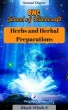 Herbs and Herbal Preparations. Second Degree