Pages

Showing posts with label history. Show all posts

Monday, November 17, 2025

Princess Ghika, A Royal Mystery from 1925 (100-Year-Old News)

Who was this woman? I read this Associated Press item at the Library of Congress newspaper archive yesterday, but when I went to discover her place in the Russian royal family, I turned up nothing. I looked at all of Emperor Alexander III's legitimate descendants and this woman wasn't any of them. Did "princess" mean something different to Russians 100 years ago? Was something lost in translation?


This is the text of the video; I wrote it yesterday:

Here’s a mystery from November 17, 1925. An Associated Press article relates the unfortunate death by household accident of a person called “Princess Ghika” in Grosswardein, Hungary, which is the German name for what, in 2025, is the Romanian town of Oradea. This princess was said to have caught fire and burned to death whilst cleaning a pair of gloves with benzene. But did this really happen, and was she a real person? 

Here’s the thing: The article also names the woman as “formerly the Russian princess Rowowa.” It says she was 23 years old. This means she would have been born in 1901 or 1902, but the only Russian quote-unquote princess born in those years was Grand Duchess Anastasia. Yes, the Anastasia you’re thinking of, the one murdered at age seventeen. 


The Russian monarchy, of course, had been abolished by the Russian Revolution in 1918, so there weren’t strictly speaking, any Russian royals in the year 1925, although there were a few Europeans claiming to be the rightful heirs to the abolished Russian throne around and about seven years later. None of them were named Rowowa or even Rowena or anything similar. 

So if this woman was related to the crowned heads of Europe, she doesn’t seem to have been Russian by birth or a very close relation to the family that included Germany’s Kaiser Wilhelm and England’s Queen Victoria and her descendants. In fact, the deceased woman’s husband was said to be the adjutant of, quote, King Ferdinand of Bulgaria. An adjutant is a military administrator equivalent to an human resources manager in a civilian organization. I put King Ferdinand in quotes because technically, Ferdinand of Bulgaria’s title was Czar. 

The Bulgarian monarchy had also been abolished by 1925, so the former czar of Bulgaria lived in exile from the throne, although he’s been allowed to return to Bulgaria’s capital city, Sofia. So this short item is sad, if true, but very confusing. Maybe a minor Russian royal named Rowowa died tragically in front of her minor military figure husband in 1925, but unless I’m missing an important clue, this doesn’t stand up to fact checking. 

Now, there was a European royal who died tragically from an accidental fire. In 1867, Archduchess Matilda of Austria, age 18, was smoking a cigarette. Her father, Archduke Albert [or Albrecht], hated smoking. When he entered the room, Matilda swiftly hid her cigarette behind her back, but in doing so, she set her dress on fire. Since the family had intended to visit the theater later that day, Matilda’s fancy dress was made of gauze, which is highly flammable. Then, thirty years later, the terrible Bazar de la Charite fire in Paris killed an appalling total of 126 souls, including Princess Sophia Charlotte of Bavaria.


Those things happened. A woman in Europe in 1925 probably did tragically end her own life unintentionally by using a flammable cleaning solution too near to the family hearth. Her royal status, though, remains a mystery.

Tuesday, September 19, 2023

121 Years Ago Today: Shiloh Baptist Church Stampede

121 years ago today, on September 19, 1902, one hundred fifteen members of the Shiloh Baptist Church in Birmingham, Alabama, are killed in a stampede after one of them called out “Fight!” and this was misheard as “Fire!” 

Listen to the facts of the incident on Disaster Area Podcast:

Here it is from the perspective of Useless Information Podcast:

In addition, you can learn about the history from All Bad Things:

This is an affiliate link: https://amzn.to/3Rak9ol

Here are some other disastrous September 19ths from history:

September 19, 1692: Massachusetts Bay Colonist Giles Corey, having been accused of witchcraft but refusing to plead either guilty or not guilty in court, is subjected to a form of torture in which his body is crushed with increasingly heavy stone weights in an attempt to force him to plead. Corey refuses and is crushed to death, with his last words reportedly being, “More weight!”

September 19, 1881: U.S. President James Garfield dies of septic infection. He had been shot by his assassin, Charles Guiteau, on July 2, 1881.

September 19, 1913: Purdue University student Francis Obenchain dies of a broken neck after taking part in a large-scale fight between first- and second-year students intended as a class hazing ritual.

September 19, 1973: Singer-songwriter Gram Parsons dies of an accidental overdose of alcohol and morphine at the age of 26. He dies peacefully in his sleep inside a room at the Joshua Tree Inn in California. 

His stepfather Bob Parsons insists the singer’s body be flown to New Orleans for burial, but friends of Gram Parsons steal the body from Los Angeles International Airport and attempt to carry out what they insisted were Parsons’s final wishes, to be cremated in Joshua Tree National Monument (now Joshua Tree National Park). They pour gasoline into the coffin and light it with a match, causing a tremendous fireball, and are charged a fine of $750. What remains of Parsons’s body is buried in Louisiana.


Stay safe and look out for your neighbors.

Friday, June 9, 2023

My Favorite History Podcasts

This long list covers history podcasts specifically; for my general list of five podcast recommendations, see this list: https://erinoriordan.blogspot.com/2021/01/5-recommended-podcasts.html

Here they are, in alphabetical order:

All Bad Things

The Atlas Obscura Podcast

Behind the Bastards

Podcast host Robert Evans - not the Robert Evans you're thinking of  - is an author whose novel is called After the Revolution. It's a dystopian fantasy about cybernetically-enhanced North Americans living after a civil war that splits the United States into very different countries. I haven't read it, but if you want to hear excerpts, Evans reads them on the show.

https://www.goodreads.com/en/book/show/59645604


Cautionary Tales with Tim Harford

The Constant: A History of Getting Things Wrong

The Dark Histories Podcast

Disaster Area 

Disastrous History: A Disasters of History Podcast

Disastrous History's host, Anthony Finchum, is a firefighter by profession, which gives him an interesting perspective on how disasters happen and what kinds of safety measures could have prevented them.

Footnoting History

Ghost Town: Strange History, True Crime, & The Paranormal

The History Cache Podcast 

History Extra Podcast

History for Weirdos

History Uncovered (the podcast of All That's Interesting)

Most Notorious! A True Crime History Podcast

I have a particular favorite episode of Most Notorious!, and it's #123: Harper Lee and Murderer Willie Maxwell with Casey Cep.

https://www.goodreads.com/book/show/41883932-furious-hours

Now & Then

Omnibus

Strange Year: A Strange History Podcast

Useless Information

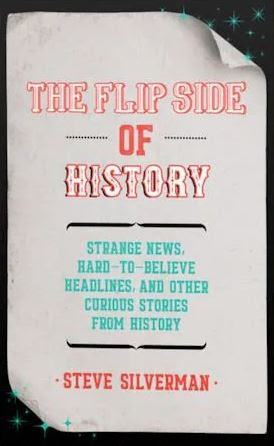
Useless Information host Steve Silverman is the author of several books, including Einstein's Refrigerator and Lindbergh's Artificial Heart.

https://uselessinformation.org/the-flip-side-of-history/


You Must Remember This

This one's mostly about movies and Hollywood history, so a very niche topic within U.S. history.

Tuesday, November 19, 2019

Nonfiction: 'Trainwreck' by Sady Doyle

Trainwreck: The Women We Love to Hate, Mock, and Fear... and WhyTrainwreck: The Women We Love to Hate, Mock, and Fear... and Why by Sady Doyle

My rating: 5 of 5 stars

Doyle is somewhat preaching to the choir with me - I already love "difficult" women like Courtney Love despite their flaws (i.e. being human beings). Still, I was enthralled by this exploration of what happens when a woman in the public eye is judged to have become the wrong kind of woman in the public eye. It taught me more than I'd ever known before about Charlotte Bronte and Marie Antoinette - we're not good at teaching history and literature from the point of view of the women who experienced them. I highly recommend this book for anyone who participates in American popular culture on any level.

I borrowed this audio book from my local public library using the Libby app. I'm not obligated in any way to review it.

Monday, August 26, 2019

'Fall and Rise: The Story of 9/11' by Mitchell Zuckoff

Forget the conspiracy theories that have cropped up in the past 18 years. If you want to know what happened on September 11, 2001, stick to factual, journalistic reports like this one. Zuckoff cites extensive notes in his sources, including firsthand interviews with survivors, so this isn't just some person with a YouTube channel talking out of their...imagination.


This is a hard read. It was an awful, brutal, cruel act of terrorism, and this narrative pulls no punches when it comes to graphic descriptions. Content warning for descriptions of violence and bodily injury; sensitive readers may not be able to handle some of the more vivid chapters. (One of the really graphic ones relating to the Shanksville, Pennsylvania plane crash was mentioned in the Washington Post review of this book. If you could handle that review, you'll probably be okay.)

This book does two important things. One, it personalizes the unthinkable tragedy, bringing it back down to human scale. Two, it ends on a hopeful note, reminding us that survivors continue to survive and thrive despite their horrific losses and injuries.

I don't know why I'm drawn to reading such sad things. I guess it's a "hope for the best but prepare for the worst" thing. But I do know that an American is more likely to be killed by a bee sting than by a terrorist. The reality is that we're actually safer than we've ever been. So read this history, but don't get depressed.

I borrowed this audio book from my local library using the Libby app. I wasn't obligated to review it in any way.

Monday, June 17, 2019

'Get Well Soon: History's Worst Plagues and the Heroes Who Fought Them' by Jennifer Wright

Get Well Soon: History's Worst Plagues and the Heroes Who Fought ThemGet Well Soon: History's Worst Plagues and the Heroes Who Fought Them by Jennifer Wright

My rating: 5 of 5 stars

If your favorite podcast is Sawbones, this book is for you.

This is the first book I've read by Wright, but I really enjoyed her writing style and authorial voice. She belongs to the Roxane Gay school of feminist scholarship that has a sense of humor but puts up with no bullshit. Beginning with the Antonine Plague (probably of smallpox) that killed between 10 and 18 million ancient Romans during the reign of Emperor Marcus Aurelius, Wright examines how societies reacted each time a mass illness raged through them.

In a predictable historical pattern, individuals have two reactions to plagues: To take advantage (often by selling bogus cures) and to genuinely try to ease suffering. There's a bit of good news in there: Namely, that there's never been a mass illness without individuals reacting with compassion and trying their best to help, even if the cause of the illness was not yet understood. For every bad reaction (like some of the crap that happened to Typhoid Mary), there were people like Father Damien (of Molokai fame) who risked their own lives in the service of others.

Some of humanity's previous plagues were caused by diseases that are curable now. Tuberculosis was the bane of the 18th and 19th centuries, for example, but can now be eliminated with antibiotics. So, too, can syphilis, although knowing this doesn't do much to help the victims of the infamous Tuskegee experiments whose lives were lost or irreparably altered by their unethical doctors withholding the cure from them. (Shame, America. Shame.)

Other plagues could still kill us today. The bubonic plague that ravaged Europe in the Middle Ages is still with us. About a dozen Americans get it every year. We could drive ourselves to anxiety thinking about the "Spanish" (actually American) flu spread by service members quartered close together to wage the Great War. Influenza is still one of our deadliest infections and still has no cure.

But worrying us about plagues that will happen in the future isn't Wright's purpose. She's more interested in documenting the ways we've always reacted when our friends, family members, neighbors, and ourselves fall ill in large numbers. Are children cared for or abandoned? Do we spread deadly misinformation, focus on what facts we can glean, or expend our energy on compassion? This book combines sociology, psychology, and medical history.

The most recent plague examined is that of polio*, which terrified Americans through the middle of the 20th century when it could be cured. Wright chose to focus on those epidemics in which the key players are historical ones. In her epilogue, she mentions the AIDS epidemic of the late 1970s and 1980s. She chose not to write about it because it's still within living memory to a much greater extent than polio. I can appreciate that decision. Having lived through the 1980s, I can understand why it's tough to be objective about the lack of government response to the deaths of so many innocent people. (And all victims of disease are innocent - microbes are not a moral judgment).

If you read this book, you'll learn some interesting historical facts. You'll be impressed by the heroes of history who did their best to respond with compassionate care. You'll be saddened by a few less-than-desirable aspects of human behavior. And hopefully, if you ever find yourself caught in a plague, you'll be a little bit wiser. I'll do my best to try to err on the side of compassion. While also remembering that personal protective gear exists.

I borrowed this audiobook from my local library using the Libby app and was not obligated in any way to review it.

*Upon reflection, the encephalitis lethargica epidemic may come after the polio chapter.

Saturday, May 25, 2019

'Barracoon' by Zora Neale Hurston #AmericanHistory

Barracoon: The Story of the Last Barracoon: The Story of the Last "Black Cargo" by Zora Neale Hurston

My rating: 5 of 5 stars

I listened to this short audiobook; it's about a 4-hour listen. This is nonfiction, so be prepared for the very tragic details of the life of Cudjo Lewis. His village was raided by the Dahomey people, his parents were killed, and he was captured to be sold by the Portuguese into slavery. All of those things would be terrible enough for one lifetime, but Cudjo continued to encounter myriad tragedies after the Union soldiers came and told him he wasn't a slave anymore. Very sad.

Cudjo Lewis was a real survivor, though. He hung in there long enough to tell his tale to the brilliant Zora Neale Hurston, a pioneer of recording authentic African-American folklore. Her recording of Lewis's tale is believed to be historically accurate to a high degree, and she also relates it in a literary style that makes it incredibly compelling. But - still very tragic.

By Unknown - This image is available from the United States Library of Congress's Prints and Photographs division under the digital ID cph.3b10040. This tag does not indicate the copyright status of the attached work. A normal copyright tag is still required. See Commons:Licensing for more information. Public Domain 
If you are an African-American who's descended from enslaved Africans, you may have to consider whether you really want to hear the gruesome details. This is not a lighthearted or easy read. Definitely all white Americans should read or listen to this book, because we should have our eyes fulled opened about what our ancestors caused.

An appendix to this book is a collection of Cudjo's fictional folk tales, which I highly recommend for anyone who's interested in folklore.

I checked this book out from my local library using the Libby app and I was not obligated in any way to review it.

Monday, November 12, 2018

Fantasyland: How America Went Haywire: A 500-Year History

Fantasyland: How America Went Haywire: A 500-Year HistoryFantasyland: How America Went Haywire: A 500-Year History by Kurt Andersen

My rating: 4 of 5 stars

Andersen, one of the two co-founders of Spy magazine, spent several years researching this meandering but compelling history. The 500 years in question begin with Martin Luther and the beginnings of the Protestant Reformation, leading to the Puritans, leading eventually to the "alternate facts" that America runs on today. This isn't an indictment of only the contemporary Republican party - we're all guilty of some of these strange, irrational beliefs - but it pulls no punches in calling BS on climate change deniers, flat earthers, and anyone who thinks the Earth is 5,779 years old and/or takes the Bible literally. I'm not sure if I enjoyed this book or if it just made me want to smack all my fellow Americans on the nose with a rolled-up newspaper like naughty puppies.

I borrowed this e-book from my local library using the Libby app and was not obligated in any way to review it.

Thursday, June 7, 2018

'Voodoo Histories: The Role of the Conspiracy Theory in Shaping Modern History' by David Aaronovitch

Voodoo Histories: The Role of the Conspiracy Theory in Shaping Modern History
My rating: 5 of 5 stars

David Aaronovitch is a British journalist. The central theme of his book is that conspiracy theories often come about when a large group of people has suffered an emotional loss. The conspiracy theory provides a narrative that makes the loss more palatable, more understandable.

While Aaronovitch sympathizes with the psychological aspects of conspiracy theorizing, he also emphasizes the real-life consequences when large groups believe things that are factually inaccurate. The chapters of his book provide several historical examples of this. The most dramatic may be how the demonstrable fraud of the Protocols of the Elders of Zion influenced a century of virulent anti-Semitism, including the Holocaust. When conspiracy theory is linked with scapegoating, there's a good possibility that people will die as a result.

Please note that Aaronovitch's analysis of conspiracy theories has neither a liberal nor a conservative bias. In his historical survey, what he sees is that neither side of the political spectrum is more prone than the other to believing in dark forces at work behind the scenes. What matters more is not the political bent of the theorizer but whether they feel disempowered and at a loss at the historical moment of the theorizing.

For example, the liberal/progressive side of the United States felt it was under attack and at a loss with the assassination of John Kennedy in 1963. As of the writing of this book, approximately half of Americans believed in some kind of conspiracy theory regarding the president's assassination. Aaronovitch brought up a historical fact rarely mentioned in Kennedy conspiracy circles: That Lee Harvey Oswald had tried to assassinate another politician previously, although his shot missed and no one was hurt. The note Oswald wrote to his wife Marina confessing this deed, in case he didn't return home, is still extant. Since this fact is inconvenient to "Oswald was framed" theories, it's rarely brought up in conspiracy circles.

Omitting inconvenient facts is a common characteristic of conspiracy theories, Aaronovitch argues. He mentions the glaring inconsistencies and outright untruths in the popular documentary Loose Change, which alleges U.S. government conspiracy in the September 11, 2001 terrorist attacks.

Another popular conspiracy theory in which popular narratives bend and twist the facts to fit the narrative is the suicide of Clinton White House aide Vincent Foster. Conspiracists, Aaronovitch demonstrates, take off-hand, non-professional, and uninformed statements made by those loosely attached to the incident, such as statements made by first responders, as if they were gospel truth.

This is called the Historian's Fallacy: The tendency to believe that a witness, having experienced an event that later turned out to have historical significance, must experience the event in the way that a historian would describe it. In reality, by definition, the witness can only know what they experienced at the time. They can't have foreknowledge of facts that will only become widely known after the event has been studied and investigations conducted. To expect a witness's offhand statement to be 100% accurate at the moment the witness is involved in an ongoing event is to fight the nature of reality itself.

And yet we see this all the time on YouTube. A tragic event such as a mass shooting (unfortunately common in the U.S.) happens and a witness, who may be a first responder, a child, or a person with no formal training in law enforcement, ballistics, etc. makes an offhand remark about the number of shooters, the number of gunshots, etc., and the conspiracy-minded YouTube video creator takes this statement as if it must be accurate. This is then conflated into the theory that there must be a cover-up of the "real" version of events that "they" don't want you to know.

If you've spent any time on YouTube at all, you probably know how common, and often disturbing, this is. It has led to lawsuits, in fact. Grieving relatives don't like being called liars or having non-experts with no connection to the event claiming that their dead relative is, in fact, a "crisis actor" who only pretended to be murdered so that Group X could try to get Law Z passed.

The fact is, for human societies to operate properly, there has to be a certain amount of agreement on what does and what does not constitute reality. Facts must be properly vetted and opinions must be grounded in facts that can withstand rigorous scrutiny. Otherwise we each live in our own fantasy worlds and none of those fantasies are compatible with each other.

This book was published in 2008, but even though it's a decade old, a thoughtful reader could easily apply what Aaronovitch lays out in his book to the U.S. election of 2016. In fact, he addresses the loss of power experienced by white American males as they perceive their world being threatened by advances made by women and by men of color. An antidote to the harmful scapegoating effect, Aaronovitch suggests, is for these men to gain the emotional literacy they would need to deal with their feelings as feelings, rather than externalizing them in a way that can have devastating consequences for the lives of the groups they see as the enemy.

I purchased a used copy of this book from Better World Books with my own funds and was not, in any way, obliged to review it.

Monday, December 18, 2017

Graphic Novel for '80s Kids, Gamers, and Gunters

The Comic Book Story of Video Games: The Incredible History of the Electronic Gaming RevolutionThe Comic Book Story of Video Games: The Incredible History of the Electronic Gaming Revolution by Jonathan Hennessey

My rating: 4 of 5 stars

I was born in the late '70s and grew up in the '80s, so I have many vivid memories of the Atari game console, video arcades, the Nintendo revolution, the change over from Nintendo to Sega, et al. For me, this was a fascinating history of the technology that had to happen in order for the human race to have massive multiplayer online role-playing games (MMORPGs) and other gaming technology at our fingertips.

I noticed some reviewers thought that it took the graphic novel too long to explain the background technology, but for me, the background technology and some of the names and faces behind it were some of the charm and fascination of this book.

If you're a fan of Ready Player One, this is an absolute must-read for you. Like Parzival, you need to know your gaming history if you want to navigate the Oasis.

I received a copy of this graphic novel in exchange for my review through BloggingForBooks.com.

Tuesday, June 6, 2017

5 Corporate Scandals

Oops! I accidentally got carried away while working on a freelance writing project and wrote way over my projected word count about corporate scandals. So please, enjoy this short list of awful things done in the name of capitalism.

If you are horrified and fascinated by these events, perhaps you would like to browse this blog's history tag.

1. Ford Pinto (1978). Ford made its Pinto models between 1971 and 1980. In 1971, Ford recalled 20,000 of its Pintos because of reports of vapors from the fuel tank leaking into the back of the car through the carburetor. In two legal cases, Ford was accused of producing a car it knew was unsafe, particularly in low-speed rear-end collisions. Three deaths and four incidents of serious injury were reported 1971-1974.

https://www.amazon.com/Was-Ford-Pinto-Death-Trap-ebook/dp/B017OFMRQI/
In 1978, the National Highway Transportation Safety Administration ruled that the design of Ford’s fuel tank was defective. In 1980 the state of Indiana charged the Ford corporation with murder after three teenage girls were killed in one accident involving a Pinto, but the company was found not guilty.

2. Union Carbide (1984). The chemical manufacturer’s pesticide plant in Bhopal, India was so poorly maintained it caused the largest industrial disaster in history. The accidental release of methyl isocyanate caused the immediate suffocation deaths of more than 2,000 people, injuries in more than 50,000 people, and an additional gas-related death toll of perhaps another 8,000 people. Although the Indian government charged Union Carbide executives with homicide, the company claimed it was not under Indian jurisdiction and these officials did not appear in court to face these charges.

https://www.amazon.com/Five-Past-Midnight-Bhopal-Industrial/dp/0446530883/


3. Lincoln Savings and Loan (1989). The Lincoln S&L had been a respected financial institution since it was opened in Los Angeles in 1925. Its management ran the institution conservatively and made a modest profit.

When Charles Keating purchased Lincoln S&L in February 1984, Keating increased the company’s profits five-fold by taking on riskier and riskier investments. As a result, the parent company was forced to declare bankruptcy and 21,000 investors, many of them elderly, lost their savings.

4. Firestone Natural Rubber Company (1990). Firestone Tire and Rubber Company opened this natural rubber plantation in Liberia in 1926. Leased from the Liberian government, the plantation was the largest of its kind in the world. Human rights groups have documented numerous worker complaints about conditions in the plantation, ranging from accusations of child labor violations to modern-day slavery.

Civil war broke out in Liberia in 1990, and a resistance group took over the Firestone plantation. Although all the details of the what happened on the plantation at that time are unclear, what is known is that warlord Charles Taylor made Firestone Natural Rubber Company his base of operations and that Taylor was convicted in international criminal court for war crimes.

5. Halliburton (2010). Founded in 1919, the Halliburton Company is among the world’s largest oil field service companies. It has been involved in numerous scandals over the years, from accusations of illegal trading with the enemy when a subsidiary opened an office in Tehran to charges of obstructing an investigation by deleting data related to the Deep Water Horizon oil rig explosion of 2010. Halliburton was found to be jointly responsible, along with BP and another oil company, of negligent practices that caused the deaths of 11 employees and the discharge of 4.9 million barrels of oil into the Gulf of Mexico.

Saturday, December 10, 2016

Girl Power! 'Rad Women Worldwide' by Kate Schatz and Miriam Klein Stahl

"Enheduanna, who lived 4,300 years ago, is the world's oldest known author. Yes, before the ancient Greek poet Sappho, before Confucius, even before The Epic of Gilgamesh, there was Enheduanna: a priestess, princess, poet, and teacher who lived, wrote, and ruled as part of the world's most ancient society. Her story is also the story of the beginning of the written word -- and of civilization as we know it!"


So begins Rad Women Worldwide: Artists and Athletes, Pirates and Punks, and Other Revolutionaries Who Shaped History, written by Kate Schatz and illustrated by Miriam Klein Stahl. How awesome is it for me, a writer, that the first known author in history was also a woman?! She's also a Middle Eastern woman, from ancient Mesopotamia, the ancestor-culture of the Jews and Arabs. We already have so much in common!

The women in this illustrated guide come from all over the world, and from a wide variety of time periods, but they're all extraordinary human beings. From the second young woman in the book, Malala Yousafzai, to the last few pages with Emma Goldman and "The Stateless" (refugee women), these women are all inspiring.

This book would make an excellent gift for a young person in middle school or high school, whether they have an interest in reading about history or need to brush up on their history. The short biographies with large, engaging, and colorful illustrations make this book easy to read through.

Kate Schatz's bio on Penguin Random House is empty, except for this picture of Kate Schatz by Kate Schatz.
But you don't have to be a middle-grader to appreciate this book. It would make a wonderful addition to anyone's nonfiction shelf. It would be a nice gift for a teacher, for them to add to their classroom library.

PRODUCT DETAILS

Hardcover
Published by Ten Speed Press
Sep 27, 2016 | 112 Pages | 7 x 9 | Middle Grade (10 and up) | ISBN 9780399578861

I received this book from Blogging for Books for this review.

Tuesday, August 30, 2016

August Mini Book Reviews

The Last Sherlock Holmes StoryThe Last Sherlock Holmes Story by Michael Dibdin

My rating: 5 of 5 stars

This book is so suspenseful, it caused me some degree of anxiety. It was worth it. This story is quite the opposite of boring; it is a thrilling tale, well told. John Watson is somewhat unreliable as a narrator, but not nearly as unreliable as...he...could be. (That's about all I can say without spoiling the whole thing.) It's fascinating and horrifying and I'm glad it's non-canonical.

I checked out this audio book from my local library and was not obligated in any way to review it.

In the Garden of Beasts: Love, Terror, and an American Family in Hitler's BerlinIn the Garden of Beasts: Love, Terror, and an American Family in Hitler's Berlin by Erik Larson

My rating: 5 of 5 stars

Chilling.

William E. Dodd never set out to be an ambassador, yet he ended up representing the U.S. in Hitler's Germany from 1933 to 1937. He tried to warn America of the horrors to come, but very few listened to him.

I have one remaining question: What happened to Dodd's unfinished history of the Southern U.S., titled 'The Old South?' I hope someone preserved it somewhere, even though it was nowhere near to being finished.

I purchased this hardcover book with my own funds (secondhand) and was not obligated in any way to review it.

Dead Presidents: An American Adventure into the Strange Deaths and Surprising Afterlives of Our Nation's LeadersDead Presidents: An American Adventure into the Strange Deaths and Surprising Afterlives of Our Nation's Leaders by Brady Carlson

My rating: 5 of 5 stars

This book is really fun if you like U.S. history and presidential trivia. Who knew that Teddy Roosevelt's oldest daughter Alice had a pet garter snake named Emily Spinach? Or that Franklin Pierce, when he didn't get re-elected, responded with "The only thing left to do is get drunk?" I do, now.

My only caveat is that if you have a very weak stomach as concerns the remains of the dead, there are a few passages that may make you wince. On the whole, though, this fascinating slice of Americana is more about the presidents' lives than their deaths.

I have been to Mount Rushmore Rapid City, South Dakota, but not since 1989. I never saw the presidential statues. Now I'll have to go back one of these days. Put it on my bucket list.

I checked this digital audio book out through HooplaDigital.com and was not obligated in any way to review it.

View all my reviews on Goodreads

Friday, February 5, 2016

Historical Person with No Right To Be So Good-Looking: Lewis Powell

Look at Lewis Powell. Look at him.

Public domain.
He's so handsome he looks like he should play an antihero in a Marvel Comics Universe movie. Yet this historical hottie has absolutely no right to look so attractive. He is, in fact, an attractive sociopath who had no problems taking part in a conspiracy to brutally murder up to four people, as part of the larger conspiracy to assassinate president Abraham Lincoln.

I read about Lewis Powell and his better-known co-conspirator, John Wilkes Booth, in Killing Lincoln by Bill O'Reilly and Martin Dugard.


Mr. Tit Elingtin scoffed when I told him I was reading one of Bill O'Reilly's books. We're not very much fans of Mr. O'Reilly's loudmouthed talk show on Fox News - or anything that's on Fox News, really. (As a person of Middle Eastern descent, I often come away from watching Fox News with the feeling that I'm being blamed for something I haven't done. This is a familiar feeling to Jewish persons, but not one of which we are fond.)

Perhaps my husband would be happier if, instead, I had chosen to read Fox News Fuckfest.


(Yes, that's a real book, a piece of "bizarro erotica." I wouldn't necessarily be opposed to reading it someday, just out of curiosity.)

To be perfectly fair, it should be noted that the co-author with the real experience in historical research and writing is Mr. Dugard.

Let it be further noted that I purchased this book off my Irish Granny's want list. I bought it from Better World Books, then gave it to her, and she read it. Then my dad read it. When he was done it passed back to me, and I read it, and then I'll re-donate it Better World Books to await its next reader(s).

Bill O'Reilly notwithstanding, this was a fascinating little slice of American history. I knew a little bit about Booth being part of a larger conspiracy, but I never knew the details. The story of Mary Surratt, the only woman ever executed by hanging in the U.S., is quite sad. She didn't really do anything wrong, but got swept up in the fervor to punish Lincoln's killers because of the actions of her son.

Lewis Powell was a scumbag, but his last act was one of compassion, declaring before the crowd (100 people won a sort of lottery to witness the hangings) that Mary Surratt was innocent. But that still doesn't excuse the fact that he savagely beat Secretary William Seward, Seward's son Frederick, and Frederick's wife, leaving all three for dead. He was also very rude to the Sewards' butler, William Bell. He called Mr. Bell a very bad name such as only the likes of Draco Malfoy or Donald Trump would use.

But the Sewards survived, and William Seward would go on to purchase Alaska for the United States (known at the time as "Seward's folly" before oil and gold were discovered there. Now that Sarah Palin has been discovered there, maybe we should go back to calling it a folly again).

So the unfairly handsome Lewis Powell probably deserved his fate, to be hanged by the neck until he was dead.

Why is it always the sexy people who get hanged?

Thursday, February 4, 2016

Black History Month Reads #1: #Nonfiction by Manu Ampim


Goodreads book description: Supposedly given in 1712, the "Willie Lynch Speech" is widely believed to be authentic. Actually, as revealed in this book, it is an amateurish and malicious hoax. Unfortunately, many people taken in by this hoax have spread and championed it. An extreme example of this championing occurred in 1995 at the Million Man March. There, the "Willie Lynch Speech" was dramatically repeated. Marchers and millions around the world who witnessed the March through television and radio were presented with this hoax as fact and history.

In the Death of Willie Lynch Speech, Professor Manu Ampim exposes the myth of Willie Lynch. Ampim does this by documenting the 20th century origin and fraudulent history of the "Willie Lynch Speech" and speculating, correctly, about the author's identity--forcing the admitted hoaxer to confess.

This volume contains the fake "Willie Lynch Speech," correspondence between Ampim and the admitted hoaxer, and the hoaxer's confession.

Death of the Willie Lynch Speech: Exposing the MythDeath of the Willie Lynch Speech: Exposing the Myth by Manu Ampim

My rating: 5 of 5 stars

Professor Manu Ampim, an African-American historian who specializes in Africana, uses his extensive knowledge of American history to thoroughly debunk a stubborn urban myth with new legs in the Internet era. This is a brief collection of letters and essays that can be read fairly quickly, making it ideal for group study, including in high school and college classrooms. In addition to the historical debunking itself, the book also provides readers a number of suggestions with which to research historically accurate (and thus more useful) firsthand sources on the African-American experience.

This was an ebook I checked out from the library through HooplaDigital.com. I was not obligated in any way to review it. This review represents my own honest opinion.

Wednesday, February 3, 2016

#Nonfiction: 'Tinder Box: The Iroquois Theatre Disaster 1903'


Tinder Box: The Iroquois Theatre Disaster 1903Tinder Box: The Iroquois Theatre Disaster 1903 by Anthony P. Hatch

My rating: 5 of 5 stars

This is really well-written and well-researched, but what happened in 1903 is so terribly, terribly sad. Seriously, don't read this book if you'll be disturbed by gruesome injuries and deaths caused by horrible accidents. Not only was there a fire, but there was a panic, and the poor design of the theater caused a lot of deaths by crush asphyxia, a particularly horrible way to die.

But if you can stomach the nauseating details, it's a fascinating glimpse into life in Chicago in the early 20th century, a scathing look into the devastation caused by Gilded Age laissez-faire capitalism, and an importance lesson for the public spaces of today. This book is about 10 years old now, but the importance of preventing panics in theaters is very high when now we have to worry about random acts of violence, such as the Aurora, Colorado movie theater shooting.

This was a library book I checked out from HooplaDigital.com, and I was not obligated to review it in any way. This review represents my own honest opinion.