Pages

Showing posts with label J.K. Rowling. Show all posts

Saturday, January 12, 2019

Because I Can Never Resist New J.K. Rowling...

Fantastic Beasts the Crimes of Grindelwald: The Original ScreenplayFantastic Beasts the Crimes of Grindelwald: The Original Screenplay by J.K. Rowling

My rating: 3 of 5 stars

I didn't like this screenplay/movie as much as the first one, because a) Queenie is acting out-of-character stupid in service of the plot :( and b) no real!Percival Graves, who had such great chemistry with Credence in the first one. (This is no knock against Claudia Kim, whom I think did a nice job in the Nagini role she was given. I actually liked her relationship with Credence and I hope she gets a bigger role in the next one.)

The first movie shouldn't have had more homoerotic subtext than the second one given that this screenplay includes scenes with young Dumbledore and young Grindelwald together. I know same-gender romances are frowned upon in some non-U.S., non-U.K. film markets, but if J.K. Rowling let that economic consideration stop her from exploring the Dumbledore-Grindelwald relationship, she shouldn't really have told us that Dumbledore is a gay character. Commit to your characters' background stories or leave them out.

Also, there are continuity issues with what we already know from the Harry Potter books and Pottermore addenda. Minerva McGonagall shouldn't be at Hogwarts yet in 1927, should she? I read somewhere that she shouldn't even have been born yet according to a previously plotted timeline. So I don't love that.

But it does have some nice touches nonetheless, such as the blood troth and the baby Nifflers. Jacob is still his wonderful Jacob self even if Queenie is sacrificed to bad writing, and Newt and Tina still have their adorably awkward spark. "Salamander eyes" is my new favorite compliment.

I purchased this book from my local brick-and-mortar Barnes and Noble and was not obligated in any way to review it.

Thursday, March 22, 2018

'Quidditch Through the Ages' Audiobook Read by Andrew Lincoln

Slight spoilers below if you haven't already listened to this audiobook. Nothing major - no Cursed Child-type surprises. 

When I first read Quidditch Through the Ages by "Kennilworthy Whisp," one of the schoolbooks Harry Potter and his cohort are said to have read and studied at Hogwarts, I wasn't too impressed. Quidditch was never one of my favorite aspects of the Harry Potter books, although I do have quite the fondness for some of the lady quidditch players, especially Ginny Weasley and Angelina Johnson. But the history of the sport didn't interest me, so I only gave it three stars on Goodreads.

Still, it sounded like fun to listen to the new audiobook version read by Andrew Lincoln, available through Pottermore. It has sound effects and bonus material, namely new writing by J.K. Rowling. It consists of 21 tracks, of which the first 12 are the actual text of the book.

Andrew Lincoln has a lovely reading voice. I can imagine it's the voice Edgar Linton used to read bedtime stories to baby Judith Cathy Linton before he remarried Michonne and lived happily ever after sadly passed away. Somehow his natural English accent sounds nothing at all like Rick Grime's Georgia accent. Actors are amazing.

The audiobook's bonus tracks also feature the voice of Imogen Church as Ginny Weasley-Potter (reading bulletins she wrote for the Daily Prophet as a Quidditch World Cup correspondent) and Annette Badland as Rita Skeeter (gossiping at the World Cup finals).

https://whompingwillowy.tumblr.com/post/170186950554/i-woke-up-to-such-news-my-fandoms-collide

A portion of the proceeds from sales of this audiobook go to charity, so I didn't feel bad at all about paying the $16 to Pottermore. One charity is the Lumos Foundation, which helps support families who might otherwise give their children up for adoption, since it's normally in a child's best interest to stay with their birth family whenever possible. Its goal is to reduce the number of children who live in the world's orphanages. The other charity is Comic Relief UK, which supports poverty alleviation projects.

Introduction

The first track of this book is an introduction by Albus Dumbledore. Dumbledore describes the process of borrowing the Hogwarts library's copy of Quidditch Through the Ages from librarian Madame Pince, who was not keen on letting the book be released into the muggle world. Lincoln reads this chapter in the voice of elderly Dumbledore. It's amusing, but I'm glad he doesn't have to use this voice for the entire book.

Chapter Three

This chapter relays the recollections of early quidditch play recorded by Gertie Kettle at Queerditch Marsh. Andrew Lincoln's Gertie Kettle voice is one of the funniest parts of this book.


Chapter Ten

Lincoln pronounces "patent" with a long A. It's the most British thing I've ever heard, aside from perhaps Benedict Cumberbatch's guest appearance on The Simpsons.


...which is, of course, a parody of Love Actually, in which Andrew Lincoln plays would-be wife-stealer Mark.

Afterward 

In the 12th track, Lincoln reads the biography of Kennilworthy Whisp and the book's "reviews" from in-world celebrities such as Rita Skeeter. The best of these reviews, in Lincoln's reading, is from Gilderoy Lockhart. He might have been brilliant at playing Lockhart, had he been given the chance. (No offence to Sir Kenneth Branagh.)

History of the Quidditch World Cup

In this bonus material, track 13, Lincoln does Viktor Krum's Bulgarian accent, and this is very cute. You'll be happy to know that Viktor is still playing competitive quidditch at the age of 38.

Quidditch World Cup 2014 - First Round Matches (Track 15)

The match between Chad and Lichtenstein seems like it will never even, and Imogen Church's Ginny sounds sufficiently exasperated at the seemingly-endless play. Church's real accomplishment, though, is pronouncing the many multi-ethnic names required of her here. In this bonus chapter we learn that Viktor Krum has come out of retirement to play again at the age of 38 and that he's the oldest player in the tournament.

Quidditch World Cup 2014 - Rita Skeeter's Gossip Column (Track 18)

Skeeter is a notoriously unreliable narrator, and she's clearly jealous of Ginny. Should we believe her when she reports that Harry, age 34, has some streaks of gray in his black hair?

Rita Skeeter is certainly a character one loves to hate; I'd have some words for her over her snark about Hermione's hair or her speculation about why Charlie Weasley is still unmarried. (He's probably just asexual.)

I hope she's correct in her assessment that Bill and Fleur's daughter Victoire and Harry's godson Teddy Lupin are taking every available opportunity to sneak off to a dark corner and snog.

Quidditch World Cup Final 2014 - Live Match Commentary (Track 20)

Rita Skeeter and Ginny Potter perform the live match commentary together (with a brief introduction narrated by Andrew Lincoln). It's the most highly-enhanced track as far as sound effects. Harry, James Sirius, and Lily Luna are rooting for Viktor's Bulgarian team in the finals, but Albus Severus is rooting for Brazil. They're sitting with Neville Longbottom.

Skeeter also gives us a vivid description of Luna Lovegood's wedding dress when she married Rolf Scamander (grandson of Newt Scamander and Tina Goldstein): "Rainbows, spangles, and a tiara of silver unicorn horns." It sounds awesome.

Will Viktor Krum finally walk away with a Quidditch World Cup trophy on his third attempt? If he does, will Ron still be jealous of Hermione's teenage crush on Viktor? Will Ginny jinx Rita to get her to shut up? You'll have to listen to find out.

And the 21st and Final Track...

...is only the credits and a little spiel about Pottermore, read by Andrew Lincoln.

Summary

If you're not the biggest fan of sports/quidditch, you won't find this the most interesting of J.K. Rowling's books. It certainly relies much less on traditional mythologies than, say, Fantastic Beasts and Where to Find Them. The voice actors' performances are enjoyable, but not so amazing that they can hold your attention if you're simply not interested in the material. But if you're like me and you feel compelled to read all of J.K. Rowling's books, you're going to listen to this anyway. And you should, because the proceeds are going to a really good cause.

Thursday, October 19, 2017

J.K. Rowling's 'Very Good Lives'

Very Good Lives: The Fringe Benefits of Failure and the Importance of ImaginationVery Good Lives: The Fringe Benefits of Failure and the Importance of Imagination by J.K. Rowling

My rating: 5 of 5 stars

This should be required reading for everyone. J.K. Rowling doesn't just donate a portion of her wealth to Amnesty International -- she used to work for Amnesty International, taking testimonies of African victims of torture. She's seen the absolute worst humanity can do, so when she writes about evil, she knows of which she speaks.

This deeply wise woman addressed her remarks to Harvard's graduating class of 2008, but her words apply to every human life on this planet.

The illustrations are also delightful. I read this as a library e-book on my phone, but some day I'll purchase the hardcover book so I can enjoy the illustrations properly. In the meantime, I was not obligated to review this library book in any way.

Wednesday, August 23, 2017

'A Discovery of Witches' Is Coming to TV (and Other Reasons I'm Happy Today)

One of my favorite books in the history of time, A Discovery of Witches, is becoming a TV series, as reported by Entertainment Weekly


Matthew Goode, who appeared in The Imitation Game* with Benedict Cumberbatch, will play my fictional boyfriend, vampire-scientist Matthew Clairmont. 

Badass witch heroine and mother of dragon (technically, firedrake) Diana Bishop is to be played by Teresa Palmer, the Australian actress I thought was very good in Warm Bodies

Quite nice. Another favorite getting a TV adaptation is Robert Galbraith's (a.k.a. J.K. Rowling's) The Cuckoo's Calling


It looks like Cormoran Strike - another of my fictional boyfriends, although I truly want him and Robin to get together - got a bit of an adaptational attractiveness upgrade, but no matter. Holliday Grainger looks like she'll be an absolutely perfect Robin Ellacot. 

Elarica Johnson, who made a brief but notable appearance in the film version of Harry Potter and the Half-Blood Prince, is playing Lula Landry. I still like to imagine that Lula is dating Fred Weasley in the afterlife. 

Grainger is also set to play the lover of Anna Paquin's character in Tell It to the Bees, a novel written by Fiona Shaw. Shaw did a stint on True Blood with Paquin, playing the lead witch of a coven, but is perhaps more famous for playing Harry Potter's witchcraft-phobic Aunt Petunia. 

"Telling the bees" is an ancient folkloric custom. 

Also adapted for TV was Charlaine Harris's Midnight, Texas series. I'm missing it because I don't have cable, but my parents are watching it. Maybe some day they'll put it on Netflix. 


*Which I never finished watching because sad LGBT+ history makes me sad. 

Recently Watched: Much Ado About Nothing at Notre Dame on Sunday, then my second viewing of Twelfth Night, with my niece this time, also at Notre Dame but on Monday. 

Currently Listening To: Wil Wheaton reading the audio book of Ready Player One.
 
Currently Reading

Sunday, January 22, 2017

'Short Stories from Hogwarts of Heroism, Hardship and Dangerous Hobbies' by J.K. Rowling


I started reading this short book in December. It took me a while to get back to reading this one because I knew the Remus Lupin chapter was going to be a heartbreaker. It is. So is the back story of Professor Minerva McGonagall, who lost both of the loves of her life. She's also more badass than we realized.

J.K. Rowling named Minerva McGonagall after the Roman goddess of wisdom + William Topaz McGonagall, remembered for being a terrible Victorian poet. He wrote a terrible poem about the Tay Bridge Disaster, which I knew about from  Scientific Blunders: A Brief History of How Wrong Scientists Can Sometimes Be by Robert M. Youngson. It's a book I have read and enjoyed for many years.


H, H + DH was kind of a sad book, but I enjoyed it because it gave us some more back story of some of our favorite characters. The Sybill Trelawney chapter was a little short, and it didn't have a lot of new information. But I've now read 2 of the 3 Pottermore story collections, and I'm excited to read the third one.

Here is my review of Hogwarts: An Incomplete and Unreliable Guide.

Here is a review from Reading Lark.

I purchased this book on Pottermore and was not obligated in any way to review it.

Saturday, December 17, 2016

Hogwarts: An Incomplete and Unreliable Guide

I lied.

When I finished Fantastic Beasts and Where to Find Them: The Original Screenplay, I wrote, "And now I have read all of J.K. Rowling's books, except Very Good Lives." But I forgot about the three ebook collections of short stories that were available on Pottermore.


To remedy this situation, I bought all three from Pottermore. On my new laptop, I've been reading through them with my new IceCream Reader. So far, I've finished Hogwarts: An Incomplete and Unreliable Guide.

I found out afterward that it's actually the third of the three. So now I'm reading Heroism, Hardship, and Dangerous Hobbies. It was a chapter on one of my favorites, Remus Lupin.

This is a short ebook of short stories, so it didn't take me very long to read. It was very enjoyable. All of the content came originally from Pottermore. It includes some further information about the Hogwarts Express, Hogwarts, and the magical objects used in the Harry Potter books, plus new insights from J.K. Rowling into why she made the writing choices she did.

After reading Harry Potter and the Cursed Child, Parts 1 and 2, I still have more questions about the use of Time Turners, so this book won't answer all of your magical questions. However, it was still an entertaining and informative read.

I never cease to be impressed by Ms. Rowling's knowledge of world folklore.

Saturday, December 3, 2016

Fantastic Beasts and How I Found Them


My hardcover copy of Fantastic Beasts and Where to Find Them: The Original Screenplay by J.K. Rowling arrived on Friday, November 18th. I didn't start reading it right away, because I wanted to see the film in the theater first. (Beware of spoilers if you keep reading below.) 


It has been many years since I last read J.K. Rowling's 2001 book titled Fantastic Beasts and Where to Find Them, one of the two volumes she wrote for a charity project as Harry Potter's schoolbooks. I really had very little idea of what to expect when I saw the movie on Thanksgiving, other than a prequel to the Harry Potter series set in the 1920s.

The FBAWTFT film is set in 1926, to be exact.

We knew the main character was going to be Newt Scamander. When Harry Potter read Fantastic Beasts at Hogwarts, he knew Newt Scamander as the author of his textbook. We, the readers, had very little information about Newt - other than that he would be played by Eddie Redmayne. I remember Redmayne best as Marius Pontmercy in Les Miserables 


He is absolutely adorable as Newt Scamander. 

Newt is a wizard visiting New York in the '20s. He has a suitcase with a virtual zoo inside, full of magical creatures. He's on his way to Arizona on a creature-related errand when he's distracted by an escapee: a niffler, a sort of platypus-mole that can't stop itself from hoarding shiny objects. 

The real trouble begins when Newt crosses paths with a Muggle - or, as they're known to American wizards - a No-Maj. He's Jacob Kowalski, a WWI vet who works in a canning factory but aspires to opening his own bakery with his grandmother's recipes. Jacob is played by Dan Fogler. I wasn't familiar with him before this film, but he's adorable too.

Jacob's briefcase of sample pastries gets mixed up with Newt's case of beasts, causing the intervention of an American auror (magical law enforcement officer), Tina Goldstein (Katherine Waterston). When Jacob is bitten by a murtlap and takes ill, Tina decides to take him and Newt home for the night. She shares a room with her sister, Queenie (Alison Sudol). 

Here, I swoon. American witches! JEWISH American witches! 

American witches and wizards have, rather than a Ministry of Magic, the MACUSA (Magical Congress of the United States of America). MACUSA doesn't allow witches and wizards to marry No-Majs, ostensibly so the witches' code of secrecy isn't broken, so they can't be persecuted. But Queenie and Jacob start flirting almost immediately. 

Newt and Tina have even more of a slow build. Newt is more socially awkward than Jacob. He does, however, keep a picture of Leta Lestrange in his creature case. We don't know how Leta is related to Bellatrix Lestrange - but presumably, she is. The actress portraying Leta in Newt's photo is Zoë Kravitz.

This will probably be explored further in the four sequels planned for this film. They're said to be taking us from 1926 all the way up to the end of World War II. Interestingly, Albus Dumbledore defeated Gellert Grindelwald in 1945, according to his chocolate frog card. Young!Albus doesn't appear in the FBAWTFT movie, but he is mentioned. He was Newt's teacher at Hogwarts and single-handedly kept Newt from being expelled over an undisclosed magical creature incident. 

Will Young!Albus appear in the prequel sequels? Fingers crossed for yes.

All of this, plus the amazing creatures, are very good. But wait, there's more! 

No-Majs aren't supposed to know that witches and wizards exist, but some of them suspect. The rough equivalent of Harry Potter's Aunt Petunia is Mary Lou Barebone (Samantha Morton). She heads the New Salemers, a religious group seeking to root out witchcraft in the U.S.A. 

Mary Lou has two adopted daughters (one a child, one an adult) and an adopted son, Credence (an adult). Credence is played by Ezra Miller, whom I may remember from such series as Californication. [SPOILERS] Credence's biological mother was a witch, and Credence is both desperately trying to hide his natural magic from Mary Lou, who violently abuses him, and desperate to join the magical world. This is a recipe for disaster. 


Credence serves as an informant for Percival Graves (Colin Farrell), a high-ranking auror and Tina's boss. Graves is looking for a magical child with legendary powers. Only the "child" isn't a child, but turns out to be Credence himself!

(We can suppose that Credence is in his early 20s. Ezra Miller is 24.) 

And...MAJOR SPOILER HERE...Graves isn't actually Graves, but Grindelwald in disguise.

But oh! The interactions between Credence and Graves are so flirty. It seems Credence is repressing his sexuality as well as his magic. (Not such a stretch for Ezra Miller, who is pansexual.) And, I think, Grindelwald is using Credence's attraction to Graves for Grindelwald's own evil purposes. 

But can I help it if real!Graves and Credence would make an incredibly sexy couple? I mean...

Not my fan art. http://thatwritererinoriordan.tumblr.com/post/153820648360/para-dlse-i-want-to-eat-you
I can't get "Gradence" out of my brain. They have pushed my Sherlock obsession almost completely out of my head. 

And that was already starting to replace Destiel. By the way, as of today I can no longer say I've never watched a single episode of Supernatural. While babysitting my twin nephews this morning, I watched a 3-episode DVD with my 12-year-old niece. I learned God (a.k.a. Chuck) has a sister named Amara, a.k.a. The Darkness. Basically, the Supernatural universe is a duality, as in Zoroastrianism. Dean offered to sacrifice himself so God and the universe wouldn't die, and Castiel offered to go with him. That angel really does love that human. (Maybe in a platonic way. But maybe not.) 

I digress. Still, the movie will not leave my brain alone. I was glad to have the screenplay at home waiting for me. It helped me catch some of the bits I missed in the theater. Especially that part where I had to take my niece to use the restroom. The screenplay was beautifully written, and it made me appreciate how well-acted the movie was. 

And now I have read all of J.K. Rowling's books, except Very Good Lives

Sunday, August 7, 2016

#CursedChild No-Spoiler Mini Review

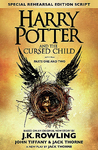
Harry Potter and the Cursed Child - Parts One and Two (Harry Potter, #8)Harry Potter and the Cursed Child - Parts One and Two by J.K. Rowling

My rating: 4 of 5 stars

So it's not exactly an 8th Harry Potter book - but so what? We still get a deep dive into Harry and Ginny's married life and the next generation, focusing on the middle Weasley-Potter child, Scorpius Malfoy (son of Draco and his wife Astoria Greengrass), and, to a lesser extent, Rose Granger-Weasley.

Remember when J.K. Rowling said she wished she hadn't paired Ron and Hermione? Well, she seems to have jettisoned that thought, because clearly, Romione is meant to be in every alternative universe.

And maybe Rainbow Rowell ruined me on this, but I can't help but think Scorpius's crush on Rose is only temporary, and that eventually, Scorpius and Albus end up together. I kept waiting for them to kiss. But hey, I won't rush them. Let them figure it out in their own time.

Major Voldemort bombshell? Oh, yes! Major, major, major. I won't spoil it.

This play gave me a lot of good feelings, and some bad ones. (There's mention of Molly Weasley, but not Arthur. Jo, did you kill Arthur?) It's well worth the read, since we can't all get to London's West End. Just read it.

Look, there it is on my night stand. Photo by me.
I pre-ordered this book from Amazon.com. I purchased it with my own funds and was not obligated in any way to review it.

Wednesday, April 6, 2016

J.K. Rowling, Writing as Robert Galbraith, Doesn't Fear the Reaper

I started a new audio book today. So far I've heard 1 of the 15 discs of the audio version of Robert Galbraith's Career of Evil. Beginning Career of Evil by J.K. Rowling writing as Robert Galbraith forces me to consider a post I wrote many years ago, one that has to do with, of all things, the rock band Blue Oyster Cult (BOC).


Although the two previous Cormoran Strike novels (The Cuckoo's Calling and The Silkworm) were filled with references to classical English poetry and Latin texts, this one is different - it's filled with BOC song lyrics. The book opens with our heroine Robin receiving a grisly package containing a human leg, with some lyrics included in the package. Strike soon tells Robin that his own mother, "super-groupie" Leda Strike, admired the BOC above all other rock groups, although she was never able to hook up with lead singer Eric Bloom.

Eric Bloom, in a Creative Commons image

I recalled immediately that Rowling was not the first person in the media to associate the BOC with creepiness. I recalled a 4-part blog post series I had previously mentioned in my Buddy Holly/Imbolc post in 2012:

How the Music Died Part I
Part II
Part III
Part IV

The posts are quite long and detailed, but I will attempt to summarize as briefly as I can. The overarching theme of the 4-part post series is that from approximately 1959 - the year of Buddy Holly's death - to 1969, the commercial rock music industry in the U.S. was heavily influenced by "sinister forces." The post author, known as VISUP, contends there is a parallel between such a shift in the music industry and a similar one in U.S. politics.

Public domain image of Buddy Holly

Part III is an overview of the Blue Oyster Cult. Part IV deals specifically with a song called "Dominance and Submission." Some points made by VISUP in Part III are:

1. Essentially, BOC were a "biker bar band" until "scooped up" by Sandy Pearlman, a manager/producer who had previously been a music critic. Pearlman wrote some of the groups' song lyrics.

2. 1990s music critics used the term "heavy psych" to describe the type of late 1960s/early 1970s hard rock that BOC played. Although not commonly thought of as such, the BOC -according to VISUP - can be firmly placed within that circle of heavy psych bands that contributed to the early proto-punk movement.

3. Pearlman himself was attached to proto-punk in that he was friends with Lenny Kaye and Patti Smith of the Patti Smith Group. Smith wrote a number of songs for BOC, including "Career of Evil."


4. Pearlman was also interested in the occult, which influenced his songwriting for the BOC.

5. In his pre-BOC days, Pearlman is alleged to have written a series of occult poems (collectively referred to as The Secret Doctrines of Imaginos) about a group of eldritch spirit-beings he called The Invisibles, which might be thought of as akin to H.P. Lovecraft's Old Ones.


6. The Invisibles were associated, albeit vaguely, with the star Sirius.

7. In this aspect, Pearlman was not alone; a number of writers in the 1970s associated extraterrestrial beings with the Sirius star system. In fact, if you go into the pseudohistory category on Wikipedia, you'll find an example: The Sirius Mystery by Robert K.G. Temple.


Although the cover says "scientific evidence," the Wikipedia entry lists a number of critics, including Carl Sagan, who have debunked the theories it presents.

8. The band's name, Blue Oyster Cult, comes from the Imaginos series. The fictional BOC were the human servants of The Invisibles, aiming to help their overlords achieve world domination.

9. Pearlman and the BOC originated from Long Island.

10. The religion of Wicca entered the United States through Long Island, specifically (at least in some part) through the Warlock Shoppe in Brooklyn.

11. Peter Levenda, described as a "rogue historian," associates the Warlock Shoppe with something called the Process Church of Final Judgment.


12. The Process Church of the Final Judgment is associated by some writers with murderers including Charles Manson and David Berkowitz. It's alleged to be a nationwide "death cult." The Wikipedia entry describes it as an offshoot of Scientology. The Wiki author says in his book Helter Skelter, Vincent Bugliosi claimed that Charles Manson "may have borrowed philosophically" from the church.


The Process Church began in London...which is precisely where the fictional Robin Ellacott and Cormoran Strike live.

13. VISUP is drawing no firm conclusions from any of this, but at the very least, the BOC's music circa 1972 was created in the atmosphere of motorcycle gangs, the Wiccan goings-on of the Warlock Shoppe, and potentially the doings of the Process Church, which may or may not be nefarious.

Part IV: The "Dominance and Submission" Post

1. The 1974 song - co-written by Pearlman and two members of the band - seems to refer to a shift in consciousness.

2. A character named "Susie" is mentioned in the song. Supposedly, Susie was an ex-girlfriend of Sandy Pearlman's. VISUP interprets the name in several ways, including as a symbol for the "vibrant rock scene."

3. A second character in the song is called Charles, referred to as Susie's brother. Through elaborate flights of association, VISUP suggests Charles represents an initiate into a new way of life. Another association VISUP makes for Charles is as a sacrificial victim.

4. One indicator, and possible cause, of the shift in musical consciousness between 1959 and 1969 was The Beatles and their meteoric rise to fame.

5. "Charles" is The Beatles.

6. Charles/The Beatles are an example of the price musicians pay for their fame - the "submission" to the "dominance" of corporate interests.

In conclusion, both Don McLean's song "American Pie" and the BOC's "Dominance and Submission" chronicle the shift in American music, and in American consciousness, over the 1959-1969 period.

When I was in high school, I took a course called Media. My teacher, the late great Tom Gerencher, covered rock 'n' roll/rock music when we talked about the history of radio. He mentioned several calamities that happened around 1960 that helped end the reign of rock 'n' roll songs (with the typically AABA chord structure the form shares with blues music, as typified by Buddy Holly and Fats Domino), making way for rock music, rock 'n' roll's more complicated descendant.

As I recall, The Day the Music Died (February 3, 1959) was part of it, as were:

- Elvis Presley being drafted into the army (March 1958)
- The revelation to the public that Jerry Lee Lewis's wife was underage (May 1958)
- The payola scandal and disc jockey Alan Freed's being fired from his radio and TV shows (November 1959)
- Chuck Berry's arrest for an alleged violation of the Mann Act (December 1959; he subsequently served three years in prison)

Chuck Berry - public domain image in the United States

With all those rock 'n' roll stars being taken off the market, so to speak, from 1958 to 1960, it's easy to see why the American music-buying public would be primed for a new sound by the time the Beatles hit the American shores. Therefore, I tend to believe VISUP when he says there was a huge shift in the music industry between 1959 and 1969, approximately. Whether the songs "American Pie" and "Dominance and Submission" exemplify that shift is more speculative. Still more speculative is a link between BOC, the Beatles, and various conspiracy theories.

Is there a special reason why Rowling would choose to incorporate the band's occultish lyrics into a book that has already featured a gruesome murder and mutilation? I'll have to finish the book to find out.

https://amzn.to/3NzhPoM - this is an affiliate link

Wednesday, October 14, 2015

'Carry On' by Rainbow Rowell

This book discussion is not spoiler-free. If you haven’t read Fangirl and Carry On yet, I strongly recommend you read no further.


I bought my copy of Carry On by Rainbow Rowell on the day it was released: Tues. October 6th. I couldn’t wait to dig in and start reading the boy-boy love story. (I say “boy,” but understand I’m talking about 18-year-old adults.) I finished it a week later, on Monday the 12th. In a way, I still can’t believe I’ve finished it. Reading Carry On was an incredibly enjoyable experience. I’m not sure I can entirely explain why, but I’ll try.

Part of it was the extent to which I enjoyed Rowell’s 2013 book, Fangirl. Recall that I didn’t just LIKE Cath Avery, but also felt like I WAS Cath Avery. Because Cath loved Simon Snow and his vampire classmate Baz, I loved Simon Snow and his beloved/enemy Baz.

Another part of the puzzle is that Simon and Baz are based, in part, on Harry Potter and Draco Malfoy.  I’ve never personally been a Drarry shipper – I’m satisfied with J.K. Rowling’s choice of Ginny Weasley as Harry Potter’s lifemate. Even if Rowling herself sometimes wishes she’d made Harry and Hermione more than friends. Let’s face it: I’m a grown adult who wears Harry Potter socks and a golden snitch necklace and whenever I hear plumbing make a funny noise my first thought is still “Chamber of Secrets!” I consider myself a member of the Harry Potter fandom. I understand the fandom impulse.

And yes, it is exciting to read a mainstream novel in which the featured romantic subplot involves a same-sex couple. It IS important to me as an out bisexual woman to have non-heterosexual (I’d say queer, but I don’t want to use that word if it will offend some readers. I personally do not have a problem with “queer”), positive representation in the media. Especially in the traditional media.

Can you imagine if J.K. Rowling went back and wrote a book about Albus Dumbledore’s unrequited love for Gellert Grindelwald? It would be heartbreaking and poignant and I would love that so much, even while it was torturing my poor little heart.

But until we get Carry On, Albus, we have to settle for SnowBaz.

In my review of Fangirl, I wrote, “Let's talk about Simon Snow. I honestly would love it if someone wrote Carry On, Simon as Cath, because the little bits of fan fiction that we get in the novel are tasty. Cath left her magnum opus unfinished (and, may I just say, I think the ending of this novel is perfection and I wouldn't want it any other way), but I still want to know if she decided to kill Baz or to let Simon and Baz live happily ever after. We're somewhat left hanging in a Hazel Grace Lancaster-type fashion. This book is meta to begin with - fiction about a fiction writer writing fan fiction about fiction - would it just be too incredibly meta for someone to write Carry On, Simon?”

Rowell hasn’t written Carry On, Simon, but she’s written something even better. Carry On isn’t written as Cath Avery writing Simon Snow fan fiction, nor is it written as if it were the original novel Cath based her fan fiction on (written by the fictional Gemma T. Leslie). Instead it’s a Simon Snow novel written in Rowell’s own authorial voice. But I no longer feel disappointed or Peter Van Houtened by Fangirl. I’ve gotten my SnowBaz story – and (spoiler alert!) Baz doesn’t even die.

Of course, I would not be sad if Rowell somehow extended this to a 7- or 8-book series…I’m just sayin’.

Ultimately, Simon Snow owes his existence to J.K. Rowling and Harry Potter. Because Rowling’s world-building is so thorough, and we’re already assumed to be familiar with it, Simon Snow’s Watford School already seems like familiar territory – yet it is its own unique world. Further, Rowling and Rowell are brilliant writers, each in unique ways. As I’ve discussed in my reviews of the Robert Galbraith novels, Rowling is intimately familiar with all 400+ years of English-language literature, plus the Latin language, plus Classical mythology and a veritable buffet of multicultural world mythologies.  She’s wonderfully erudite and such a natural storyteller, she can write a children’s book filled with scholarly Classical references without either boring the reader or showing off.


I’m not implying that Rowell isn’t as brilliant or as educated as Rowling, but Rowell’s storytelling style is more inwardly oriented, more personal and intimate and less world-traveling. She writes with her tongue in her cheek, tossing in pop cultural references that might be not-so-subtly winking puns, meaningful allusions, or a combination of the two. In an early chapter, for example, Simon is nearly taken out by a taxi driver who turns out to be a goblin. In the mirror’s reflection he appears to have green skin and blood-red lips, but otherwise he’s “handsome as a pop star.” Any goblin who manages to kill Simon will become the goblin king. Wait a minute: goblin king, handsome as a pop star? Is she talking about David Bowie in the film Labyrinth, in which the pop star plays the Goblin King?

I have no doubt Rowell is making references to a wide variety of fantasy novels, films, and tropes throughout her novel. I half-suspect the surname Snow is a reference to Game of Thrones – Simon, like Jon Snow, was abandoned by his parents. Of course, it’s revealed in Carry On that Snow is his middle name. Maybe Simon officially has his mother Lucy’s last name. It’s unclear whether Davy (the Mage) and Lucy ever married – not that that would necessarily require her to change her name. I don’t recall the Mage’s last name ever being given.

Baz – short for Tyrannus Basilton – has his mother’s last name. His mother, Natasha Pitch-Grimm, was headmistress of Watford before The Mage. Baz’s father isn’t a bully like Lucius Malfoy; he’s more of a neglectful parent than an abusive one. He’s not happy that Baz is gay. Baz doesn’t identify much with his father, so he doesn’t use the Grimm last name. He’s chummy with his Grimm cousins, though.

Naming traditions are more conventional in the household of Simon’s best friend, Penelope Bunce. Penelope is a British girl with a British-ethnicity dad and an Indian-ethnicity mom. She has some of the traits of Ron Weasley (including ginger hair, in their first year at Watford) and some of the traits of Hermione Granger, yet she managers to be her own unique character. Her siblings, including brother Premal and sister Priya, have Indian personal names, but they all have the Bunce family name. Penelope is technically a name from Greek mythology, but it’s not that uncommon in the English-speaking world.

Rowell, of course, is from the United States. She’s writing English characters who speak U.K. English, and occasionally (to my North American ears) this rings a little false. For example, I’ve never heard a person from the U.K. or Ireland refer to a “bag of crisps.”* The familiar expression is “a packet of crisps” where we Americans would say “a bag of chips.” But U.K. readers will have to weigh in on that matter.

(I can say that E.L. James, writing in the voices of U.S. characters, uses an occasional phrase that rings very British. It works both ways – as if we can understand, but not quite reproduce, one another’s dialects.)

The witches and wizards of Simon’s world are a bit more modern than those in Harry’s, who seem a bit stuck in the 19th century in some of their customs. Simon doesn’t speak Latin. Heck, he barely speaks English. (His dad really did a number on him when he dumped Simon in that orphanage.) Rowell’s witches cast spells in English, using concentration and intent to turn common phrases into spells. Any phrase can become a spell, theoretically, but some have caught on and are common. Song titles and lyrics often work well, and nursery rhymes are said to be the most powerful spells of all.

Baz’s family – the Pitch side – is unusually gifted with fire magic. This is a shame, since Baz (made a vampire, not born a vampire) is more flammable than the average human, something his dad and aunt (a somewhat Bellatrix LeStrange-like character, but not quite as evil) consistently remind him of. Baz is aristocratic, worldly, handsome, charming, and completely in love with Simon since their fifth year of school.

Yet it’s Simon who initiates their first kiss, in a moment of despair when Baz seems on the verge of suicide by self-immolation. Simon hasn’t quite worked out his sexuality yet. He knows he’s attracted to Baz – Baz’s huge vampire fangs impress him. It’s unclear whether he’s sexually attracted to Agatha Wellbelove or simply socially attracted to her. It’s a question the author chose to leave open. It’s entirely possible Simon is bisexual or pansexual, though.

The first kiss is magickal. Please don’t judge me, but I may have done a slight dance shortly after reading it. I really do love SnowBaz as a couple.

Of course, the dramatic climax is a traumatic climax. Not Allegiant traumatic, but still…Simon loses a person and a thing, both very dear to him. The person, Ebb the goatherd, is sort of a combination of Rubeus Hagrid and Sybil Trelawney, in a very wonderful way. Her nickname is short for Ebeneza. She’s a very powerful magician but must sacrifice herself (which she does willingly) to save Agatha.

Agatha Wellbelove doesn’t closely resemble any of the characters in the Harry Potter series. Her family name is vaguely reminiscent of Luna Lovegood’s, but she’s not quirky like Luna. In fact, she’s quite the opposite: she’d rather be with her Normal friends (the equivalent of Muggles – apparently, magicians can hear the difference between Normal and normal) than at a magickal school. She has a slight crush on Baz – one that’s destined to be unrequited, obviously. But it is not a typical young adult novel love triangle, not at all. In fact, Agatha breaks off her relationship with Simon because she realizes they’re both only going through the motions.

Penelope – Penny – has an American boyfriend named Micah. I have a deep desire to watch a sitcom starring Mindy Kaling as an older Penny living in the U.S.A. with Micah and their kids. Seems unlikely to happen, though.

Penny’s roommate, Trixie the pixie (the ridiculous name is lampshaded by the characters), is also LGBTQ+. Her girlfriend is another female Watford student, and the fact that dorm rules do nothing to keep them from snogging and flinging pixie dust 24/7 annoys Penny to no end. Technically she isn’t allowed in Baz and Simon’s shared suite, but through some unknown method she circumvents this policy – a feat never attempted by policy-respecting Hermione Granger.

SnowBaz ends more happily-for-now than happily-ever-after. They both have such grave insecurities. But I’ll take it. It’s better than being stuck, not knowing whether Baz even survives the end of Cath’s fan fiction rendition of Gemma T. Leslie’s world. (It’s not even entirely clear that Baz CAN be killed.) I like knowing Rainbow Rowell’s take.

I purchased Carry On with my own funds and was obligated to review it in any way. But I really, really, really liked it.

See what I did there?
*Retracted. J.K. Rowling uses "bag of crisps" in one of the Cormoran Strike/Robin Ellacot novels.

Tuesday, September 1, 2015

'The Silkworm' by J.K. Rowling, Writing as Robert Galbraith


Brava, Ms. Rowling! Much of what I said for The Cuckoo's Calling can also be applied here: "Robert Galbraith" once again shows herself witty, hilarious, brilliant, and in command of both English literature and European mythology.

I had to look up at least two cultural references in this one: Rose West and Rowntree. The victim in this murder mystery is Owen Quine, and his wife Leonora is one of the suspects. The press compares her in physical appearance to Rose West – apparently, a real-life serial killer currently serving a life sentence in the U.K.

If I heard the audiobook correctly, Rowntree is the name of Robin Ellacott’s parents’ chocolate Labrador retriever. The name fits a chocolate-colored dog because it’s the name of the U.K. chocolate maker, the one that makes Aero bars. (Rainbow Rowell has teased an appearance by Aero bars in Carry On, which she promises is filled with nommy food references.)

Robin Venetia Ellacott is even more of a superheroine in this one than she was in the last. Guy Ritchie could direct the movie version.

Book Boyfriend #444: Cormoran Strike. If Edward Fairfax Rochester fell through half a dozen Raymond Chandler novels and From Here to Eternity on his way to the 21st century, the result would be Cormoran Strike.

And I am shipper trash because I desperately want Robin to leave Matthew for Cormoran. That kiss on the hand in the very last sentence of the novel - that's all the encouragement I need. The line has been crossed. Let the good ship CormoRobin set forth.

Robert Glenister is an amazing voice actor. I didn’t love his voice for Cormoran’s brother Al; Al was supposed to have a slight French accent, but to me he sounded too American. But otherwise, Glenister makes it too easy to forget I’m listening to a single person reading instead of to the characters themselves.

Do I really have to wait until October 20 for the third book, Career of Evil, though?


I checked this audiobook out of my local library and was not, in any way, obligated to review it.


P.S. I don’t think I’ll ever buy anything made from silk again unless it’s ahimsa or cruelty-free silk. I can’t stand the thought of the little silkworms being boiled alive inside their cocoons. 

Sunday, July 5, 2015

'The Loss,' A Book Based on a Series Based on a Series Based on a Book

The Originals: The Loss by Julie Plec

My rating: 4 of 5 stars

The Loss is an appropriate title for this book, which centers on Klaus Mikaelson's oh-so-very ill-fated marriage.

I didn't read the first book in this trilogy, so I don't know if Vivianne Lescheres was an important character in that book. If she was, I'm guessing the plot of that one centered on the 1722 battle between the Mikaelsons (the Original vampires) and the witches over who would rule New Orleans. We learn from The Loss that the battle culminated in witch-induced hurricane and an explosion, and that Vivianne died.


Now it's 1766. The Mikaelsons rule New Orleans with a firm hand, keeping the witch clans at bay in the surrounding swamplands. The werewolves, too, have fled the city for fear of Klaus. And Klaus still mourns Vivianne. She's the great love of his long, long, unnatural life.

...Which leads to a terrible decision. Pining for his lost love, Klaus goes to the leader of the witches, Lily Leroux, with an opal pendant from his witch mother. The pendant has magical properties, and Lily uses it to bring Vivianne back from the land of the dead.

This is a lesson literature has tried to teach us before. Bringing someone back from the dead worked out very poorly in Stephen King's Pet Sematary, in Douglas Clegg's Isis, and in J.K. Rowling's "Tale of the Three Brothers" in The Tales of Beedle the Bard. Klaus is many centuries old by the 18th century and should have known better.

The side effect of the spell creates an evil not yet seen in the Vampire Diaries world: zombies. In fact, Vivianne herself is slowing becoming more and more like the walking undead, who have a penchant for eating the hearts out of living things. Their first victim is Elijah's lover, Ava.

Don't worry about Elijah, though - he's learned not to get too attached to other vamps who aren't his siblings. By the end of the book, he's moved on to the lovely gray-eyed vamp Lisette.

Is Lisette a character on the show? I haven't watched very much of The Originals, although I'm familiar with Elijah, Rebekah, and Klaus from the TV version of The Vampire Diaries.

Some of the most delicious bits of this book are Klaus's love scene with Vivianne and Elijah's love scene with Lisette. Rebekah doesn't get a love scene in this one, unfortunately. The great love of her life, Eric Moquet, lost his life in the hurricane.

Klaus is a difficult character to love because of his destructive tendencies, but I find Rebekah quite sympathetic. She causes her fair share of destruction as well, but she's also been epicly mistreated by her older half-brother.

"By" Julie Plec is a bit of a misnomer; this was ghostwritten, with Plec credited as creatrix of the Vampire Diaries spin-off. She gets a lot of fandom hate, but I like her a whole lot more now that I know her horror film credits include Cursed, the stupidest werewolf movie I ever loved.

I received this book through the Amazon Vine program in exchange for an honest review.


This is an affiliate link:

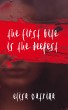
The First Bite Is the Deepest by Elisa Catrina. $2.99 from Smashwords.com
“Funny and clever and emotionally hard-hitting” "A perfectly creepy read." Elisa Catrina's debut novel begins as a quirky send-up of vampire romance, but quickly turns sinister. High schooler Stella Ortiz starts dating the mysterious new guy, but her friends are convinced he's bad news: Sebastian misses tons of school, he day-drinks something that smells like pennies, and oh yeah, he's a vampire.

Wednesday, March 18, 2015

'The Cuckoo's Calling' by #JKRowling Writing as Robert Galbraith


I loved this audiobook, so I'm as surprised as you are that I simply don't have very much more to say about it, other than what I covered in my March 1st post. Just a few talking points, then:

- The title, of course, comes from a poem by Christina Rossetti called "The Dirge." I haven't read much of Rossetti. I'm slightly more familiar with her notorious uncle, John William Polidori.

- I said Rowling has a casual familiarity with 400 years of British literature, but she also makes at least passing reference to American literature in this volume. A poem by Walt Whitman is mentioned. During the episode in which he learns of his ex-fiance's engagement and has too much to drink, Cormoran Strike reveals himself to have something in common with Robert E. Lee Prewitt in From Here to Eternity. Namely, both were boxers in their respective armies. Also, Strike is very, very drunk, as Prew so often gets in the War Trilogy.

Physically, Strike is described as a large, lumbering man with curly hair - less Montgomery Clift as Prew in From Here to Eternity, more John C. Reilly as John Storm in The Thin Red Line.

- Apart from Cormoran, Robin, and Lula herself, I think my favorite character is Guy Somé. First of all, it's hilarious that he gave himself a professional name that's a faux-Frenchified version of "some guy." Second of all, being gay, he had no sexual interest in Lula, yet he still loved her very, very much in a platonic way. I love their friendship. I hope he shows up again in The Silkworm.

But I really hope that in a future short story or drabble based on her Harry Potter characters, J.K. Rowling has one of them wear a Guy Somé design. I'd love to see Draco Malfoy in a studded hoodie. Astoria Greengrass can wear it when he's not home.

- Vashti is a great name for a high-end clothes shop. You may remember Queen Vashti of Persia from the Biblical book of Esther. When her drunken husband orders her to appear before him and his rowdy, drunken friends, Vashti refuses. She has sometimes been thought of as haughty and self-important in Jewish tradition, but to feminists it simply seems as if she valued her own worth over her husband's senseless "command." Vashti's reward is to be replaced by the more submissive Esther, much in the same way Lilith is replaced by the more submissive Eve.

- Nothing ever explained how Lula got that scar on her arm, so I'm just going to have to assume "from Voldemort" is the correct answer.

- Headcanon: Lula Landry and Fred Weasley are dating in heaven.

Sunday, March 1, 2015

Currently Reading: 'The Cuckoo's Calling' by Robert Galbraith

The audiobook I'm currently listening to (borrowed from my local library) while I commute is The Cuckoo's Calling by Robert Galbraith, a pseudonym of J.K. Rowling. Thus far, I've listened to 5 of 13 discs.


Oh, Jo, how I've missed your expansive vocabulary, your encyclopedic knowledge of Classical mythology and folklore, your insights into human nature, your particular sense of humor, your casual familiarity with 400 years of British literature, and your use of the Latin language.

Two references to Virgil's Aeneid have occurred in the part of the book I've listened to thus far - is Rowling drawing a comparison between Lula Landry (the deceased fashion model around whom the mystery occurs) and Queen Dido of Carthage? I seem to remember that Dido commits suicide by throwing herself off a cliff; Landry is thought to have committed suicide by jumping from her flat's third-floor window. Carthage is in North Africa; Landry is of multiracial English and African descent.

Sidebar: I had to read the Aeneid in college and I distinctly remember barely being able to understand a word of it. I remember calling my dad and asking him if he could take me to Barnes and Noble to get the Cliff Notes. This was the late '90s, mind you, and I don't think Shmoop and SparkNotes were things yet.  If they were, I hadn't yet discovered them.

The statue of Eros - well, technically his twin brother Anteros, but commonly referred to as Eros - at Piccadilly Circus is where Robin Ellacot and her beloved Matthew got engaged to be married. Creative Commons image by Eriko Nakagawa.
Will Cormoran Strike turn out to be another literary example of Marry the Man with One Leg? He walks with the aid of a prosthesis after losing part of a leg in Afghanistan. You know who else in British literature was wounded in Afghanistan? John Watson in Sir Arthur Conan Doyle's Sherlock Holmes stories. Although Cormoran is the Sherlock Holmes and his Watson is Robin Ellacot, I tend to think it's an intentional homage.

And Now Some Harry Potter References I Have to Get Out of My System.

Will that pink "bekittened" death threat turn out to be from Dolores Umbridge?

(Actually, I already heard about the man with the not-cheating wife who sent the death threats. Umbridge was my first thought, though.)

How did Lula get that scar on her arm? Was it - Voldemort?

Cormoran's sister Lucy has three sons. In their portrait, the boys are wearing bottle-green school uniforms. Slytherins, then?

Tanacetum vulgare, or tansy, in a Creative Commons image by fir0002
I like the name Tansy, even if the character isn't a very lovable one. Neville Longbottom, Hogwarts professor of herbology, could tell you that tansy, a member of the daisy family, has also been used as a medicinal herb, although it should not be due to toxic side effects. WebMD can tell you that the word "tansy" derives from the Greek word athanasia, or immortality. The ancient Greeks used it for embalming.

Because the plant effects include stimulating blood flow, it has been used to treat fluid retention and to stimulate menstrual flow. It has been used for abortion. BUT it should not be used medicinally because of the serious risk of side effects that include kidney and liver failure and death.

This is an affiliate link:

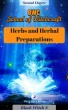
Herbs and Herbal Preparations. Second Degree by Black Witch S. $4.97 from Smashwords.com
In this book you will learn about herbs and herbal preparations. There is a research project for you to complete, plus two lesson related exercises for you to work on. Finally, there is a blessing, and a gift - A powerful herbal love mojo for you to create for yourself and draw love into your life. Plus, a 60-page magical herb glossary.

Thursday, October 16, 2014

The Feast Day of St. Hedwig

October 16 is the feast day of St. Hedwig of Silesia. If you're a Potterhead/Harry Potter fan, you probably know J.K. Rowling named Harry's snow-white owl companion after Hedwig, the patron saint of orphans. According to David Colbert in his book The Magical Worlds of Harry Potter, Rowling found the name in a book of saints.

Snowy owl. Creative Commons image by Matt MacGillivray
Now, there are two women referred to in English as St. Hedwig. One is Hedwig, or Jadwiga, of Poland, who lived in the 14th century and was canonized by Pope John Paul II. Jadwiga of Poland is a fascinating historical figure because her official title made her king, rather than queen, of her country. However, Jadwiga of Poland is not the patron saint of orphans.

Hedwig, Queen of Poland. Public domain image
That honorary title goes to ÅšwiÄ™ta Jadwiga ÅšlÄ…ska, also known as Saint Hedwig of Andechs or of Silesia. Andechs is a family name, referring to a series of Bavarian kings. Our Hedwig was born in Andechs castle in Bavaria circa 1174. Silesia is a place; it was a medieval (1138-1335) province of Poland, ruled over by a duke. Its neighboring provinces were Bohemia and Moravia. 

Hedwig married Henry I, nicknamed Henry I the Bearded. Henry I is remembered for bringing the German language and culture to Silesia. 

Henry I became Duke of Silesia in 1232, a position he held until his death in 1238. Their son Henry II the Pious became Duke of Silesia upon his father's death, and Hedwig spent the remainder of her life in a monastery (which she'd encouraged her husband to establish) as a lay sister. She did not become a nun. When Henry II died, Hedwig and Henry II's widow Anna of Bohemia (sometimes called Anne of Bohemia) established a Benedictine abbey together.

Besides founding several religious institutions with her husband and daughter-in-law, Hedwig of Silesia is known for her charity and humility. She refused to wear shoes, even in winter. She ministered to women afflicted with Hansen's disease. In folklore, she is also credited with stopping in Austria on a pilgrimage to Rome; where she visited Austria, a stream with healing properties sprung up from the earth. 


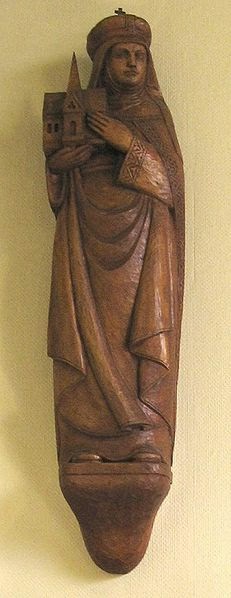
St. Hedwig of Silesia, public domain image by Matthias Feige
Although Hedwig was canonized by Pope Clement IV in 1267, her association with orphans didn't begin until 1848. In that year, Robert Spiske founded a religious women's association that eventually developed into the congregation of the Sisters of St. Hedwig. The nuns' principal mission is the education of orphaned/abandoned children, chiefly in Germany, Austria, and Denmark. 

Robert Spiske is not himself considered a saint, but the Catholic church considers him "venerable." He was a Polish priest born in 1821, known for his preaching, pastoral work with young people, and outreach to people who felt alienated from the church. 

According to TheHogsHead.org, a Harry Potter fan website, Hedwig of Silesia was the mother of seven children, like Molly Weasley. Her husband's name, Henry, is another form of the name Harry. The Hog's Head also reminds us that in the books, Harry chooses Hedwig's name after seeing it in A History of Magic by Bathilda Bagshot. We don't know what the fictional Bathilda Bagshot wrote in her fictional magical textbook, but it may have had something to do with those magical healing waters. 

You can read more about St. Hedwig on Wikipedia and the Catholic Encyclopedia. The Catholic Encyclopedia lists her feast day as October 17. She is thought to have died on October 15, 1243. 

Other saints' day posts you might enjoy:

St. Swithen's Day
St. Lucia's Day

Follow on Bloglovin

Social Media, Writing, and Editing Services I Offer - Erin O'Riordan