Pages

Wednesday, October 14, 2015

'Carry On' by Rainbow Rowell

This book discussion is not spoiler-free. If you haven’t read Fangirl and Carry On yet, I strongly recommend you read no further.


I bought my copy of Carry On by Rainbow Rowell on the day it was released: Tues. October 6th. I couldn’t wait to dig in and start reading the boy-boy love story. (I say “boy,” but understand I’m talking about 18-year-old adults.) I finished it a week later, on Monday the 12th. In a way, I still can’t believe I’ve finished it. Reading Carry On was an incredibly enjoyable experience. I’m not sure I can entirely explain why, but I’ll try.

Part of it was the extent to which I enjoyed Rowell’s 2013 book, Fangirl. Recall that I didn’t just LIKE Cath Avery, but also felt like I WAS Cath Avery. Because Cath loved Simon Snow and his vampire classmate Baz, I loved Simon Snow and his beloved/enemy Baz.

Another part of the puzzle is that Simon and Baz are based, in part, on Harry Potter and Draco Malfoy.  I’ve never personally been a Drarry shipper – I’m satisfied with J.K. Rowling’s choice of Ginny Weasley as Harry Potter’s lifemate. Even if Rowling herself sometimes wishes she’d made Harry and Hermione more than friends. Let’s face it: I’m a grown adult who wears Harry Potter socks and a golden snitch necklace and whenever I hear plumbing make a funny noise my first thought is still “Chamber of Secrets!” I consider myself a member of the Harry Potter fandom. I understand the fandom impulse.

And yes, it is exciting to read a mainstream novel in which the featured romantic subplot involves a same-sex couple. It IS important to me as an out bisexual woman to have non-heterosexual (I’d say queer, but I don’t want to use that word if it will offend some readers. I personally do not have a problem with “queer”), positive representation in the media. Especially in the traditional media.

Can you imagine if J.K. Rowling went back and wrote a book about Albus Dumbledore’s unrequited love for Gellert Grindelwald? It would be heartbreaking and poignant and I would love that so much, even while it was torturing my poor little heart.

But until we get Carry On, Albus, we have to settle for SnowBaz.

In my review of Fangirl, I wrote, “Let's talk about Simon Snow. I honestly would love it if someone wrote Carry On, Simon as Cath, because the little bits of fan fiction that we get in the novel are tasty. Cath left her magnum opus unfinished (and, may I just say, I think the ending of this novel is perfection and I wouldn't want it any other way), but I still want to know if she decided to kill Baz or to let Simon and Baz live happily ever after. We're somewhat left hanging in a Hazel Grace Lancaster-type fashion. This book is meta to begin with - fiction about a fiction writer writing fan fiction about fiction - would it just be too incredibly meta for someone to write Carry On, Simon?”

Rowell hasn’t written Carry On, Simon, but she’s written something even better. Carry On isn’t written as Cath Avery writing Simon Snow fan fiction, nor is it written as if it were the original novel Cath based her fan fiction on (written by the fictional Gemma T. Leslie). Instead it’s a Simon Snow novel written in Rowell’s own authorial voice. But I no longer feel disappointed or Peter Van Houtened by Fangirl. I’ve gotten my SnowBaz story – and (spoiler alert!) Baz doesn’t even die.

Of course, I would not be sad if Rowell somehow extended this to a 7- or 8-book series…I’m just sayin’.

Ultimately, Simon Snow owes his existence to J.K. Rowling and Harry Potter. Because Rowling’s world-building is so thorough, and we’re already assumed to be familiar with it, Simon Snow’s Watford School already seems like familiar territory – yet it is its own unique world. Further, Rowling and Rowell are brilliant writers, each in unique ways. As I’ve discussed in my reviews of the Robert Galbraith novels, Rowling is intimately familiar with all 400+ years of English-language literature, plus the Latin language, plus Classical mythology and a veritable buffet of multicultural world mythologies.  She’s wonderfully erudite and such a natural storyteller, she can write a children’s book filled with scholarly Classical references without either boring the reader or showing off.


I’m not implying that Rowell isn’t as brilliant or as educated as Rowling, but Rowell’s storytelling style is more inwardly oriented, more personal and intimate and less world-traveling. She writes with her tongue in her cheek, tossing in pop cultural references that might be not-so-subtly winking puns, meaningful allusions, or a combination of the two. In an early chapter, for example, Simon is nearly taken out by a taxi driver who turns out to be a goblin. In the mirror’s reflection he appears to have green skin and blood-red lips, but otherwise he’s “handsome as a pop star.” Any goblin who manages to kill Simon will become the goblin king. Wait a minute: goblin king, handsome as a pop star? Is she talking about David Bowie in the film Labyrinth, in which the pop star plays the Goblin King?

I have no doubt Rowell is making references to a wide variety of fantasy novels, films, and tropes throughout her novel. I half-suspect the surname Snow is a reference to Game of Thrones – Simon, like Jon Snow, was abandoned by his parents. Of course, it’s revealed in Carry On that Snow is his middle name. Maybe Simon officially has his mother Lucy’s last name. It’s unclear whether Davy (the Mage) and Lucy ever married – not that that would necessarily require her to change her name. I don’t recall the Mage’s last name ever being given.

Baz – short for Tyrannus Basilton – has his mother’s last name. His mother, Natasha Pitch-Grimm, was headmistress of Watford before The Mage. Baz’s father isn’t a bully like Lucius Malfoy; he’s more of a neglectful parent than an abusive one. He’s not happy that Baz is gay. Baz doesn’t identify much with his father, so he doesn’t use the Grimm last name. He’s chummy with his Grimm cousins, though.

Naming traditions are more conventional in the household of Simon’s best friend, Penelope Bunce. Penelope is a British girl with a British-ethnicity dad and an Indian-ethnicity mom. She has some of the traits of Ron Weasley (including ginger hair, in their first year at Watford) and some of the traits of Hermione Granger, yet she managers to be her own unique character. Her siblings, including brother Premal and sister Priya, have Indian personal names, but they all have the Bunce family name. Penelope is technically a name from Greek mythology, but it’s not that uncommon in the English-speaking world.

Rowell, of course, is from the United States. She’s writing English characters who speak U.K. English, and occasionally (to my North American ears) this rings a little false. For example, I’ve never heard a person from the U.K. or Ireland refer to a “bag of crisps.”* The familiar expression is “a packet of crisps” where we Americans would say “a bag of chips.” But U.K. readers will have to weigh in on that matter.

(I can say that E.L. James, writing in the voices of U.S. characters, uses an occasional phrase that rings very British. It works both ways – as if we can understand, but not quite reproduce, one another’s dialects.)

The witches and wizards of Simon’s world are a bit more modern than those in Harry’s, who seem a bit stuck in the 19th century in some of their customs. Simon doesn’t speak Latin. Heck, he barely speaks English. (His dad really did a number on him when he dumped Simon in that orphanage.) Rowell’s witches cast spells in English, using concentration and intent to turn common phrases into spells. Any phrase can become a spell, theoretically, but some have caught on and are common. Song titles and lyrics often work well, and nursery rhymes are said to be the most powerful spells of all.

Baz’s family – the Pitch side – is unusually gifted with fire magic. This is a shame, since Baz (made a vampire, not born a vampire) is more flammable than the average human, something his dad and aunt (a somewhat Bellatrix LeStrange-like character, but not quite as evil) consistently remind him of. Baz is aristocratic, worldly, handsome, charming, and completely in love with Simon since their fifth year of school.

Yet it’s Simon who initiates their first kiss, in a moment of despair when Baz seems on the verge of suicide by self-immolation. Simon hasn’t quite worked out his sexuality yet. He knows he’s attracted to Baz – Baz’s huge vampire fangs impress him. It’s unclear whether he’s sexually attracted to Agatha Wellbelove or simply socially attracted to her. It’s a question the author chose to leave open. It’s entirely possible Simon is bisexual or pansexual, though.

The first kiss is magickal. Please don’t judge me, but I may have done a slight dance shortly after reading it. I really do love SnowBaz as a couple.

Of course, the dramatic climax is a traumatic climax. Not Allegiant traumatic, but still…Simon loses a person and a thing, both very dear to him. The person, Ebb the goatherd, is sort of a combination of Rubeus Hagrid and Sybil Trelawney, in a very wonderful way. Her nickname is short for Ebeneza. She’s a very powerful magician but must sacrifice herself (which she does willingly) to save Agatha.

Agatha Wellbelove doesn’t closely resemble any of the characters in the Harry Potter series. Her family name is vaguely reminiscent of Luna Lovegood’s, but she’s not quirky like Luna. In fact, she’s quite the opposite: she’d rather be with her Normal friends (the equivalent of Muggles – apparently, magicians can hear the difference between Normal and normal) than at a magickal school. She has a slight crush on Baz – one that’s destined to be unrequited, obviously. But it is not a typical young adult novel love triangle, not at all. In fact, Agatha breaks off her relationship with Simon because she realizes they’re both only going through the motions.

Penelope – Penny – has an American boyfriend named Micah. I have a deep desire to watch a sitcom starring Mindy Kaling as an older Penny living in the U.S.A. with Micah and their kids. Seems unlikely to happen, though.

Penny’s roommate, Trixie the pixie (the ridiculous name is lampshaded by the characters), is also LGBTQ+. Her girlfriend is another female Watford student, and the fact that dorm rules do nothing to keep them from snogging and flinging pixie dust 24/7 annoys Penny to no end. Technically she isn’t allowed in Baz and Simon’s shared suite, but through some unknown method she circumvents this policy – a feat never attempted by policy-respecting Hermione Granger.

SnowBaz ends more happily-for-now than happily-ever-after. They both have such grave insecurities. But I’ll take it. It’s better than being stuck, not knowing whether Baz even survives the end of Cath’s fan fiction rendition of Gemma T. Leslie’s world. (It’s not even entirely clear that Baz CAN be killed.) I like knowing Rainbow Rowell’s take.

I purchased Carry On with my own funds and was obligated to review it in any way. But I really, really, really liked it.

See what I did there?
*Retracted. J.K. Rowling uses "bag of crisps" in one of the Cormoran Strike/Robin Ellacot novels.

Thursday, October 1, 2015

Review: 'Dear Mister Essay Writer Guy'

Dear Mister Essay Writer Guy: Advice and Confessions on Writing, Love, and Cannibals by Dinty W. Moore

My rating: 5 of 5 stars

I picked this out from Blogging for Books (free book in exchange for review), although I was not familiar with the writer Dinty W. Moore. If Wikipedia is to be believed, the essayist is actually named Dinty W. Moore, not after the Canadian hockey player (or the corned beef sandwich) but after a character in the comic strip 'Bringing Up Father.' That makes him sound ancient, but he is in fact a Baby Boomer, a few years younger than my parents.

Moore won me over early in this essay collection, with this sentence, "I believe the best way to avoid coming off as a male chauvinist pig might be to not be a male chauvinist pig?" The question mark is unnecessary; the advice is sound.

The questions that spark each essay (or, in some cases, doodle) come from other nonfiction writers, including Cheryl Strayed, Diane Ackerman, and Roxane Gay. My personal favorites include Moore's anecdotes about other writers; he has one on George Plimpton and another with Nelson Algren.

It's on my TBR list.

Moore is funny. Quite funny. He has a quirky sense of humor, which happens to be the kind of sense of humor that most appeals to me. This is one of those books I laughed out loud to, causing my husband to ask, "What are you laughing at?" Just the thing I'm usually laughing at, dear: writers' meta jokes about punctuation and non sequiturs.

This is an affiliate link:

The Literary Tour of London by Tom Laimer-Read. $1.99 from Smashwords.com
Ladies and gentlemen, roll up one and all for the strolling tour of a lifetime! Follow in the footsteps of some of Great Britain's greatest writers! London is a city of literature and lust, poverty and riches, woe and wonder. Come experience the places that inspired and were influenced by some of the greatest writers of all time, and find out more about their fascinating lives.

Sunday, September 27, 2015

Banned Books Week: Is ‘The Catcher in the Rye’ Morally Destructive?

On August 17, 2012, I wrote the following two paragraphs:

“From Here to Eternity is on page 131. I'm pretty sure I read this section before, but I didn't mean as much to me before I finished FHTE…I also learned that the book FHTE beat out when it won the National Book Award was The Catcher in the Rye.

“Catcher in the Rye is a favorite subject of the conspiracy theory bloggers, by the way. See this post at MK Culture, for example, or this post at Pseudo-Occult Media implicating the cartoon ‘Family Guy’ (a cartoon I personally dislike, for the record). The Wikipedia entry on the book mentions that it's been linked to John Hinckley Jr.'s attempted assassination of Ronald Reagan, Mark David Chapman's shooting of John Lennon, and Robert John Bardo's shooting of Rebecca Shaeffer.”


The Wikipedia article doesn’t go into any great detail, and for these past three years I haven’t really strongly understood the connection between the book I read as a teen and real-life incidents of violence. Then I stumbled across this video:

https://www.youtube.com/watch?v=TI93pmWGWNc

…and then, subsequently:

https://www.youtube.com/watch?v=sUHvCaSFeOg

In these videos, Joseph Atwill discusses a blog post he’s written about Holden’s relationship with his younger sister and other post called "The Freemason in the Rye." In the articles and subsequently in the video, he attempts to explain how he interprets some of the more cryptic passages in J.D. Salinger’s text.

Who is Joseph Atwill? If you search for Joseph Atwill within Wikipedia, you’ll find two relevant results. One is the entry for “Christ myth theory,” and the other is the entry for Emilia Lanier. Atwill’s 2013 book Caesar’s Messiah is cited as a source for the former. In the latter, he is credited along with John Hudson as having discovered that Emilie Lanier, the first English woman to publish a book of poetry, was possibly the identity of the “Dark Lady” to whom William Shakespeare’s poems were addressed. The citation there is Atwill’s 2014 self-published book Shakespeare’s Secret Messiah.


According to Goodreads, Atwill also wrote The Roman Origins of Christianity in 2003. His Goodreads author page links to Atwill’s blog, http://caesarsmessiah.com/blog/.

In the videos, Atwill summarizes his interpretation of The Catcher in the Rye, basically, as follows:

• In the novel, Holden Caulfield (Salinger’s protagonist) mentions being in a secret fraternity.
• Atwill connects that fraternity to the Freemasons because Holden mentions studying the Egyptians (for a test) for 28 days, elements of Freemasonic initiation rituals.
• Holden lying down on Eli’s bed is mentioned three times, which Atwill takes to be a Freemasonic signal.
• The most obvious reason why CITR is connected with various assassinations is that Holden calls his deer-hunting hat a people-shooting hat. Atwill connects the hat with the traditional hoodwink of Freemasonic initiation.
• The titular allusion of CITR is a mishearing of the Robert Burns poem “Comin’ Thro’ the Rye.” Atwill says a different word ("fuck") is used in the original Robert Burns poem in place of “meet” a body coming through the rye. Thus, it has an explicit sexual connotation. Wikipedia agrees that there is an explicit version:

https://en.wikipedia.org/wiki/Comin%27_Thro%27_the_Rye

• Atwill contends passages where the 10-year-old sister, Phoebe, is described as being in states of undress are intended to imply an inappropriate relationship between brother and sister. I suppose it makes sense, then, that Holden was studying the Egyptians, since among ancient Egyptian royalty, brother-sister marriages were common.
• He says the last paragraph of the book is the warning that anyone who tells the secret will be killed. He says Mark Twain put the same warning into the end of Tom Sawyer.


• Boys are supposed to identify with Holden and girls are supposed to identify with Phoebe. Thus, boys are being conditioned to be violent abusers and girls are being conditioned to be victims.
• Atwill’s call to action in this interview is the request for people who have children in the school systems to bring up these issues with the school boards, ultimately to get books that serve as “weaponized anthropology” out of the schools.

Atwill did not invent the term “weaponized anthropology” to describe cultural artifacts intended to have psychological effects upon those who consume them. He refers to a book by David H. Price called Weaponizing Anthropology published in 2011. Price is an anthropology professor whose scholarly works examine the history of the intersection between military intelligence and ethnography/anthropology. Atwill contends that J.D. Salinger worked on military intelligence during World War II.


(There is another university professor/author named David H. Price who is a historian, but they are not the same person.)

If you want to read further into the connection between military intelligence and Mark David Chapman, you can do so with our old friend Visup. (You may remember him from the Buddy Holly human sacrifice conspiracy post.) Atwill’s Freemason article also provides the following link:

http://morcanbooksandfilms.com/2014/04/25/the-catcher-in-the-rye-enigma/

But basically, Atwill is saying that CITR is a military experiment explicitly written by Salinger to be morally destructive to U.S. culture.

On a slightly different subject, in one of the videos Atwill calls Lewis Carroll a “Freemasonic monster” and refers to an analysis of “The Walrus and the Carpenter.” Along with Lewis Carroll’s nonsense poem, the article discusses the Beatles song “I Am the Walrus.” Atwill contends the poem is about the Biblical book of Revelation (Lewis Carroll was a clergyman, after all) and that Lennon’s song lyrics are about genocide.

So, are the critics right when they want to ban CITR? Should we ban Alice’s Adventures in Wonderland/Through the Looking Glass from schools also?


Saturday, September 26, 2015

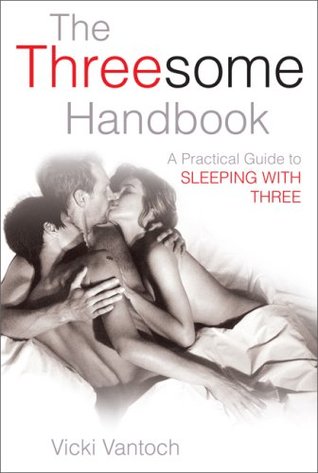
'The Threesome Handbook: A Practical Guide to Sleeping with Three' by Vicki Vantoch


I love nonfiction books about sexuality in general, and I wanted to read this one specifically because I thought it might be good research for future short stories and novel scenes. I’ve written threesomes before, but I could always learn to write them hotter.

I started reading this book ages ago, but I kept putting it away when guests came over and then getting distracted by other books. That's not to say that it's uninteresting or boring - far from it. Granted, I did skip a few passages that didn't apply to me, but overall, I enjoyed this very much. It's really more 4.5 stars than 4.

Vicki Vantoch is the kind of smart girl who makes me want to do stupid things. She’s brilliant and witty. I laughed out loud several times throughout the book, just like I do with Lemony Snicket things. She has one of the best jobs I could imagine: anthropologist and historian who specializes in the history of sex. In physical appearance, she reminds me of the singer Sara Bareilles. Funny, smart, cute, openly bisexual – Vicki Vantoch is my kind of writer.

She’s also the mom of two adorable kidlings, son West and daughter Maison. Their dad is Vantoch’s life partner since they were 16 years old, the actor Dimitri Krushnik. But, as she writes on page 328, “Yale law professor Kenji Yoshino argues we are all pressured to ‘cover’ or to downplay stigmatized traits to blend into the mainstream. We do this in various ways—by hiding hearing aids or changing ethnic-sounding names to commercially viable ones.” In that exact manner, Dimitri is better known as Misha Collins. Which, I suppose, is not quite as Russian-sounding, even though Misha is still the traditional Russian nickname for Dimitri. (Didn’t Dimitri Belikov’s sisters call him Misha in the Vampire Academy novels?)

Vantoch is candid about her own three-way relationship with her husband and her female best friend, but Collins is more guarded. She writes in the Acknowledgments, “And finally, M, my sweet coadventurer in love and life. Even though this book wasn’t his cup of tea, he was supportive from the beginning and was always there when I needed him with encouragement, egg sandwiches, and a brutally-honest critical eye. His patience, humor, openness to change, and super-human ability to love me without crushing me, continues to amaze me. I feel enormously lucky to be sharing this journey with him.”

My favorite chapter is Chapter 5, which gets into some of the issues that not-bisexuals might face when in multiple partner relationships. It encourages people who consider themselves straight to be open to a range of experiences that might be pleasurable even if a bit outside their usual comfort zone, without obsessing about labels. Human beings seem to have an innate tendency to want everything neatly categorized, but our sexuality is much too fluid and varied for that. Vantoch gets that, and she’s able to write about it in a way that’s not only humorous but also quite sexy.


Whether they read it for research, for practical tips, or simply out of curiosity, readers who are brave enough to pick this one up will be rewarded. 


I purchased this book with my own funds and was not obligated in any way to review it.

Thursday, September 17, 2015

PNR #Review: 'Wild For Milly' by Jane Jamison

Wild for Milly (Werewolves of Forever, TX #9)Wild for Milly by Jane Jamison

My rating: 4 of 5 stars

I haven't read any of the other books in Jane Jamison's Werewolves of Forever, Texas series, but I thought I'd give this one a try. I found it for a deeply discounted price at an outlet store and I couldn't resist snapping it up. I wasn't at all disappointed. It wasn't necessary to read the first 8 books in this series to understand who Milly was as a character.

Milly is the waitress at the diner in the tiny, supernatural town of Forever, which reminded me of Charlaine Harris's Midnight, Texas. Milly can't read minds like Sookie Stackhouse, but she can shapeshift at will into a werewolf. She doesn't even have to wait for the full moon.

One thing is missing from Milly's life, though: unlike most of the werewolves in Forever, she is unmated. Like Jacob Black in Twilight, she expects to "imprint" on someone - maybe two or more someones. It appears that polyandry is not unknown among these particular wolves. In this regard, they're not unlike the wolfish Chanku in Kate Douglas's Wolf Tales series.

I'm a big fan of paranormal romances, so I enjoyed that this mythological territory was somewhat familiar from some of my other favorite series.

Like clockwork, Milly's perfect matches seem to come along in the forms of California transplants Dan and Matthew Hudson. But Dan and Matthew bring a bit of baggage - their 15-year-old niece Riley, whose parents were killed in a car accident. Her uncles are her surrogate parents.

Riley does NOT warm up to Milly quickly. Cue the dramatic suspense: Riley's unwise flirtation with some immature teenage vampires leads the vamps to kidnap and attempt to sacrifice her for a ritual. Bravely, Milly offers herself in exchange for Riley. She's rescued by the brothers before the vampires kill her, and Milly-Riley relationship is permanently turned around.

So Milly gets her perfect mates and her happy ending. Who could ask for anything more?

On the cover art, it's not possible to tell which sexy brother is Matthew and which is Dan, but one has short hair and one has longish hair that tucks behind his ear. Dare I say they look a bit like a certain pair of demon-hunting brothers from a certain CW TV series?


I purchased this paperback with my own funds and was not obligated to review it in any way. This review represents my own honest opinion.

Wednesday, September 16, 2015

'Bright-Sided' by Barbara Ehrenreich

Bright-sided: How the Relentless Promotion of Positive Thinking Has Undermined AmericaBright-sided: How the Relentless Promotion of Positive Thinking Has Undermined America by Barbara Ehrenreich

My rating: 4 of 5 stars

The thesis of Bright-Sided is the U.S. residents tend, as a people, to subscribe to an optimistic outlook on life that isn’t so much based in fact as it is in wishful thinking. Sometimes this wishful thinking is presented to us with the best of intentions. At other times, it’s presented to us as a cynical ploy to make a fast buck with a minimal output of effort, since one of the tenets of positive thinking is often, “If it’s not working for you, you must not be trying hard enough.”

Sometimes, corporations use this mindset to try to increase productivity as much as possible while laying out as few benefits as they can get away with. Haven’t gotten a raise in five years? You’re probably just not working hard enough! Envision success and use positivity to attract a raise to you! At worst, this can be used as an excuse to pay people poverty wages for working long, hard hours at unpalatable jobs.

The problem, as Ehrenreich explains, is that very little scientific evidence shows that positive people fare significantly better than their less-positive peers. At the same time, individuals can experience real-world consequences, including loss of their jobs, simply for being perceived as not having a positive attitude.

As Ehrenreich shows, however, the economic sphere is not the only one in which people can find themselves blamed and shamed for not being cheerful enough. Oddly, one of them is the cancer support group sphere, as Ehrenreich found out during her bout with breast cancer. Women suffering from the disease will sometimes repeat the mantra that positivity strengthens their immune system and thus helps them fight the disease. The problem is that physicians don’t think there is much of a link between the immune system and breast cancer. Think about what the immune system does – it fights foreign “invaders” in the body, namely bacteria and viruses. Cancer cells are the body’s own cells, not recognized by the immune system as “foreign.” Women who get sicker and blame themselves for being too negative are expending their precious energy over something irrelevant.

The chapter on the religious aspect of positive thinking is also very interesting. In this chapter, I learned about the New Thought movement of the 1800s and its founder, Phineas Parkhurst Quimby. If a 21st-century person believes human thought can affect atoms and molecules in the real world, that person can likely trace their thoughts back to Quimby. Followers of the so-called Prosperity Gospel as exemplified by Joel Osteen and Joyce Meyer, adherents of Oprah Winfrey, and readers of Rhonda Byrne’s The Secret may not seem to have much in common on the surface, but all can trace their philosophical roots back to New Thought. Quimby’s most direct influence may have been on Mary Baker Eddy, the founder of Christian Science.


The origin of Quimby’s “heal thyself” philosophy? He had tuberculosis. He was born in 1808, and when he was a young man, doctors could do next to nothing for the bacterial infection. His doctors gave him a remedy that did little to abate his breathing problems, but did make his teeth start to fall out. Fed up with the institutional medicine of his day (with good reason), he decided to study hypnotism. He eventually came to believe that all diseases were caused by the way one thinks about one’s body.

The scientific evidence that beliefs affect the human body is scant to nonexistent, but Quimby and Baker Eddy weren’t really interested in scientific evidence. I read a little bit more about Mary Baker Eddy in Wikipedia, and it seems she had something of a kerfuffle with Mark Twain in the first decade of the 1900s. Twain wrote an article criticizing Christian Science, which Harper’s magazine refused to publish. Twain then accused the publication of bowing down to pressure from high-profile Christian Scientists and of not being objective. He later published – elsewhere, one presumes – a lengthy critical essay on the subject of Mary Baker Eddy herself.

Touched on in this chapter, and quite possibly worth addressing in greater detail elsewhere, are John Marks Templeton Sr. and Jr. The senior John M. Templeton created the Templeton Foundation, which supports a large variety of both religious and scientific research endeavors. It has been accused of supporting unscientific theories such as “intelligent design” creationism and other dubious sciences. Ehrenreich herself has publicly accused the Templeton Foundation of a conservative political bias, which the Foundation has answered by saying that it stays within the guidelines set forth by its founder, which are designed to be unbiased and apolitical.

Dr. John Marks Templeton Jr., popularly known as Jack Templeton, was well known for donating vast sums of his personal wealth to Republican political causes. He and his wife are estimated to have personally donated a million dollars to opposing same-sex marriage. Having died of a brain tumor in May of this year, he didn’t quite live long enough to see marriage equality become the law of the land on June 26th.

Economics, politics, religion, medicine…areas of life in which people need to be at their most clear-eyed. Optimism and a positive outlook can make life more bearable, especially when one is ill or under stress, but it’s also important to be armed with objective fact. This is the point Barbara Ehrenreich makes in Bright-Sided, and it’s a good one.

I purchased this title as a CD audiobook with my own funds from a library used media sale. I wasn't obligated in any way to review it. This review represents my own honest opinion.