Pages

Showing posts with label witches. Show all posts

Wednesday, April 6, 2016

J.K. Rowling, Writing as Robert Galbraith, Doesn't Fear the Reaper

I started a new audio book today. So far I've heard 1 of the 15 discs of the audio version of Robert Galbraith's Career of Evil. Beginning Career of Evil by J.K. Rowling writing as Robert Galbraith forces me to consider a post I wrote many years ago, one that has to do with, of all things, the rock band Blue Oyster Cult (BOC).


Although the two previous Cormoran Strike novels (The Cuckoo's Calling and The Silkworm) were filled with references to classical English poetry and Latin texts, this one is different - it's filled with BOC song lyrics. The book opens with our heroine Robin receiving a grisly package containing a human leg, with some lyrics included in the package. Strike soon tells Robin that his own mother, "super-groupie" Leda Strike, admired the BOC above all other rock groups, although she was never able to hook up with lead singer Eric Bloom.

Eric Bloom, in a Creative Commons image

I recalled immediately that Rowling was not the first person in the media to associate the BOC with creepiness. I recalled a 4-part blog post series I had previously mentioned in my Buddy Holly/Imbolc post in 2012:

How the Music Died Part I
Part II
Part III
Part IV

The posts are quite long and detailed, but I will attempt to summarize as briefly as I can. The overarching theme of the 4-part post series is that from approximately 1959 - the year of Buddy Holly's death - to 1969, the commercial rock music industry in the U.S. was heavily influenced by "sinister forces." The post author, known as VISUP, contends there is a parallel between such a shift in the music industry and a similar one in U.S. politics.

Public domain image of Buddy Holly

Part III is an overview of the Blue Oyster Cult. Part IV deals specifically with a song called "Dominance and Submission." Some points made by VISUP in Part III are:

1. Essentially, BOC were a "biker bar band" until "scooped up" by Sandy Pearlman, a manager/producer who had previously been a music critic. Pearlman wrote some of the groups' song lyrics.

2. 1990s music critics used the term "heavy psych" to describe the type of late 1960s/early 1970s hard rock that BOC played. Although not commonly thought of as such, the BOC -according to VISUP - can be firmly placed within that circle of heavy psych bands that contributed to the early proto-punk movement.

3. Pearlman himself was attached to proto-punk in that he was friends with Lenny Kaye and Patti Smith of the Patti Smith Group. Smith wrote a number of songs for BOC, including "Career of Evil."


4. Pearlman was also interested in the occult, which influenced his songwriting for the BOC.

5. In his pre-BOC days, Pearlman is alleged to have written a series of occult poems (collectively referred to as The Secret Doctrines of Imaginos) about a group of eldritch spirit-beings he called The Invisibles, which might be thought of as akin to H.P. Lovecraft's Old Ones.


6. The Invisibles were associated, albeit vaguely, with the star Sirius.

7. In this aspect, Pearlman was not alone; a number of writers in the 1970s associated extraterrestrial beings with the Sirius star system. In fact, if you go into the pseudohistory category on Wikipedia, you'll find an example: The Sirius Mystery by Robert K.G. Temple.


Although the cover says "scientific evidence," the Wikipedia entry lists a number of critics, including Carl Sagan, who have debunked the theories it presents.

8. The band's name, Blue Oyster Cult, comes from the Imaginos series. The fictional BOC were the human servants of The Invisibles, aiming to help their overlords achieve world domination.

9. Pearlman and the BOC originated from Long Island.

10. The religion of Wicca entered the United States through Long Island, specifically (at least in some part) through the Warlock Shoppe in Brooklyn.

11. Peter Levenda, described as a "rogue historian," associates the Warlock Shoppe with something called the Process Church of Final Judgment.


12. The Process Church of the Final Judgment is associated by some writers with murderers including Charles Manson and David Berkowitz. It's alleged to be a nationwide "death cult." The Wikipedia entry describes it as an offshoot of Scientology. The Wiki author says in his book Helter Skelter, Vincent Bugliosi claimed that Charles Manson "may have borrowed philosophically" from the church.


The Process Church began in London...which is precisely where the fictional Robin Ellacott and Cormoran Strike live.

13. VISUP is drawing no firm conclusions from any of this, but at the very least, the BOC's music circa 1972 was created in the atmosphere of motorcycle gangs, the Wiccan goings-on of the Warlock Shoppe, and potentially the doings of the Process Church, which may or may not be nefarious.

Part IV: The "Dominance and Submission" Post

1. The 1974 song - co-written by Pearlman and two members of the band - seems to refer to a shift in consciousness.

2. A character named "Susie" is mentioned in the song. Supposedly, Susie was an ex-girlfriend of Sandy Pearlman's. VISUP interprets the name in several ways, including as a symbol for the "vibrant rock scene."

3. A second character in the song is called Charles, referred to as Susie's brother. Through elaborate flights of association, VISUP suggests Charles represents an initiate into a new way of life. Another association VISUP makes for Charles is as a sacrificial victim.

4. One indicator, and possible cause, of the shift in musical consciousness between 1959 and 1969 was The Beatles and their meteoric rise to fame.

5. "Charles" is The Beatles.

6. Charles/The Beatles are an example of the price musicians pay for their fame - the "submission" to the "dominance" of corporate interests.

In conclusion, both Don McLean's song "American Pie" and the BOC's "Dominance and Submission" chronicle the shift in American music, and in American consciousness, over the 1959-1969 period.

When I was in high school, I took a course called Media. My teacher, the late great Tom Gerencher, covered rock 'n' roll/rock music when we talked about the history of radio. He mentioned several calamities that happened around 1960 that helped end the reign of rock 'n' roll songs (with the typically AABA chord structure the form shares with blues music, as typified by Buddy Holly and Fats Domino), making way for rock music, rock 'n' roll's more complicated descendant.

As I recall, The Day the Music Died (February 3, 1959) was part of it, as were:

- Elvis Presley being drafted into the army (March 1958)
- The revelation to the public that Jerry Lee Lewis's wife was underage (May 1958)
- The payola scandal and disc jockey Alan Freed's being fired from his radio and TV shows (November 1959)
- Chuck Berry's arrest for an alleged violation of the Mann Act (December 1959; he subsequently served three years in prison)

Chuck Berry - public domain image in the United States

With all those rock 'n' roll stars being taken off the market, so to speak, from 1958 to 1960, it's easy to see why the American music-buying public would be primed for a new sound by the time the Beatles hit the American shores. Therefore, I tend to believe VISUP when he says there was a huge shift in the music industry between 1959 and 1969, approximately. Whether the songs "American Pie" and "Dominance and Submission" exemplify that shift is more speculative. Still more speculative is a link between BOC, the Beatles, and various conspiracy theories.

Is there a special reason why Rowling would choose to incorporate the band's occultish lyrics into a book that has already featured a gruesome murder and mutilation? I'll have to finish the book to find out.

https://amzn.to/3NzhPoM - this is an affiliate link

Wednesday, October 14, 2015

'Carry On' by Rainbow Rowell

This book discussion is not spoiler-free. If you haven’t read Fangirl and Carry On yet, I strongly recommend you read no further.


I bought my copy of Carry On by Rainbow Rowell on the day it was released: Tues. October 6th. I couldn’t wait to dig in and start reading the boy-boy love story. (I say “boy,” but understand I’m talking about 18-year-old adults.) I finished it a week later, on Monday the 12th. In a way, I still can’t believe I’ve finished it. Reading Carry On was an incredibly enjoyable experience. I’m not sure I can entirely explain why, but I’ll try.

Part of it was the extent to which I enjoyed Rowell’s 2013 book, Fangirl. Recall that I didn’t just LIKE Cath Avery, but also felt like I WAS Cath Avery. Because Cath loved Simon Snow and his vampire classmate Baz, I loved Simon Snow and his beloved/enemy Baz.

Another part of the puzzle is that Simon and Baz are based, in part, on Harry Potter and Draco Malfoy.  I’ve never personally been a Drarry shipper – I’m satisfied with J.K. Rowling’s choice of Ginny Weasley as Harry Potter’s lifemate. Even if Rowling herself sometimes wishes she’d made Harry and Hermione more than friends. Let’s face it: I’m a grown adult who wears Harry Potter socks and a golden snitch necklace and whenever I hear plumbing make a funny noise my first thought is still “Chamber of Secrets!” I consider myself a member of the Harry Potter fandom. I understand the fandom impulse.

And yes, it is exciting to read a mainstream novel in which the featured romantic subplot involves a same-sex couple. It IS important to me as an out bisexual woman to have non-heterosexual (I’d say queer, but I don’t want to use that word if it will offend some readers. I personally do not have a problem with “queer”), positive representation in the media. Especially in the traditional media.

Can you imagine if J.K. Rowling went back and wrote a book about Albus Dumbledore’s unrequited love for Gellert Grindelwald? It would be heartbreaking and poignant and I would love that so much, even while it was torturing my poor little heart.

But until we get Carry On, Albus, we have to settle for SnowBaz.

In my review of Fangirl, I wrote, “Let's talk about Simon Snow. I honestly would love it if someone wrote Carry On, Simon as Cath, because the little bits of fan fiction that we get in the novel are tasty. Cath left her magnum opus unfinished (and, may I just say, I think the ending of this novel is perfection and I wouldn't want it any other way), but I still want to know if she decided to kill Baz or to let Simon and Baz live happily ever after. We're somewhat left hanging in a Hazel Grace Lancaster-type fashion. This book is meta to begin with - fiction about a fiction writer writing fan fiction about fiction - would it just be too incredibly meta for someone to write Carry On, Simon?”

Rowell hasn’t written Carry On, Simon, but she’s written something even better. Carry On isn’t written as Cath Avery writing Simon Snow fan fiction, nor is it written as if it were the original novel Cath based her fan fiction on (written by the fictional Gemma T. Leslie). Instead it’s a Simon Snow novel written in Rowell’s own authorial voice. But I no longer feel disappointed or Peter Van Houtened by Fangirl. I’ve gotten my SnowBaz story – and (spoiler alert!) Baz doesn’t even die.

Of course, I would not be sad if Rowell somehow extended this to a 7- or 8-book series…I’m just sayin’.

Ultimately, Simon Snow owes his existence to J.K. Rowling and Harry Potter. Because Rowling’s world-building is so thorough, and we’re already assumed to be familiar with it, Simon Snow’s Watford School already seems like familiar territory – yet it is its own unique world. Further, Rowling and Rowell are brilliant writers, each in unique ways. As I’ve discussed in my reviews of the Robert Galbraith novels, Rowling is intimately familiar with all 400+ years of English-language literature, plus the Latin language, plus Classical mythology and a veritable buffet of multicultural world mythologies.  She’s wonderfully erudite and such a natural storyteller, she can write a children’s book filled with scholarly Classical references without either boring the reader or showing off.


I’m not implying that Rowell isn’t as brilliant or as educated as Rowling, but Rowell’s storytelling style is more inwardly oriented, more personal and intimate and less world-traveling. She writes with her tongue in her cheek, tossing in pop cultural references that might be not-so-subtly winking puns, meaningful allusions, or a combination of the two. In an early chapter, for example, Simon is nearly taken out by a taxi driver who turns out to be a goblin. In the mirror’s reflection he appears to have green skin and blood-red lips, but otherwise he’s “handsome as a pop star.” Any goblin who manages to kill Simon will become the goblin king. Wait a minute: goblin king, handsome as a pop star? Is she talking about David Bowie in the film Labyrinth, in which the pop star plays the Goblin King?

I have no doubt Rowell is making references to a wide variety of fantasy novels, films, and tropes throughout her novel. I half-suspect the surname Snow is a reference to Game of Thrones – Simon, like Jon Snow, was abandoned by his parents. Of course, it’s revealed in Carry On that Snow is his middle name. Maybe Simon officially has his mother Lucy’s last name. It’s unclear whether Davy (the Mage) and Lucy ever married – not that that would necessarily require her to change her name. I don’t recall the Mage’s last name ever being given.

Baz – short for Tyrannus Basilton – has his mother’s last name. His mother, Natasha Pitch-Grimm, was headmistress of Watford before The Mage. Baz’s father isn’t a bully like Lucius Malfoy; he’s more of a neglectful parent than an abusive one. He’s not happy that Baz is gay. Baz doesn’t identify much with his father, so he doesn’t use the Grimm last name. He’s chummy with his Grimm cousins, though.

Naming traditions are more conventional in the household of Simon’s best friend, Penelope Bunce. Penelope is a British girl with a British-ethnicity dad and an Indian-ethnicity mom. She has some of the traits of Ron Weasley (including ginger hair, in their first year at Watford) and some of the traits of Hermione Granger, yet she managers to be her own unique character. Her siblings, including brother Premal and sister Priya, have Indian personal names, but they all have the Bunce family name. Penelope is technically a name from Greek mythology, but it’s not that uncommon in the English-speaking world.

Rowell, of course, is from the United States. She’s writing English characters who speak U.K. English, and occasionally (to my North American ears) this rings a little false. For example, I’ve never heard a person from the U.K. or Ireland refer to a “bag of crisps.”* The familiar expression is “a packet of crisps” where we Americans would say “a bag of chips.” But U.K. readers will have to weigh in on that matter.

(I can say that E.L. James, writing in the voices of U.S. characters, uses an occasional phrase that rings very British. It works both ways – as if we can understand, but not quite reproduce, one another’s dialects.)

The witches and wizards of Simon’s world are a bit more modern than those in Harry’s, who seem a bit stuck in the 19th century in some of their customs. Simon doesn’t speak Latin. Heck, he barely speaks English. (His dad really did a number on him when he dumped Simon in that orphanage.) Rowell’s witches cast spells in English, using concentration and intent to turn common phrases into spells. Any phrase can become a spell, theoretically, but some have caught on and are common. Song titles and lyrics often work well, and nursery rhymes are said to be the most powerful spells of all.

Baz’s family – the Pitch side – is unusually gifted with fire magic. This is a shame, since Baz (made a vampire, not born a vampire) is more flammable than the average human, something his dad and aunt (a somewhat Bellatrix LeStrange-like character, but not quite as evil) consistently remind him of. Baz is aristocratic, worldly, handsome, charming, and completely in love with Simon since their fifth year of school.

Yet it’s Simon who initiates their first kiss, in a moment of despair when Baz seems on the verge of suicide by self-immolation. Simon hasn’t quite worked out his sexuality yet. He knows he’s attracted to Baz – Baz’s huge vampire fangs impress him. It’s unclear whether he’s sexually attracted to Agatha Wellbelove or simply socially attracted to her. It’s a question the author chose to leave open. It’s entirely possible Simon is bisexual or pansexual, though.

The first kiss is magickal. Please don’t judge me, but I may have done a slight dance shortly after reading it. I really do love SnowBaz as a couple.

Of course, the dramatic climax is a traumatic climax. Not Allegiant traumatic, but still…Simon loses a person and a thing, both very dear to him. The person, Ebb the goatherd, is sort of a combination of Rubeus Hagrid and Sybil Trelawney, in a very wonderful way. Her nickname is short for Ebeneza. She’s a very powerful magician but must sacrifice herself (which she does willingly) to save Agatha.

Agatha Wellbelove doesn’t closely resemble any of the characters in the Harry Potter series. Her family name is vaguely reminiscent of Luna Lovegood’s, but she’s not quirky like Luna. In fact, she’s quite the opposite: she’d rather be with her Normal friends (the equivalent of Muggles – apparently, magicians can hear the difference between Normal and normal) than at a magickal school. She has a slight crush on Baz – one that’s destined to be unrequited, obviously. But it is not a typical young adult novel love triangle, not at all. In fact, Agatha breaks off her relationship with Simon because she realizes they’re both only going through the motions.

Penelope – Penny – has an American boyfriend named Micah. I have a deep desire to watch a sitcom starring Mindy Kaling as an older Penny living in the U.S.A. with Micah and their kids. Seems unlikely to happen, though.

Penny’s roommate, Trixie the pixie (the ridiculous name is lampshaded by the characters), is also LGBTQ+. Her girlfriend is another female Watford student, and the fact that dorm rules do nothing to keep them from snogging and flinging pixie dust 24/7 annoys Penny to no end. Technically she isn’t allowed in Baz and Simon’s shared suite, but through some unknown method she circumvents this policy – a feat never attempted by policy-respecting Hermione Granger.

SnowBaz ends more happily-for-now than happily-ever-after. They both have such grave insecurities. But I’ll take it. It’s better than being stuck, not knowing whether Baz even survives the end of Cath’s fan fiction rendition of Gemma T. Leslie’s world. (It’s not even entirely clear that Baz CAN be killed.) I like knowing Rainbow Rowell’s take.

I purchased Carry On with my own funds and was obligated to review it in any way. But I really, really, really liked it.

See what I did there?
*Retracted. J.K. Rowling uses "bag of crisps" in one of the Cormoran Strike/Robin Ellacot novels.

Sunday, July 5, 2015

'The Loss,' A Book Based on a Series Based on a Series Based on a Book

The Originals: The Loss by Julie Plec

My rating: 4 of 5 stars

The Loss is an appropriate title for this book, which centers on Klaus Mikaelson's oh-so-very ill-fated marriage.

I didn't read the first book in this trilogy, so I don't know if Vivianne Lescheres was an important character in that book. If she was, I'm guessing the plot of that one centered on the 1722 battle between the Mikaelsons (the Original vampires) and the witches over who would rule New Orleans. We learn from The Loss that the battle culminated in witch-induced hurricane and an explosion, and that Vivianne died.


Now it's 1766. The Mikaelsons rule New Orleans with a firm hand, keeping the witch clans at bay in the surrounding swamplands. The werewolves, too, have fled the city for fear of Klaus. And Klaus still mourns Vivianne. She's the great love of his long, long, unnatural life.

...Which leads to a terrible decision. Pining for his lost love, Klaus goes to the leader of the witches, Lily Leroux, with an opal pendant from his witch mother. The pendant has magical properties, and Lily uses it to bring Vivianne back from the land of the dead.

This is a lesson literature has tried to teach us before. Bringing someone back from the dead worked out very poorly in Stephen King's Pet Sematary, in Douglas Clegg's Isis, and in J.K. Rowling's "Tale of the Three Brothers" in The Tales of Beedle the Bard. Klaus is many centuries old by the 18th century and should have known better.

The side effect of the spell creates an evil not yet seen in the Vampire Diaries world: zombies. In fact, Vivianne herself is slowing becoming more and more like the walking undead, who have a penchant for eating the hearts out of living things. Their first victim is Elijah's lover, Ava.

Don't worry about Elijah, though - he's learned not to get too attached to other vamps who aren't his siblings. By the end of the book, he's moved on to the lovely gray-eyed vamp Lisette.

Is Lisette a character on the show? I haven't watched very much of The Originals, although I'm familiar with Elijah, Rebekah, and Klaus from the TV version of The Vampire Diaries.

Some of the most delicious bits of this book are Klaus's love scene with Vivianne and Elijah's love scene with Lisette. Rebekah doesn't get a love scene in this one, unfortunately. The great love of her life, Eric Moquet, lost his life in the hurricane.

Klaus is a difficult character to love because of his destructive tendencies, but I find Rebekah quite sympathetic. She causes her fair share of destruction as well, but she's also been epicly mistreated by her older half-brother.

"By" Julie Plec is a bit of a misnomer; this was ghostwritten, with Plec credited as creatrix of the Vampire Diaries spin-off. She gets a lot of fandom hate, but I like her a whole lot more now that I know her horror film credits include Cursed, the stupidest werewolf movie I ever loved.

I received this book through the Amazon Vine program in exchange for an honest review.


This is an affiliate link:

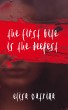
The First Bite Is the Deepest by Elisa Catrina. $2.99 from Smashwords.com
“Funny and clever and emotionally hard-hitting” "A perfectly creepy read." Elisa Catrina's debut novel begins as a quirky send-up of vampire romance, but quickly turns sinister. High schooler Stella Ortiz starts dating the mysterious new guy, but her friends are convinced he's bad news: Sebastian misses tons of school, he day-drinks something that smells like pennies, and oh yeah, he's a vampire.

Monday, June 8, 2015

I Catch Up With 'The Vampire Diaries' (SPOILERS)

Today I watched (well, listened to) the TVD episodes currently available on Hulu, which were the last 5 episodes of Season 6. I hadn't watched the show since perhaps the middle of Season 5, when Katherine (presumably) died. These were the new developments to me:

- Alaric Salzman is not dead anymore. He has a fiancee named Jo; she used to belong to a witch coven, but she's no longer any kind of supernatural being. She's pregnant - with twins. They're getting married.

- Tyler and Caroline aren't together anymore and haven't been for a while. Her mother died. She shut off her humanity and manipulated Stefan into turning his off as well. Stefan and Caroline have something of a relationship.

- Tyler and Matt are training to be police officers. Somehow Tyler is not a werewolf anymore, although he'll become one again if he kills someone. (He used to be a vampire/werewolf hybrid like Klaus, right? Is he still a vampire? I'm unclear on the finer points.)

Creative Commons image by Vamplady01
- Damon and Stefan's mother is a vampire, but they only found this out recently. She was stuck in a temporal prison that kept her trapped in 1903. Her companions there were six very dangerous vampires who have some of the powers of witches, even though witch/vampire hybrids are normally against the rules of TVD worldbuilding.

- Damon has the cure for vampirism. He gave it to Elena and she became human again. Damon was more reluctant to give up his immortality. Damon and Elena are still in/back in a relationship.

Creative Commons image by JJ Duncan
In the penultimate episode of the season, a bad vamp/witch (they are called The Heretics) named Kai has attacked the wedding, killing the bride and her unborn babies. (So sad!) Human!Elena is injured and in some kind of a coma.

The season 6 finale has Tyler triggering his werewolf curse, so any vampire he bites will be poisoned and die. It turns out Elena's coma is a spell cast by Kai. He has some kind of grudge against Bonnie, so he magically links Bonnie's life to Elena's. As long as Bonnie is alive, Elena will remain asleep. Tyler bites Kai, but Heretics are not killed by werewolf bites. Damon has the opportunity to let Bonnie die by doing nothing, but instead he kills Kai and saves her. So now Elena is in a coma for the rest of Bonnie's life. Elena's friends place her in a coffin; the Salvatore brothers will guard her until Bonnie dies. The episode almost ends with Stefan declaring his love for Caroline as, inside Elena's mind, Damon and Elena dance.

Then there's a short flash forward to a future in which cop!Matt is patrolling the seemingly-deserted town of Mystic Falls, watched over by a solitary Damon.

Season 7 is most likely to be the final TVD season, and it's already been established that Nina Dobrev will not be returning. Further, Michael Trevino will not return in the role of Tyler Lockwood.

Creative Commons image

I'm not nearly as interested in this series as I once was, but still, it was nice to get a little caught up.

Wednesday, March 11, 2015

Real Feelings About Ersatz History

Sometimes I like to get lost on Wikipedia. I got lost the other day in the "pseudohistory" category, and it was fascinating.

It started with the Ourang Medan. Well, it started on YouTube. I wasn't signed into my Google Account, so I was browsing the home page. A channel with a series of "top 5" lists came up - in fact, the channel is called Top5s.

This is the video I saw.


[If you want to read more about the strange death of Canadian student Elisa Lam in Los Angeles, you may do so at The Vigilant Citizen.]

The evening after I watched the video, I went to bed thinking about the Ourang Medan, the "ghost ship" whose crew was supposedly found dead, with expressions of abject terror on their faces, shortly before the ship exploded and sank. I wondered if the story was true.

I looked it up the next day. According to Wikipedia, there's no evidence that a ship called the Ourang Medan even existed. If it did, it should be listed in Lloyd's Shipping Register, but it isn't.

The categories at the bottom of the entry caught my eye; this is where I noticed the word "pseudohistory." What a fascinating word, I thought: not history that actually happened, but "history" that circulates in human consciousness without apparent basis in fact. I had to know what else belonged to this category.

For the record, I should mention that Wikipedia, as a peer-edited source, doesn't have the same standards for reliability and accuracy that a source with a "gatekeeper"/editor has. Although it has guidelines, it has so many users that it would be virtually impossible to ensure that all the articles adhere to its guidelines at all times. We have to take Wikipedia entries with a grain of salt, but that doesn't mean the categorization itself isn't of interest.

Pseudohistory, it turns out, contains a great many fascinating topics. Some of it has to do with "ancient astronaut theory," as exemplified by Erich von Däniken's 1968 nonfiction book Chariots of the Gods?. (The question mark is part of the title.)


Another large subcategory of pseudohistory is labelled as Priory of Sion Hoax. This has to do with much of the background story that went into Dan Brown's writing of The Da Vinci Code. Another subcategory is the "Shakespeare authorship question." (There's also a Molière authorship question, but hey, I care much less about French literature than English. Cultural bias - sorry.)

Much of the pseudohistory category has to do with religion, much of it to do specifically with Christianity. Take, for example, the brief Babylon Mystery Religion article. Babylon Mystery Religion is a book, now out of print, by Ralph Woodrow published in 1966. Referring to an earlier (1853) book called The Two Babylons by Alexander Hislop, Woodrow's book linked the Roman Catholic Church to ancient Babylonian rituals. Woodrow later recanted his anti-Catholic views in a second book.


Apparently there are quite a few factual errors in Hislop's book, stemming from misunderstandings about the historical Babylonian culture. Although scholars have subsequently pointed out these errors, the Catholicism=Whore of Babylon theme is still alive and well among some Evangelical Christians and Jehovah's Witnesses.

One of the modern-day adherents to some version of Hislop's ideas is Michael Hoggard, an American (Missouri) pastor with a relatively large following for his radio/YouTube show. The show has more than 20,000 fans on Facebook. He also curates the website http://666alert.net/, which collects uses of images linked to the number 666 as they appear in popular culture.

Hoggard is a Southern Baptist. A related pseudohistorical concept is Baptist successionism, which argues that the Baptist denomination is most direct line between the Christianity of Jesus and the Apostles and modern churches. The work most often associated with this view is The Trail of Blood (1931) by J.M. Carroll. It is not historically accurate, but it remained influential among Southern Baptists well into the late 20th century.


But for me, maybe the most interesting article in all of pseudohistory is the Witch-Cult Hypothesis. Remember when I got my ass handed to me for over-relying on Barbara J. Walker as a source? (If not, you can always read about it here.) Well, Walker is probably an adherent of this theory. It states, essentially, that through the Middle Ages and into the Modern Era, ancient Pagan religions survived in such a way that worshipers of The Horned God of Paganism were mistaken by Christians for worshipers of the Christian devil and subsequently persecuted as witches. This theory came about in the 19th century and was perpetuated into the 20th century, even including the entry in the Encyclopedia Britannica for many years.

(Encyclopedias are them things we used to read before we had Google.)

According to the Wikipedia entry, the Witch-Cult Hypothesis found a champion in British historian/Egyptologist Margaret Murray*, who wrote The Witch-Cult in Western Europe. It is not historically accurate.


Despite its unreliability as history, Murray's book is said, in the Wikipedia entry, to have been influential in the development of the Wiccan religion. Murray's subsequent book, The God of the Witches, introduced the term The Horned God for the male deity worshiped by the alleged witch cult on Western Europe. (She acknowledged that the witch cult also worshiped a goddess, but in her opinion the witches regarded their male deity as the more important of the two.) Gerald Gardner, who was also English and is now considered the founder of modern Wicca (referred to as Gardnerian Wicca), claimed to have found a surviving coven of the kind of witches Murray described, and he started his own coven based on them, in the interest of keeping the religion alive.

But mind you, Wicca, modern witchcraft, and NeoPaganism are 20th century religions. While they revive certain aspects of ancient belief and worship, the rituals and beliefs of modern witches were created in the 20th century. And there's nothing wrong with that. People take what they need from their religions, and a religion doesn't have to be old to meet the needs of its practitioners.

The Wikipedia article on The Horned God states that Gardner, consciously influenced by Murray, borrowed his conception of Wiccan practice from Freemasonry, from the Theosophy movement, from other unnamed occult sources, and from Aleister Crowley's Gnostic Mass. (In 1913, Crowley wrote a mass for the Gnostic church, borrowing from the rituals of the Roman Catholic and Eastern Orthodox Christian churches, but replacing Christian concepts with his own Thelema, his "do what thou wilt shall be the whole of the law.")

By the way, Margaret Murray is also in part responsible for the association of Glastonbury, England, with King Arthur and the Holy Grail. I used this legend in Midsummer Night.

https://www.createspace.com/4657847
So dig in to pseudohistory if you like. If you're interested in history - and in the history of ideas - you may find it as fascinating as I did.

*That Madeleine L'Engle's fictional protagonist in The Time Quintet is named Margaret "Meg" Murry is coincidence, I think.

Monday, July 7, 2014

New Covers, New Titles, Same Sizzling Paranormal Trilogy by K D Grace (@kd_grace) #erotica #romance #paranormal


K D Grace’s paranormal trilogy has had a makeover! The covers have been redone, along with a slight upgrade in the titles to better reflect their paranormal romance genre. The novels themselves are still both sizzling and chilling. And now they’re all dressed up for the summer heat.

The Lakeland Witches Trilogy

Book One: Body Temperature and Rising

American transplant to the Lake District, MARIE WARREN, didn’t know she could unleash demons and enflesh ghosts until a voyeuristic encounter on the fells ends in sex with the charming ghost, ANDERSON, and night visits from a demon. To help her cope with her embarrassing and dangerous new abilities, Anderson brings her to the ELEMENTALS, a coven of witches who practice rare sex magic that temporarily allows needy ghosts access to the pleasures of the flesh.


Book Two: Riding the Ether

Cassandra Larkin keeps her ravenous and dangerous sexual appetite secret until she seduces Anderson in the mysterious void of the Ether.  Anderson is the sexy, insatiable ghost who can give her exactly what she needs.

But sex is dangerous in a place like the Ether…

When the treacherous demon, Deacon, discovers the truth about the origin of Cassandra’s powerful lust, he plots to use her sex magic for revenge on Tara Stone and the Elemental Coven, who practice their own brand of sex magic.


Cassandra must embrace the lust and sexuality she fears and learn to use its power. Will she stand with Anderson, Tara, and the Elemental Coven against Deacon’s wrath or suffer the loss of friendship, magic and love?


Book Three: Elemental Fire

Obsessed with revenge, KENNET LUCIAN makes a deal with a demon, a deal he comes to regret when he meets TARA STONE, head of the Elemental Coven, and a powerful witch with a desire for revenge at least as great as his. Even though the attraction between the two is magnetic and the lust combustive, Kennet must betray her to accomplish his goal, which is ultimately her goal as well; to put a final end to the demon, Deacon’s, reign of terror. But can Tara trust the man who has wormed his way into her heart and the heart of the Elemental Coven? Can she trust LUCIA, the demon with whom Kennet is allied, a demon with her own agenda. The path to Deacon’s destruction is far from clear, and the price that must be paid to be free of him forever may be too high, even for Tara Stone.


DEACON, the demon Marie has unleashed, holds an ancient grudge against TARA STONE, coven high priestess, and will stop at nothing to destroy all she holds dear. Marie and her landlord, the reluctant young farmer, TIM MERIWETHER, are at the top of his list. Marie and Tim must learn to wield coven magic and the numinous power of their lust to stop Deacon’s bloody rampage before the coven is torn apart and more innocent people die.


*****

Author Bio:

K D Grace believes Freud was right. In the end, it really IS all about sex, well sex and love. And nobody’s happier about that than she is, otherwise, what would she write about?

When she’s not writing, K D is veg gardening. When she’s not gardening, she’s walking. She walks her stories, and she’s serious about it. She and her husband have walked Coast to Coast across England, along with several other long-distance routes. For her, inspiration is directly proportionate to how quickly she wears out a pair of walking boots. She also enjoys martial arts, reading, watching the birds and anything that gets her outdoors.

K D has erotica published with SourceBooks, Xcite Books, Harper Collins Mischief Books, Mammoth, Cleis Press, Black Lace, Erotic Review, Ravenous Romance, Sweetmeats Press and others.

K D’s critically acclaimed erotic romance novels include The Initiation of Ms Holly and The Pet Shop. Her paranormal erotic novel, Body Temperature and Rising, the first book of her Lakeland Witches trilogy, was listed as honorable mention on Violet Blue’s Top 12 Sex Books for 2011. Books two and three, Riding the Ether, and Elemental Fire, are now also available. She was nominated for ETO’s Best Erotic Author 2013.
K D Grace also writes hot romance as Grace Marshall. An Executive Decision, Identity Crisis, The Exhibition are all available.

Find K D Here:

http://www.twitter.com/GM_Romance

Saturday, March 8, 2014

#BookReview: The Vampire Diaries, The Return: Midnight (Spoilers)


Previous Vampire Diaries series book reviews on this blog:

The Awakening 
The Return, Book 1: Nightfall
The Return, Book 2: Shadow Souls

Midnight (The Vampire Diaries: The Return, #3)Midnight by L.J. Smith
My rating: 4 of 5 stars

This is the last book in the Vampire Diaries series to be written by L.J. Smith herself - or at least it was until Kindle Worlds opened up the VD franchise to fan fiction writers. You can read here about how LJ Smith, hired by Alloy Entertainment to create the series in 1990 and then fired in 2011, used Kindle Worlds to flesh out her own vision. As I write this review, Smith's two newest "fanfic" entries in the series she created are #1 and #2 on Amazon's Kindle Worlds Young Adult bestsellers list.

I read the previous installment, Shadow Souls, two years ago in March 2012. In that volume, Elena and her friends rescued Stefan from prison in the Dark Dimensions. Stefan had hoped a magical rose would make him human again, but Damon became human instead, and wasn't at all happy about it.

The town of Fell's Church is still under attack from the demonic kitsune (fox spirit) siblings. As the clock counts down to the Last Midnight, the town's possessed children intend to carry out a terrible plot, which kitsune sister Misao hopes will restore her evil powers. But, as Matt, Meredith, and wise crone Miss Flowers discover, the kitsunes are acting as minions for an even greater, even more black-hearted entity. Smith has introduced more Japanese folklore into her tale, which is one of the things I love most about this series. She's kind of like J.K. Rowling's American cousin.

Shrine to Inari no Kami at a Buddhist temple in Tokyo, with many kitsune statues. Public domain image by Ph0kin.
That black-hearted entity is Inari, the Shinto goddess of rice and mistress of all the fox spirits. Encyclopedia Mythica says that Inari is a shape-shifter, sometimes a god and sometimes a goddess. She has a springtime festival and is sometimes associated with the agricultural goddess Uga-no-Mitami and with Hinduism's Lakshmi. In Smith's tale, Inari has the largest starball - a repository of spiritual power - in the Dark Dimensions. Using the kitsune as her messengers, she intends to cause ritualistic destruction.

For further reading on the mythology of Inari:

"Goddess Inari" at Journeying to the Goddess
"Inari and Her Kitsune" at Goddess School 

Miss Flowers plays a more important role in this book than in any of the previous ones, using her benevolent witchcraft to its fullest extent. If you've only watched the TV show, you'll be unfamiliar with Miss Flowers, but you can think of her as the book version of Bonnie's Gran.

Damon, meanwhile, is determined to become a vampire again as quickly as he became human. To do so, he returns to the Dark Dimensions, unwillingly bringing Bonnie McCollough with him. Damon still has very strong feelings for Elena, but at the same time, he's drawn to the very innocent, almost child-like Bonnie.

At first I thought the red-haired woman on the cover was supposed to be Bonnie, who is described as a Scottish-American teen with curly, strawberry blonde hair. She doesn't resemble Kat Graham, the multiracial actress who plays Bonnie Bennett on the TV series - but then again, the TV character Dr. Meredith Fell bears little resemblance to the book series' olive-skinned Latina teen Meredith Sulez. Dr. Fell is played by Torrey DeVitto who, when the Meredith character first appeared in Season 3, was married to Paul Wesley, who plays Stefan. But then AGAIN, book character Tyler Smallwood is not described as Latino, while Michael Trevino who plays TV Tyler Lockwood is Mexican-American. The TV series is more ethnically diverse than the book, which is good. I favor adding diversity over subtracting it.

However, it turns out the woman on the cover isn't Bonnie but Idola, a Guardian of the Celestial Realms (a sort of embassy of heaven that exists in the Dark Dimensions). The Guardians spill some secrets in this volume, including the true revelation of how Elena's parents died. They also explain some of Elena's angelic qualities since she died as a vampire and came back as a specially-gifted human.

Bonnie gets herself into some serious trouble with a craving for a simple sugarplum - but Damon saves her. Stefan and Elena enter the Dark Dimension to join them, and they must work together with those left behind in Fell's Church to keep the Last Midnight from happening.


The story ends on a hopeful note, and it certainly doesn't read like the end to a series. Since I don't want to read the ghostwritten The Hunters books, I'll have to download the Kindle Worlds books and give them a chance. The two books that are currently out (The Vampire Diaries: Evensong: Paradise Lost (Kindle Worlds) and The Vampire Diaries: Evensong: The War of Roses (Kindle Worlds Novella)) are 2/3 of a story arc called Evensong. After she finishes that, the Daily Dot article linked at the top of this blog post says, Smith will write her "endgame," her version of how the series ends. That'll probably be another 3-book arc, at least. Fortunately, the e-books are only $1.99 apiece.


View all my reviews on Goodreads. I purchased this book with my own funds at The Dusty Bookshelf used bookstore in Manhattan, Kansas, and was not obligated in any way to review it. This review represents my own honest opinion.

I haven't been watching the Vampire Diaries TV series very closely for the past two seasons - or the spin-off series The Originals, despite my love of Rebekah - but I did watch on Thursday, May 6. SPOILER ALERT: It ended with Katerina Petrov, a.k.a. Katherine Pierce, apparently dead but unable to enter the afterlife through Bonnie. (Bonnie is the conduit between life and death now that she herself is back from the dead.) Some unseen supernatural force dragged her kicking and screaming backwards out of the church where Bonnie stood - perhaps she was dragged off the hell? Could this really be the end of TV-Katherine? We won't know until the series returns after a short hiatus on March 20th.

Enter to win Midsummer Night - Pagan Spirits Book 2 - from Goodreads through March 26th

Post contains Amazon.com affiliate links 

Wednesday, October 30, 2013

A Very Vintage Halloween


Happy Halloween Eve! Please enjoy some vintage Halloween pins.


"A full moon on Halloween night ensures that the powers of all forms of magick and divination practiced on this night will be at their greatest. A secret wish made at midnight will be realized within the coming year, and do not be surprised in an experience of a psychic nature awaits you in the very near future."


"In ancient Egypt, the goddess Bastet (also known as Bast or Pasht) was worshiped in the form of a lean, short-haired black cat, and sometimes as a female human having the head of a cat...She was a benevolent goddess, and the domestic cat was the animal most sacred to her. So sacred, in fact, that at one time, the very harming of a cat in Egypt carried the price of execution."

"The black cat is also associated with the Greek goddess Hecate (a deity with a strong connection to the practice of Witchcraft) and the Norse goddess Freya (who rode on a chariot drawn by cats...)."


"The ancient Greeks considered the owl to be a sacred bird, for it was the constant companion of Athena, the goddess of wisdom and the patron deity of the city of Athens. It was through this association that the owl came to be known as a 'wise old bird.'"


"Many Native American medicine men still consider the owl to be a messenger from the dead, while practitioners of Peruvian folk magick continue to utilize this bird in spells and rituals to combat black magick and to cure various ailments."


"The besom, another name for the broomstick, has long been associated with Witches--not so much because Witches were, at one time, believed to fly on enchanted broomsticks to from their Sabbats, but rather because the broomstick has played an important role in the handfasting and birth ceremonies of Witches and other Pagan folk since ancient times.

"In Greek mythology, Hecate, the goddess of the moon, queen of the underworld, and protectress of all Witches, possessed a broomstick that signified sexual union. If a woman desiring children jumped over three times, she would instantly become impregnated. It is believed that from this myth the Pagan custom of the bride and groom jumping over a broomstick evolved."


Many of these pins are from MyVintageVogue.Tumblr.com, from Halloween 2012. The text is quotes from The Pagan Book of Halloween by Gerina Dunwich.


Follow on Bloglovin

This is an affiliate link:

Witchcraft Second Degree. Wiccan Themed. by Black Witch S. $29.97 from Smashwords.com
Witchcraft - A 2nd Year in the Craft. This course will introduce you to the basics of Witchcraft with a Wiccan fusion. Step-by-step beginner exercises are included to help you start your journey safely and to show you exactly what to do in order to achieve your full magical potential. Plus, you can apply for a Certification of Completion for 2nd Degree Witchcraft.

Tuesday, March 19, 2013

Book Review: The Devil on Lammas Night by Susan Howatch

The Devil on Lammas Night, in a single volume with Susan Howatch's other novel The Waiting Sands, is a book I picked up at a library used book sale simply because it had the word "Lammas" in it. I've had it for years, but only recently decided to read the dual novels. The Devil on Lammas Night was the better of the two.

This is what the cover design of my edition looks like, but it also includes the novel 'The Waiting Sands.'  My copy, a book club edition, is undated. 
Susan Howatch, an English author who lived in the U.S. for a number of years, is a Gothic suspense and historical fiction author who enjoys using the far corners of the British Isles as settings. These two fall into the Gothic suspense category. Lammas Night is a contemporary novel, but it's a little bit older, so it has a bit of a "vintage" feel. The Waiting Sands is set in a Scottish castle so remote it doesn't have a telephone (these books were written in the 1970s); Lammas Night is set in a country home in Wales, near a ruined church.

The ruined church is a strategic location. Colwyn Court is the family home of young doctor Evan Colwyn, his  mentally fragile sister Gwyneth and their father. The father has rented out a wing of the enormous manner house to a natural foods society - or so he believes. The leader of this society is Tristan Poole, and he's the leader of a coven of twelve young female witches. The coven uses mind control to get their way and keep outsiders from finding out their true purpose.

"Outsiders" include Colwyn relatives who show up to occupy the guest house for the summer holiday. Mr. Colwyn's cousin Benedict Shaw, a middle-aged college professor, and his slightly younger wife Jane Shaw show up with their albino cat Marble. They're soon followed by Jane's sister, Lisa Morrison. Lisa was a young widow with twins who married her late husband's brother, Matt. Matt and the twins come with her.

The character with whom I most identify is Jane Shaw. Lisa is a rigorous dieter; Jane has a softer, more rounded figure, which Matt not-so-secretly admires. I'd be the softer, rounder sister. Jane is somewhat obsessed with her cat - again, that's me. Jane dotes on and spoils her niece and nephew, the twins. I - well, I don't so much spoil my nephews, because they're adults (and one is currently stationed in South Korea), but I do spoil my 7- and 9-year-old nieces.

Jane, the twins, and Evan are the main protagonists of the novel - all very likable - along with the woman Evan loves, Nicola. Evan and Nicola almost got engaged, but then he decided to go do charitable work in Africa first. When he came back, she was somewhat ambivalent about renewing the relationship.

Sidebar: Shaw is the name of the most prominent character (played by Noomi Rapace) in the 2012 movie Prometheus. I've seen a blogger or two speculating (er, maybe it's just VISUP) that there's some folkloric significance to the name "Shaw," but it all seems sketchy at best. On Person of Interest, we learned this season that an agent named Sam (Sameen) Shaw is the "Reese" of the Relevant list - a complete and total badass like her male counterpart. 

I mention that Tristan Poole and his twelve female adherents are a coven of witches. I like books about witches, and I do not insist that the witches necessarily be the protagonists of the story. In this novel, they are the clear villains. Tristan Poole is a creepy sociopath (he reminds me of the coldblooded Michael Garfield in the Agatha Christie novel Hallowe'en Party). In addition to being witches, Poole's coven are also Satanists who call up demons to do their dirty work.

Just so we're all clear: "witch" and "Satanist" are not equivalent and interchangeable terms. Some witches are Satanists, and some Satanists are witches, but not all witches are Satanists and not all Satanists are witches. Most - but not all - Satanists believe in a literal devil, similar to the one mentioned a few times in the Jewish and Christian Bibles, only Satanists seem him (usually him, sometimes she or it) as the hero of the story rather than the villain. Witches may believe in a literal Judeo-Christian devil, or they may believe in pantheistic/NeoPagan deities (Dianic witches, for example, worship an all-powerful supreme Goddess) instead - or they may be atheistic or agnostic. There's a wide range of belief and folkloric practice under the big umbrella of the Craft. But in Susan Howatch's book, the witches are Satanists.


Clear? Good. I also mentioned that Poole and his coven have a true purpose. That purpose is twofold: to get the material fortune of Matt Morrison, and to use the ruined church for a black mass on August 1st, which is the Neopagan holiday of Lammas. (Lammas, technically, is a contraction of "Loaf Mass," the Christianized version of the holiday at the beginning of harvest season, celebrating the ripening of many of the grain crops in the Northern Hemisphere. In Europe this would typically be the wheat harvest; in North America, wheat and also corn. The harvest season ends with the harvest of winter meat -i.e. slaughter of animals - on October 31, Halloween or Samhain. Lammas is sometimes given the Celtic name Lugnasadh.)

The novel correctly identifies four of the major Neopagan celebrations of the Wheel of the Year - Imbolc, Beltane, Lammas and Samhain - but leaves out Winter Solstice/Yule, Spring Equinox/Ostara, Midsummer Night/Summer Solstice and the middle harvest festival that falls between Lammas and Samhain, which is called Mabon by modern practitioners (though that's not a historical name).

Tristan Poole is planning to marry Nicola as part of the ritual and then, at a later time, murder her. It's implied that he also plans to sacrifice Lucy, one of Lisa's twins. I believe the twins are about seven years old. Poole has a distinct aversion to the male twin, Timothy - and in the end, Timothy (in all innocence) proves to be his undoing. Like The Waiting Sands, it all ends happily (for the most part - a few characters die, including Matt, who does nothing to deserve this), with the villains punished, the innocent children unharmed and the young heroine marrying her true love. I'm not too familiar with the somewhat antiquated genre of Gothic suspense (which is why these books were a nice change of pace for me), but I gather that its readers expect it to end happily just as romance novel readers do.

A funny thing happens when Susan Howatch goes to describe the black mass itself. She wants us to follow along with her narrative, of course, and she wants us to know how evil and obscene these characters actually are - they are her villains, after all. The full extent of their obscenity is implied rather than stated explicitly. For example:

"Agnes was the first to pay homage. Phrases from the book on witchcraft tumbled through Jane's mind and she felt the color rush to her face as she recalled her own voice reading about the obscene kiss of a millenium of witches' sabbaths."

What Howatch is describing without describing is what medieval witch hunters called the osculum infame, or "infamous kiss." According to the Woman's Encyclopedia of Myths and Secrets, the kiss was:

"...Supposedly bestowed on the devil's anus by his worshipers as an act of homage. Pagan rituals, however, contained no such act; it seems to have been one of the inventions of the inquisitors. Scatological fantasies and excrement often figured in churchmen's visions of the activities of witches."

So, in other words, they all kissed Tristan's ass. (Sidebar: the oblique reference may be similar to what the writers of The Matrix Reloaded meant to imply when Persephone tells the Merovingian he still has traces of lipstick, but not on his face.)

Actually, Tristan Poole is himself the victim of demonic possession, not acting in his own right. For a time, Marble the albino cat is also possessed by a demon and causes the car accident that kills Matt. However, when all the evil spells are reversed, Marble goes back to being a normal, if slightly bad-tempered, house cat.

One of the prettiest passages occurs when Nicola is under Tristan's spell:

"He kissed her. At first it was just like any other kiss a man might have given her but then it changed and it was like nothing she had ever experienced before. Senses which she had not even known existed flared to life until she saw the world expanding into an unknown and mystical dimension which existed without beginning and without end in a wilderness of time.

"He stopped kissing her. The world tilted back to normality and the room spun around to meet her. The evening light was streaming through the window to slant across the panels of the closed door.

"'Take me back,' said Nicola. Where we were before. Take me back.' And she reached up and pulled his face down to hers so that she could touch his mouth again with her own.

"She felt his fingers sliding over her skin and realized for the first time that her bathrobe was on the floor and she was naked. But then his mouth closed hers and all the conventions of a petty decaying world were lost amid the velvet darkness of a hundred solar systems and the heat was blazing down upon her from a vast and invisible powerhouse.

"'Oh God,' said Nicola, 'I'm in heaven.'

"He laughed." 

The other day I shared a passage about magical sex. Here I think Susan Howatch had hit upon a truth most of us have probably experienced - that the first throes of falling in love are exactly what it must be like being under a magical spell.

Overall, I found this novel slightly quaint, very British, and highly entertaining. A few of Susan Howatch's novels have been reprinted as e-books, but I think this one hasn't yet. If you happen upon an old copy of it, you might want to pick it up. It's a worthwhile read.