Erin O'Riordan writes smart, whimsical erotica. Her erotic romance novel trilogy, Pagan Spirits, is now available. With her husband, she also writes crime novels. Visit her home page at ko-fi.com.
March 31, 1855: Charlotte Brontë and her unborn child die, most likely due to hyperemesis gravidarum. In modern times, their lives could have been saved by something as simple as an IV injection of fluids and electrolytes.
March 31, 1931: While flying to participate in a movie called The Spirit of Notre Dame, University of Notre Dame head football coach Knute Rockne is killed when his Transcontinental & Western Air airliner crashes near Bazaar, Kansas. Seven other people are killed in the crash. Rockne is 43 years old.
March 31, 1995: Singer/fashion designer Selena (in full, Selena Quintanilla Pérez) is murdered by her hanger-on Yolanda Saldívar when it appears Selena is about to confront Saldívar about financial misdeeds. At a Days Inn motel in Corpus Christi, Texas, Saldívar shoots Pérez once in the right shoulder as Pérez walks away. Pérez is rushed into emergency surgery but is pronounced dead on the operating table.
March 31, 2019: Roman Catholic priests in Gdańsk, Poland, perform a “spring cleaning” that includes burning books and other objects they consider “harmful to our faithful.” These include Harry Potter books, books from the Twilight series, an African-style face mask, and a Hello Kitty umbrella. Exactly how Hello Kitty was thought to be attacking the Catholic faith is unclear.
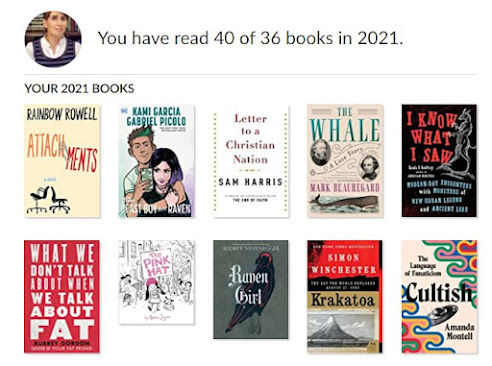
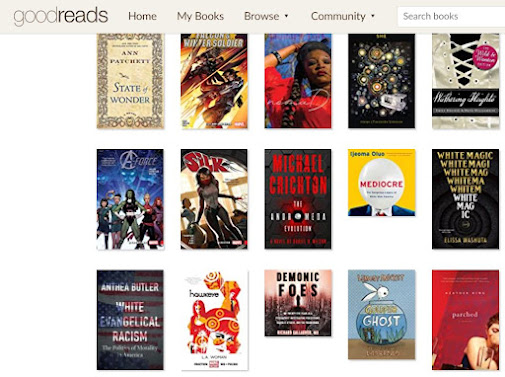
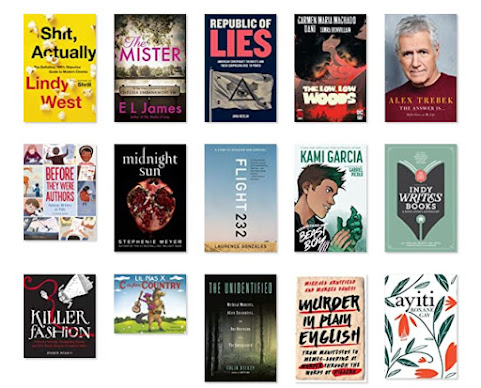
This post has two kinds of affiliate links. The ones directly below the pictures link to Amazon, and the Bookshop.org affiliate links are in a widget at the bottom of the post.
I don't necessarily recommend this Evangelical Christian tome. I wouldn't have chosen it or known about it except that it showed up as a donation in my Little Free Library.
Of these, the best was The Whale: A Love Story by Mark Beauregard. It's the fictionalized story of the forbidden love between Herman Melville and Nathaniel Hawthorne. It's so good and so sad. The Hawthorne character is exactly how I always imagined Nathaniel Hawthorne would be. Herman Melville is, surprisingly, extremely relatable.
I haven't read Moby Dick, and honestly I probably never will because I asked my dad what it was like and he said, "Boring." We both like the Last of the Mohicans novels, so if he thinks it's more boring than James Fenimore Cooper's six pages of descriptions of trees, it's probably pretty boring, even if it is an extended Symbolist metaphor for love.
Just know, as a bit of background information, that classic American literature lives rent-free in my mind at all times.
There are a lot of really good ones in this middle photo, but I think my absolute favorite was State of Wonder by Ann Patchett. My copy belonged to my grandma, who loved Ann Patchett, especially Bel Canto. State of Wonder knocked me for several loops and, although it may seem counterintuitive to read about diseases in the midst of a pandemic, actually a good read for the COVID-19 outbreak. I highly recommend it.
Carmen Maria Machado's graphic novel The Low, Low Woods is excellent, and of course reading Alex Trebek's memoir was a bittersweet pleasure. I think my favorite of these was the first one I read, Ayiti, a short writing collection by Roxane Gay. Everything Gay writes is phenomenal. And I'm not even that upset that she and her wife moved (moved back, in Gay's case) to Omaha and don't live in West Lafayette, Indiana anymore (where I always hoped I would accidentally run into them. Oh well, Indianapolis still has John Green).
What was your favorite book that you read in 2021?
Good news came yesterday in the form of an email from my local library: Colin Dickey's The Unidentified: Mythic Monsters, Alien Encounters, and Our Obsessionswith the Unexplained was ready for me to borrow the audiobook. I started listening to it yesterday.
I'd listened to the audiobook version of Dickey's previous book Ghostland: An American History in Haunted Places some time in the last year or so - apparently I didn't record it in Goodreads, but it was some time when I lived in my apartment in downtown Indianapolis. I could barely put it down. I'm well-known to enjoy stories about hauntings (note that I don't believe in ghosts) and modern folklore.
In chapters 1 through 3 of The Unidentified, Dickey discusses the modern folklore of Mount Shasta and the alleged Lemurians. In her Demonslayers novel series, author Kate Douglas used the mythology of the Lemurians to weave her tale. She got me interested in the discarded scientific theory of Lemuria - an incorrect but perfectly respectable theory about how lemurs ended up on the island of Madagascar - and how charlatan Helena Blavatsky turned the faulty science into a woo-woo spiritualism that endures among the alternatively spiritual today.
What I didn't learn from Douglas's fiction but did learn from Dickey's nonfiction: the indigenous people of Mount Shasta and the surrounding region are the Winnemem Wintu nation. Just like reading Stephenie Meyer's Twilight series must be taken with a grain of respecting the Quileute people, who are real human beings and not Meyer's fictional creation, if you're going to approach the folklore of Mount Shasta, respect the Winnemem Wintu people and their traditions (or GTFO).
I highly recommend that readers of Stephenie Meyer visit the Truth vs. Twilight website. If at all possible, please help the Quileute tribe move its school to higher ground, out of the flood plane, by contributing to the fund for the school.
(P.S. Yes, I am still working my way through Midnight Sun. It's not that I'm not enjoying it, it's just that reading physical books has been difficult for me during the pandemic. I've been reading ebooks on my phone almost exclusively.)
But back to the Winnemem Wintu people: Visitors to Mount Shasta sometimes engage in various New Age spiritual practices: Leaving crystals, building makeshift shrines, leaving behind the ashes of their deceased loved ones, and similar behavior. By themselves, there is nothing wrong with these behaviors per se. I'm not judging New Age practitioners.
The problem with this is that before New Age spirituality existed in California, the Winnemem Wintu were there with their own religion, in which Mount Shasta is sacred ground. Just like you wouldn't walk into a mosque and leave a Christian shrine there, you obviously shouldn't leave spiritual or secular items behind when you visit Mount Shasta.
If I'm lucky enough to go back to California, I may get to visit Mount Shasta some day. If I do, I'll be sure to observe appropriate behavior for being invited to visit my neighbors' sacred space, just as I did when I visited Serpent Mound.
By the way, if you can visit Serpent Mound once we get out of this pandemic, you definitely should. What archaeology can tell us about the ancient people of what is now Southern Ohio is fascinating, in addition to the earthwork itself. Plus you're in the foothills of the Appalachian Mountains, which in summer is deeply green, remote, and gorgeous.
After 4 years of outrageous disrespect for indigenous people's rights in the U.S., let's let 2021 be a return to recognizing the basic rights of all of our neighbors, no matter which sovereign nation they hail from.
Currently Making: Another handmade, one-of-a-kind collage and art book that will be featured in my Etsy shop, Writer's Brain Has Wings like this one.
Currently Watching: The Haunting of Bly Manor on Netflix, based on The Turn of the Screw by Henry James, which I finally read about Halloween time in 2019. In the TV series, the governess's name is Dani. The setting has been moved to the 1980s, which I enjoy for the nostalgia factor.
Currently Reading: Midnight Sun by Stephenie Meyer. I'm reading it slowly. I started it in the middle of July and so far I'm only up to the part where Edward and Bella have dinner together at the restaurant in Port Angeles.
Currently Listening: I have a rotation of favorite podcasts. I don't listen to every single episode, but I do listen to all the ones that interest me. Some of my top podcasts include:
- Omnibus with Ken Jennings and John Roderick. Check out the recent Aztec death whistles episode: eerie and informative!
- FireStarters Podcast. Dan and Henry explain the history of everyone and everything mentioned in Billy Joel's "We Didn't Start the Fire." We're learning world history of the 20th century and it's fun!
- None of This Is Real. Sarah and Damani are two North Carolina friends who tell each other stories about weird phenomena. On one episode, a listener shared a dream about a fictional person called Nut Guttson and I have been laughing at the name "Nut Guttson" ever since.
- Terrible Book Club
- Book Vs Movie Podcast. The two Margots have done The Perks of Being a Wallflower, Toni Morrison's Beloved, In Cold Blood, Elton John's biography Me vs. the movie Rocketman, and many more. This is one of my very, very favorites.
- You're Wrong About. Michael Hobbes and Sarah Marshall debunk pop culture myths one at a time, sometimes with the aid of a book. They're both writers and Sarah is currently working on nonfiction about the "Satanic Panic" of the 1980s. The "killer clowns" episode references Loren Coleman, who writes the Twilight Language blog. It doesn't have anything to do with the Stephenie Meyer series at all, but it does have to do with eerie synchronicities and other kinds of things you might see on Ancient Aliens.
I listen to all of my podcasts on Spotify Free, but many of these are available across numerous platforms.
What are your currentlies? What are you making, reading, watching, and listening to?
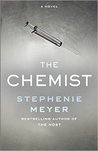
This is the best book Stephenie Meyer has written so far. I really enjoyed the Twilight series, and I liked most of The Host(although I thought it was quite a bit longer than it needed to be). I know her writing isn't perfect (no one's is), but she is still getting better.
For me, the best thing about Stephenie Meyer's writing is the way she understands those deep moments of connection between two human beings. In the Twilight books, she made me recall the experience of being in love for the first time as a teenager. In The Host, she drew a beautiful portrait of a connection that crossed worlds and species in the romance between Ian and Wanderer.
In this book, the character we generally know as Alex (not her real name) doesn't have any close attachments to anyone in her life. She learns to, through a difficult and painful process. Daniel starts out as the war criminal she's chosen - through an unlikely set of circumstances - to torture for information.
Oh yes, Alex is a difficult women. Meyer doesn't let us go easy on her or warm up to her quickly, but that's okay. This is a suspense novel taking place in the world of elite and highly-trained agents. Elite agents aren't people-people, and Alex is no exception. Getting us to invest emotionally in these characters is difficult, because they are difficult and complex characters.
Meyer pulls it off. Near the end, the unthinkable happens, and it's a heart-wrenching moment.
In the meantime, this is an absolute page-turner. Compared to the slow build of The Host, this book reads lightning-quick. Alex's life is in constant danger, and as a reader I constantly had to know what she was going to do next.
What Meyer can still improve upon is the way she writes relationships between women. This improves a bit toward the end of the novel, when she part-way humanizes a character who had previously been portrayed as Alex's rival. Still, there's the rivalry and the implication that the woman's beauty and sexuality are somehow negatives. Alex also has a few judgmental moments directed at random strangers. But the overall quality of Meyer's writing is moving in the right direction.
Even if you're not necessarily a fan of Meyer based on her previous books, if you're a devourer of suspense and willing to suspend some disbelief at the more unlikely aspects of thriller novels, you should find this enjoyable.
FYI, this may be a tough read if you love dogs. There are dogs, and those dogs are in peril.
I purchased this hardcover book at my local Barnes and Noble. I was not obligated in any way to review it.
I finally finished listening to the audio book version of Grey: Fifty Shades of Grey as Told by Christian by E.L. James. I must say, I genuinely enjoyed it, in no small part to the voice acting talent of Zachary Webber.
Many of my thoughts about this audio book are captured in my status updates over the two months it took me to "read" this book on my commute. (Click on the image or zoom to make it more readable.)
I enjoyed this as a lengthy and complicated piece of Twilight fan fiction, and I find that I genuinely care about these fictional characters. I want Ana and Christian to succeed as a couple. Of course we know they do - they finish as a nice married couple with two children - but they're actually broken up at the end of the first novel of the trilogy. It's a downer ending, made somewhat more hopeful in this version.
I really do get a kick out of the way Kate irks Christian.
But I still don't want to see the movie. Jamie Dornan is quite attractive, and being a person of Northern Irish descent myself I quite like him, but I like my imaginary Christian Grey better. He doesn't resemble any living person that I know of, although from here on out he may sound like Zachary Webber in my imagination.
I do think Kristen Stewart would have made an amazing Ana, though. That's not a slight against Dakota Johnson. I find her beautiful and charming.
Dakota Johnson. Creative Commons image by GabboT
I feel especially compelled to protect and defend the young Ms. Johnson, and I suppose it's because I've long felt compelled to protect her mother, Melanie Griffith. Do you all remember The Bust Guide to the New Girl Order?
It was first published in 1999, and it's very, very '90s. It represents some of the early work featured in the women's magazine, which started out as a small feminist/girl culture zine, itself a very 1990s concept. I mention the anthology because it contains an essay called "Bring Me the Head of Melanie Banderas" by Sarah Feldman writing as Dixie LaRue. It's much meaner and snarkier than what Bust publishes today, and it's all about what a terrible actress and human being Melanie Griffith (married to Antonio Banderas at the time) is.
Like a Judge-y Judy, Dixie LaRue recounts Griffith's crimes against womankind, including getting multiple tattoos (!) and having breast implants. Body shaming much? She takes Griffith to task for starring in sexist movies but doesn't question why the movie-going public lets filmmakers get away with pernicious gender stereotyping and sexist slander. It's very old school, and it makes me want to wrap Griffith in a nice warm blanket, hand her a latte, and assure her she's worthy of love and respect.
So, with absolutely no offense meant to Jamie Dornan or Dakota Johnson, I'll just watch the "movie" inside my head and fan-cast it with the Twilight cast members.
"Lelliot" hates jellyfish.
If I were summing up this book in one sentence, it would be, "A brave woman explores the limits of her sexuality; a recovering abuse victim explores the limits of his emotional vulnerability." And I liked it.
Life and Death: Twilight Reimagined by Stephenie Meyer
My rating: 4 of 5 stars
When this new, gender-swapped version of Twilight came out on the same day as Carry On and the illustrated Harry Potter #1, I was very excited. I knew I had to read it. Despite all the criticism I've read and heard about the Twilight Saga, I still get the thrill of early first love when I read Edward and Bella's story or watch one of the movies. Is it perfect? No. Do I like it anyway? Yes.
As I began reading the story of Beaufort (Beau) Swan, human, and Edythe Cullen, vampire, I found myself enjoying it. Sure, I was a little distracted by trying to figure out how the new characters corresponded to the old ones. And yes, I was a bit critical inside my mind of some of the new names. I really don't care for the name Archie at all - I keep picturing the comic book character and not a gender-swapped Alice. I think I would like Earnest better as a name if it were spelled "Ernest," as in Mr. Hemingway. Eleanor seems a little frumpy for such a beautiful woman.
Most of the names, I like. I like Joss, Jessamine, and Royal. I like Royal's man-bun. I wish I had a visual reference for regal, blond Royal with his hair in a masculine up 'do.
Even though the ending of this book is quite conclusive - no room for three sequels - and different from the original - and frankly sad - I'm mostly satisfied with the familiar joy I gleaned from this story. Again. Hey, I've read Wuthering Heights at least four different times, and I still love that. Twilight sticks with me like that. (And a lot of people hate Heathcliff and Catherine, too. But I'm not one of them. They're deeply flawed as people, yes, but still great characters.) I'm happy to get the chance to revisit it in a fresh new incarnation.
I borrowed this book from my local library and was not obligated in any way to review it.
I haven't read any of the other books in Jane Jamison's Werewolves of Forever, Texas series, but I thought I'd give this one a try. I found it for a deeply discounted price at an outlet store and I couldn't resist snapping it up. I wasn't at all disappointed. It wasn't necessary to read the first 8 books in this series to understand who Milly was as a character.
Milly is the waitress at the diner in the tiny, supernatural town of Forever, which reminded me of Charlaine Harris's Midnight, Texas. Milly can't read minds like Sookie Stackhouse, but she can shapeshift at will into a werewolf. She doesn't even have to wait for the full moon.
One thing is missing from Milly's life, though: unlike most of the werewolves in Forever, she is unmated. Like Jacob Black in Twilight, she expects to "imprint" on someone - maybe two or more someones. It appears that polyandry is not unknown among these particular wolves. In this regard, they're not unlike the wolfish Chanku in Kate Douglas's Wolf Tales series.
I'm a big fan of paranormal romances, so I enjoyed that this mythological territory was somewhat familiar from some of my other favorite series.
Like clockwork, Milly's perfect matches seem to come along in the forms of California transplants Dan and Matthew Hudson. But Dan and Matthew bring a bit of baggage - their 15-year-old niece Riley, whose parents were killed in a car accident. Her uncles are her surrogate parents.
Riley does NOT warm up to Milly quickly. Cue the dramatic suspense: Riley's unwise flirtation with some immature teenage vampires leads the vamps to kidnap and attempt to sacrifice her for a ritual. Bravely, Milly offers herself in exchange for Riley. She's rescued by the brothers before the vampires kill her, and Milly-Riley relationship is permanently turned around.
So Milly gets her perfect mates and her happy ending. Who could ask for anything more?
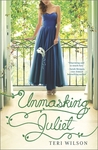
Two households, both alike in dignity/In fair Napa, where we lay our scene. In this delightful modern twist on a beloved Shakespearean classic, author Teri Wilson turns a bloody tragedy into a chocolate-drenched romance in which the worse thing that happens is a non-fatal, accidental dog poisoning. (Animal lovers, fear not.) Wilson tells us in her introduction, "I really wanted a chance to give these star-crossed lovers the happy ending they deserve." This is a romance novel, after all.
No Tybalts were slain in the making of this novel.
Personally, my first exposure to Romeo and Juliet was in the 7th grade. My English teacher, Mrs. O'Brian, went on maternity leave midway through the play, and the class finished it out with Mr. Bowerman. He was the greatest substitute teacher of my life. I'll never forget that when it came time for him to read the line, "How now, Balthazar?" he said, "How now, Brown Cow?" The class laughed for a solid 10 minutes, and it still makes me chuckle to this day. I re-read the play with my 9th grade class, and it hadn't lost any of its charm or magic.
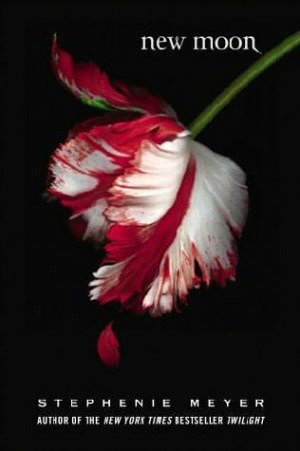
For me, some of the fun of this novel is the way Wilson incorporates familiar lines from Shakespeare's play. Unmasking Juliet seems to be set in a slightly alternate universe in which no one has heard of the fictitious Romeo and Juliet. The characters aren't referencing the play within the world of the novel the way Bella and Edward consciously do in New Moon. They're simply living a (happier) version of it.
The female protagonist of Wilson's version is third-generation chocolatier Juliet Arabella. The male protagonist is Leo Mezzanotte. (Leo - as in DiCaprio - as in the Romeo of the Baz Luhrmann film adaptation. I see what you did there, Ms. Wilson.) He's the grandson of Juliet's grandmother's original business partner in the chocolate business. The Arabellas and Mezzanottes are now rivals as bitter as unsweetened baker's chocolate.
Of course, Leo's only love springs from his only hate. From the moment the two meet - identities concealed in Italian carnival masks - there's a magnetic attraction. They can't get each other out of their minds. I think we all know where this is going, but the fun is in getting there.
By coincidence, the names Arabella and Mezzanotte can combine to make Bellanotte - Italian for "beautiful night."
For never was a story of more "Whoa!"/Than this of Juliet and her Leo.
I received a copy of this book through the Amazon Vine program in exchange for this review, which represents my own honest opinion.
The hubby and I recently finished watching all seven seasons of Californication on Netflix. I didn't love the show, mainly because the two main male protagonists, Hank Moody (David Duchovny) and Charlie Runkle (Evan Handler), are misogynistic, unrepentantly racist douchebags. (Unrepentant racism was also a problem with Weeds, a show I liked better than Californication despite its flaws.)
The main female protagonists, Karen and Marcy, aren't much better. Karen is ridiculously indecisive. Marcy has a serious cocaine addiction and a mean streak. Mia is a thief who perpetrates a literary fraud, and a troublemaker in general. (A troublemaker isn't necessarily a bad thing, and there's a part of me that feels for Mia.) They're difficult women - interesting and complex characters, to be sure, but still not very likable as written. Methinks the team of writers was overburdened with testosterone.
Instead, my favorite women of the series are:
1. Becca Moody. By far the most sympathetic character on the show, Karen and Hank's musically talented daughter's biggest fault is her terrible, terrible taste in boyfriends. (One of them is played by The Perks of Being a Wallflower's Ezra Miller. He was a cheater.) Can we really blame her, though? Karen and Hank are hardly good role models of adult relationships. I'm not judging them for non-monogamy, which I do not have a problem with, but for their reckless attitudes toward other people's feelings and disregard for the consequences of their actions.
Becca is played by Madeleine Martin. She's a beautiful young woman (born in 1993, so currently aged 21) with the sweetest, most musical voice. If you watch Cartoon Network, you may know her as the voice of Fionna on Adventure Time.
2. Jackie. Played by Susan Sarandon's daughter, Eva Amurri Martino, Jackie is a recurring character in my favorite season, Season 3. She's a student in Hank's creative writing class by day and a stripper by night. Like her mother (on whom I have a perma-crush, no matter her age - loved her as the futuristic shamaness in Cloud Atlas), Amurri Martino is absolutely drop-dead gorgeous. My favorite thing about Jackie as a character is the way she draws attention to the fact that strippers - a job too often degraded, along with all the forms of sex work and related jobs - are human beings, not things to be used and discarded. Go girl.
Like many of the fictional characters on this list, Jackie is never given a last name. In general, if a character isn't given a last name, that means the character doesn't get much development in the series. It's telling that a male character is much more likely to be fully named on this show.
3. Faith. Played by Maggie Grace, Faith came along in Season 6, when Hank is in rehab for his serious drinking problem. (It doesn't work.) Faith is a muse, inspiring rock musicians to write beautiful songs. She acts as Hank's muse when he has to turn his novel-turned-movie into a rock opera. His work sucks, but that probably has to do with Hank's limited productivity rather than with Faith.
You may remember Maggie Grace from such films as Twilight: Breaking Dawn Pt. 2 and such TV shows as Lost. In the Twilight Saga, she was the vampire Irina. She ran to the Volturi to tell them about what she thought was an immortal child, and her reward for trying to do the right thing - at least in her mind - was death. On Lost, as Shannon she overcame her spoiled, selfish, manipulative nature and fell in love with Sayid, and her reward was death. Her characters have no luck.*
4. Jill. Hank's TA (teaching assistant)/one of several lovers in Season 3 is played by Diane Farr, who also wrote The Girl Code. She doesn't just play a smart cookie on TV, she's an actual smart cookie. Jill No Last Name represents women who are very, very smart and also highly sexual, with no contradictions between the two aspects to their personalities. Also, she is absolutely gorgeous.
5. Trixie. Another working girl, Trixie No Last Name the call girl is played by Judy Greer. Greer deserves to be a Hanukkah Hottie, and she should have a bigger fandom than she does. She's played a few roles I find particularly memorable, including Fern/Violette in a '90s cult classic, Jawbreaker, and the one you'd least suspect of being a werewolf in a stupid horror movie that I love, Cursed. (Okay, I really just like the part where Milo Ventimiglia tries to kiss Jesse Eisenberg.) She's also an author.
Trixie is a sex worker because she loves sex. Like Jackie, she helps humanize and give dignity to women that society traditional considers unacceptable.
6. Pearl. Played by Zoe Kravitz (our beloved Christina from Divergent), Pearl is not a love interest of Hank or Charlie, but rather the friend and bandmate of Becca. Their fictional band is called Queens of Dogtown, whereas Kravitz's real band is called Lolawolf. Lolawolf is a mixed-gender trio, but the Queens of Dogtown are an all-woman group.
7. Sue Colloni. The most outrageous and over-the-top of the characters listed here, Sue Colloni is an agent Charlie comes to work with after he's fired from his previous job for excessive masturbation at work. She's played by Kathleen Turner with outrageous aplomb, because Colloni (as she likes to call herself) knows no shame. Why should she? She knows she's the best, even if her working relationship with her artists is highly unconventional and unabashedly sexual. Colloni represents the woman who's old enough to know what she wants and go for it.
*Shannon and her stepbrother Boone (played by Ian Somerhalder pre-Vampire Diaries, who by the way is currently dating Nikki Reed from the Twilight movies) are an example of a more socially acceptable incestuous fictional character pairing, as we discussed here, because they are not biologically related. These types of pairing make up a subgenre of erotica called pseudo-incest. And I'm not judging you if you're into it.
This is an affiliate link:
All In: 25 Erotic Storiesby Emily Cantore. $4.99 from Smashwords.com
25 erotic short stories from the hot and bothered mind of Emily Cantore! To buy individually would cost a bundle! More than 130,000 words of first-time lesbians, threesomes, girls experimenting, sex toys and much more. Guaranteed to warm you up and get your mind racing!
Content Warning (CW) for discussion of child abuse. The Bourne Identity
YouTube recommended this video to me the other day.
This video is a bit silly. Mario is essentially just reading an article he found on the (unaffiliated with him) website The Vigilant Citizen. The article is from June 2012, and it includes photos of Twilight stars Robert Pattinson and Kristen Stewart - separately - in photo shoots from glossy fashion magazines. The article makes reference to MK Ultra, a favorite among conspiracy theorists a.k.a. alternative media sources. (No judgment - remember, I like to examine so-called conspiracy theories through the lens of modern folklore and urban legends.)
Here's how the theory basically goes, according to my understanding:
- During/after the Korean War, the U.S. government saw the American prisoners of war were being manipulated by their North Korean captors to say anti-American things. (This part seems to be factual.)
- As a defense strategy, the U.S. began researching ways in which the human mind can be controlled. The "MK" part stands for "Mind Kontrol." Part of the U.S. government experiments under this program involved giving doses of hallucinogenic drugs, including LSD, to people without their knowledge or consent. (This part is factual and documented.)
- Although the program was alleged to have ended in the 1970s, it continues today. Actors, musicians, and other popular culture figures undergo mind control experimentation that makes them into Jason Bourne-type "puppets" who can be triggered by their handlers into performing whichever action their handlers want them to take. The process involves taking these people into a secret place where they are abused and tortured until their minds split like people with dissociative disorder. They come out with alternate personalities that don't know what the other personalities are doing. Common triggers include Disney movies, Alice in Wonderland symbolism, and Wizard of Ozsymbolism (This part is speculative.)
Mario is an interesting vlogger. I don't see eye to eye with him on many, many issues. He's anti-feminist, for example, and he doesn't believe in the theory of evolution. I'll never quite understand why a certain segment of the Christian population has to reject the scientific method, but hey, that's just me (and people who believe in a rational universe). But I think he's basically coming from a well-intentioned place, even if his "facts" are intellectually questionable. I say this so you know my intention is not to mock or disrespect him. On a person-to-person level, I kinda like the guy. Like me, he was raised as a Roman Catholic. He's a French Canadian who learned English as a second language.
Ellie Goulding's "Lights"
At this point, I have been exposed to enough YouTube and blog material by The Vigilant Citizen, Mario the Vigilant Christian, and others to be able to "talk the talk" of MK Ultra, as you'll see below. If I were going to pick out a song to use as an example of mind control talk in popular media, that song would be "Lights" by Ellie Goulding.
I know you can interpret the lyrics of just about any song to mean whatever you want them to mean. In college I once wrote a paper about how the lyrics of Hole's song "Violet" could be interpreted as a warning about the dangers of alcohol abuse and another paper on how the Beatles song "I Am the Walrus" was John Lennon's plea for American authors, but especially Edgar Allan Poe, to be taken as seriously by the literary world as classical British authors. I knew those things weren't intended by the songwriters, but at the time I thought it was humorous to tortuously over-interpret things for allegedly comical effect.
So, please take this with a large grain of salt and, perhaps, a rocks margarita.
I hear "Lights" quite often on the station Tit Elingtin and I listen to on our day job as remodeling contractors. We listen to an "easy listening" station, while essentially means Top 40 radio without the rap songs. I liked the way the song sounded before I even listened to all the lyrics. I started to like Ellie Goulding even more when I heard her song "High For This (The Weekend Cover)." Then, of course, she contributed the song "Beating Heart" to the Divergentfilm soundtrack. It was one of my favorite songs for a while.
BUT I can't stand her song "Burn." I just find the very high-pitched section of this song incredibly annoying. Sorry. Even the best musical artists have an occasional fail. Now back to "Lights."
According to SongMeanings.com, which lets anyone add their comments on what they think the song means, the simplest explanation of this song is that it's about Goulding's childhood fear of the dark. She was afraid of the dark, so she had to sleep with a light on in order to feel safe.
Other theories think the song refers to:
- A battle with depression or another mental illness, such as schizophrenia
- Childhood sexual abuse
- An encounter with an extraterrestrial spacecraft and/or Goulding herself being from another planet.
Lyrics
Let's look at the lyrics of "Lights."
I had a way then losing it all on my own I had a heart then but the queen has been overthrown And I'm not sleeping now, the dark is too hard to beat And I'm not keeping now the strength I need to push me You show the lights that stop me turn to stone You shine it when I'm alone And so I tell myself that I'll be strong And dreaming when they're gone 'Cause they're calling, calling, calling me home Calling, calling, calling home You show the lights that stop me turn to stone You shine it when I'm alone home Voices I play within my head Touch my own skin and hope that I'm still breathing. And I think back to when my brother of my sister slept In an unknown place the only time I feel safe You show the lights that stop me turn to stone You shine it when I'm alone And so I tell myself that I'll be strong And dreaming when they're gone 'Cause they're calling, calling, calling me home Calling, calling, calling home You show the lights that stop me turn to stone You shine it when I'm alone home Light, lights, lights, lights Light, lights, lights, lights (Home, home) Light, lights, lights, lights Light, lights You show the lights that stop me turn to stone You shine it when I'm alone And so I tell myself that I'll be strong And dreaming when they're gone 'Cause they're calling, calling, calling me home Calling, calling, calling home You show the lights that stop me turn to stone You shine it when I'm alone home Home, home Light, lights, lights, lights Light, lights, lights, lights... Writers: Ash Frances Howes, Lorin Ashton, Ellie Goulding, Richard StannardCopyright: Sony/ATV Music Publishing (Uk) Limited, Major 3rd Music Limited, Amorphous Music, Global Talent Publishing Interpretation The first line could refer to a childhood fear of the dark: "I had a way then (when I was a child) of losing it (losing my fear of the dark) all on my own (I simply turned on my night light)."
Creative Commons image by Marple Bridge Photography
The second line, though, seems a little strange in that context. The queen has been overthrown? That fits more with the mental illness theory - the "queen," or rational part of her mind, has been "overthrown" or overwhelmed by the illness. It also makes sense according to the childhood sexual abuse theory: she had a heart then (as a child, before she was abused) but then she learned to shut off her feelings after "the queen was overthrown," which could refer to an adult authority figure, such as her mother, being unable to keep her safe from the abuse. Of course, both mental illness and sexual abuse could be considered part of MK Ultra-type conditioning - a child who is being groomed to be a pop star is abused until her mind splits, and that way she'll be easily controllable.
The chorus starts off with, "You show the lights that stop me turn to stone/You shine it when I'm alone/And so I tell myself that I'll be strong/And dreaming when they're gone." Now this seems to be saying the opposite of what we might expect. The lights were supposed to protect her from fear of the dark, right? So why is saying that the lights "stop me?" This speaks to the alien theory, I suppose: the lights that stop her are the sudden lights from a spacecraft that appear. She is either stopped simply by curiosity, or paralyzed with fear of them, or the extraterrestrial beings have stopped her somehow.
Some theorists, depending on their point of view, would go so far as to claim that aliens are synonymous with demons. They say that when people think they are abducted by aliens, they are really being tormented by fallen angels. If we are going with the MK Ultra theory, then we'd probably say that the handlers who perform the abusive experiments disguise themselves as aliens--or that they're somehow in league with actual aliens, who may or may not be fallen angels.
Creative Commons image by Mingle Media TV
The "I tell myself that I'll be strong" could refer to being strong in the dark when there are no lights - a simple enough explanation, although it doesn't seem to match up with "lights that stop me, turn to stone" line. What does turning to stone mean, anyway? Shutting off one's emotions so that one is as imperturbable as stone, perhaps, which fits with the abuse theory.
"Dreaming when they're gone" seems to fit this theory as well; the child cannot sleep until her abusers are gone. What would "they're" refer to in the context of fear of the dark? Nightmares, perhaps. Maybe she simply means that sleeping in the dark makes her prone to nightmares.
The "calling me home" of the chorus is why some people interpret this song to mean that Goulding herself has come from the star people. The lights call her home? Why, that's her fellow extraterrestrials coming back to claim her. Alternatively, we might say that the lights calling her home are some kind of signal or trigger that her handlers use when it's time for her to "come home" to be reprogrammed. The "reprogramming" process is painful and frightening, and that's why the singer seems to be so scared and depressed.
In the second verse, "Touch my own skin and hope that I'm still breathing" sounds a bit ominous, but fear - including simple childhood fear of the dark - could do that to a person. But then she sings something rather strange: "And I think back to when my brother of my sister slept/In an unknown place(,) the only time I feel safe." The only time she feels safe is when her brother and sister slept in an unknown place - now that seems odd. If a child were simply scared of the dark, wouldn't we expect her to say that she only felt safe when her brother and sister slept in her room with her, or when they were in the house with her - sort of a "safety in numbers" feeling? What is the "unknown place?" Is she saying that she wants her brother and sister to sleep away from where she is, because wherever she is is unsafe, and she wants to keep them safe? That line really makes it seem as if something other than mere darkness frightened her when she was a child.
In short, although this song is supposed to be about using light to ward off fear of the dark, the lyrics actually seem to be suggesting exactly the opposite - that the lights are failing to ward off the fearful thing that the dark brings, whatever that thing may be. But only the songwriters know for sure what they were thinking.
Nothing as erotic as Morgan Black's Fireside Series appeared in my shopping basket at my local library's used media sale yesterday. These are the things I did get, though:
I love Marta Acosta, and my fondness for Marvel has grown immensely since I first saw The Avengers. I've been wanting this book for over a year now, and here it is!
I don't know anything about this series, and I don't think it has anything to do with Vampire Academy, but if Richelle Mead wrote it then I'm willing to give this graphic novel a chance.
I gave away my copy of Volume 1 a long time ago, but look at how beautiful Edward looks on the cover. Young Kim's artwork is beautiful.
I also got three DVDs. I had hoped to find a bigger selection, including some of the young adult book-to-film adaptations that I've recently missed (The Book Thief, Ender's Game, and The Mortal Instruments: City of Bones). But instead I found these.
This was my personal haul. I also got 10 books from my grandmother's handwritten, extensive, alphabetized list. She gets a mix of literary fiction and suspense:
Doughty, Louise. Whatever You Love
Erdrich, Louise. The Round House
Haigh, Jennifer. Faith
Kellerman, Jonathan. Killer
LaPlante, Alice. Turn of Mind
Mathis, Ayana. The Twelve Tribes of Hattie
Meyer, Phillip. The Son
McGrath, M.J. White Heat
Patchett, Ann. State of Wonder
Quinlan, Anna. Still Life with Bread Crumbs
Those should keep her reading for at least six months. What are you reading?











.jpg)


