Erin O'Riordan writes smart, whimsical erotica. Her erotic romance novel trilogy, Pagan Spirits, is now available. With her husband, she also writes crime novels. Visit her home page at ko-fi.com.
Happy October! I'm sorry I haven't been blogging much lately. I've just started a new Corporate Day Job. I'll try to least post about some interesting audio books I listen to in my car on the way to and from work, like this one.
My brother loaned me this audio book. I'd read most of these stories and poems before, but they were still enjoyable. "Tamerlane" is really not a great poem, but it's always fun to hear a dramatic reading of "The Raven."
My favorite of the material that was new to me was the sketch about the man who was hypnotized at the point of death, "The Facts in the Case of M. Valdemar."
The biography was interesting, too. Here's a fun Poe tidbit: Although he was often a harsh, cruel critic of work he disliked, he genuinely liked the work of Elizabeth Barrett Browning. He wrote positive reviews of her work in his newspapers and was influenced by her when he wrote "The Raven."
This book makes the case that the probably cause - or at least one cause - of Poe's final delirious illness and death may have been the 19th-century practice of cooping, a kind of voter fraud. It explains why he was found wearing someone else's clothes. Unscrupulous electioneers would dress the same intoxicated man up in different outfits so he could vote multiple times.
Today's Observance (United States): Martin Luther King, Jr. Day
Beatles Trivia
January 19 January 19, 1971: During Charles Manson’s murder trial, Manson’s defense attorneys introduce the Beatles’ song “Helter Skelter” into evidence. According to Los Angeles Deputy District Attorney Vincent Bugliosi, one of Manson’s delusion beliefs was that the song, written by Paul McCartney, referred to a coming race war.
In reality, the lyrics refer to the literal meaning of a helter skelter, an English amusement ride consisting of a tower with a slide curling around it.
Bummer January 19
January 19, 1729: Restoration-era playwright William Congreve dies of complications from internal injuries he suffered in a September 1728 carriage accident.
January 19, 1903: Newspaper publisher and political powerbroker Narciso Gener Gonzales dies of a gunshot wound inflicted by James H. Tillman, the lieutenant governor of South Carolina. Gonzales was critical of Tillman’s uncle Ben Tillman, a U.S. senator. Tillman was a strict segregationist who favored harsh repression of African-American voting rights in South Carolina. Gonzales, although himself a segregationist, was also an anti-lynching activist who abhorred Tillman’s support for violence.
January 19, 1991: 20-year-old Austrian ski racer Gernot Reinstadler, competing in a qualifying race in Wengen, Switzerland, veers slightly to the right during the course of the downhill race. This slight deviation causes one of the tips of his skis to become tangled in the side netting while Reinstadler is still moving at a high speed. Reinstadler suffers a severe injure that essentially threatens to split his body in two from the pelvis upward. Although flown by helicopter to the nearest hospital and given multiple blood transfusions, the young man dies from the injury.
October 1, 1941: 52-year-old Aline Murray Kilmer, herself a poet and also the widow of Joyce Kilmer, a poet killed in World War One, dies following three years of an unknown, but excruciatingly painful, illness.
October 1, 1951: Journalist Pauline Pfeiffer dies at age 56 of acute shock. She had a rare pheochromocytoma tumor on one of her adrenal glands. It appears that when Pauline’s transgender daughter Gloria was arrested for using a women’s bathroom and Gloria’s father Ernest Hemingway called his ex-wife Pauline to tell her, the news of Gloria’s arrest caused Pauline’s adrenal tumor to produce the hormones that caused the fatal state of physical shock.
October 2, 2018: Saudi Arabian journalist Jamal Ahmad Khashoggi, who resides in the U.S., is murdered at the Saudi consulate in Istanbul, Turkey. Khashoggi’s writings were critical of the Saudi government, and Saudi Arabia’s Crown Prince Mohammed bin Salman is suspected of being involved in the assassination.
October 3, 1849: On this election day, Edgar Allan Poe is given alcohol and marched from polling place to polling place in an illegal voting scam that was popular at the time. It may have contributed to his death four days later.
October 4, 1951: Henrietta Lacks passes away from complications of cervical cancer. She had been treated with radiation therapy at Johns Hopkins Hospital in Baltimore. As a result of her cancer and/or the radiation, her organs failed. After her death and without her knowledge or consent, Lacks’ cancerous cells will be collected and used to start an “immortal” cell line that will be used in most of the major medical research of the 20th century.
October 4, 1974: Poet Anne Sexton dies by suicide in her car, locked inside her garage, by carbon monoxide poisoning. She is 45 years old.
October 5, 1995: 50-year-old voice actor Linda Gary, who provided an impressive number of cartoon characters with their voices in American animation of the ‘70s and ‘80s, dies of brain cancer.
October 7, 1849: In Baltimore, Edgar Allan Poe dies.
October 7, 1992: The last fluent speaker of the Ubykh language, Tevfik Esenç, dies at the age of 88. The Ubykh people are a subset of the Circassian people, who were the victims of ethnic cleansing by the Russians in the 18th and 19th centuries.
October 10, 1901: 23-year-old David Park Barnit, a poet of the Decadent school of poetry, dies suddenly of what newspapers describe as “an enlarged heart.” Some suspect this may be a cover story and that the young poet may have taken his own life.
October 12, 1943: Poet Robert Traill Spence Lowell IV, best known as Robert Lowell or Robert Lowell, Jr., is sentenced to a year in prison for draft evasion for being a conscientious objector to service in World War II.
October 19, 1950: Poet Edna St. Vincent Millay, age 58, dies after apparently suffering a heart attack and falling down the stairs of her home.
October 20, 1728: The Copenhagen Fire of 1728 begins and burns through October 23rd. It destroys nearly a third of the city’s buildings, leaving approximately 20% of Copenhagen’s population homeless. The University of Copenhagen library loses approximately 35,000 texts.
October 21, 1969: Jack Kerouac dies of internal abdominal hemorrhage caused by his heavy alcohol use. He is 47 years old.
October 22, 2009: The county government of Zhenyuan, Gansu province, China, announces on social media that it has burned 65 “illegal publications” outside of a local library. It describes the books as either “religious” or displaying “leanings,” presumably leanings that tend to disagree with the Chinese government.
On the same day, in the United States, novelist/blogger Mac Tonnies dies at age 34 of a cardiac arrhythmia.
October 23, 1731: Fire breaks out at Ashburnham House in Westminster, England. The house holds the Cotton Library, a collection of books and historical documents gifted to the British Crown by Sir Robert Bruce Cotton, a Member of Parliament who died in 1631. The fire destroys 13 manuscripts and damages 200 others. The Nowell Codex, the single manuscript on which the Epic of Beowulfis recorded, is among those damaged.
October 24, 2010: Pan Jin-yu dies at the age of 96 in Taiwan. She was the last fluent native speaker of the Pazeh language.
October 28, 1991: The commercial fishing boat Andrea Gail is lost amid the so-called Perfect Storm weather event that began with Hurricane Grace, formed on October 26th. The boat sinks with six crew members aboard near Sable Island, Canada. Their bodies are never recovered. In all, the Perfect Storm claims 13 lives.
October 31, 1871: Emily and Mary Wilde, the older half-sisters of Oscar Wilde, attend a Halloween party at Drumacon House near Ulster, Ireland. During the last dance of the evening, Mary gets too close to a candlestick and catches her dress on fire. Emily, too, catches her dress on fire as she rushes to help her sister. Party host Andrew Reid leads the women outside in the hope that the snow would help them extinguish the flames, but both sisters die of their injuries, Mary (age 22) on November 9th and Emily (age 24) on November 21st.
October 1, 1941: 52-year-old Aline Murray Kilmer, herself a poet and also the widow of Joyce Kilmer, a poet killed in World War One, dies following three years of an unknown, but excruciatingly painful, illness.
October 1, 1951: Journalist Pauline Pfeiffer dies at age 56 of acute shock. She had a rare pheochromocytoma tumor on one of her adrenal glands. It appears that when Pauline’s transgender daughter Gloria was arrested for using a women’s bathroom and Gloria’s father Ernest Hemingway called his ex-wife Pauline to tell her, the news of Gloria’s arrest caused Pauline’s adrenal tumor to produce the hormones that caused the fatal state of physical shock.
October 2, 2018: Saudi Arabian journalist Jamal Ahmad Khashoggi, who resides in the U.S., is murdered at the Saudi consulate in Istanbul, Turkey. Khashoggi’s writings were critical of the Saudi government, and Saudi Arabia’s Crown Prince Mohammed bin Salman is suspected of being involved in the assassination.
October 2, 2019: Guitarist Kim Shattuck, who played for groups including Pixies, the Muffs, and the Pandoras, dies of amyotrophic lateral sclerosis at the age of 56.
October 3, 1849: On this election day, Edgar Allan Poe is given alcohol and marched from polling place to polling place in an illegal voting scam that was popular at the time. It may have contributed to his death four days later.
October 4, 1951: Henrietta Lacks passes away from complications of cervical cancer. She had been treated with radiation therapy at Johns Hopkins Hospital in Baltimore. As a result of her cancer and/or the radiation, her organs failed. After her death and without her knowledge or consent, Lacks’ cancerous cells will be collected and used to start an “immortal” cell line that will be used in most of the major medical research of the 20th century.
October 4, 1970: Her road manager finds 27-year-old singer Janis Joplin dead on the floor of her motel room in Los Angeles. She has apparently died of a heroin overdose.
October 4, 1974: Poet Anne Sexton dies by suicide in her car, locked inside her garage, by carbon monoxide poisoning. She is 45 years old.
October 5, 1995: 50-year-old voice actor Linda Gary, who provided an impressive number of cartoon characters with their voices in American animation of the ‘70s and ‘80s, dies of brain cancer.
October 5, 2001: Robert Stevens, a photographer for the tabloid newspaper Sun in Boca Raton, Florida, dies of pulmonary anthrax. His death is the first in a series of anthrax terror attacks that killed Stevens and four other people and sickened 17 others.
Microbiologist Bruce Ivins is the lead suspect in the FBI investigation into the anthrax attacks. He dies by suicide before he can be arrested and charged.
October 7, 1849: In Baltimore, Edgar Allan Poe dies.
October 7, 1992: The last fluent speaker of the Ubykh language, Tevfik Esenç, dies at the age of 88. The Ubykh people are a subset of the Circassian people, who were the victims of ethnic cleansing by the Russians in the 18th and 19th centuries.
October 10, 1901: 23-year-old David Park Barnit, a poet of the Decadent school of poetry, dies suddenly of what newspapers describe as “an enlarged heart.” Some suspect this may be a cover story and that the young poet may have taken his own life.
October 10, 1963: 47-year-old French cabaret singer Édith Piaf dies of liver failure from liver cancer and cirrhosis after years of alcohol and drug addiction.
October 10, 1984: One employee and three customers are killed when a fire breaks out at Ole's Home Center in South Pasadena, California. The youngest victim is two years old. The fire is determined to be arson by investigators who include John Leonard Orr. In 1992, Orr will be convicted of this and several other arson fires in the Los Angeles area.
October 12, 1943: Poet Robert Traill Spence Lowell IV, best known as Robert Lowell or Robert Lowell, Jr., is sentenced to a year in prison for draft evasion for being a conscientious objector to service in World War II.
October 19, 1950: Poet Edna St. Vincent Millay, age 58, dies after apparently suffering a heart attack and falling down the stairs of her home.
October 19, 1977: A small fire breaks out aboard the charter plane used by members of the band Lynyrd Skynyrd. No one is hurt, but the fire makes Cassie Gaines hesitant to board the plane the next day.
October 20, 1728: The Copenhagen Fire of 1728 begins and burns through October 23rd. It destroys nearly a third of the city’s buildings, leaving approximately 20% of Copenhagen’s population homeless. The University of Copenhagen library loses approximately 35,000 texts.
October 20, 1977: Cassie Gaines, her brother Steve Gaines, Ronnie Van Zant, road manager Dean Kilpatrick, and pilots William Gray and Walter McCreary die when Lynyrd Skynyrd’s chartered plane runs out of fuel and crashes in the woods outside Gillsburg, Mississippi. Drummer Artimus Pyle, guitarist Gary Rossington, and keyboardist Billy Powell all survive with serious injuries.
October 20, 1990: Stunt performer Brian Jewell, portraying a hanged man at a New Jersey “haunted hayride” attraction, accidentally hangs himself in earnest.
October 21, 1966: “[On this date] a massive coal-tip slid down a mountainside and engulfed the Welsh mining village of Aberfan, killing 144 persons, mostly school children. In response to an appeal the following week in a national newspaper, an English psychiatrist, J. Barker, obtained a large number of reports from respondents who felt they may have received paranormal information concerning this tragedy. After all claims were carefully checked out, thirty-five cases remained which Dr. Barker considered worthy of confidence. In twenty-four cases, the respondents had related the information to someone else before the landslide occurred. Dreams figures in twenty-five of these accounts. In one, the dreamer saw, spelled out in large, brilliant letters, the word ABERFAN, In another, a telephone operator from Brighton talked helplessly to a child, who walked toward her, followed by a billowing cloud of black dust or smoke.” - Our Dreaming Mind by Robert L. Van de Castle
October 22, 2009: The county government of Zhenyuan, Gansu province, China, announces on social media that it has burned 65 “illegal publications” outside of a local library. It describes the books as either “religious” or displaying “leanings,” presumably leanings that tend to disagree with the Chinese government.
On the same day, in the United States, novelist/blogger Mac Tonnies dies at age 34 of a cardiac arrhythmia.
October 23, 1731: Fire breaks out at Ashburnham House in Westminster, England. The house holds the Cotton Library, a collection of books and historical documents gifted to the British Crown by Sir Robert Bruce Cotton, a Member of Parliament who died in 1631. The fire destroys 13 manuscripts and damages 200 others. The Nowell Codex, the single manuscript on which the Epic of Beowulfis recorded, is among those damaged.
October 24, 2010: Pan Jin-yu dies at the age of 96 in Taiwan. She was the last fluent native speaker of the Pazeh language.
October 26, 1952: Hattie McDaniel, the first African-American to sing on the radio in the U.S. and the first African-American to win an Academy Award for acting, dies of breast cancer in Los Angeles. She’s 59 years old.
October 26, 1990: 15-year-old William Anthony Odom, setting up a gallows scene for a Halloween tableau in North Carolina, accidentally hangs himself when the rope he’s using tightens on him.
October 26, 2018: A bomb addressed to then-Senator Kamala Harris is intercepted by authorities in Sacramento, California. Cesar Altieri Sayoc, Jr. is later convicted of the terroristic threat.
October 26, 2022: Food writer Julie Powell dies of cardiac arrest at age 49 after battling a COVID-19 infection.
October 28, 1991: The commercial fishing boat Andrea Gail is lost amid the so-called Perfect Storm weather event that began with Hurricane Grace, formed on October 26th. The boat sinks with six crew members aboard near Sable Island, Canada. Their bodies are never recovered. In all, the Perfect Storm claims 13 lives.
October 31, 1871: Emily and Mary Wilde, the older half-sisters of Oscar Wilde, attend a Halloween party at Drumacon House near Ulster, Ireland. During the last dance of the evening, Mary gets too close to a candlestick and catches her dress on fire. Emily, too, catches her dress on fire as she rushes to help her sister. Party host Andrew Reid leads the women outside in the hope that the snow would help them extinguish the flames, but both sisters die of their injuries, Mary (age 22) on November 9th and Emily (age 24) on November 21st.
"But I'm not a psychoanalyst," Dr. Oliver Sacks objects. "I'm a neurologist."
Reclining on the leather couch that Tit Elingtin and I found, for free, given away at a storage facility, I add, "And a ghost."
"I'm not a ghost," he insists. "And this isn't a dream. I'm a figment of your imagination. I'm you talking to yourself again."
"Can you explain all the kissing, though?" I ask him.
"I certainly can," he says in his polished English accent. Dr. Sacks is gay, and my interest in him is in his fascinating work as an articulate neurologist specializing in stories of quirky outliers, but god, I love a crisp English accent. My mind flashes on Murray Head (the Somerset Maugham suite. Oh god, the Somerset Maugham Suite!). Then Ralph Fiennes.
A rat creeps out from under Dr. Sacks's arm chair. The cats, Seven and Jerry, race after it, following it down the hallway into my office.
"Clue me in, Doc."
"You spend too much time on Tumblr. You've forgotten how to write a plot that doesn't descend into slashy self-insert fan fiction."
I sit up, one ear listening to the crashes and bangs coming from my office. I hope the cats haven't broken my Shakespeare candle.
"Harsh," I say.
"One day you'll get back in the habit of practicing your craft," Dr. Sacks says consolingly. "Other than in these short, self-referential pieces."
I nod. "Tell me what you meant when you said Charles Dickens had a haunted mind. Were you referring to that last year of his life, after the railway accident?"
He tells me everything, the footnote of the explanation, the digression that his editor made him remove from the book Hallucinations. I smile. At last I know.
Jerry trots back into the room and drops the dead rat at my feet.
II.
Author's note: Vignette II is vintage! This is from a just-for-me fic I wrote in 1998. I cleaned it up, tore out an unfun subplot, and added a cameo by The Pale Blue Eye!Edgar Allan Poe and Augustus Landor.
Finally they arrived at Jack Rabbit Slim’s. They were seated in a car–fortunately, they got a Stingray. Their server looked just like James Dean.
“Last time I was here, Buddy Holly was my server,” Uma told him.
“Who’s Buddy Holly?” he responded.
“I guess he was after your time,” she said.
Erin noticed that despite the nostalgic ‘50s decor, the music being played over the speakers was from the ‘90s. She heard the Spice Girls’ “Too Much.”
Tim ordered a vanilla Coke, but Erin and Uma had the famous five-dollar milkshakes. “The more pregnant you are, the more people try to get you to drink milkshakes,” said Uma. Uma was pregnant with her first child and she was in love.
They ordered burgers and sat talking about the party and about tv until the food came. They’d just started eating when the start of the nightly twist contest was announced. Uma set her burger down and volunteered herself as a contestant. Tim got up to dance with her. They danced to “Are You Jimmy Ray?”
As they danced, the server came and sat across the table from Erin. “You really look like him,” she said.
“I do?”
“Yeah, no foolin.’ I know it’s your job to look like him, but wow! You even have the same nice ass.” He gave her a little smile and seemed to blush slightly. She stared for what seemed like a long time, then said, “Oh my god.”
“I know what you’re thinkin’,” he said, wagging a finger playfully. “And you’re right.”
“You are him, for real.”
“For real, no foolin.’ Do you believe me?”
“I’ve talked to dead people before; it’s not so unusual. Why are you here?”
“I wanted to see her.”
“Uma Thurman.”
He nodded. “She’s the best actress I’ve seen since Natalie Wood. She’s not much of a dancer, though.”
“Give her a break; she’s pregnant.”
“But still hot.”
“That she is. What do you think of the boy?”
“He’s pretty hot, too.”
“I thought you’d like him. He’s a cop, but a nice one. He has to be a nice one to go out with me.”
He raised his eyebrows. Erin asked, “What, do you think I’m a bad girl?”
“Obviously,” he said, “but in the best possible sense. Sometimes no good can come from being good. Besides, you seem like an honest girl to me. I like people who are honest. That’s how I can tell you’re a Midwest girl.”
“I’m from Indiana,” she volunteered.
“Well there then now, that’s something else we have in common. I have to go wait on a Chrysler now, but when I come back I’ll bring you an ice cream. I hope you don’t mind sharing.”
She imagined sharing an ice cream with James Dean and felt the heat rising in her face. The tips of her ears felt suddenly hot.
Uma and Tim sat back down in the booth. “We’ve got the contest in the bag,” said Tim. “Did you see us up there?”
“No,” Erin admitted. “I was busy talking to James Dean.”
They returned to their burgers. Erin wasn’t more than halfway through hers when she noticed another familiar face sitting in the Chrysler booth across from them. He wasn’t one of the servers, yet the man seemed to be in costume. He looked exactly like the famous photograph of Edgar Allan Poe, although rather than a stiff and ill-fitting black suit suitable for a funeral, he wore a finely-tailored brown suit that nicely complemented his gently-curling dark hair. Across from the spitting image of a young Poe sat an older man, perhaps in his late forties, with graying dark hair and a solid build. If Erin’s eyes didn’t deceive her, Poe and the handsome older man appeared to be sharing a chocolate malt with two straws. They seemed to be on a date; she caught them furtively exchanging smiles.
Jimmy came around with the ice cream. He’d had the class to bring one for Tim and, as Uma predicted, an extra-large ice cream for Uma with extra whipped cream on top. People were always trying to get pregnant people to eat more ice cream, even James Dean, who famously thought children should be drowned like puppies. After delivering the chilly treat, Jimmy sat beside Erin. He leaned across the table and said in a stage whisper, “If you really want to see something, meet me on top of that bluff outside the city at seven tomorrow.”
“What happens then?”
“A chickie run. Have you ever been to one before?”
“Sure,” Erin said. “That’s all I ever do.” He took the spoon from her (he’d only brought one spoon for their shared ice cream), ate a large spoonful of ice cream, and left. Erin turned to Uma. “What’s a chickie run?”
The emcee took the floor again and announced that the winners of the twist contest had been decided. He called Uma and Tim back up to the dance floor and gave them the trophy. Everyone felt pretty good.
***
At seven o’clock the following evening, James, Uma, and Tim waited impatiently for Erin to arrive at the bluff outside the city. Finally she came along driving her mom’s 1995 Chevy Cavalier.
“What am I doing?” she asked, getting out of her car and walking over to the others.
“You and I are driving toward the edge, and the first one to jump out of the car is a chicken,” James Dean explained.
“And this is supposed to be a good idea?!”
“Just don’t forget to jump out.” He got into his car, a silver Porsche Spyder. Then Tim went over to the Spyder and rubbed some dirt on James’s hands.
“Tim, I would also like some dirt, please,” said Erin. Tim did the same for her. Uma stood safely off to one side as Tim prepared to give the signal for the run to begin. James and Erin turned on their headlights and waited. Then the signal came.
I’m not going to keep you in suspense over this: James jumped out first, followed seconds later by Erin. Their cars were gone, and although the were dusty, Erin and James were unharmed.
When she hit the ground, Erin was a little stunned. She shook it off, sat up and said, “Where’s James?”
“I’m right here behind you,” he said.
Tim began to cry. “Why are you crying? Erin asked him. “We both jumped. We’re fine.”
“But the cars!” Tim said.
“The Porsche, he means,” said Uma. “No one would cry over a green 1995 Chevy Cavalier.” Tim nodded in agreement.
James said, “Now let’s go hang out in that old abandoned mansion.” Erin went to hang out with her new friends at that old abandoned mansion.
III.
The light in the room seems wrong somehow. Too warm, too golden, even for this Southern California day. I feel like I'm in an Instagram filter designed to make me look vintage. I sense I'm being viewed by the male gaze and that the male gaze is squinting into a pair of tinted designer sunglasses.
I'm in another Tarantino movie, I think. How very Gen X of me. The word "recursion" pops into my head. I hear it in Dan Stevens's accent. Back into the past again. Boats against the current, beating back ceaselessly and all of that.
"Could I refresh your drink, dear?" asks my gracious and beautiful host, Niele Adams.
"Please," I say, sipping the last lime-infused dregs from my iced martini glass. She takes the glass and I turn to talk to the women beside me in the sitting room, all so impossibly beautiful and interesting. To my tremendous relief, each of them is clad in footwear which entirely covers the sides, backs, and toes of her feet. I shan't be forced to stare at any women's soles today.
Niele returns with my refreshed drink. I take a sip and it slakes thirsts I didn't even know I had in me, cool and heavenly, tasting of ascent and aspiration. I think of the 1890s Parisian tourist clubs Jess Cale describes on her history podcast: L'Enfer and Le Ciel, Hell and Heaven. This must be what it tasted like to drink in Le Ciel.
Nature calls and I excuse myself to use the guest bath. As I am on my second gin gimlet and a bit tipsy, it seems to me a bit of a trek. Nielle sends me through a den and down a hall. I know the ladies' is on my right, but which door? I turn a doorknob and hope for the best.
I slam the door shut, immediately aware that I've chosen unwisely. I've walked in on the man of the house and he's in the tub.
I shut my eyes. I face the door. Oh shit, I'm still inside the bathroom. Behind my back, Steve McQueen clears his throat.
"I'm so sorry," I say, almost spilling my drink as I fumble for the doorknob. Is it hot in here? Of course it's hot in here; this bathroom is filled with steam. The King of Cool likes his bathwater hot.
"See anything you like?" he asks, laughing. Hey, we have the same accent! We're from Indiana. His is less Kentuckiana than James Dean's.
"I didn't see anything," I say. I'm not entirely lying. All I saw was his stylishly-cut, wet dirty-blond hair.
I hear the water splash as he gets up.
"I'm your wife's guest," I say. "I'm just looking for the guest bathroom."
"You found it," he says, laughing as I feel like dying from embarrassment. "You can turn around now."
I assume this means he's put on a towel. I assume wrong. Now we're standing face to face and he's soaking wet and naked. He takes my drink from my hand, takes a long sip, and asks, "Is it hot in here?"
I nod. I repeat, "I'm your wife's guest." I barely get the words out of my mouth before he's kissing me, hard. He tastes like gin, lime, and tobacco and I have to be forgiven for the moan that escapes my throat.
"My wife's guest is my guest," he breathes into my ear. "How about I show you a little hospitality?"
L'Enfer. This is L'Enfer and I am burning alive. The fabric of my designer dress is soaked now and I don't care.
His feet are bare, but I'm not complaining about that either.
I don't know what this is. Maybe it was inspired by my Spotify Wrapped? I'm still not sure I'm using the word "pastiche" correctly. I pulled at a few different threads and I wove this, whatever it is.
I.
Robert Sheehan is outside my window again. Lucky for me, I'm on the 2nd floor, in my writer's studio above the corner bodega and he's standing on the sidewalk.
The window is open.
"Eileen!" he shouts up. "Come on, Eileen."
I leave my chair, push aside the pink-and-gray buffalo check curtain and peer down at him.
Putting his Irish accent on thick, he sings, "Believe me, if all those enduring young charms..."
"I'm dreaming," I say, interrupting his croon. "This is because I said you should play Kevin Rowland in a movie about Dexys Midnight Runners."
"Not a dream," he half-says, half-sings. "Don't you want to come down and go for a walk with me, just around the neighborhood?"
"No." The smell of hot tortilla chips warming in the bodega below makes my nostrils flare. I imagine the salt crystals on their flat surfaces. Craving the warmth and salt, I feel a hunger pang.
"Why not?"
"I've got things to do."
"Like what?"
I gesture at my laptop. "I have to write things. Legitimate things, fresh things, not just this Joyce Carol Oates pastiche."
"Eileen, you ain't telling the truth."
"Not my name," I remind him.
"Eileen, Erin, whatever. This is your day set aside for going for a walk with me and you know it."
I feel threatened. I close the window and go back to my laptop.
II.
I walk into the little Historic Downtown Irvington shop on Washington Street that used to be the ice cream shop that sold bubble tea. I see the new owner has rebranded it as a 1950s-themed nostalgia diner. The bubble tea options and anime keepsakes are gone, but the ice cream counter remains, as do about a dozen shiny, chrome milkshake blenders.
The brightly lit Wurlitzer jukebox in the corner plays “Drugstore Rock'N'Roll” by Janis Martin. The cheerful song paints the perfect picture of midcentury innocence.*
At one high table sits Edgar Allan Poe. His dark brown suit fits him well, although the foot that dangles from the long-legged chair has an untied shoelace. Catching me in his blue-eyed gaze, he says, “This was her favorite place.”
I’m confused. He died in the 1840s, over a century before the trope of the ‘50s malt shop emerged.
“I’m sorry?” I say. “ 'She’ is –?”
“Was,” he corrects me. “She was my Annabel Lee.”
I shake my head as I take the seat across from him. He offers me a sip of his milkshake, turning the straw toward me. I know I shouldn’t, but I indulge myself in a sweet sip of Poe’s chocolate malt.
I then continue, “This couldn’t have been her favorite place; that’s a line from that MC Lars song, 'Annabel Lee R.I.P.’”
He shrugs. Poe looks sad and beautiful but not morose. Despite his Gothic reputation, there’s nothing gloomy or goth about him. He’s every bit the Southern gentleman, gracious and effortlessly charming. I want to touch his dark hair where it starts to curl, just behind his ear.
I excuse myself to use the restroom. In the mirror, my eyes are less green and much more hazel than usual. Am I Christian Bale? No, I’m Augustus Landor. My clothes are careworn and I want to go back to my cottage.
Well, perhaps one more sip of Poe’s chocolate malt first.
*The song is about a drugstore. The former drugstore with the soda fountain, the one robbed by John Dillinger, is up the block a bit and on the other side of the street, across from the present-day library.
III.
John Legend, wearing a fashionable off-white suit, sits at his white piano, playing me a Christmas song in front of a roaring fire. Actually, he’s singing me “The Christmas Song.”
“Chestnuts roasting on an open fire…”
“Happy birthday,” I blurt out.
“My birthday isn’t until the 28th. I’m an after-Christmas baby.”
He laughs, and I can’t tell whether he’s more surprised or amused.
Presently the fireplace-warmed air grew hotter. This was no winter wonderland. Were we in Jerusalem? Beyond John I spot a man with copious sandy-blond hair wearing black eyeliner and a keffiyeh.
“Judas,” I say upon the appearance of Tim Minchin.
“Jesus Christ,” he says, approaching John, seemingly moving in to kiss him. They lock eyes and I feel I’m witnessing something I’m not meant to see.
“…Superstar,” I mutter to myself as I turn away to give them their privacy. I muse aloud, “I can appreciate casting Alice Cooper as King Herod; I appreciate his showmanship. You know else might have made an interesting casting choice? Murray Head, the original album-Judas Superstar, coming back to play King Herod.”
We stand before his throne now: King Murray Head.
Blame W. Somerset Maugham. He had a birthday (January 25), I remembered that his Oriental Hotel suite is name-checked in “One Night in Bangkok,” and soon I’m detecting something wistful in Murray Head ballads that speaks to me as something other than merely an ‘80s kid.
“Now see what you’ve done?” Jesus Christ Superstar admonishes me. “You chose to lean fully into your 1980s nostalgia and now I’m going to be crucified.”
Is Tim Minchin Judas wearing lip gloss? And is it a bit smudged now?
“I’m not interested in matters of Jewish law tonight,” King Murray Head says in the crispest English accent you’ve heard since Ralph Fiennes. Offering me a doubtful smile, he adds, “My dear, would you care to join me in the Somerset Maugham Suite?”
“I thought you got your kicks above the waistline, sunshine,” the saucy Aussie chimes in.
King Murray Head shrugs. “I’m only human. We can’t all be Jesus Christ Superstar.”
I’m sexualizing that old man. I desire him carnally. But will he love me tomorrow? I'm guessing no, but that's ok. Nothing lasts forever.
IV.
I’m tucked snugly, quite comfortably into my 4-post bed, the curtains drawn around me, blissfully asleep in the warm and the dark. The sound of my name awakens me.
“Who’s there?” I ask. It had better not be Robert Sheehan.
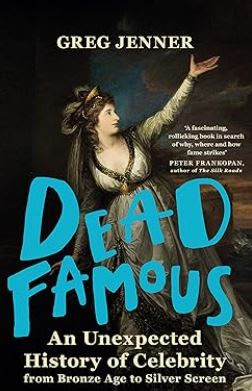
“Charles Dickens,” comes the reply. This is what I get for reading Greg Jenner’s Dead Famous before bed.
But I know that distinctive voice. I part the bed curtains. “Dan Stevens?!” I ask incredulously, laying eyes on the extremely handsome English actor in the early morning light.
“It’s Charles Dickens,” Dan Stevens insists. He’s brought a friend.
“And John Forster,” adds Justin Edwards-in-Victorian-costume.
Accepting that these British thespians are in character as their The Man Who Invented Christmas counterparts, I ask, “Are you the Ghosts of Christmas Past? Am I dreaming?
“Neither,” says John/Justin, pulling a pie sprinkled with sugar seemingly out of nowhere.
That explained nothing. I thought back to Robert Sheehan telling me his creepy Oatesian visit wasn’t a dream. I then grew distracted by the state of my bedroom, suddenly filled with evergreen trees and boughs decorated with silver baubles, iridescent glass bubbles, and magical flickering candles. I smelled cinnamon and cloves; was someone mulling red wine in my bedroom?
It was beginning to look a lot like Victorian Christmas and smell like it too. My chamber suddenly possessed a long dining table on which there lay a roasted turkey, an enormous figgy pudding, and a rapidly-multiplying host of 19th-century holiday delicacies that would have made Ichabod Crane’s head explode.
“And you’re saying you two are not the Ghosts of Christmas Past?” I asked my guests for clarification.
Seating themselves at the table, they denied being ghosts a second time as they helped themselves to a portion of the mouth-watering feast.
“Tuck in,” said Charles/Dan.
I serve myself, but soon notice how the actors favor each other’s company, eat from each other’s plates, and feed one another. They’d constructed an elaborate ritual that allowed them to touch one another without social judgment.
“What is this?” I wonder out loud.
“You could think of it as recursion,” Charles/Dan says. “Each Christmas harks back to every other Christmas. This Christmas reminds you of childhood Christmases, which in turn retains elements of Victorian Christmas past, which in turn bears marks of earlier traditions, and so on.
“One might say,” remarks John/Justin, “that, in a sense, there has only ever been one Christmas and we return to it every year. We practice the myth of eternal return when we practice Christmas.” His thumb traces a line of cream that Charles/ Dan has smeared on his cheek, then eats the errant cream.
“I still don’t understand why I’m here,” I say. “Why was it necessary for me to be the Scrooge in this drama?”
“It isn’t,” Charles/Dan says flatly. “We merely need your bed.”
With that they abandon their feast and retire to my comfy bed, drawing the curtains behind them. I politely ignore their pleasured sighs as I slice into a steaming plum pie, but internally I wish they’d gotten a different room. I knew the Somerset Maugham Suite at the Oriental Hotel in Bangkok had recently been vacated.
* * *
Author’s Note: Oliver Sacks wrote that Charles Dickens had a haunted mind, but didn’t explain that statement and then very sadly passed away. I began to understand it when I read about the railway accident he was involved in. I now believe that perhaps Dr. Sacks also meant that Dickens was haunted by his childhood poverty. This is depicted in The Man Who Invented Christmas and discussed in Dead Famous.
But then in this podcast, Helena Kelly spilled the absolute tea on Dickens and found out that he might have been lying about working in a boot blacking factory?! And he probably had syphilis, which he gave to Kate and the children - some of them may have died from it! - and maybe her sister too?! I don’t want to slut shame Charles Dickens, but I do think I understand what Dr. Sacks meant a lot more deeply now.
I celebrated Adrienne Rich's Day by eating breakfast at my local poet house. A poet house, you’ll find, is like a pancake house, but with better coffee.
Adrienne Rich's Day (May 16) is a made-up holiday. It doesn’t exist, although Rich was born on the 16th of May. But that doesn’t stop me from celebrating Adrienne Rich's Day to the fullest. I’d already written out my Poets’ Day cards, trimmed the Poets’ Day tree and opened each one of my Poets’ Day gifts. All that was left to do was brunch at the Poet House.
There I heard Lewis Carroll as he ordered the seafood omelet with extra oysters.
"We cannot do with more than four," his server responded. "To give a hand to each."
Carroll frowned, and when his omelet came, he complained that the lobster was baked too brown. "I must sugar my hair," he said in frustration. He had the server take away the omelet and bring the soup of the evening, beautiful soup, instead.
George Gordon, Lord Byron said that he wasn’t hungry, but I caught him staring at Emily Dickinson’s waffles. Dickinson led the poets in saying grace in the name of the butterfly, and of the birds, and of the breeze, amen. She washed down her waffles with the sherry which the guest leaves.
Allen Ginsberg let me have a bite of his kosher Zen New Jersey nowhere, howling as he sipped his hot matzo ball soup. Meanwhile, Lawrence Ferlinghetti ate a good deal of spaghetti.
Along came Adrienne Rich, who ordered strong black coffee. It came nestled sensuously between the waitress’s breasts.
Langston Hughes had the raisin toast in the sun, but said that it was dried up. Edgar Allan Poe had the toast as well. His came with cognac and three red roses. When asked if he wanted a side of bacon with that, Poe said, "Nevermore." When the check came, Poe was nowhere to be found.
Oscar Wilde went wild when served his Oscar Meyer wiener. Robert Frost stopped by to watch the powdered sugar fall on my french toast, but he couldn’t stay. "I have promises to keep," he said. "And miles to go before I sleep."
William Shakespeare ordered the turkey dinner, and made much ado about stuffing. But all was as he liked it in the end. He washed down his meal with a winter’s ale.
It was impossible to tell what Robert Pinsky wanted for an entree, so we put him in charge of ordering dessert. He chose Basho, banana pudding. It was the perfect ending to the perfect Adrienne Rich's Day celebration.
***Author's Note: An earlier version of this poetic fantasy appeared in Wild Violet literary magazine. ***
"The poem I just wrote is not real. And neither is the black horse who is grazing on my belly. And neither are the ghosts of old lovers who smile at me from the jukebox." - Joy Harjo
Joy Harjo. Library of Congress Life, CC0, via Wikimedia Commons
I walk into the little Historic Downtown Irvington shop on Washington Street that used to be the ice cream shop that sold bubble tea. I see the new owner has rebranded it as a 1950s-themed nostalgia diner. The bubble tea options and anime keepsakes are gone, but the ice cream counter remains, as do about a dozen shiny, chrome milkshake blenders.
The brightly lit Wurlitzer jukebox in the corner has a hastily printed-off sign that reads, in Comic Sans font, "Do Not Play the Jukebox."
I glance around the diner. The only occupied booth is in the corner, where a snappily-dressed 20-year-old Edgar Allan Poe can't take his pale blue eyes off his broad-shouldered, 49-year-old date. Augustus Landor is dressed somewhat more shabbily than the young dandy he's courting but appears to be no less enthralled by his partner's company. Their table is littered with empty beer bottles, in the midst of which sits a single milkshake with two straws.
I sit at the counter and order a vanilla Coke and a veggie burger with lettuce, tomato, and pickles. As the server delivers my Coke, I ask her, "What's up with that jukebox? Is it broken?"
"Not broken, exactly," she says. She has a working class London accent, tall black hair, and an abundance of retro tattoos.
"Nah, I don't think so," the server says, snapping her gum. "That's not it. It's just been acting weird ever since that writer Joy Harjo came in and played it."
I pause to think. Is she being subtly racist, maybe unintentionally, attributing some kind of magic to Harjo because the poet is an indigenous woman? Maybe she attributes magic to all poets. Isn't what they do with words a sort of magic, after all?
"Weird how?" I ask at last.
She reaches into her apron, produces a shiny quarter, and tosses it to me. "See for yourself."
I take her quarter to the jukebox and drop it in the glowing slot. I don't select a song from the touchscreen; I don't get the chance to touch the screen before the first notes of "Come On Eileen" play.
I shrug. "So it doesn't let you choose the song," I say, turning to the server. "That's not so unusual."
"Look again," she says, pointing to the jukebox. I turn back to its brightly-lit display and notice, for the first time, the faint outline of a face. Is it my reflection in the glass? But no, the faint outline becomes clearer, as if I'm looking into a crystal ball and an image appears from the clouded interior.
I know this face. He's Robert Sheehan. This time, he doesn't call me Eileen. He doesn't say a thing. He only smiles.
Well, not ONLY smiles; his eyes follow me as I shake my head. I move to the left and his eyes track me. I sense awareness, maybe even intelligence. I know the image I see isn't the real Robert, but it isn't exactly a mere image either.
"See what I mean now?" the server asks me. "The fuckin' thing's haunted. It shows you exes, old boyfriends and like that."
"It showed me my Annabel Lee," says Poe from the corner. "It played Gus a waltz and showed him his late wife."
Augustus groans. "Could I get another beer?" he asks the server.
"Eerie," I say, rummaging in my jeggings pocket for another quarter. I find one and feed it into the jukebox. Apparently its powers included showing me the faces of the dead as if they were alive and well; I wanted to test this property. "Play some Johnny Cash."
But it doesn't. As Robert Sheehan's smiling face fades away, the opening incidental music of "One Night in Bangkok" fades in and I glimpse the smiling face of Murray Head.
I smile back, remembering some of the sweetest hours of my life spent with the singer in the luxury of the Somerset Maugham suite.
The illusion is broken as the black-haired server sets my veggie burger on the counter. I sit and eat in happy reminiscence as the song plays out, my eyes darting between the jukebox and my burger.
The song cross-fades into "Are You Jimmy Ray?" and I wonder whose smiling face I'll see. Will it be my old friend Uma, whose first child Maya is now a grown woman, actor, and singer herself? Will it be my ex-flame Tim, complicated and morally gray, sometimes a peaceful Buddhist and at other times capable of great inner darkness?
The mysterious jukebox surprises me by showing me the face of my dear, departed friend James Dean. His smile is radiant. He looks so happy it gives me a little pang in my chest.
"You see?" says the server as she takes away my empty plate. "That's a dead boy, innit? It's right spooky. That Joy Harjo did something to it. She didn't have a quarter, she said, so she tried to pay for a song with a poem instead. Ever since she put her poetry into the, the bloody thing's been going off like a fortune teller's crystal ball."
"Amy!" pipes up Poe, addressing the server. "You didn't tell me you accepted poetry as payment!"
"Now don't you start, Eddie," says the server, whose name tag I can now clearly see says Amy. I think she might be less spooked by dead boys than she's been letting on. "You be a good boy and pay for your food and beers with your American dollars."
"You know he doesn't have any money," says Landor, with a slight slur to his voice after he's finished his last beer. He reaches across the table and takes Poe's hand. "Not that you need worry about paying the tab when you're with me. Old Augustus will keep body and soul together for you, Eddie."
Poe smiles and for a moment I think they're going to kiss. Maybe they do. I'm looking at the jukebox and the radiantly happily, eerily glowing face of James Dean, his eyes following my every move.
As he fades away, the notes of "Helter Skelter" fade in. Will I see a Beatle? Could John or George pay me a visit? And does the diner seem suddenly warmer?
I soon realize the reason for the extremely localized heat wave. I see the face of Steve McQueen, whom I first encountered steaming hot and soaking wet when I stumbled into the room as he took a bath.
As if reading my mind, Amy sets another icy vanilla Coke on the counter. I grip the straw and sip eagerly, thirsty in more ways than one. Steve's smile makes me feel like I'm evaporating into steam.
***
The vignette I just wrote is not real. But it does contain affiliate links.
On of the first things hubby and I did in Los Angeles? See the Pacific Ocean - my first time, his real first time even though he may have seen glimpses when he was a truck driver. We walked from Venice Beach to the Santa Monica pier on Sunday. We saw a pod of wild dolphins - I never saw wild dolphins before, either, not even in Key West.
Here I am having a beer at the Sidewalk Cafe on the boardwalk in Venice Beach. I also had a cheeseburger and fries. The menu has a "Bookshelf" section, which includes sandwiches named for the Iliad and the Odyssey, the thesaurus, Daniel Pinkwater, Mario Puzo, Henry Miller, and Ernest Hemingway. Why no female authors, I wonder?
The street art outside the cafe was also bookish: this is Edgar Allan Poe with Alice Cooper-esque eye makeup. Why Poe? I wonder. I would think John Steinbeck would be more California's style.
Next to the Sidewalk Cafe was Small World Books. I bought a blank journal there, and was sorely tempted to buy the latest Lemony Snicket volume, Who Could That Be at This Hour? I also wanted to buy - but didn't - The Dial Press trade paperback of From Here to Eternity:
...and The Thin Red Line:
...although I cannot for the life of me figure out why The Dial Press has not released a new edition of Whistle. My book obsessiveness demands they complete the trilogy. My favorite part of Small World Books? Petting Conan the Librarian, the bookstore cat.
You can't see it because he's sleeping, but he has a black spot on the nose. He's almost, but not quite, a Cat That Looks Like Hitler.
Venice, California, is named Venice because of its human-created canals. They're quite beautiful.
It's nice to just wander around in the canal neighborhood and sight-see, and then come out and have a beer at the Baja Cantina or another place. Next time I come to Venice Beach, I am definitely renting a wet suit and a surfboard. (This time, we rented a tandem bike. That was fun, too.) I still contend that if I can stand up on a paddleboard, I could totally learn to stand up on a traditional longboard.
 The Essential Edgar Allan Poe: Stories, Poems, Biography by Edgar Allan Poe

.jpg)