Erin O'Riordan writes smart, whimsical erotica. Her erotic romance novel trilogy, Pagan Spirits, is now available. With her husband, she also writes crime novels. Visit her home page at ko-fi.com.
Stopping by from Reading-Romances.com's Romancing the Valentine Giveaway Hop? Please find the giveaway post HERE.
The Vampires for Valentines giveaway post is HERE.
____________
A Guest Post From Brynn Alexander:
By now, most people have heard of the hit Broadway musical Wicked. Since its debut in 2003, Wicked has taken America by storm and entertained thousands of patrons around the country with its magical sets, inspiring story, and memorable songs. The Oz-ian tale of two witches (based on L. Frank Baum’s original characters of Glinda the Good Witch of the North and the Wicked Witch of the West) has found appeal in both adults and children, and continues to entertain theatergoers each night in venues around the world.
The story behind Wicked is loosely based on the 1995 Gregory Maguire novel Wicked: The Life and Times of the Wicked Witch of the West, which itself is a parallel novel and prequel of sorts to the 1939 film The Wizard of Oz and Baum’s original material. It sees two witches - Elphaba, whose emerald-green skin and fiery disposition sets her apart from the other residents of Oz, and Galinda, the beautiful, ambitious and popular blonde witch - develop an unlikely friendship. Throughout the story, the two witches struggle through opposing viewpoints and compete over the same love interest. As the plot unfolds, Elphaba becomes increasingly ostracized for opposing the corrupt government in Oz, while Galinda remains headstrong and is embraced by the people of Oz.
(Stacie Morgain Lewis and Kristy Cates in a Chicago performance of Wicked)
When interviewed in El Paso about her role as Galinda, Katie Rose Clarke described her character’s arc: "She starts out as a young girl going to school for the first time, away from her comfort and her family and then going through just difficulties of life." What follows is a tale of friendship between Galinda (who later becomes Glinda, the Good Witch of the North) and the misunderstood Elphaba. "I think it's known to be life-changing. People very much relate to the story, everyone can," said Katie Rose.
One aspect of the production that has received widespread acclaim from critics and fans alike is the sets. Galinda’s now-famous magic bubble is one of the key props, while other props, equipment and lights that feature onstage all come together to give a sense of magic rarely seen in other stage productions. It is because of this high level of production that fans have wanted to come back time and time again to see this spectacular show.
The costumes, too, are quite fantastic. With a reported $2 million spent on this part of the production alone, no expense has been spared in producing the best outfits for the cast. Describing the fitting process, Katie Rose said, "All the characters have the costumes made for their bodies. We go in. We get measured, so it's a work-intensive process to get costumes for every company." And what happens when one of the cast members becomes sick? “We try to get better hopefully before we do the show that night. And if not, then we have understudies that are amazing and they rehearse just like we do.”
Wicked tickets are available from various online outlets, including at the show’s official website. New dates have recently been announced for Salt Lake City in July, and further dates are expected for 2012 in locations around the US.
Watercolor artist and illustrator Bonnie Beckeman will be my guest on November 6, 2010. She'll sit down for an interview and one commenter will win a copy of the children's book Amie and the Purple Butterfly. Written by Cheryl Pillsbury, it's the sweet story of a little girl with autism and the purple butterfly who befriends her.
The first professional review of my YA novel I Made Out With a Teenage Communist! is up! Visit Cobwebs and Memories to read it.
Another book blog to check out is Livin' the Vida Latina. Books written by Latinas are reviewed by Latinas. The featured post today is by previous Pagan Spirits guest blogger Sandra C. Lopez.
Finally, I borrowed this post from TeacherNinja Jim Randolph. This list of the 100 top children’s books was created by School Library Journal. The ones I’ve personally read are in bold.
100. The Egypt Game - Snyder (1967)
99. The Indian in the Cupboard - Banks (1980)
98. Children of Green Knowe - Boston (1954)
97. The Miraculous Journey of Edward Tulane - DiCamillo (2006) 96. The Witches - Dahl (1983) 95. Pippi Longstocking - Lindgren (1950)
94. Swallows and Amazons - Ransome (1930)
93. Caddie Woodlawn - Brink (1935)
92. Ella Enchanted - Levine (1997)
91. Sideways Stories from Wayside School - Sachar (1978) 90. Sarah, Plain and Tall - MacLachlan (1985) 89. Ramona and Her Father - Cleary (1977)
88. The High King - Alexander (1968)
87. The View from Saturday - Konigsburg (1996) 86. Harry Potter and the Chamber of Secrets - Rowling (1999) 85. On the Banks of Plum Creek - Wilder (1937)
84. The Little White Horse - Goudge (1946)
83. The Thief - Turner (1997)
82. The Book of Three - Alexander (1964)
81. Where the Mountain Meets the Moon - Lin (2009)
80. The Graveyard Book - Gaiman (2008)
79. All-of-a-Kind-Family - Taylor (1951) 78. Johnny Tremain - Forbes (1943)
77. The City of Ember - DuPrau (2003)
76. Out of the Dust - Hesse (1997)
75. Love That Dog - Creech (2001)
74. The Borrowers - Norton (1953)
73. My Side of the Mountain - George (1959)
72. My Father's Dragon - Gannett (1948) 71. The Bad Beginning - Snicket (1999)
70. Betsy-Tacy - Lovelae (1940)
69. The Mysterious Benedict Society - Stewart ( 2007)
68. Walk Two Moons - Creech (1994)
67. Jeremy Thatcher, Dragon Hatcher - Coville (1991) 66. Henry Huggins - Cleary (1950)
65. Ballet Shoes - Stratfeild (1936)
64. A Long Way from Chicago - Peck (1998)
63. Gone-Away Lake - Enright (1957)
62. The Secret of the Old Clock - Keene (1959)
61. Stargirl - Spinelli (2000)
60. The True Confessions of Charlotte Doyle - Avi (1990) 59. Inkheart - Funke (2003)
58. The Wolves of Willoughby Chase - Aiken (1962) 57. Ramona Quimby, Age 8 - Cleary (1981) 56. Number the Stars - Lowry (1989)
55. The Great Gilly Hopkins - Paterson (1978) 54. The BFG - Dahl (1982)
53. Wind in the Willows - Grahame (1908)
52. The Invention of Hugo Cabret (2007)
51. The Saturdays - Enright (1941) 50. Island of the Blue Dolphins - O'Dell (1960)
49. Frindle - Clements (1996)
48. The Penderwicks - Birdsall (2005)
47. Bud, Not Buddy - Curtis (1999) 46. Where the Red Fern Grows - Rawls (1961) 45. The Golden Compass - Pullman (1995)
44. Tales of a Fourth Grade Nothing - Blume (1972) 43. Ramona the Pest - Cleary (1968) 42. Little House on the Prairie - Wilder (1935)
41. The Witch of Blackbird Pond - Speare (1958) 40. The Wonderful Wizard of Oz - Baum (1900)
39. When You Reach Me - Stead (2009) 38. HP and the Order of the Phoenix - Rowling (2003)
37. Roll of Thunder, Hear My Cry - Taylor (1976) 36. Are You there, God? It's Me, Margaret - Blume (1970) 35. HP and the Goblet of Fire - Rowling (2000)
34. The Watsons Go to Birmingham - Curtis (1995) 33. James and the Giant Peach - Dahl (1961)
32. Mrs. Frisby and the Rats of NIMH - O'Brian (1971)
31. Half Magic - Eager (1954) 30. Winnie-the-Pooh - Milne (1926)
29. The Dark Is Rising - Cooper (1973)
28. A Little Princess - Burnett (1905) 27. Alice I and II - Carroll (1865/72)
26. Hatchet - Paulsen (1989) 25. Little Women - Alcott (1868/9) 24. HP and the Deathly Hallows - Rowling (2007) 23. Little House in the Big Woods - Wilder (1932)
22. The Tale of Despereaux - DiCamillo (2003)
21. The Lightning Thief - Riordan (2005) 20. Tuck Everlasting - Babbitt (1975)
19. Charlie and the Chocolate Factory - Dahl (1964)
18. Matilda - Dahl (1988)
17. Maniac Magee - Spinelli (1990)
16. Harriet the Spy - Fitzhugh (1964)
15. Because of Winn-Dixie - DiCamillo (2000) 14. HP and the Prisoner of Azkaban - Rowling (1999)
13. Bridge to Terabithia - Paterson (1977)
12. The Hobbit - Tolkien (1938)
11. The Westing Game - Raskin (1978)
10. The Phantom Tollbooth - Juster (1961)
9. Anne of Green Gables - Montgomery (1908) 8. The Secret Garden - Burnett (1911)
7. The Giver -Lowry (1993) 6. Holes - Sachar (1998)
5. From the Mixed-Up Files of Mrs. Basil E. Frankweiler - Koningsburg (1967)
4. The Lion, the Witch, and the Wardrobe - Lewis (1950)
3. Harry Potter #1 - Rowling (1997)
2. A Wrinkle in Time - L'Engle (1962)
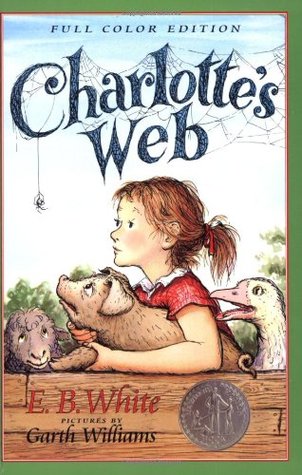
1. Charlotte's Web - White (1952)
During a random check of Twitter on Wednesday, May 24th, I learned the sad news that musical icon Tina Turner had died at the age of 83. She was said to have passed away from an illness, which I assume was either a recurrence of cancer or her kidney disease for which she'd had an organ transplant. As a longtime fan, I create this blog post as my small tribute to her memory.
November 26, 1938: Tina Turner is born. Kurt Loder writes in I, Tina: My Life Story by Tina Turner and Kurt Loder, “The woman who would one day be Tina Turner was born Anna Mae Bullock at the tail end of another age. By 1939, tensions in the world, long building, were yielding to turmoil...
“Such events still seemed safely remote to most Americans, however, and the U.S. remained politically neutral amid the bad news from abroad. There were, after all, more effervescent diversions. This was the year Garbo laughed in Ninotchka, the year of Gone With the Wind and Gunga Din, of Buck Rogers, The Wizard of Oz, and The Hunchback of Notre Dame...On the AM dial, Americans contented themselves with Kate Smith’s ‘God Bless America,’ and hummed just as happily through ‘Over the Rainbow’ or ‘In the Mood’ (it was Glen Miller’s big year) or perhaps ‘South of the Border,’ the latest hit by Gene Autry, the ‘Yodeling Cowboy’ of the silver screen.”
In short, Tina Turner was born squarely in the Jazz Age, grew up alongside rock n’ roll, and became its queen.
“These days, I'm very much a child when it comes to my birthday. I get excited as November 26th approaches because I look forward to being with Erwin [her husband] and receiving greetings from all over the world. I love reading the cards, which I display throughout the house. I love picking out the cake from my favorite bakery in Kusnaut. There's nothing I love more than a birthday party, even if it's a small dinner with close friends. One thing I've learned is that the older you get, the more important it is to include young people in the festivities, because everything gets a little bit louder and light-hearted when they're at the table.
“I cherish these celebrations, probably because it wasn't always that way. There were no cakes when I was growing up, no candles, no presents.” - Tina Turner, Tina...That's My Life
January 1, 1970: Tina Turner appears on the cover of German music magazine Bravo.
January 8, 1971: Ike & Tina Turner release their single “Proud Mary,” written by John Fogarty. Its highest-charting position will be #4 on the Billboard Hot 100, which it reaches on March 27th. The B-side, “Funkier Than a Mosquito’s Tweeter,” was written by Tina’s sister Alline Bullock (December 1, 1936 – September 4, 2010) and later covered by Nina Simone.
March 29, 1978: Ike and Tina Turner’s divorce is finalized.
January 2, 1984: Tina Turner releases her cover of Al Green’s “Let’s Stay Together” as a single.
March 10, 1984: Tina Turner’s single “Let’s Stay Together” hits #1 on the Billboard Club Play chart.
August 28, 1986: Tina Turner gets a star on the Hollywood Walk of Fame.
January 16, 1988: On Lin-Manuel Miranda’s 8th birthday, George Harrison has the #1 song in the U.S., “Got My Mind Set On You.” The same day, Tina Turner sets a concert attendance record when crowd of 180,000 shows up to her show in Rio de Janeiro, Brazil.
August 1, 1993, South Bend: I went to the Forum and saw What’s Love Got to Do With It, starring Angela Bassett as Tina Turner. While a good movie, it was also hard to watch because of the violence.
December 28, 1993: My mother, brother, and I went to Chicago with our family friends Stephanie and Mark. We went mainly for after-Christmas discount shopping at Marshall Field’s, but we also had lunch at the Hard Rock Café. I ate a turkey burger at the table near Tina Turner’s leather miniskirt from her “What’s Love Got to Do With It?” music video and Andy Taylor of Duran Duran’s guitar.
March 5, 1994, South Bend: I went, all by myself, to the bookshop at North Village Mall. I bought two books: The Adventures of Huckleberry Finn, which I’ll eventually have to read for American Literature class, and I, Tina: My Life Story by Tina Turner and Kurt Loder.
Monday, October 10, 1994, South Bend: After school I picked up Mom from work. She and I went to a college fair at the Century Center. Then she took me to McDonald’s for supper. The restaurant had a cardboard cutout of Tina Turner, and four guys in kilts were there.
November 3, 1994, South Bend: After school and supper I went to the Main Library and checked out a book and the Ike and Tina Turner CD with the Ikettes song "I'm Blue (The Gong-Gong Song)." It’s the song Salt-N-Pepa is sampling in “Shoop.”
March 1, 1995: After school I went to Tracks and treated myself to the Tina Turner boxed set, Tina Turner: The Collected Recordings Sixties to Nineties (Capitol Records). It comes with a book with tons of pictures, including the covers of most of her records, old and new, plus some quotes and a little info.
The first CD is the most interesting; it’s all Ike & Tina Turner songs. I had some of them on CD or on tape (copied from library CDs), but six songs were new to me. The second CD has some duets, covers, B-sides, etc. The really good stuff includes the version of “Acid Queen” from the Tommy soundtrack, the cover of Led Zeppelin’s “Whole Lotta Love,” and the cover of Robert Palmer’s “Addicted to Love.” The third CD has a lot of material from Private Dancer, plus “The Best” and “Steamy Windows.”
December 2, 1995, St. Mary’s: I read Jon Pareles’s review on Melissa Etheridge’s album Your Little Secret in today’s newspaper. He described Etheridge as being influenced by Tina Turner. Now, this guy knows what’s he’s talking about.
December 6, 1995, St. Mary’s: In between classes, my mother came to the dorm and gave me candy for St. Nicholas Day. After classes, some of the other girls from my floor and I watched The Year Without a Santa Claus. After that I watched a bit of the Billboard Music Awards and saw Tina Turner singing her James Bond theme song, “Goldeneye.”
Sunday, March 10, 1996, South Bend: I woke up and read the paper. It said Tina Turner would be starring in Hanes ads this fall. My mom said she also has a new album coming out.
December 7, 1996, St. Mary’s: I saw a tape of last night’s pay-per-view Tina Turner concert, Tina Turner’s Wildest Dreams. She did “Proud Mary,” “What’s Love Got to Do With It,” and a few others from the concert I saw on TV a few winter breaks ago, plus her new songs, including “Goldeneye” and “Missing You.” And she did “River Deep, Mountain High;” that was pretty cool.
Saturday, February 22, 1997, St. Mary’s: My family took me to Yesterday’s, a restaurant in Granger. We had a good time. I ate Asian plum chicken and got a slice of key lime pie to go. Later I could be found watching Tina Turner on Saturday Night Live.
March 10, 1997: After dinner, my mom, brother, and I went to Barnes and Noble, where Mom bought me The American Women’s Almanac by Louise Bernikow. This book is fascinating. It has a picture of Janis Joplin and Tina Turner singing together.
March 27, 2021: Tina, a documentary about Tina Turner, premieres on HBO Max.
Content Warning (CW) for discussion of child abuse. The Bourne Identity
YouTube recommended this video to me the other day.
This video is a bit silly. Mario is essentially just reading an article he found on the (unaffiliated with him) website The Vigilant Citizen. The article is from June 2012, and it includes photos of Twilight stars Robert Pattinson and Kristen Stewart - separately - in photo shoots from glossy fashion magazines. The article makes reference to MK Ultra, a favorite among conspiracy theorists a.k.a. alternative media sources. (No judgment - remember, I like to examine so-called conspiracy theories through the lens of modern folklore and urban legends.)
Here's how the theory basically goes, according to my understanding:
- During/after the Korean War, the U.S. government saw the American prisoners of war were being manipulated by their North Korean captors to say anti-American things. (This part seems to be factual.)
- As a defense strategy, the U.S. began researching ways in which the human mind can be controlled. The "MK" part stands for "Mind Kontrol." Part of the U.S. government experiments under this program involved giving doses of hallucinogenic drugs, including LSD, to people without their knowledge or consent. (This part is factual and documented.)
- Although the program was alleged to have ended in the 1970s, it continues today. Actors, musicians, and other popular culture figures undergo mind control experimentation that makes them into Jason Bourne-type "puppets" who can be triggered by their handlers into performing whichever action their handlers want them to take. The process involves taking these people into a secret place where they are abused and tortured until their minds split like people with dissociative disorder. They come out with alternate personalities that don't know what the other personalities are doing. Common triggers include Disney movies, Alice in Wonderland symbolism, and Wizard of Ozsymbolism (This part is speculative.)
Mario is an interesting vlogger. I don't see eye to eye with him on many, many issues. He's anti-feminist, for example, and he doesn't believe in the theory of evolution. I'll never quite understand why a certain segment of the Christian population has to reject the scientific method, but hey, that's just me (and people who believe in a rational universe). But I think he's basically coming from a well-intentioned place, even if his "facts" are intellectually questionable. I say this so you know my intention is not to mock or disrespect him. On a person-to-person level, I kinda like the guy. Like me, he was raised as a Roman Catholic. He's a French Canadian who learned English as a second language.
Ellie Goulding's "Lights"
At this point, I have been exposed to enough YouTube and blog material by The Vigilant Citizen, Mario the Vigilant Christian, and others to be able to "talk the talk" of MK Ultra, as you'll see below. If I were going to pick out a song to use as an example of mind control talk in popular media, that song would be "Lights" by Ellie Goulding.
I know you can interpret the lyrics of just about any song to mean whatever you want them to mean. In college I once wrote a paper about how the lyrics of Hole's song "Violet" could be interpreted as a warning about the dangers of alcohol abuse and another paper on how the Beatles song "I Am the Walrus" was John Lennon's plea for American authors, but especially Edgar Allan Poe, to be taken as seriously by the literary world as classical British authors. I knew those things weren't intended by the songwriters, but at the time I thought it was humorous to tortuously over-interpret things for allegedly comical effect.
So, please take this with a large grain of salt and, perhaps, a rocks margarita.
I hear "Lights" quite often on the station Tit Elingtin and I listen to on our day job as remodeling contractors. We listen to an "easy listening" station, while essentially means Top 40 radio without the rap songs. I liked the way the song sounded before I even listened to all the lyrics. I started to like Ellie Goulding even more when I heard her song "High For This (The Weekend Cover)." Then, of course, she contributed the song "Beating Heart" to the Divergentfilm soundtrack. It was one of my favorite songs for a while.
BUT I can't stand her song "Burn." I just find the very high-pitched section of this song incredibly annoying. Sorry. Even the best musical artists have an occasional fail. Now back to "Lights."
According to SongMeanings.com, which lets anyone add their comments on what they think the song means, the simplest explanation of this song is that it's about Goulding's childhood fear of the dark. She was afraid of the dark, so she had to sleep with a light on in order to feel safe.
Other theories think the song refers to:
- A battle with depression or another mental illness, such as schizophrenia
- Childhood sexual abuse
- An encounter with an extraterrestrial spacecraft and/or Goulding herself being from another planet.
Lyrics
Let's look at the lyrics of "Lights."
I had a way then losing it all on my own I had a heart then but the queen has been overthrown And I'm not sleeping now, the dark is too hard to beat And I'm not keeping now the strength I need to push me You show the lights that stop me turn to stone You shine it when I'm alone And so I tell myself that I'll be strong And dreaming when they're gone 'Cause they're calling, calling, calling me home Calling, calling, calling home You show the lights that stop me turn to stone You shine it when I'm alone home Voices I play within my head Touch my own skin and hope that I'm still breathing. And I think back to when my brother of my sister slept In an unknown place the only time I feel safe You show the lights that stop me turn to stone You shine it when I'm alone And so I tell myself that I'll be strong And dreaming when they're gone 'Cause they're calling, calling, calling me home Calling, calling, calling home You show the lights that stop me turn to stone You shine it when I'm alone home Light, lights, lights, lights Light, lights, lights, lights (Home, home) Light, lights, lights, lights Light, lights You show the lights that stop me turn to stone You shine it when I'm alone And so I tell myself that I'll be strong And dreaming when they're gone 'Cause they're calling, calling, calling me home Calling, calling, calling home You show the lights that stop me turn to stone You shine it when I'm alone home Home, home Light, lights, lights, lights Light, lights, lights, lights... Writers: Ash Frances Howes, Lorin Ashton, Ellie Goulding, Richard StannardCopyright: Sony/ATV Music Publishing (Uk) Limited, Major 3rd Music Limited, Amorphous Music, Global Talent Publishing Interpretation The first line could refer to a childhood fear of the dark: "I had a way then (when I was a child) of losing it (losing my fear of the dark) all on my own (I simply turned on my night light)."
Creative Commons image by Marple Bridge Photography
The second line, though, seems a little strange in that context. The queen has been overthrown? That fits more with the mental illness theory - the "queen," or rational part of her mind, has been "overthrown" or overwhelmed by the illness. It also makes sense according to the childhood sexual abuse theory: she had a heart then (as a child, before she was abused) but then she learned to shut off her feelings after "the queen was overthrown," which could refer to an adult authority figure, such as her mother, being unable to keep her safe from the abuse. Of course, both mental illness and sexual abuse could be considered part of MK Ultra-type conditioning - a child who is being groomed to be a pop star is abused until her mind splits, and that way she'll be easily controllable.
The chorus starts off with, "You show the lights that stop me turn to stone/You shine it when I'm alone/And so I tell myself that I'll be strong/And dreaming when they're gone." Now this seems to be saying the opposite of what we might expect. The lights were supposed to protect her from fear of the dark, right? So why is saying that the lights "stop me?" This speaks to the alien theory, I suppose: the lights that stop her are the sudden lights from a spacecraft that appear. She is either stopped simply by curiosity, or paralyzed with fear of them, or the extraterrestrial beings have stopped her somehow.
Some theorists, depending on their point of view, would go so far as to claim that aliens are synonymous with demons. They say that when people think they are abducted by aliens, they are really being tormented by fallen angels. If we are going with the MK Ultra theory, then we'd probably say that the handlers who perform the abusive experiments disguise themselves as aliens--or that they're somehow in league with actual aliens, who may or may not be fallen angels.
Creative Commons image by Mingle Media TV
The "I tell myself that I'll be strong" could refer to being strong in the dark when there are no lights - a simple enough explanation, although it doesn't seem to match up with "lights that stop me, turn to stone" line. What does turning to stone mean, anyway? Shutting off one's emotions so that one is as imperturbable as stone, perhaps, which fits with the abuse theory.
"Dreaming when they're gone" seems to fit this theory as well; the child cannot sleep until her abusers are gone. What would "they're" refer to in the context of fear of the dark? Nightmares, perhaps. Maybe she simply means that sleeping in the dark makes her prone to nightmares.
The "calling me home" of the chorus is why some people interpret this song to mean that Goulding herself has come from the star people. The lights call her home? Why, that's her fellow extraterrestrials coming back to claim her. Alternatively, we might say that the lights calling her home are some kind of signal or trigger that her handlers use when it's time for her to "come home" to be reprogrammed. The "reprogramming" process is painful and frightening, and that's why the singer seems to be so scared and depressed.
In the second verse, "Touch my own skin and hope that I'm still breathing" sounds a bit ominous, but fear - including simple childhood fear of the dark - could do that to a person. But then she sings something rather strange: "And I think back to when my brother of my sister slept/In an unknown place(,) the only time I feel safe." The only time she feels safe is when her brother and sister slept in an unknown place - now that seems odd. If a child were simply scared of the dark, wouldn't we expect her to say that she only felt safe when her brother and sister slept in her room with her, or when they were in the house with her - sort of a "safety in numbers" feeling? What is the "unknown place?" Is she saying that she wants her brother and sister to sleep away from where she is, because wherever she is is unsafe, and she wants to keep them safe? That line really makes it seem as if something other than mere darkness frightened her when she was a child.
In short, although this song is supposed to be about using light to ward off fear of the dark, the lyrics actually seem to be suggesting exactly the opposite - that the lights are failing to ward off the fearful thing that the dark brings, whatever that thing may be. But only the songwriters know for sure what they were thinking.
I'm back from my long weekend in Manhattan - not the fun Manhattan, but the one in Kansas - where my nephew got married. When leaving Kansas, I felt obliged to say, "I don't think we're in Kansas anymore." While we never got around to visiting the Wizard of Oz museum in nearby Wamego, I chose to associate Kansas with the L. Frank Baum classic. The other literary work I associate with Kansas is In Cold Blood by Truman Capote, which is rather less pleasant.
We did drive through Mark Twain's hometown of Hannibal, Missouri, but we didn't stop there.
The paperback I carried with me on my trip of Patricia Bosworth's biography of Montgomery Clift, a cheap paperback I purchased from Better World Books. Look how neatly its yellow edges match my manicure (and the dress I wore to the wedding reception.)
In Aggieville (the quaint shopping and pub-crawling neighborhood in the vicinity of Kansas State University), I visited The Dusty Bookshelf. There I bought my great-niece a Mickey Mouse coloring book and a picture book based on the Disney version of Peter Pan. For myself, I purchased The Vampire Diaries: The Return: Midnight.
But now that I'm back in the Great Lakes region, I'm back to reading the books I left behind, including The Thin Red Line. I'm about halfway through The Thin Red Line, the second book in James Jones' trilogy. Since I kind of cheated, in that I watched the movie before I read the book, and I've now read and watched From Here to Eternity, I feel somewhat prepared to compare the characters of Robert E. Lee Prewitt and his counterpart in the second book, Bob Witt.
You know what might be even more fun, though? Comparing the actors who portrayed Prewitt and Witt, respectively Montgomery Clift and Jim Caviezel. They have stuff in common, other than playing essentially the same character in adaptations of James Jones novels. (In fact, I now know that some of Witt's monologue in the Thin Red Line movie comes from the book version of From Here to Eternity, further fusing two fictional characters who are already essentially the same. Not exactly the same, though: Prew is 22 years old in 1941, while Witt is 21 in 1943, to name just one example of how their biographies differ. Obviously, Prewitt is dead at the end of FHTE - he never makes it to Guadalcanal.)
They both modeled during their early acting careers, for example. Clift modeled for Arrow shirts and Steinway pianos, among other gigs. Caviezel modeled clothes for The Gap. This is not a great picture, but you get the idea.
Clift appeared in a Gap khakis ad posthumously, via a still from his film I Confess.
(P.S. The nephew who got married? Also a former model, and so is his brother.)
They were both called upon to learn the trumpet, or at least to look as if they knew what they were doing with one. Clift's scene is the emotional climax of the From Here to Eternity movie: Prew's brokenhearted rendition of TAPS in Maggio's honor.
Caviezel's scene is in the romantic drama Angel Eyes. The music is forcing his character to remember a past he'd done his best to try to forget.
The other things they have in common? A perpetual tan. Intense eyes. Long, dark eyelashes that women envy; prettiness that at times verges on androgyny, but also the ability to rock a sexy beard. They're both part Irish, too.
I warn you not to stare too long, or you may end up pregnant.
Happy December! I hope you're having a lovely winter holiday season so far, whether or not you're observing Hanukkah.
A lot of people don't even realize Mila Kunis is Jewish. My dad thought she was Latina, and keep in mind, my dad is married to an ethnic Jewish woman. But she's from a Ukrainian Jewish family, born in what at the time was the USSR. Her parents tried to raise her as a religious Jew as much as they could in the Soviet Union, where religion was severely repressed.
I'm gonna be brutally honest here: Mila Kunis is here more because I think she's absolutely gorgeous than because I like a whole bunch of the work she's done. Like most people, I remember her mainly from That '70s Show on Fox. It's not one of my all-time favorite shows.
It is, however, kind of fun to imagine that Kunis' character Jackie Burkhart is a more grown-up version of spoiled young Veruca Salt from Charlie and the Chocolate Factory.
Kunis played Rachel, the flirtatious hotel receptionist, in Forgetting Sarah Marshall with Jason Segel. Okay, I kinda love that movie. She co-starred with Justin Timberlake in Friends with Benefits, which I found neither very funny nor very romantic.
She was in Oz the Great and Powerful (as a witch) with fellow Hanukkah hottie James Franco. I haven't seen it yet, although I'm guessing my 7-year-old niece has. For a while, she walked around handing everyone notes written on Oz the Great and Powerful stationery from the dollar store, and she suggested we pretend there was an evil witch with flying monkeys, flying dinosaurs, and flying maids and butlers. (The irony is that her father, my brother, was terrified of the flying monkeys as a child and used to hide behind the couch during selected parts of The Wizard of Oz.)
I also remember Kunis from The Book of Eli, a not-particularly-good post-apocalyptic thing with Denzel Washington. She played a small role in the Tina Fey comedy Date Night (again with James Franco, playing characters named Whippit and Taste).
Her next project after that was Black Swan, which is my favorite of her movies. Here she starred opposite fellow Hanukkah hottie (tomorrow) Natalie Portman. (Winona Ryder plays a small role in it as well.)
Jewish women: our relationship with black eyeliner goes back to ancient Egypt.




.jpg)


