Pages

Showing posts with label Jewish. Show all posts

Monday, August 10, 2015

'Paper Towns,' the Novel, Reviewed

Paper TownsPaper Towns by John Green

My rating: 4 of 5 stars

The second line of the prologue contains a throwaway cancer joke that momentarily stopped my breath, but Quentin "Q" Jacobsen is no Augustus Waters, and Margo Roth Spiegelman is no Hazel Grace Lancaster. (Same number of syllables in her case, but there the similarity ends.) I mean that in a good way! The actor who plays Q in the movie version, Nat Wolff, is the same actor who played Isaac in The Fault in Our Stars. But never mind that - aside from their author, the two books have little in common.

While TFIOS is decidedly a love story, PT deals with the issue of how we represent other people in our minds. We all see other people through the lens of our personal experience with them. Q learns that each of Margo's friends has his or her own version of Margo and that there were many sides to her he hasn't considered.

The tool that allows Q to discover these facets of Margo is Walt Whitman's Leaves of Grass. I love the idea that this novel may get younger readers excited about Walt Whitman's poetry. Some of it is quite remarkable. I've always admired Whitman's ability to make the reader feel connected to him as a human being, despite the fact that he died in 1892.


Also there is something about Moby Dick. Like Q, I did not read Herman Melville's dense symbolist tome. I understand Green is referencing Captain Ahab's white whale when Q's life is nearly ended by a pure-white cow, but I lack the ability to compare all the moments in this novel that may resonate with Melville's masterpiece. Once again, I'd like to express my gratitude to my 11th grade American Lit teacher, the late Mr. Tom Gerencher, for having us read ONLY Billy Budd and not Melville's longer, more famous work.

Classic American literature fuels this literary journey, with references to Emily Dickinson, Henry David Thoreau, Sylvia Plath, and Kurt Vonnegut (Green's fellow Hoosier, and mine) sprinkled in. As an American Lit nerd, I enjoy this very much. The greatest thing is that Green's American Lit references seem organic, not forced and/or pedantic. Q is a bit of a lit nerd, too. In that way, he does share similarity to the well-read Augustus. Possibly a bit of the creator sneaks into the creations.

I should really watch a few more Vlog Brothers videos. I really don't know that much about John Green as a person. I've only picked up a few of his thoughts and mannerisms from bits on Tumblr and Pinterest.


(Okay, that's John Green's younger brother Hank, but to be fair Hank IS the other Vlog Brother.)

Note, too, that Margo's last names each reference notable American authors - Philip Roth and Art Spiegelman. Both are noted for chronicling the lives of American Jews. Both Q and Margo are Jewish characters, but their ethnicity and/or religion (it's not clear that either the Roth Spiegelmans or the Jacobsens practice religious Judaism) don't make up a very important part of the novel. Therefore, I don't read too much into the characters being Israeli-Americans.

I really liked this book. Not quite 5 stars for me, but a solid 4.5. It didn't make me cry, unlike a certain other book I could name that made me cry, then drop it on the floor, then call it a stupid book for making me cry and drop it. An excerpt from that certain book appears in the end of my paperback. I reread the excerpt. Then I got emotional about Augustus Waters' fictional existence. John Green, quit playing games with my heart.

I purchased Paper Towns with my own funds from Forever Books in St. Joseph, Michigan. I was not obligated in any way to review it. This review represents my own honest opinion.

Tuesday, April 15, 2014

Food Porn at Its Sexiest: Ramen Matzah Ball Soup

(Woodland Hills, CA - press release) March 19th, 2014 – It isn't too often that an invention so ground-breaking comes along that it changes the way we work, play, sleep, and even live. But on Woodrocket.com's web series, James Deen Loves Food, it happens almost every week. And this week, it is Ramen Matzah Ball Soup!


The show that brought you Cool Ranch Donuts, The World's Most Expensive Burrito, and 27 Layer Dip now brings together Japanese and Jewish cuisine in the incredibly delicious and innovative new episode, James Deen Loves Food: Ramen Matzah Balls.

Star of The Canyons (the 2013 Lindsay Lohan film based on the book by Bret Easton Ellis), adult cinema, and host James Deen takes the classic Passover favorite and adds an Asian twist. He makes Matzah Balls out of Ramen noodles and adds it to a Jewish/Japanese style soup. It's new! It's multicultural! It's delicious! It's food porn at its sexiest!

This hot dish episode of James Deen Loves Food: Ramen Matzah Balls is sponsored by HotMovies!

You can watch James Deen Loves Food for Free at Woodrocket.com

Or check out the Safe-for-Work Trailer at JamesDeenLovesFood.com

Dubbed by Gawker as a “leader in viral porn content,” WoodRocket.com is a mix of adult & comedic entertainment, offering thousands of free, high quality videos, including exclusive porn like Porks & Recreation, SpongeKnob SquareNuts, and Game of Bones, & original Web series like “James Deen Loves Food,” “Topless Girls Reading Books,” and “Naked in Public.”

WoodRocket.com and its content has been featured on Gawker, Gizmodo, The Hollywood Reporter, Jezebel, Esquire, Bon Appetit, Vice, Fleshbot, and more. WoodRocket even found its Game of Bones parody as a trivia question on the highly acclaimed Comedy Central game show @Midnight.

Erin's Note: From time to time I get these press releases in my e-mail inbox. I thought this one was enjoyable. I corrected the grammar and punctuation a little. 

This is an affiliate link:

All In: 25 Erotic Stories by Emily Cantore. $4.99 from Smashwords.com
25 erotic short stories from the hot and bothered mind of Emily Cantore! To buy individually would cost a bundle! More than 130,000 words of first-time lesbians, threesomes, girls experimenting, sex toys and much more. Guaranteed to warm you up and get your mind racing!

Saturday, June 22, 2013

Even More Tales of Biblical Terror: Dybbuk Press Plans 'King David and the Spiders From Mars'

This is my 665th post on this blog. You know what that means - the next one will be #666. It's too bad I couldn't get THIS to be the 666th post on account of its Biblical theme.


In 2010, I read and reviewed the Dybbuk Press horror anthology She Nailed a Stake Through His Head. It's an awesome read. I liked the book so much, editor Tim Lieder decided to use my review as the editorial review that appears on Amazon and Goodreads.

Now, Dybbuk Press is getting ready to publish a second anthology on the same Biblical horror theme. A short blurb by Dybbuk Press publisher/editor Tim Lieder reads:

"I am both the publisher and the editor of the anthology. This book and the previous Bible-themed horror collection - She Nailed a Stake Through His Head - are inspired by my love of the literary Bible studies as pioneered by Robert Alter and Erich Auerbach. When I first started publishing books through Dybbuk Press, I knew that I wanted to edit a book of Bible-themed stories because regardless of one's faith or lack thereof, the Bible is a great literary work with tight plotting, an economy of language, sudden bursts of violence and poetry as well as some of the most memorable characters in Western literature."

The authors and tales are all lined up - the small press is now seeking a little crowdfunding assistance. If you care to, please watch this short video from Tim.


Also, I think you should follow Tim on Facebook because, well, I think he's awesome. You won't see him around on the Sabbath or on Jewish holidays, because he's observant.

Saturday, May 4, 2013

YA #BookReview: The Watcher in the Shadows by Chris Moriarty

The Watcher in the Shadows (Inquisitor's Apprentice #2)The Watcher in the Shadows by Chris Moriarty

My rating: 4 of 5 stars


I love this alternative history world Chris Moriarty has created, a version of early 1900s New York City where magic is commonplace, but under the control of the police department's Inquisitor division. It's a world where tenement-dwellers clash with upper-crust families of ultrarich wizards, where Old World traditions collide with Industrial Age realities.

In this second installation, 13-year-old apprentice Sacha Kessler doesn't simply follow Inquisitor Max Wolf on the investigation of a mysterious death in full view of a packed theater. Sacha has some very adult decisions to make, including how much to trust Wolf and whether or not he wants to learn magic. Sacha's supernatural doppelganger is still on the loose, and the danger has never been greater.

Fans of The Invention of Hugo Cabret should appreciate this sophisticated magical tale.


View all my reviews

Disclosure: I received this book at no cost from Amazon Vine in exchange for this review, which represents my own honest opinion.


This book will be released on May 28, but you can pre-order it now. In the meantime, catch up by reading The Inquisitor's Apprentice, the first book in a planned 5-part series.

Tuesday, July 24, 2012

The One With Jewish Lesbians

One of the truly remarkable women of the late 20th-early 21st centuries - Dr. Sally Ride, the first American woman in space - passed away on July 23rd of pancreatic cancer. She was only 61. She leaves behind her wife of 27 years (but not legally - and don't get me started on how unfair that is), Dr. Tam O'Shaughnessy, one of the few women in the world whose name is more Irish than mine.

July 23rd, 2012 was the one-year anniversary of the passing of Amy Winehouse. In honor of these two blessed memories, I've decided to follow through on what I said I'd do two weeks ago and dedicate a post to the some of the world's truly remarkable Jewish lesbians. (Sally Ride - not Jewish; Amy Winehouse - not lesbian - just to clarify. They are linked only by their death dates and my train of thought.)

First and foremost (at least in literary circles), there's Gertrude Stein (born 1874, died 1946). Says American Women Poets: Pioneers of Modern Poetry by Jean Gould, speaking of Stein's college experience, "At Radcliffe, the most important person in her life was William James, the eminent psychologist. He influenced her thinking and, to a certain extent, her career as well. She was his favorite student. On the day of her final exam, a very lovely spring day, Gertrude, who had been going to the opera every night, just sat there with the paper staring her in the face. She simply could not face answering the questions. Finally she wrote at the top of the paper, 'Dear Professor James, I am so sorry but really I do not feel a bit like an examination paper in philosophy today.' And she left. The next day she received a post card from James saying, 'Dear Miss Stein, I understand perfectly how you feel. I often feel like that myself.' And underneath he gave her the highest mark in his course."

The balls on that one! Gould also wrote of her, "Perhaps because of the gay liberation movement, Gertrude Stein's poetry is to the younger generation of the sixties and seventies what Edna St. Vincent Millay's sonnets of flaunted free love were to the 'flaming youth' of the twenties." Stein's wife was also her secretary, Alice B. Toklas.


The New York Public Library Literature Companion refers to her not only as a poet, but also "novelist, playwright, and essayist" and says, "Stein was at the center of the modernist literary artistic scene and counted Picasso, Matisse, Hemingway, and Ford Madox Ford among her intimates....Widely known for her bons mots and literary quips, Stein originated the line 'a rose is a rose is a rose' (in her Geography and Plays, 1922)."


QPB Anthology of Women's Writing quotes her The Making of Americans as saying, "I wish I had died when I was a little baby and had not any feeling, I would not then have to be always suffering." The anthology furthermore says, "Her style has been described as Cubist, as Steinese (gnomic, repetitive, illogical, sparsely punctuated) as straightforward ('Sentences must not have bad plumbing - they must not leak,' in her words to F. Scott Fitzgerald)."


In The American Women's Almanac, she's mentioned in the context of Harlem Renaissance author Nella Larsen. "Nella Larsen wrote to Gertrude Stein, praising her handling of the 'mulatto' character in her 1909 novel Melanctha, 'I never cease to wonder how you came to write it and just why you and not some one of us should so accurately have caught the spirit of this race of mine.'"


...although I'm sure than even in 1909, there were plenty of fine writers of African descent working in the English language. On the other hand, the mainstream media still to this day tends to ignore writers of color. When E. Lynn Harris died, for example, I didn't find out until a month later when I saw a library display in his honor, and he had multiple New York Times best sellers. So, it's possible that Larsen was unaware of some of the other writers working in her own community. 

Gertrude Stein may not have been a very good student of philosophy, but Judith Butler certainly was. (I say "was" not because Butler is deceased, but because she's no longer a student.) Between 1987 and 2011, Butler has published 20 books on philosophy, gender, sexuality, politics, violence and religion. Her most recent is The Question of Gender: Joan W. Scott's Critical Feminism (21st Century Studies)Butler's wife is the feminist/activist/philosopher/political scientist Wendy Brown. 

Butler could have a fascinating conversation with another Jewish lesbian, Rabbi Denise Eger. Raised in Tennessee, Reb Eger is now based in the Los Angeles area. She officiated the first legal wedding between two women in L.A. She's an expert on Judaism as well as a civil rights and HIV/AIDS activist. 

Another prominent name in Jewish lesbian sacred circles was Debbie Friedman, who passed away in January 2011. Friedman was a singer-songwriter-guitarist, and the Debbie Friedman School of Sacred Music at Hebrew-Union College-Jewish Institute of Religion is named in her honor. She has 22 albums to her credit.


Friedman's secular counterpart is singer-songwriter Janis Ian. Her most famous songs are "Society's Child" and "At Seventeen," the latter of which won her a Grammy. ("At Seventeen" has been used in three episodes of The Simpsons.) She's also a columnist, a huge science fiction fan who frequently attends conventions and a writer of short science fiction stories. 

Other Jewish lesbians from the entertainment world include comedian Julie Goldman and Ilene Chaiken, the screenwriter/director/producer responsible for Showtime's The L Word. 

So there you have it - a basic primer of some of the more famous lesbian women of Jewish descent. By the way, the Canadian writer Leanne Lieberman, who wrote the Jewish lesbian young adult novel Gravity? Not a lesbian. An author worth checking out, though. 

For further Internet stalking: Via Jinni T., a.k.a. The Purple Junkie, I stumbled upon the LGBTQ+ history blog KnowHomo, whence I discovered this graphic of LGBTQ+ Jews. 

Thursday, May 10, 2012

Lots of Interesting Sex: The Pagan Spirits Interview with Nomi Eve


In a June 25, 2011 post, I wrote:

"The History of Love is not my favorite Jewish fiction ever. That might be Nomi Eve's The Family Orchard, Markus Zusak's The Book Thief or possibly Mona in the Promised Land by Gish Jen."

The post then deviated from a discussion of fiction, as one might guess from its title, "5 Jewish Dudes I'd Most Like to See Lewd." ("Lewd" was the buzzword of last year's Congressman Anthony Weiner scandal.) At the moment, it's my #7 all-time most viewed post.  

Imagine my surprise when Nomi Eve sent me an e-mail saying she'd read the post and thanking me for mentioning her book. It was a bit of an awkward way to start a literary dialogue, but Nomi Eve agreed to answer a few questions for me and my readers. 

Erin O'Riordan: Some of the reviewers of The Family Orchard criticized the book for its emphasis on the erotic. How did you respond to this criticism?

Nomi Eve: My characters break many taboos.  They steal, lie, and have lots of interesting sex.  Personally I don't like to read about boring people doing ordinary things.  And so I don't write about people doing ordinary things.  I responded to those reviewers by not responding at all.  If someone was offended, I assume they stopped reading after the third or fourth page.  And if they kept reading, well, then they couldn't have been all that offended in the first place. 
Erin O'Riordan: To create your novel, you used your father's research into your family history, but fictionalized that history. Other authors have been caught at passing fictionalized memoirs off as their true stories. In your mind, is there a clear line between a carefully-shaped historical account and fiction? 

Nomi Eve:  Absolutely.  I very consciously blended fact and fiction in The Family Orchard.  I was blatant and upfront about my use of my father's narrative. But my whole point was to show that the line between fact and fiction is naturally blurry.  We tend to think that memoir is devoid of fiction and fiction is devoid of truth.  I have always found otherwise.  Each contains elements of the other.  Now, historians are different.  Historians need to build their narratives out of sturdy fact-based materials, whereas fiction is made of soul, memory and imagination. That doesn't mean that good fiction can't rely upon research and historical veracity.  Only that readers need to be aware that the fiction writer can take them anywhere, and that adhering to a character's truth isn't the same thing as being factually accurate.  

Erin O'Riordan: Did you create the family tree and the glossary of orchard terms before or after completing the novel? I wonder if you used it as a reference as you were writing, or added it afterward for the benefit of readers.

Nomi Eve:  I created both of these things afterwards.  The whole time I was writing I had all the characters floating around in my head, and the same goes for the glossary of orchard terms.  They were two of the last things I did before the book was sold. 

Erin O'Riordan: In an interview for The Jewish Federations of North America, Jodi Werner compared your writing style in The Family Orchard to Latina fiction. Was the work of the Spanish-language magical realists something you had in mind as you were writing the novel?

Nomi Eve:  I have always loved Jorge Luis Borges, Gabriel Garcia Marquez, Isabelle Allende, but I also love Isaac Bashevis Singer, Cynthia Ozick and Meir Shalev.  Jewish writers have always been magical realists. The Talmud, and the mystical Jewish texts are nothing if not magically real.  There is tremendous cultural and spiritual overlap between the great Spanish language writers and the great Jewish writers.  
Author: ×©×—ר דרורי Creative Commons license
Erin O'Riordan: Why do you think it is that Israelis seem so infatuated with trees? Is it just a consequence of living in a desert area, or is there something more to it?

Nomi Eve:  My Israeli grandfather was of the generation who planted the orchards in the early twentieth century, and then made a livelihood by harvesting the fruit.  That way of life is mostly gone now.  But the history of Israel can certainly be told as a story of the grafting of disparate people, the planting of hearty trees, and the harvesting of the fruit of ancient days on modern soil.  Orchards provide endless metaphors, and for a writer, and the granddaughter of an orchard man, well, they proved irresistible. 

Erin O'Riordan: If I were to visit Brookline, Massachusetts, what would be the one cultural attraction - whether part of the Jewish community or otherwise - I would not want to miss?

Nomi Eve:  I no longer live there.  Now I live with my family in Elkins Park, Pennsylvania.  And the one thing I would recommend not to miss is a construction site.  Our community has come together to build a food co-op on the site of an old abandoned empty grocery store -- which also happens to be located in the heart of our tiny town center.  It is just glorious to see what can happen when people come together to build something out of nothing.  Every day we watch more beams go up.  Our entire community is thrilled by the progress and promise of this one communal undertaking. 

Sunday, April 29, 2012

SOC Sunday: Of Domestic Violence and Islam-Bashing

Ruh-roh, Raggy - I feel a rant coming on. On Sundays I typically link up with Stream of Consciousness Sunday at All Things Fadra, but rather than waiting for the prompt this time, I'm going to brain-dump on what's been on my mind this weekend.
Friday night I fell asleep in front of the TV watching the local news. When I woke up, Mel Gibson was talking to Jay Leno on The Tonight Show. Who let Mel Gibson on the Tonight Show? Who lets Mel Gibson around decent people?

Recap: Mel Gibson was working with screenwriter Joe Eszterhas, who apparently has not yet produced the screenplay Gibson was hoping for. Gibson called Eszerthas to rant about it in a profane tirade; the conversation was recorded by Eszerthas' son. Joe Eszterhas released the tape.

Ranting at a screenwriter? Not so bad. No worse than the Christian Bale meltdown, perhaps. Reminiscent, however, of earlier, and uglier, incidents, including 2010 recordings of Gibson verbally abusing Oksana Grigorieva, the mother of his youngest child, the beautifully-named Lucia.

In 2011, he was convicted of domestic violence against Grigorieva and sentenced to 36 months of probation.

If I were a producer of The Tonight Show, I would have a strict policy that no one with a domestic violence conviction would be a guest, period. I would want to message sent that we don't explicitly or implicitly condone relationship violence. The men who don't have the sense to walk away from stressful situations, but instead choose to use violence against the people they supposedly love, don't deserve public adulation. They deserve to be personally and professionally shunned. It's a decision that we as a society can make to show that we don't tolerate unacceptable relationship behavior. It's a decision we can make to show that we value the lives and rights of women and children.

I use a legal conviction and/or a guilty or no-contest plea as the standard for who belongs on my permanent shit list. Charlie Sheen, Chris Brown, and Eric Roberts are some of the men I include with Gibson. Do you have a different standard? Let me know.

The son of Joe Eszterhas violated your privacy? Boo hoo. It's perfectly within your rights to sue him, but don't expect me to feel sympathy.

Yes, I am still upset about Gibson's past antiSemitic remarks. Recently I've read more and more anti-Muslim posts in social media. Let me be clear: prejudice against a group of people because of their Middle Eastern ethnicity or cultural identity is antiSemitism, whether those people are Jews, Arabs or non-Arab Muslims. We (I do have the one Eastern European Jewish grandmother) have a common cultural ancestry, which our folklore traces to Abraham. Abraham settled what is now Israel/Palestine after leaving Mesopotamia. Ancient Mesopotamia, the land between the Tigris and Euphrates rivers, is modern Iraq.

I was galled yesterday (before I fell asleep and woke up to Gibson) to read an article titled "The Immorality of Sexuality" by an author who goes by "The 5 Elements Quest." According to this blog, the author's name is Abdoulaye N'Gom. He states, "Any diversity of sexuality beside one male and one female is immoral, period." In the same paragraph, he writes, "Take Islam for example, where men are permitted to have multiple wives. When you trace the roots of this religious polygamy, with a spiritual understanding you will see that evil was the cause."

Sure, blame Islam for polygamy! Never mind that it was a common Middle Eastern practice that included the ancient Hebrews. Never mind that Biblical patriarchs like Jacob had multiple wives. Solomon was said to have 700 wives and 300 concubines! Clearly, the ancient Hebrews were comfortable with non-monogamy - at least male heterosexual non-monogamy.

I'm no big fan of polygamy for the non-religious reason N'Gom mentions - that it can be a way for women to be exploited and treated as property. But I don't condemn people for non-monogamy; as adults, we all make our choices.

I do have a problem with Islam-bashing. It's antiSemitism, plain and simple. Don't be afraid of us because are roots are non-European. So we're Asiatics - most of the world's people are Asians. Embrace it.

It's like this: hold all the world's cultures, religious and otherwise, to the same standards. That, and recognize that all the world's cultures are interconnected, both by our cultural artifacts and by our DNA. People are like the ocean. We call the oceans Atlantic, Pacific, et al., but they all touch each other - there's really only one big ocean. There's really only one ethnic group - human.

And for the love of all that is good and holy, when you're angry with your domestic partner, walk away from him or her. Being drunk or on drugs is no excuse. You're an adult - you know how to NOT assault people.

Sunday, February 19, 2012

SOC Sunday: Thoughts on Fate and Tikkun Olam


Today’s (Optional) Writing Prompt: What’s your take on fate? Does everything happen for a reason? Are we in control of our own destiny?

Find the rules and the link-up on this writing prompt/5-minute brain dump at AllThingFadra.

I don't tend to believe that "everything happens for a reason," because some really, really horrible things happen. I do believe in a supreme being (which I call by various names and conceptualize in a variety of forms), and I have a tough time with the concept of that being willing human beings to suffer terribly.

I know some people believe that suffering is necessary to somehow "purify" a soul (I remember this from Catholic school) - sort of the "whatever doesn't kill you makes you stronger" theory, although in some cases suffering does physically kill you, and it's the soul that's supposed to get stronger.

I believe we have more free will than that. I believe from moment to moment, we're called to choose the actions that will cause other human beings to suffer less. I believe in the Jewish concept of tikkun olam, "heal the world." I believe we have a choice between compassion and indifference, and to "be good" and "do right" we have to constantly choose compassion.

Tuesday, August 30, 2011

Book Review: 'Sex Pot: The Marijuana Lover's Guide to Gettin' It On'

I myself am not a marijuana smoker. I've taken a few puffs in my day, but I don't care for the burning sensation in my throat. Plus, Irish Granny and Yiddish granny smoked cigarettes and both ended up with lung diseases that left them barely able to walk to the mailbox. That doesn't look like too much fun. I'll eat a great many things baked into chocolate brownies, but the one time I ate a third of a pot brownie, I totally tripped out and had to go to bed, where I dreamed extremely vivid Technicolor cartoon dreams. That was the end of that phase of experimentation.

Still, I was excited to read Sex Pot: The Marijuana Lover's Guide to Gettin' It On by "cannabis columnist" Mamakind, also known as Lisa Kirkman (Quick American Publishing, August 2011). I love a good sex guide - and this is one. Does it devote pages to the combining of smoking weed with sexual activities? Yes, it certainly does.

It does more than that, though. Mamakind, experienced columnist for SKUNK Magazine, answers all kinds of sex questions. She's more than a columnist, though - she's an activist, and in this tome, she gets to wave the flag of freedom for all consenting adults who claim the right to make our own sexual (as well as pharmaceutical) choices. This erotica writer can't help but love her liberated love-and-let-love philosophy.

Mamakind herself is rather fascinating. She's a smart, pop culture-savvy, bisexual Canadian of Jewish descent whose BDSM preferences tend toward the submissive. (The cover portrays a curvy cartoon female with some serious red - and a pot leaf tattoo - on her behind. Mamakind's cartoon doppelganger?) She may be a self-confessed stoner, but she seems to know of which she speaks.

The questions she fields include:

*Is it possible for growing plants to soak up sexual energy?
*Is my boyfriend normal? He wants to role-play that I age into an 80-year-old while we make love.
*How can I get my penis to stop humming?

I half suspect that second question may be from Bella Swan, but that's beside the point. The point is, Mamakind makes some interesting and persuasive arguments. I liked her comparison of women as "candyfloss without the sticky" and of men as "the stick left over after the candyfloss, sticky included." (Apparently Canadians use the English word "candyfloss" where Americans would say "cotton candy.")

My favorite quote was this: "Love between consenting adults is never something to be avoided...nor is mind-blowingly good sex."


Image: Creative Commons, generic license
I received an Advanced Digital Pre-Press Copy of this book at no charge from its editorial director. I was not otherwise compensated for this review.

Monday, June 27, 2011

Addendum: My Historical Hebrew Crush


At the risk of seeming a little boy-crazy this week, I can't seem to get 5 Jewish Dudes I'd Most Like to See Lewd out of my head. It feels like it won't rest in peace until I add at least one more guy - my historical Jew crush, George Gershwin, originally Jacob Gershovitz.

Some years ago, when my Catholic grade school sold off some of its withdrawn titles, my mom rescued a little volume called The Jews in America by Frances Butwin. It was published in 1969, and it's a nice book, totally pro-Jew. It says this about the prettier of the Gershwin brothers, my future baby daddy as soon as time travel is perfected:

"George Gershwin (1898-1937) first played Rhapsody in Blue with Paul Whiteman's orchestra in 1924 - the same year that Lady Be Good! opened on Broadway. His use of jazz rhythms marked a turning point in American music. Most of Gershwin's lyrics were written by his brother Ira."

He's a tragic figure, having written great and beautiful music before dying from a brain tumor at age 38. In college when I took a music course (about the same time Jake Dylan was giving me Sixth Avenue heartache), I did a little independent study by reading some huge biography of Gershwin. I discovered he was...kinky. Alas, I can't remember all the delicious details, but I do recall reports of brothels and voyeurism.


Perhaps this historical detail will surface in the as-yet-untitled movie Steven Spielberg is making about this curious George. A girl can hope. The hottie set to play the composer is
Zachary Quinto, who is Irish and...Italian. Eh, he's Mediterranean. Close enough.

Now listen to Rhapsody in Blue and tell me if this jazz masterpiece doesn't make you a little wet.

Saturday, June 25, 2011

5 Jewish Dudes I'd Most Like to See Lewd

Am I a little late to jump into the Anthony Weiner fray? Maybe so, but this isn't really about an ex-Congressman with an awesome Muslim feminist wife and a sexting habit. This is book blog, damn it, and the inspiration for this one is The History of Love of Nicole Krauss, a nice Jewish book like your mother always wanted you to read. It happens to be what I'm reading right now.

As you may have guessed from previous blog posts about Hanukkah and "Spicy, Earthy, Sweet," in addition to being Irish on my dad's side, I'm Jewish on my mom's side. I belong to the Templin family, formerly of Warsaw, Poland. That's right, I'm straight-up ghetto. Ethnic Judaism comes to me straight through my motherline: my mother is Jewish because her mother was Jewish, because her mother was Jewish, and so on and so forth.

The History of Love is not my favorite Jewish fiction ever. That might be Nomi Eve's The Family Orchard, Markus Zusak's The Book Thief or possibly Mona in the Promised Land by Gish Jen. I like it, but I don't love it. I understand why my alma mater chose it for the college's first-ever book club selection, because it's well-written and charming, but nonetheless it fails to knock my socks off.

And speaking of socks off...

Call it tribal identification, or simply acknowledge I have widely varying tastes in sexy, but I like the Semitic look. I kinda think Weiner's hot. Jewish Mayhem magazine has the Hebraically hot chicks covered, so this post goes out to the five Jewish dudes I'd most like to see lewd.

1. Adam Levine
Wish granted! The Maroon 5 lead singer took it all off for a Cosmo photo shoot, with only his Victoria's Secret supermodel girlfriend's hands to cover up his junk. Someone on Zimbio commented that this photo makes him look like there's not too much to cover. To that person I say, Israeli-American dudes are internationally world-famous for having not so much the inches, but the fatness. Beer cans are often referenced in comparison.

(In her book Thanks for Coming, Mara Altman went to Israel to test this theory.)


He has a lot of tattoos for a Jewish guy. He was the inspiration for temple cantor Ilan Kauffman in "Bat Mitzvah" and "The Hope."

2. Harrison Ford
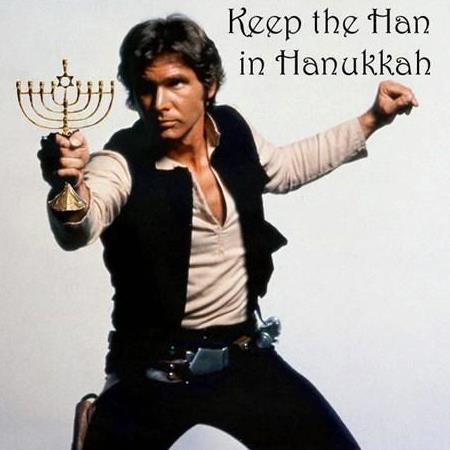
I wrote a bit about the Harrison Ford thing already...part of it's historical, left over from the days of Star Wars, part of it is yet another one of my old-guy crushes (cf. Gabriel Byrne, Jean Reno, Liam Neeson), and part of it is, well, he's Irish and Jewish, too. Great combo.


As an added bonus, he's married to Calista Flockheart who, in addition to being completely sexy in her own right, touched her lips to the lips of Christian Bale in A Midsummer Night's Dream. Excuse me if I space out for a few moments thinking about Harrison Ford kissing Christian Bale...


3. Leonard Albert "Lenny" Kravitz
Lenny sings. He rocks out. He looks great with long hair or short hair. Either way, I say "Let Love Rule." Does he not have the most kissable lips?


Added bonus: Neneh Cherry wrote the song "Buddy X" about him, and it's one of the great '90s female anthems.

4. Jakob Dylan
Bob Dylan's blue-eyed baby got the looks and the voice! No visible tattoos on this Jewish rock star, but I'd still like to check.


Jakob Dylan was probably my #1 celebrity crush of the '90s. Guy crush, I mean. Uma Thurman was the actual #1. I borrowed his first name for the husband of my fictional ancestress, the pirate Raven Rachel Templin.

5. Eli Roth
This guy you either love or you hate. I think he freaked some people out with Hostel, which I have not seen. As The Bear Jew in Inglorious Basterds, IMHO he managed to be hotter than Brad Pitt. With that buff body, he looks like a hot Krav Maga instructor.


Honorable Mention: Adrien Brody
Do I hate almost all of his movies? Yes. Cadillac Records especially, as it seemed to hit every Jewish stereotype in the book. He walks around saying, "The money!" like he's starring in an episode of The Jew, The Italian and the Redhead Gay. Written by Louis Farrakhan, directed by Borat? Maybe. Even if he makes me say, "Et tu, Brody?" and makes terrible film choices, I still want to kiss his badly-reset Hebrew nose.


That's my list. Blog symmetry dictates that I go out on the note I came in with. So, for your viewing pleasure, I close with a gratuitous photo of Huma Abedin's dude. Dignified? No, but kinda fun nonetheless.

Sunday, March 20, 2011

PS Holiday Trilogy Concludes with Naw-Ruz and Purim

The Vernal Equinox on March 21 closes out a trio of holidays: first St. Patrick’s Day, then St. Marcus Day and now the coming of spring. The other day, I heard of Naw-Ruz for the first time. Naw-Ruz (which goes by a variety of alternative spellings) means “New Day,” occurs on or around the first day of spring, and is a cultural holiday to people in Iran and people all over the world of the Baha’i faith.

In Iran, Naw-Ruz begins the first day of Farvardin, the first month of the new year. It’s now a secular holiday observed by all religious groups. Although once associated with the Zoroastrian religion, Naw-Ruz likely has some Pagan origins. Zoroastrians observe only two official religious holidays, one at the spring equinox and the other at the fall equinox. (Indian Zoroastrians, the Parsis, have a different calendar and observe Naw-Ruz around August.)

Like the Christian Easter, Iranian Naw-Ruz (Norooz) may be celebrated by spring cleaning, wearing new clothes, coloring eggs and other symbols of new life and beginnings. A common Naw-Ruz observance is the “Seven S’s,” a display of seven items that start with S in the Persian language. They include lilies, apples, hyacinths, garlic, silver coins, vinegar, green grass, senjad berries...that's more than seven because there are various combinations.

The final Tuesday of the old year is celebrated with a bonfire. Jumping over the bonfire is a symbolic purification. The 13th day of the new year, Sizdah Bedar, has its own custom: unmarried women who want to get married go into the fields to tie knots in the grasses. Just like in the English language "tying the knot" symbolizes a wedding.

The Baha’i feast of Naw-Ruz is observed by taking a day off from work for prayer, celebration and a shared evening meal. Some Baha’i practitioners give gifts. The day also marks the end of a 19-day fast.

On March 20 and 21 this year, Jewish practitioners celebrate Purim, Judaism's spring festival. (The date on the Hebrew calendar in 14 Adar.) It has been compared to Christianity's Carnival/Mardi Gras and to Halloween. It involves feasting, noisemakers and costumes. Israeli kids bonk each other on the head with toy hammers.

Eden Aviv, CC0, via Wikimedia Commons

The religious basis of Purim is the book of Esther (Megillat Esther), the ancient text in which a plot by the evil Haman (a Persian) to destroy the Jews is foiled by the righteous Mordechai and his brave niece, Esther. The commandment on Purim is to drink alcohol until one can't tell the difference between Mordechai and Haman. Many also give to charity as part of the celebration.

Purim has also contributed to the world of desserts hamantaschen, the delicious triangular pastries with poppyseed, fruit or chocolate filling in the middle. The name means "Haman's hats."

More:
Beyer, Catherine. "Naw-Ruz, The Baha'i and Zoroastrian New Year."
Bodazey Magazine. "Norooz, The Iranian New Year at Present Times."
"Purim 2011: What You Need to Know."
Walbridge, John. "The Baha'i New Year."
"What is a Hamantasch?"

Wednesday, December 1, 2010

Hanukkah Reflections

Barukh atah adonai, elohaynu melekh ha-olam
Asher kidishanu b'mitzvo-tav
Vi-tzivahnu le-hadlikh ner shel Hanukkah


Praised are You, Oh Lord, our God, ruler of the universe
Who has made us holy through God's commandments and
commanded us to kindle the Hanukkah lights.

--Blessings of the first night of Hanukkah
The Little Book of Hanukkah, Running Press

"Kindle the taper like the steadfast star
Ablaze on evening's forehead o'er the earth,
And add each night a luster till afar
An eightfold splendor shine above thy hearth.
Clash, Israel, the cymbals, touch the lyre,
Blow the brass trumpet and the harsh-tongued horn;
Chant psalms of victory till the heart takes fire,
The Maccabean spirit leap newborn."

--From The Feast of Lights by Emma Lazarus
The Eight Nights of Hanukkah, Peter Pauper Press


"Hanukkah is remembered not only for the miracle of the lights that burned in the Temple, but for the miracle of bringing light to a darkened world. The days of December in which Hanukkah usually falls are the shortest in daylight and the longest in night of the entire year. On the twenty-fifth night of Kislev, the moon begins to shrink from sight altogether, and at the winter solstice, the sun begins to weaken and sheds least of its warmth on the cold earth. It is a time of year when a little light must go a long way. Running counter to the natural process of diminishing light, the ceremonial candles grow in number, shedding more light with each successive night."

--Becoming a Jew, Maurice Lamm

"Hanukkah is about being Jewish and Hanukkah is about what I'm prepared to fight for as a Jew. Hanukkah is about limits and definition. Hanukkah is about reassessing what is non-negotiable in my life...what I am ready to modify or reformulate in consequence of being a proud and loyal American; what, for me, is not up for grabs, not open to dilution or diminution or cancellation or violation. Hanukkah is about consulting the venerable traditions of our people rather than making autonomous decisions about what stays and what must go."


--Being Jewish in a Gentile World: A Survival Guide by Ronald A. Brauner

"Although America's consumer culture has tried to make Hanukkah into a Jewish version of Christmas, it remains a modest festival of candle-lighting and potato-pancake frying."


--Choosing a Jewish Life by Anita Diamant

"Hanukkah may be twentieth-century Judaism's most popular holiday--surely it is the best known amongst gentiles. Of all the holidays in the entire Jewish calendar, it is the last holiday of the ancient world; it is the only one not based on a biblical narrative; the only one that celebrates a military conquest; the only holiday based on a miracle not instituted by a prophet; the only one not celebrated by a synagogue special service, or by a scroll, or by biblical reference. But, as the Hanukkah lights are increased by one for eight nights, the power, the significance and the popularity of Hanukkah and its message grow ever brighter--from day to day and year to year."

--Becoming a Jew, Maurice Lamm


"Each side of the dreidel has a Hebrew letter. Each letter represents the first letter in each word of the sentence Nais godol hayah sham, which means "A great miracle happened there."

--The Little Book of Hanukkah, Steven Zorn, Running Press

Sunday, July 18, 2010

Tales of Biblical Terror: She Nailed a Stake Through His Head

You don't need to be Jewish or Christian to appreciate She Nailed a Stake Through His Head: Tales of Biblical Terror. Still, you may find yourself groping for a religious icon for protection given the unholy places these weird tales will take you.


The anthology opens with Gerri Leen's eerie reversal of the tale of Ruth and Naomi, wherein Ruth's devotion to her mother-in-law is not a blessing but a monstrous curse. Not all of these stories are set in the ancient Middle East, though, as Daniel Kaysen's "Babylon's Burning" proves.

Meandering between desert sands and skyscrapers, between past, present and alternate timelines, She Nailed a Stake Through His Head is a gallery of horrors inspired by the most nightmarish images of Near Eastern cultures. There are wild-eyed, drug-crazed prophets, witches drawing the dead from the depths of the Underworld, sacred prostitutes with one soul in two bodies, an English Delilah trapped in a house falling down around her, epic beheadings, and a living tomb in the foul and slimy body of a whale driving the prophet deeper into insanity.

The collection is bookended with a tale inspired by the New Testament: a vampire's take on the body and blood of the Christian savior. Regardless of religion (or lack thereof), lovers of speculative fiction will swallow up these provocative stories.

Friday, December 11, 2009

A Hanukkah Treat For Gentiles and Jews Alike


It's that time of year again! Dig in to a delectable winter treat, as warm as a potato pancake on a frosty Hanukkah night!

Caught up in the magic of the Festival of Lights, Gabriella wants everything to be perfect for her holiday with Jared. Jared has very specific tastes-and a slight obsession with teasing the individual flavors out of the aromas of fine wines. Even the kosher wine he chooses for the first night of Hanukkah is subjected to his beloved wine aroma wheel.

But wine is not the only thing that can be tasted, analyzed, and savored. Gabriella and Jared discover new uses for Jared's favorite toy as the Hanukkah candles burn down...

Read "Spicy, Earthy, Sweet" by Erin O'Riordan at Ravenous Romance (update, 2015: Although originally available at RR, the title can now be found on Etsy).

Help out a starving artist for only $1.99! It's a beautiful story (but only for readers 18+)!

Erin O'Riordan, despite what her Irish name may lead you to believe, is of mixed Catholic, Protestant, Jewish and Pagan descent. Following the philosophy of Joan Borysenko, she proudly embraces all of her diverse spiritual heritage. Her spiritual-sexual writings include the Pagan-ritual-inspired erotic novel Beltane, from Eternal Press. Visit her home page at www.aeess.com.