Erin O'Riordan writes smart, whimsical erotica. Her erotic romance novel trilogy, Pagan Spirits, is now available. With her husband, she also writes crime novels. Visit her home page at ko-fi.com.
October 7, 1849: In Baltimore, Edgar Allan Poe dies.
October 7, 1914: Julian Carlton, having murdered seven people and drunk hydrochloric acid in an attempt to commit suicide, starves to death due to the injures to his esophagus caused by the acid. He has been receiving medical attention the whole time he is in police custody.
October 7, 1957: Santa Barbara College student Max Caulk drowns during a Delta Tau Delta fraternity hazing ritual in which his fraternity brothers threw him off a pier.
October 7, 1992: The last fluent speaker of the Ubykh language, Tevfik Esenç, dies at the age of 88. The Ubykh people are a subset of the Circassian people, who were the victims of ethnic cleansing by the Russians in the 18th and 19th centuries.
What was Diane Meyer grateful for on October 7, 2024?
smoked salmon and dipping bagels in cream cheese bought a new antique fork that says bloom! growth mindset looking forward to the future sand long walks cold air country roads long books plum muffin barbecue ribs! risotto! green beans! girls loving themselves! -- working on it always roasted vegetables
October 3, 1849: On this election day, Edgar Allan Poe is given alcohol and marched from polling place to polling place in an illegal voting scam that was popular at the time. It may have contributed to his death four days later.
October 3, 1967: 55-year-old folk singer Woody Guthrie dies of complications of Huntington’s disease, a hereditary condition that is still incurable.
October 3, 1993: 18 members of the U.S. Special Forces and the Army Rangers are killed in a mission to capture one faction of warlords in the Somali Civil War. Two American Black Hawk helicopters are shot down. One American soldier is captured, and some of the bodies of the dead are dragged through the streets of Mogadishu, Somalia, and desecrated.
October 3, 2003: During a stage show in Las Vegas, 59-year-old Roy Horn of the magician duo Siegfried and Roy is bitten, knocked down, and dragged offstage by 7-year-old white tiger Mantacore. Horn suffers spinal injuries and severe blood loss, contributing to a stroke either during or after the incident. His verbal and motor skills are permanently impaired.
The tiger is not harmed after the incident and lives to be 17, dying after an illness in 2014.
July 28, 1841: Either the police or a pair of fisherman (accounts vary) discover the body of Mary Cecilia Rogers floating in the Hudson River near Hoboken, New Jersey. Rogers, who was 20 or 21 years old and worked as a cigar seller in New York City, was last seen by her family on the 25th. Although the case is officially unsolved, it’s suspected she was either murdered by her boyfriend Daniel Payne or perhaps died as a result of an illegal abortion. Payne killed himself by overdosing on alcohol and laudanum on October 7, 1841. The discover of Rogers’s body inspired Edgar Allan Poe to write “The Mystery of Marie Rogêt.”
July 28, 1914: The Great War begins in earnest when Austria-Hungary declares war on Serbia.
July 28, 1945: In foggy weather, a U.S. Army Air Forces B-25 Mitchell bomber crashes into the Empire State Building. All three crew members on the plane and 11 people inside the building are killed.
In the impact, elevator operator Betty Lou Oliver is thrown from her elevator car and suffers severe burns. Rescue crews place her in another elevator car to send her down to the ground for medical treatment; that elevator car, with its cables damaged in the accident, plummets 75 floors to the basement. Remarkably, Oliver survives, with broken bones, and is once again rescued from the rubble of the elevator crash. This is considered the record for the longest survivable fall in an elevator.
March 4, 1874: Stage actor Ada Clare dies of rabies at the age of 39 after being bitten by a rabid dog in her theatrical agent’s office.
March 4, 1908: An elementary school in Collinwood, Ohio, catches fire for an undetermined reason. The school’s masonry exterior and almost entirely wooden interior without fire breaks cause the entire building to act like a chimney. Two teachers, one rescuer, and 172 students–almost half of the students in the building--are killed.
March 4, 2019: 52-year-old actor Luke Perry dies from complications of two ischemic strokes at a hospital in Burbank, California.
All of My eBooks Are Free on Smashwords, March 1-7, 2026
Today's Observance (United States): Martin Luther King, Jr. Day
Beatles Trivia
January 19 January 19, 1971: During Charles Manson’s murder trial, Manson’s defense attorneys introduce the Beatles’ song “Helter Skelter” into evidence. According to Los Angeles Deputy District Attorney Vincent Bugliosi, one of Manson’s delusion beliefs was that the song, written by Paul McCartney, referred to a coming race war.
In reality, the lyrics refer to the literal meaning of a helter skelter, an English amusement ride consisting of a tower with a slide curling around it.
Bummer January 19
January 19, 1729: Restoration-era playwright William Congreve dies of complications from internal injuries he suffered in a September 1728 carriage accident.
January 19, 1903: Newspaper publisher and political powerbroker Narciso Gener Gonzales dies of a gunshot wound inflicted by James H. Tillman, the lieutenant governor of South Carolina. Gonzales was critical of Tillman’s uncle Ben Tillman, a U.S. senator. Tillman was a strict segregationist who favored harsh repression of African-American voting rights in South Carolina. Gonzales, although himself a segregationist, was also an anti-lynching activist who abhorred Tillman’s support for violence.
January 19, 1991: 20-year-old Austrian ski racer Gernot Reinstadler, competing in a qualifying race in Wengen, Switzerland, veers slightly to the right during the course of the downhill race. This slight deviation causes one of the tips of his skis to become tangled in the side netting while Reinstadler is still moving at a high speed. Reinstadler suffers a severe injure that essentially threatens to split his body in two from the pelvis upward. Although flown by helicopter to the nearest hospital and given multiple blood transfusions, the young man dies from the injury.
October 1, 1941: 52-year-old Aline Murray Kilmer, herself a poet and also the widow of Joyce Kilmer, a poet killed in World War One, dies following three years of an unknown, but excruciatingly painful, illness.
October 1, 1951: Journalist Pauline Pfeiffer dies at age 56 of acute shock. She had a rare pheochromocytoma tumor on one of her adrenal glands. It appears that when Pauline’s transgender daughter Gloria was arrested for using a women’s bathroom and Gloria’s father Ernest Hemingway called his ex-wife Pauline to tell her, the news of Gloria’s arrest caused Pauline’s adrenal tumor to produce the hormones that caused the fatal state of physical shock.
October 2, 2018: Saudi Arabian journalist Jamal Ahmad Khashoggi, who resides in the U.S., is murdered at the Saudi consulate in Istanbul, Turkey. Khashoggi’s writings were critical of the Saudi government, and Saudi Arabia’s Crown Prince Mohammed bin Salman is suspected of being involved in the assassination.
October 2, 2019: Guitarist Kim Shattuck, who played for groups including Pixies, the Muffs, and the Pandoras, dies of amyotrophic lateral sclerosis at the age of 56.
October 3, 1849: On this election day, Edgar Allan Poe is given alcohol and marched from polling place to polling place in an illegal voting scam that was popular at the time. It may have contributed to his death four days later.
October 4, 1951: Henrietta Lacks passes away from complications of cervical cancer. She had been treated with radiation therapy at Johns Hopkins Hospital in Baltimore. As a result of her cancer and/or the radiation, her organs failed. After her death and without her knowledge or consent, Lacks’ cancerous cells will be collected and used to start an “immortal” cell line that will be used in most of the major medical research of the 20th century.
October 4, 1970: Her road manager finds 27-year-old singer Janis Joplin dead on the floor of her motel room in Los Angeles. She has apparently died of a heroin overdose.
October 4, 1974: Poet Anne Sexton dies by suicide in her car, locked inside her garage, by carbon monoxide poisoning. She is 45 years old.
October 5, 1995: 50-year-old voice actor Linda Gary, who provided an impressive number of cartoon characters with their voices in American animation of the ‘70s and ‘80s, dies of brain cancer.
October 5, 2001: Robert Stevens, a photographer for the tabloid newspaper Sun in Boca Raton, Florida, dies of pulmonary anthrax. His death is the first in a series of anthrax terror attacks that killed Stevens and four other people and sickened 17 others.
Microbiologist Bruce Ivins is the lead suspect in the FBI investigation into the anthrax attacks. He dies by suicide before he can be arrested and charged.
October 7, 1849: In Baltimore, Edgar Allan Poe dies.
October 7, 1992: The last fluent speaker of the Ubykh language, Tevfik Esenç, dies at the age of 88. The Ubykh people are a subset of the Circassian people, who were the victims of ethnic cleansing by the Russians in the 18th and 19th centuries.
October 10, 1901: 23-year-old David Park Barnit, a poet of the Decadent school of poetry, dies suddenly of what newspapers describe as “an enlarged heart.” Some suspect this may be a cover story and that the young poet may have taken his own life.
October 10, 1963: 47-year-old French cabaret singer Édith Piaf dies of liver failure from liver cancer and cirrhosis after years of alcohol and drug addiction.
October 10, 1984: One employee and three customers are killed when a fire breaks out at Ole's Home Center in South Pasadena, California. The youngest victim is two years old. The fire is determined to be arson by investigators who include John Leonard Orr. In 1992, Orr will be convicted of this and several other arson fires in the Los Angeles area.
October 12, 1943: Poet Robert Traill Spence Lowell IV, best known as Robert Lowell or Robert Lowell, Jr., is sentenced to a year in prison for draft evasion for being a conscientious objector to service in World War II.
October 19, 1950: Poet Edna St. Vincent Millay, age 58, dies after apparently suffering a heart attack and falling down the stairs of her home.
October 19, 1977: A small fire breaks out aboard the charter plane used by members of the band Lynyrd Skynyrd. No one is hurt, but the fire makes Cassie Gaines hesitant to board the plane the next day.
October 20, 1728: The Copenhagen Fire of 1728 begins and burns through October 23rd. It destroys nearly a third of the city’s buildings, leaving approximately 20% of Copenhagen’s population homeless. The University of Copenhagen library loses approximately 35,000 texts.
October 20, 1977: Cassie Gaines, her brother Steve Gaines, Ronnie Van Zant, road manager Dean Kilpatrick, and pilots William Gray and Walter McCreary die when Lynyrd Skynyrd’s chartered plane runs out of fuel and crashes in the woods outside Gillsburg, Mississippi. Drummer Artimus Pyle, guitarist Gary Rossington, and keyboardist Billy Powell all survive with serious injuries.
October 20, 1990: Stunt performer Brian Jewell, portraying a hanged man at a New Jersey “haunted hayride” attraction, accidentally hangs himself in earnest.
October 21, 1966: “[On this date] a massive coal-tip slid down a mountainside and engulfed the Welsh mining village of Aberfan, killing 144 persons, mostly school children. In response to an appeal the following week in a national newspaper, an English psychiatrist, J. Barker, obtained a large number of reports from respondents who felt they may have received paranormal information concerning this tragedy. After all claims were carefully checked out, thirty-five cases remained which Dr. Barker considered worthy of confidence. In twenty-four cases, the respondents had related the information to someone else before the landslide occurred. Dreams figures in twenty-five of these accounts. In one, the dreamer saw, spelled out in large, brilliant letters, the word ABERFAN, In another, a telephone operator from Brighton talked helplessly to a child, who walked toward her, followed by a billowing cloud of black dust or smoke.” - Our Dreaming Mind by Robert L. Van de Castle
October 22, 2009: The county government of Zhenyuan, Gansu province, China, announces on social media that it has burned 65 “illegal publications” outside of a local library. It describes the books as either “religious” or displaying “leanings,” presumably leanings that tend to disagree with the Chinese government.
On the same day, in the United States, novelist/blogger Mac Tonnies dies at age 34 of a cardiac arrhythmia.
October 23, 1731: Fire breaks out at Ashburnham House in Westminster, England. The house holds the Cotton Library, a collection of books and historical documents gifted to the British Crown by Sir Robert Bruce Cotton, a Member of Parliament who died in 1631. The fire destroys 13 manuscripts and damages 200 others. The Nowell Codex, the single manuscript on which the Epic of Beowulfis recorded, is among those damaged.
October 24, 2010: Pan Jin-yu dies at the age of 96 in Taiwan. She was the last fluent native speaker of the Pazeh language.
October 26, 1952: Hattie McDaniel, the first African-American to sing on the radio in the U.S. and the first African-American to win an Academy Award for acting, dies of breast cancer in Los Angeles. She’s 59 years old.
October 26, 1990: 15-year-old William Anthony Odom, setting up a gallows scene for a Halloween tableau in North Carolina, accidentally hangs himself when the rope he’s using tightens on him.
October 26, 2018: A bomb addressed to then-Senator Kamala Harris is intercepted by authorities in Sacramento, California. Cesar Altieri Sayoc, Jr. is later convicted of the terroristic threat.
October 26, 2022: Food writer Julie Powell dies of cardiac arrest at age 49 after battling a COVID-19 infection.
October 28, 1991: The commercial fishing boat Andrea Gail is lost amid the so-called Perfect Storm weather event that began with Hurricane Grace, formed on October 26th. The boat sinks with six crew members aboard near Sable Island, Canada. Their bodies are never recovered. In all, the Perfect Storm claims 13 lives.
October 31, 1871: Emily and Mary Wilde, the older half-sisters of Oscar Wilde, attend a Halloween party at Drumacon House near Ulster, Ireland. During the last dance of the evening, Mary gets too close to a candlestick and catches her dress on fire. Emily, too, catches her dress on fire as she rushes to help her sister. Party host Andrew Reid leads the women outside in the hope that the snow would help them extinguish the flames, but both sisters die of their injuries, Mary (age 22) on November 9th and Emily (age 24) on November 21st.
22. "Material Girl" - Kris Bowers. From the Bridgerton soundtrack; I've neither read nor watched the Netflix Regency romance series, but I like these pop songs done in a chamber music style.
62. "Mo Money, Mo Problems," The Notorious B.I.G., Mase, Diddy
63. "What's Up?" - 4 Non Blondes
64. "Our Love Is Done" - Hannah Juanita
65. "Do What You Want" - Lady Gaga, Christina Aguilera
66. "Glory of the 80s" - Tori Amos
67. "The River of Dreams" - Billy Joel
68. "No Myth" - Michael Penn
69. "How Will I Know?" - Whitney Houston - Tit and I also saw The Bodyguard, the musical, live on stage in 2023.
70. "Tonight I'll Be Staying Here" - Bob Dylan
71. "Sirius" - The Alan Parsons Project. Which I believe was some kind of hovercraft. (That's a Simpsons reference, but in real life, this is the song that traditionally introduces the starting lineup of the Chicago Bulls.)
72. "Bitch I'm Madonna" - Madonna with Nicki Minaj
94. "Rock Your Baby" - Wanda Jackson. Goddess bless Wanda Jackson. She is 86 years old and recently put out a cover of Juice Newton's "Queen of Hearts" with Leilah Safka. (Leilah's mother Melanie Safka, who performed under the mononym Melanie, had such hits as "Brand New Key.")
"The poem I just wrote is not real. And neither is the black horse who is grazing on my belly. And neither are the ghosts of old lovers who smile at me from the jukebox." - Joy Harjo
Joy Harjo. Library of Congress Life, CC0, via Wikimedia Commons
I walk into the little Historic Downtown Irvington shop on Washington Street that used to be the ice cream shop that sold bubble tea. I see the new owner has rebranded it as a 1950s-themed nostalgia diner. The bubble tea options and anime keepsakes are gone, but the ice cream counter remains, as do about a dozen shiny, chrome milkshake blenders.
The brightly lit Wurlitzer jukebox in the corner has a hastily printed-off sign that reads, in Comic Sans font, "Do Not Play the Jukebox."
I glance around the diner. The only occupied booth is in the corner, where a snappily-dressed 20-year-old Edgar Allan Poe can't take his pale blue eyes off his broad-shouldered, 49-year-old date. Augustus Landor is dressed somewhat more shabbily than the young dandy he's courting but appears to be no less enthralled by his partner's company. Their table is littered with empty beer bottles, in the midst of which sits a single milkshake with two straws.
I sit at the counter and order a vanilla Coke and a veggie burger with lettuce, tomato, and pickles. As the server delivers my Coke, I ask her, "What's up with that jukebox? Is it broken?"
"Not broken, exactly," she says. She has a working class London accent, tall black hair, and an abundance of retro tattoos.
"Nah, I don't think so," the server says, snapping her gum. "That's not it. It's just been acting weird ever since that writer Joy Harjo came in and played it."
I pause to think. Is she being subtly racist, maybe unintentionally, attributing some kind of magic to Harjo because the poet is an indigenous woman? Maybe she attributes magic to all poets. Isn't what they do with words a sort of magic, after all?
"Weird how?" I ask at last.
She reaches into her apron, produces a shiny quarter, and tosses it to me. "See for yourself."
I take her quarter to the jukebox and drop it in the glowing slot. I don't select a song from the touchscreen; I don't get the chance to touch the screen before the first notes of "Come On Eileen" play.
I shrug. "So it doesn't let you choose the song," I say, turning to the server. "That's not so unusual."
"Look again," she says, pointing to the jukebox. I turn back to its brightly-lit display and notice, for the first time, the faint outline of a face. Is it my reflection in the glass? But no, the faint outline becomes clearer, as if I'm looking into a crystal ball and an image appears from the clouded interior.
I know this face. He's Robert Sheehan. This time, he doesn't call me Eileen. He doesn't say a thing. He only smiles.
Well, not ONLY smiles; his eyes follow me as I shake my head. I move to the left and his eyes track me. I sense awareness, maybe even intelligence. I know the image I see isn't the real Robert, but it isn't exactly a mere image either.
"See what I mean now?" the server asks me. "The fuckin' thing's haunted. It shows you exes, old boyfriends and like that."
"It showed me my Annabel Lee," says Poe from the corner. "It played Gus a waltz and showed him his late wife."
Augustus groans. "Could I get another beer?" he asks the server.
"Eerie," I say, rummaging in my jeggings pocket for another quarter. I find one and feed it into the jukebox. Apparently its powers included showing me the faces of the dead as if they were alive and well; I wanted to test this property. "Play some Johnny Cash."
But it doesn't. As Robert Sheehan's smiling face fades away, the opening incidental music of "One Night in Bangkok" fades in and I glimpse the smiling face of Murray Head.
I smile back, remembering some of the sweetest hours of my life spent with the singer in the luxury of the Somerset Maugham suite.
The illusion is broken as the black-haired server sets my veggie burger on the counter. I sit and eat in happy reminiscence as the song plays out, my eyes darting between the jukebox and my burger.
The song cross-fades into "Are You Jimmy Ray?" and I wonder whose smiling face I'll see. Will it be my old friend Uma, whose first child Maya is now a grown woman, actor, and singer herself? Will it be my ex-flame Tim, complicated and morally gray, sometimes a peaceful Buddhist and at other times capable of great inner darkness?
The mysterious jukebox surprises me by showing me the face of my dear, departed friend James Dean. His smile is radiant. He looks so happy it gives me a little pang in my chest.
"You see?" says the server as she takes away my empty plate. "That's a dead boy, innit? It's right spooky. That Joy Harjo did something to it. She didn't have a quarter, she said, so she tried to pay for a song with a poem instead. Ever since she put her poetry into the, the bloody thing's been going off like a fortune teller's crystal ball."
"Amy!" pipes up Poe, addressing the server. "You didn't tell me you accepted poetry as payment!"
"Now don't you start, Eddie," says the server, whose name tag I can now clearly see says Amy. I think she might be less spooked by dead boys than she's been letting on. "You be a good boy and pay for your food and beers with your American dollars."
"You know he doesn't have any money," says Landor, with a slight slur to his voice after he's finished his last beer. He reaches across the table and takes Poe's hand. "Not that you need worry about paying the tab when you're with me. Old Augustus will keep body and soul together for you, Eddie."
Poe smiles and for a moment I think they're going to kiss. Maybe they do. I'm looking at the jukebox and the radiantly happily, eerily glowing face of James Dean, his eyes following my every move.
As he fades away, the notes of "Helter Skelter" fade in. Will I see a Beatle? Could John or George pay me a visit? And does the diner seem suddenly warmer?
I soon realize the reason for the extremely localized heat wave. I see the face of Steve McQueen, whom I first encountered steaming hot and soaking wet when I stumbled into the room as he took a bath.
As if reading my mind, Amy sets another icy vanilla Coke on the counter. I grip the straw and sip eagerly, thirsty in more ways than one. Steve's smile makes me feel like I'm evaporating into steam.
***
The vignette I just wrote is not real. But it does contain affiliate links.
I don't know what this is. Maybe it was inspired by my Spotify Wrapped? I'm still not sure I'm using the word "pastiche" correctly. I pulled at a few different threads and I wove this, whatever it is.
I.
Robert Sheehan is outside my window again. Lucky for me, I'm on the 2nd floor, in my writer's studio above the corner bodega and he's standing on the sidewalk.
The window is open.
"Eileen!" he shouts up. "Come on, Eileen."
I leave my chair, push aside the pink-and-gray buffalo check curtain and peer down at him.
Putting his Irish accent on thick, he sings, "Believe me, if all those enduring young charms..."
"I'm dreaming," I say, interrupting his croon. "This is because I said you should play Kevin Rowland in a movie about Dexys Midnight Runners."
"Not a dream," he half-says, half-sings. "Don't you want to come down and go for a walk with me, just around the neighborhood?"
"No." The smell of hot tortilla chips warming in the bodega below makes my nostrils flare. I imagine the salt crystals on their flat surfaces. Craving the warmth and salt, I feel a hunger pang.
"Why not?"
"I've got things to do."
"Like what?"
I gesture at my laptop. "I have to write things. Legitimate things, fresh things, not just this Joyce Carol Oates pastiche."
"Eileen, you ain't telling the truth."
"Not my name," I remind him.
"Eileen, Erin, whatever. This is your day set aside for going for a walk with me and you know it."
I feel threatened. I close the window and go back to my laptop.
II.
I walk into the little Historic Downtown Irvington shop on Washington Street that used to be the ice cream shop that sold bubble tea. I see the new owner has rebranded it as a 1950s-themed nostalgia diner. The bubble tea options and anime keepsakes are gone, but the ice cream counter remains, as do about a dozen shiny, chrome milkshake blenders.
The brightly lit Wurlitzer jukebox in the corner plays “Drugstore Rock'N'Roll” by Janis Martin. The cheerful song paints the perfect picture of midcentury innocence.*
At one high table sits Edgar Allan Poe. His dark brown suit fits him well, although the foot that dangles from the long-legged chair has an untied shoelace. Catching me in his blue-eyed gaze, he says, “This was her favorite place.”
I’m confused. He died in the 1840s, over a century before the trope of the ‘50s malt shop emerged.
“I’m sorry?” I say. “ 'She’ is –?”
“Was,” he corrects me. “She was my Annabel Lee.”
I shake my head as I take the seat across from him. He offers me a sip of his milkshake, turning the straw toward me. I know I shouldn’t, but I indulge myself in a sweet sip of Poe’s chocolate malt.
I then continue, “This couldn’t have been her favorite place; that’s a line from that MC Lars song, 'Annabel Lee R.I.P.’”
He shrugs. Poe looks sad and beautiful but not morose. Despite his Gothic reputation, there’s nothing gloomy or goth about him. He’s every bit the Southern gentleman, gracious and effortlessly charming. I want to touch his dark hair where it starts to curl, just behind his ear.
I excuse myself to use the restroom. In the mirror, my eyes are less green and much more hazel than usual. Am I Christian Bale? No, I’m Augustus Landor. My clothes are careworn and I want to go back to my cottage.
Well, perhaps one more sip of Poe’s chocolate malt first.
*The song is about a drugstore. The former drugstore with the soda fountain, the one robbed by John Dillinger, is up the block a bit and on the other side of the street, across from the present-day library.
III.
John Legend, wearing a fashionable off-white suit, sits at his white piano, playing me a Christmas song in front of a roaring fire. Actually, he’s singing me “The Christmas Song.”
“Chestnuts roasting on an open fire…”
“Happy birthday,” I blurt out.
“My birthday isn’t until the 28th. I’m an after-Christmas baby.”
He laughs, and I can’t tell whether he’s more surprised or amused.
Presently the fireplace-warmed air grew hotter. This was no winter wonderland. Were we in Jerusalem? Beyond John I spot a man with copious sandy-blond hair wearing black eyeliner and a keffiyeh.
“Judas,” I say upon the appearance of Tim Minchin.
“Jesus Christ,” he says, approaching John, seemingly moving in to kiss him. They lock eyes and I feel I’m witnessing something I’m not meant to see.
“…Superstar,” I mutter to myself as I turn away to give them their privacy. I muse aloud, “I can appreciate casting Alice Cooper as King Herod; I appreciate his showmanship. You know else might have made an interesting casting choice? Murray Head, the original album-Judas Superstar, coming back to play King Herod.”
We stand before his throne now: King Murray Head.
Blame W. Somerset Maugham. He had a birthday (January 25), I remembered that his Oriental Hotel suite is name-checked in “One Night in Bangkok,” and soon I’m detecting something wistful in Murray Head ballads that speaks to me as something other than merely an ‘80s kid.
“Now see what you’ve done?” Jesus Christ Superstar admonishes me. “You chose to lean fully into your 1980s nostalgia and now I’m going to be crucified.”
Is Tim Minchin Judas wearing lip gloss? And is it a bit smudged now?
“I’m not interested in matters of Jewish law tonight,” King Murray Head says in the crispest English accent you’ve heard since Ralph Fiennes. Offering me a doubtful smile, he adds, “My dear, would you care to join me in the Somerset Maugham Suite?”
“I thought you got your kicks above the waistline, sunshine,” the saucy Aussie chimes in.
King Murray Head shrugs. “I’m only human. We can’t all be Jesus Christ Superstar.”
I’m sexualizing that old man. I desire him carnally. But will he love me tomorrow? I'm guessing no, but that's ok. Nothing lasts forever.
IV.
I’m tucked snugly, quite comfortably into my 4-post bed, the curtains drawn around me, blissfully asleep in the warm and the dark. The sound of my name awakens me.
“Who’s there?” I ask. It had better not be Robert Sheehan.
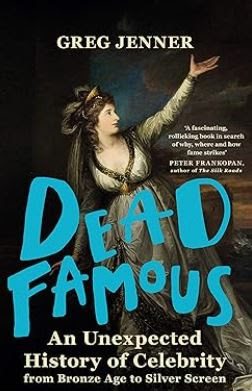
“Charles Dickens,” comes the reply. This is what I get for reading Greg Jenner’s Dead Famous before bed.
But I know that distinctive voice. I part the bed curtains. “Dan Stevens?!” I ask incredulously, laying eyes on the extremely handsome English actor in the early morning light.
“It’s Charles Dickens,” Dan Stevens insists. He’s brought a friend.
“And John Forster,” adds Justin Edwards-in-Victorian-costume.
Accepting that these British thespians are in character as their The Man Who Invented Christmas counterparts, I ask, “Are you the Ghosts of Christmas Past? Am I dreaming?
“Neither,” says John/Justin, pulling a pie sprinkled with sugar seemingly out of nowhere.
That explained nothing. I thought back to Robert Sheehan telling me his creepy Oatesian visit wasn’t a dream. I then grew distracted by the state of my bedroom, suddenly filled with evergreen trees and boughs decorated with silver baubles, iridescent glass bubbles, and magical flickering candles. I smelled cinnamon and cloves; was someone mulling red wine in my bedroom?
It was beginning to look a lot like Victorian Christmas and smell like it too. My chamber suddenly possessed a long dining table on which there lay a roasted turkey, an enormous figgy pudding, and a rapidly-multiplying host of 19th-century holiday delicacies that would have made Ichabod Crane’s head explode.
“And you’re saying you two are not the Ghosts of Christmas Past?” I asked my guests for clarification.
Seating themselves at the table, they denied being ghosts a second time as they helped themselves to a portion of the mouth-watering feast.
“Tuck in,” said Charles/Dan.
I serve myself, but soon notice how the actors favor each other’s company, eat from each other’s plates, and feed one another. They’d constructed an elaborate ritual that allowed them to touch one another without social judgment.
“What is this?” I wonder out loud.
“You could think of it as recursion,” Charles/Dan says. “Each Christmas harks back to every other Christmas. This Christmas reminds you of childhood Christmases, which in turn retains elements of Victorian Christmas past, which in turn bears marks of earlier traditions, and so on.
“One might say,” remarks John/Justin, “that, in a sense, there has only ever been one Christmas and we return to it every year. We practice the myth of eternal return when we practice Christmas.” His thumb traces a line of cream that Charles/ Dan has smeared on his cheek, then eats the errant cream.
“I still don’t understand why I’m here,” I say. “Why was it necessary for me to be the Scrooge in this drama?”
“It isn’t,” Charles/Dan says flatly. “We merely need your bed.”
With that they abandon their feast and retire to my comfy bed, drawing the curtains behind them. I politely ignore their pleasured sighs as I slice into a steaming plum pie, but internally I wish they’d gotten a different room. I knew the Somerset Maugham Suite at the Oriental Hotel in Bangkok had recently been vacated.
* * *
Author’s Note: Oliver Sacks wrote that Charles Dickens had a haunted mind, but didn’t explain that statement and then very sadly passed away. I began to understand it when I read about the railway accident he was involved in. I now believe that perhaps Dr. Sacks also meant that Dickens was haunted by his childhood poverty. This is depicted in The Man Who Invented Christmas and discussed in Dead Famous.
But then in this podcast, Helena Kelly spilled the absolute tea on Dickens and found out that he might have been lying about working in a boot blacking factory?! And he probably had syphilis, which he gave to Kate and the children - some of them may have died from it! - and maybe her sister too?! I don’t want to slut shame Charles Dickens, but I do think I understand what Dr. Sacks meant a lot more deeply now.
October 1, 1941: 52-year-old Aline Murray Kilmer, herself a poet and also the widow of Joyce Kilmer, a poet killed in World War One, dies following three years of an unknown, but excruciatingly painful, illness.
October 1, 1951: Journalist Pauline Pfeiffer dies at age 56 of acute shock. She had a rare pheochromocytoma tumor on one of her adrenal glands. It appears that when Pauline’s transgender daughter Gloria was arrested for using a women’s bathroom and Gloria’s father Ernest Hemingway called his ex-wife Pauline to tell her, the news of Gloria’s arrest caused Pauline’s adrenal tumor to produce the hormones that caused the fatal state of physical shock.
October 2, 2018: Saudi Arabian journalist Jamal Ahmad Khashoggi, who resides in the U.S., is murdered at the Saudi consulate in Istanbul, Turkey. Khashoggi’s writings were critical of the Saudi government, and Saudi Arabia’s Crown Prince Mohammed bin Salman is suspected of being involved in the assassination.
October 3, 1849: On this election day, Edgar Allan Poe is given alcohol and marched from polling place to polling place in an illegal voting scam that was popular at the time. It may have contributed to his death four days later.
October 4, 1951: Henrietta Lacks passes away from complications of cervical cancer. She had been treated with radiation therapy at Johns Hopkins Hospital in Baltimore. As a result of her cancer and/or the radiation, her organs failed. After her death and without her knowledge or consent, Lacks’ cancerous cells will be collected and used to start an “immortal” cell line that will be used in most of the major medical research of the 20th century.
October 4, 1974: Poet Anne Sexton dies by suicide in her car, locked inside her garage, by carbon monoxide poisoning. She is 45 years old.
October 5, 1995: 50-year-old voice actor Linda Gary, who provided an impressive number of cartoon characters with their voices in American animation of the ‘70s and ‘80s, dies of brain cancer.
October 7, 1849: In Baltimore, Edgar Allan Poe dies.
October 7, 1992: The last fluent speaker of the Ubykh language, Tevfik Esenç, dies at the age of 88. The Ubykh people are a subset of the Circassian people, who were the victims of ethnic cleansing by the Russians in the 18th and 19th centuries.
October 10, 1901: 23-year-old David Park Barnit, a poet of the Decadent school of poetry, dies suddenly of what newspapers describe as “an enlarged heart.” Some suspect this may be a cover story and that the young poet may have taken his own life.
October 12, 1943: Poet Robert Traill Spence Lowell IV, best known as Robert Lowell or Robert Lowell, Jr., is sentenced to a year in prison for draft evasion for being a conscientious objector to service in World War II.
October 19, 1950: Poet Edna St. Vincent Millay, age 58, dies after apparently suffering a heart attack and falling down the stairs of her home.
October 20, 1728: The Copenhagen Fire of 1728 begins and burns through October 23rd. It destroys nearly a third of the city’s buildings, leaving approximately 20% of Copenhagen’s population homeless. The University of Copenhagen library loses approximately 35,000 texts.
October 21, 1969: Jack Kerouac dies of internal abdominal hemorrhage caused by his heavy alcohol use. He is 47 years old.
October 22, 2009: The county government of Zhenyuan, Gansu province, China, announces on social media that it has burned 65 “illegal publications” outside of a local library. It describes the books as either “religious” or displaying “leanings,” presumably leanings that tend to disagree with the Chinese government.
On the same day, in the United States, novelist/blogger Mac Tonnies dies at age 34 of a cardiac arrhythmia.
October 23, 1731: Fire breaks out at Ashburnham House in Westminster, England. The house holds the Cotton Library, a collection of books and historical documents gifted to the British Crown by Sir Robert Bruce Cotton, a Member of Parliament who died in 1631. The fire destroys 13 manuscripts and damages 200 others. The Nowell Codex, the single manuscript on which the Epic of Beowulfis recorded, is among those damaged.
October 24, 2010: Pan Jin-yu dies at the age of 96 in Taiwan. She was the last fluent native speaker of the Pazeh language.
October 28, 1991: The commercial fishing boat Andrea Gail is lost amid the so-called Perfect Storm weather event that began with Hurricane Grace, formed on October 26th. The boat sinks with six crew members aboard near Sable Island, Canada. Their bodies are never recovered. In all, the Perfect Storm claims 13 lives.
October 31, 1871: Emily and Mary Wilde, the older half-sisters of Oscar Wilde, attend a Halloween party at Drumacon House near Ulster, Ireland. During the last dance of the evening, Mary gets too close to a candlestick and catches her dress on fire. Emily, too, catches her dress on fire as she rushes to help her sister. Party host Andrew Reid leads the women outside in the hope that the snow would help them extinguish the flames, but both sisters die of their injuries, Mary (age 22) on November 9th and Emily (age 24) on November 21st.
ICYMI, this post is the latest in a series highlighting one of my two current books in process,The Almanac of Bad Days(tentative title). Past installments:
July 1, 1996: Model/actress Margaux Hemingway, the granddaughter of Ernest Hemingway, is found dead inside her home in Santa Monica, California. She has died by suicide after overdosing on the barbiturate medication Luminal.
July 2, 1961: Ernest Hemingway dies by suicide at his home in Ketchum, Idaho.
July 7, 1930: Sir Arthur Conan Doyle dies of a heart attack at age 71. Reportedly, his last words were to his wife Jean: “You are wonderful.”
July 8, 1822: Poet Percy Shelley drowns while out sailing with a friend. He is 29 years old.
July 8, 1918: Ernest Hemingway is wounded while serving as a volunteer ambulance driver for the Red Cross during World War I.
July 10, 1861: After asking for a cup of coffee, Frances “Fanny” Appleton Longfellow dies of burn injuries she sustained the day before. Fanny’s dress caught on fire when either a spark or hot wax made contact with her dress as she melted sealing wax to seal an envelope containing locks of her children’s hair.
Her husband, poet Henry Wadsworth Longfellow, was napping when he heard her screams and attempted to smother the flames with a rug. Longfellow also sustained burns to his arms and face to the extent that he was too injured to attend Fanny’s funeral. He wore a beard for the rest of his life to conceal his facial scars.
July 10, 1873: French poet Paul Verlaine shoots his inappropriately younger lover/fellow poet Arthur Rimbaud in the wrist, wounding him, although the injury is not serious.
July 11, 1807: Vice President Aaron Burr shoots U.S. Secretary of the Treasury Alexander Hamilton in a duel in New Jersey. Hamilton dies the next day.
July 11, 1906: Pregnant, 20-year-old Grace Brown, a worker in the Gillette Skirt Factory, is intentionally drowned and murdered by her boyfriend Chester Gillette, nephew of the factory owner. Gillette is subsequently executed in the electric chair.
The murder inspires Theodore Dreiser’s An American Tragedy, which in turn inspires the 1951 film A Place In the Sun. The character based on Brown is played by Shelley Winters.
July 12, 1562: Bishop Diego de Landa orders the burning of Maya codices of the Yucatán, to the utter horror of the Maya people who witness the act. Only three manuscripts are known to have survived into the 21st century.
July 12, 2014: 30-year-old John Christopher Wallace, who went by Chris, dies after running deliberately into a burning wooden effigy at the Element 11 festival in Utah. The effigy was formed in the shape of one of the monster characters from the children’s book Where the Wild Things Are by Maurice Sendak. Volunteers attempted to stop Wallace before he got too close to the fire, but were unable to prevent the suicide.
July 14, 2017: Stunt performer John Bernecker dies from injuries he sustained the previous day. While filming stunt footage for the TV show The Walking Dead, Bernecker had fallen 20 feet off a balcony onto a concrete floor.
July 15, 1974: During a live broadcast of the digest news program on which she appeared, 29-year-old journalist Christine Chubbuck pulls a loaded handgun from her purse, places it behind her left ear, and shoots herself in the head. She dies at Sarasota (Florida) Memorial Hospital fourteen hours later. Her family gets a court order to keep the tape of the broadcast from ever being aired again.
July 17, 1935: Cudjoe Lewis dies. The formerly enslaved man’s story of being kidnapped from his home in what is now Benin is the subject of Zora Neale Hurston’s book Barracoon.
July 18, 1817: Jane Austen dies, aged 41. Her death is speculated to have been from Hodgkin’s lymphoma.
July 18, 1988: Christa Päffgen, the model and singer who performed under the mononym Nico, dies in Ibiza at age 49 from a cerebral hemorrhage suffered from a fall off her bicycle.
July 19, 1374: Tuscan poet Petrarch (Francesco Petrarca) dies on the eve of his 70th birthday.
July 19, 1850: Journalist Margaret Fuller returns, with her husband and child, from assignment as the New York Tribune’s European correspondent aboard the merchant ship Elizabeth. The vessel’s captain has died of smallpox during the 5-week voyage. The Elizabeth, being piloted by her less-experienced first mate, strikes a sandbar off of Fire Island and is run aground. Many of the crew abandon ship and are able to swim to shore, but Fuller and her husband are never found and are presumed to have drowned. Their son’s body is found washed up on the shore.
July 21, 1796: The poet Robert Burns dies at the age of 37, leaving behind his wife and five children.
July 22, 1934: Criminal John Dillinger is shot dead by FBI agent Melvin Purvis outside the Biograph Theater in Chicago.
July 23, 1846: Henry David Thoreau is put in jail for refusing to pay a $1 poll tax. He’s protesting the poll tax on the grounds that it supports slavery.
July 23, 2011: English jazz singer Amy Winehouse passes away, having recently completed rehabilitation for a severe alcohol addiction.
July 25, 1966: Poet Frank O’Hara dies from a ruptured liver. The previous night he had been struck by a dune buggy on Fire Island while standing near a beach taxi that had broken down.
July 28, 1841: Either the police or a pair of fisherman (accounts vary) discover the body of Mary Cecilia Rogers floating in the Hudson River near Hoboken, New Jersey. Rogers, who was 20 or 21 years old and worked as a cigar seller in New York City, was last seen by her family on the 25th. Although the case is officially unsolved, it’s suspected she was either murdered by her boyfriend Daniel Payne or perhaps died as a result of an illegal abortion.
Payne killed himself by overdosing on alcohol and laudanum on October 7, 1841. The discover of Rogers’s body inspired Edgar Allan Poe to write “The Mystery of Marie Rogêt.”
July 30, 1918: American author Joyce Kilmer is killed in action, shot by a sniper at the Second Battle of the Marne in the First World War.
July 31, 1703: Daniel Defoe is locked in a pillory as a punishment after being found guilty of seditious libel. He has criticized church officials in a pamphlet.