Pages

Showing posts sorted by relevance for query John Dillinger. Sort by date Show all posts

Saturday, October 31, 2020

'Haunted Indiana' by James A. Willis

I finished this short book yesterday. The author is from Ohio, but I'm from Indiana. This is my two cents and experiences with Haunted Indiana: Ghosts and Strange Phenomena of the Hoosier State.


Ghosts of Northern Indiana

The first section is called South Bend and Northern Indiana, which is where I'm from. The very first story is about Bremen, a very small town which can be most easily reached by going next door to South Bend - to Mishawaka - and then heading directly south on the highway. I've only been to Bremen a few times and know little about it, but apparently when teens go legend tripping, they go to Ewald Cemetery, reach through the high fence, and try to throw coins onto the graves of children, hoping to hear the ghostly voice of a child on whose grave a coin lands. 

Now, there's absolutely no evidence whatsoever that any actual living person has heard such a ghostly voice. That's the main drawback to this collection: the tales may be creepy, but they're basically only creepy rumors with nothing substantial to back them up. 

The third story in the collection is about a circus train that originated in Peru, Indiana, which during the 20th century billed itself as the Circus Capital of the World. There's still a circus museum there, but I've never visited it. (Peru is also the hometown of Cole Porter.) In 1918, the circus train from Peru got into a terrible crash with another train in Hammond, Indiana. Hammond is a stop along the South Shore train and is located in Lake County, technically the only part of Indiana that counts as Greater Chicagoland. 

It's the site of the crash that's said to be haunted. People report hearing the disembodied sounds of people and animals in distress as they would have been after the horrific crash of the wooden train cars and the fire that followed. (Wooden train cars were lit with kerosene lamps in the 1910s; that's just asking for trouble.) I've read this story before, although I can't exactly remember where. Maybe Wikipedia, maybe a magazine article about Chicago hauntings, since the bodies of the unfortunate victims of the circus train crash were buried on the other side of the Illinois border. 

Next comes the ghost story nearest and dearest to my heart, the one about the old Gipper. Unless you're from South Bend or a Notre Dame alumnus, you may not be familiar with the story of turn-of-the-20th century college football star George Gipp, who died tragically young from a terrible case of pneumonia. If you're old enough to remember former U.S. president Ronald Reagan, you might know that Reagan played Gipp in the movie Knute Rockne, All American. If you've heard of Rockne, you probably know he was Notre Dame's coach in the late 1910s and early 1920s. 

George Gipp is buried in his native Michigan, but an often-told legend around the Notre Dame campus is that Gipp's ghost haunts the old theater building, Washington Hall. Washington Hall is the place where I watched Richard III, but larger productions are now staged at the theater hall Regis Philbin donated to the Notre Dame campus about 10 years ago. I've been to Washington Hall many times, and although I've seen the bat that lives there, I've never seen George Gipp's ghost. 

From Notre Dame, the book skips to Merrillville and then to Lake County's Gary, both of which are said to have vanishing hitchhikers of the kind one might read about in Scary Stories to Tell in the Dark. The next ghosts occupy a cemetery in Crown Point, a pretty little Lake County town you'll glimpse in the Christian Bale movie Public Enemies. Its jail once held the notorious Depression-era bank robber John Dillinger. 

Dillinger is buried in Indianapolis (his hometown), but Dillinger-related hauntings don't merit a mention in Haunted Indiana. He's sometimes said to haunt a building he once robbed in South Bend, a building that longtime SB residents will know as the Dainty Maid bakery building. One of my cousins used to work as a baker there, but she never saw the ghost. 

Nor is there any mention of Posey Chapel, where my sister-in-law was once menaced by some of kind of spirit as a Ouija board-wielding teen. Skipped, too, is Mishawaka's haunted house, now a Hacienda Mexican restaurant (part of a local chain) but once a home belonging to the Kamm family, whose former brewery is only a few yards away. The former Kamm house is said to be haunted by the spirit of a servant who killed herself over an ill-fated affair with a Kamm heir. 

Mention IS made of Mishawaka's tiny eastern neighbor Osceola. A house there is said to have been troubled by a poltergeist. The paranormal activity begin and ended, once and for all, in 1966. If you get a chance to visit Osceola, do so not for its alleged poltergeist, but for Ferrettie-Baugo Creek County Park. Baugo Creek is very pretty place to go for a peaceful canoe ride on a hot summer day. 

Ghosts of Indianapolis

If I wanted to get haunted in my current home of Indianapolis, where would I go? The two most likely candidates, according to this book, are the Slippery Noodle Inn and the campus of Marian University.  The Slippery Noodle claims to be the oldest continually-operating bar in Indiana. Located near Lucas Oil Stadium, home of the Indianapolis Colts, it's tremendously popular on the days of Colts home games. I'm ashamed to say I've never been there, even though I was within walking distance when I lived downtown.

It's said that barware at the Slippery Noodle will sometimes be moved around by ghostly hands, but for your best chance to spot a ghost, you have to go to the second floor. That's where the old bordello was. The ghosts of sex workers are said to prefer female visitors and may occasionally slap a man who wanders into their territory.

Marian University has two mansions on its campus that are said to be haunted. One is the current Admissions building, which used to be the private home of Frank Wheeler. Wheeler shot himself to death with a shotgun inside the home, but the most commonly reported haunting there is a phantom carriage that pulls up into the porte cochere. A phantom woman gets out of the carriage, heads toward the house, and disappears. Marian's other haunted house is Riverdale, the former home of James Allison, one of the founders of the Indianapolis Motor Speedway. Allison is said to occasionally rearrange the books in his former private library. 

Should pandemic conditions ever lift and I ever go to see a show at the Old National Center, formerly the Murat Shrine Center, I might see the ghost of the old Shriner's temple's builder, Elias J. Jacoby. 

And those are the hauntings closest to me. What's haunted in your town?

Monday, December 18, 2023

Four Vignettes

I don't know what this is. Maybe it was inspired by my Spotify Wrapped? I'm still not sure I'm using the word "pastiche" correctly. I pulled at a few different threads and I wove this, whatever it is.


I.

Robert Sheehan is outside my window again. Lucky for me, I'm on the 2nd floor, in my writer's studio above the corner bodega and he's standing on the sidewalk.

The window is open.

"Eileen!" he shouts up. "Come on, Eileen."

I leave my chair, push aside the pink-and-gray buffalo check curtain and peer down at him. 

Putting his Irish accent on thick, he sings, "Believe me, if all those enduring young charms..."

"I'm dreaming," I say, interrupting his croon. "This is because I said you should play Kevin Rowland in a movie about Dexys Midnight Runners."

"Not a dream," he half-says, half-sings. "Don't you want to come down and go for a walk with me, just around the neighborhood?"

"No." The smell of hot tortilla chips warming in the bodega below makes my nostrils flare. I imagine the salt crystals on their flat surfaces. Craving the warmth and salt, I feel a hunger pang.

"Why not?"

"I've got things to do."

"Like what?"

I gesture at my laptop. "I have to write things. Legitimate things, fresh things, not just this Joyce Carol Oates pastiche."

"Eileen, you ain't telling the truth."

"Not my name," I remind him.

"Eileen, Erin, whatever. This is your day set aside for going for a walk with me and you know it."

I feel threatened. I close the window and go back to my laptop.


II.

I walk into the little Historic Downtown Irvington shop on Washington Street that used to be the ice cream shop that sold bubble tea. I see the new owner has rebranded it as a 1950s-themed nostalgia diner. The bubble tea options and anime keepsakes are gone, but the ice cream counter remains, as do about a dozen shiny, chrome milkshake blenders.

The brightly lit Wurlitzer jukebox in the corner plays “Drugstore Rock'N'Roll” by Janis Martin. The cheerful song paints the perfect picture of midcentury innocence.*

At one high table sits Edgar Allan Poe. His dark brown suit fits him well, although the foot that dangles from the long-legged chair has an untied shoelace. Catching me in his blue-eyed gaze, he says, “This was her favorite place.”

I’m confused. He died in the 1840s, over a century before the trope of the ‘50s malt shop emerged.

“I’m sorry?” I say. “ 'She’ is –?”

“Was,” he corrects me. “She was my Annabel Lee.”

I shake my head as I take the seat across from him. He offers me a sip of his milkshake, turning the straw toward me. I know I shouldn’t, but I indulge myself in a sweet sip of Poe’s chocolate malt.

I then continue, “This couldn’t have been her favorite place; that’s a line from that MC Lars song, 'Annabel Lee R.I.P.’”

He shrugs. Poe looks sad and beautiful but not morose. Despite his Gothic reputation, there’s nothing gloomy or goth about him. He’s every bit the Southern gentleman, gracious and effortlessly charming. I want to touch his dark hair where it starts to curl, just behind his ear.

I excuse myself to use the restroom. In the mirror, my eyes are less green and much more hazel than usual. Am I Christian Bale? No, I’m Augustus Landor. My clothes are careworn and I want to go back to my cottage.

Well, perhaps one more sip of Poe’s chocolate malt first.

*The song is about a drugstore. The former drugstore with the soda fountain, the one robbed by John Dillinger, is up the block a bit and on the other side of the street, across from the present-day library.


III.

John Legend, wearing a fashionable off-white suit, sits at his white piano, playing me a Christmas song in front of a roaring fire. Actually, he’s singing me “The Christmas Song.”

“Chestnuts roasting on an open fire…”

“Happy birthday,” I blurt out.

“My birthday isn’t until the 28th. I’m an after-Christmas baby.”

I say, “You’re the Christmas baby; you’re Jesus Christ Superstar.”

He laughs, and I can’t tell whether he’s more surprised or amused.

Presently the fireplace-warmed air grew hotter. This was no winter wonderland. Were we in Jerusalem? Beyond John I spot a man with copious sandy-blond hair wearing black eyeliner and a keffiyeh.

“Judas,” I say upon the appearance of Tim Minchin.

“Jesus Christ,” he says, approaching John, seemingly moving in to kiss him. They lock eyes and I feel I’m witnessing something I’m not meant to see.

“…Superstar,” I mutter to myself as I turn away to give them their privacy. I muse aloud, “I can appreciate casting Alice Cooper as King Herod; I appreciate his showmanship. You know else might have made an interesting casting choice? Murray Head, the original album-Judas Superstar, coming back to play King Herod.”

We stand before his throne now: King Murray Head.

Blame W. Somerset Maugham. He had a birthday (January 25), I remembered that his Oriental Hotel suite is name-checked in “One Night in Bangkok,” and soon I’m detecting something wistful in Murray Head ballads that speaks to me as something other than merely an ‘80s kid.

“Now see what you’ve done?” Jesus Christ Superstar admonishes me. “You chose to lean fully into your 1980s nostalgia and now I’m going to be crucified.”

Is Tim Minchin Judas wearing lip gloss? And is it a bit smudged now?

“I’m not interested in matters of Jewish law tonight,” King Murray Head says in the crispest English accent you’ve heard since Ralph Fiennes. Offering me a doubtful smile, he adds, “My dear, would you care to join me in the Somerset Maugham Suite?”

“I thought you got your kicks above the waistline, sunshine,” the saucy Aussie chimes in.

King Murray Head shrugs. “I’m only human. We can’t all be Jesus Christ Superstar.”

I’m sexualizing that old man. I desire him carnally. But will he love me tomorrow? I'm guessing no, but that's ok. Nothing lasts forever.


IV.

I’m tucked snugly, quite comfortably into my 4-post bed, the curtains drawn around me, blissfully asleep in the warm and the dark. The sound of my name awakens me.

“Who’s there?” I ask. It had better not be Robert Sheehan.

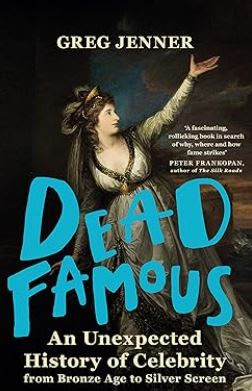
“Charles Dickens,” comes the reply. This is what I get for reading Greg Jenner’s Dead Famous before bed.

But I know that distinctive voice. I part the bed curtains. “Dan Stevens?!” I ask incredulously, laying eyes on the extremely handsome English actor in the early morning light.

“It’s Charles Dickens,” Dan Stevens insists. He’s brought a friend.

“And John Forster,” adds Justin Edwards-in-Victorian-costume.

Accepting that these British thespians are in character as their The Man Who Invented Christmas counterparts, I ask, “Are you the Ghosts of Christmas Past? Am I dreaming?

“Neither,” says John/Justin, pulling a pie sprinkled with sugar seemingly out of nowhere.

That explained nothing. I thought back to Robert Sheehan telling me his creepy Oatesian visit wasn’t a dream. I then grew distracted by the state of my bedroom, suddenly filled with evergreen trees and boughs decorated with silver baubles, iridescent glass bubbles, and magical flickering candles. I smelled cinnamon and cloves; was someone mulling red wine in my bedroom?

It was beginning to look a lot like Victorian Christmas and smell like it too. My chamber suddenly possessed a long dining table on which there lay a roasted turkey, an enormous figgy pudding, and a rapidly-multiplying host of 19th-century holiday delicacies that would have made Ichabod Crane’s head explode.

“And you’re saying you two are not the Ghosts of Christmas Past?” I asked my guests for clarification.

Seating themselves at the table, they denied being ghosts a second time as they helped themselves to a portion of the mouth-watering feast.

“Tuck in,” said Charles/Dan.

I serve myself, but soon notice how the actors favor each other’s company, eat from each other’s plates, and feed one another. They’d constructed an elaborate ritual that allowed them to touch one another without social judgment.

“What is this?” I wonder out loud.

“You could think of it as recursion,” Charles/Dan says. “Each Christmas harks back to every other Christmas. This Christmas reminds you of childhood Christmases, which in turn retains elements of Victorian Christmas past, which in turn bears marks of earlier traditions, and so on.

“One might say,” remarks John/Justin, “that, in a sense, there has only ever been one Christmas and we return to it every year. We practice the myth of eternal return when we practice Christmas.” His thumb traces a line of cream that Charles/ Dan has smeared on his cheek, then eats the errant cream.

“I still don’t understand why I’m here,” I say. “Why was it necessary for me to be the Scrooge in this drama?”

“It isn’t,” Charles/Dan says flatly. “We merely need your bed.”

With that they abandon their feast and retire to my comfy bed, drawing the curtains behind them. I politely ignore their pleasured sighs as I slice into a steaming plum pie, but internally I wish they’d gotten a different room. I knew the Somerset Maugham Suite at the Oriental Hotel in Bangkok had recently been vacated.


* * *


Author’s Note: Oliver Sacks wrote that Charles Dickens had a haunted mind, but didn’t explain that statement and then very sadly passed away. I began to understand it when I read about the railway accident he was involved in. I now believe that perhaps Dr. Sacks also meant that Dickens was haunted by his childhood poverty. This is depicted in The Man Who Invented Christmas and discussed in Dead Famous.

But then in this podcast, Helena Kelly spilled the absolute tea on Dickens and found out that he might have been lying about working in a boot blacking factory?! And he probably had syphilis, which he gave to Kate and the children - some of them may have died from it! - and maybe her sister too?! I don’t want to slut shame Charles Dickens, but I do think I understand what Dr. Sacks meant a lot more deeply now.

This is an affiliate link: https://amzn.to/3RdXQwk

But I wouldn’t be sad if the ghost of Dr. Oliver Sacks wanted to visit me and talk about it. 

Saturday, July 1, 2023

Unfortunate (Mostly) Literary Happenings of Past Julys

ICYMI, this post is the latest in a series highlighting one of my two current books in process, The Almanac of Bad Days (tentative title). Past installments:

June

May

April

March

February

January

October

September


Trigger Warnings: Burn injuries, cancer, drowning, drug abuse, falling accidents, guns, slavery mention, suicide


July 1, 1996: Model/actress Margaux Hemingway, the granddaughter of Ernest Hemingway, is found dead inside her home in Santa Monica, California. She has died by suicide after overdosing on the barbiturate medication Luminal.


July 2, 1961: Ernest Hemingway dies by suicide at his home in Ketchum, Idaho. 


July 7, 1930: Sir Arthur Conan Doyle dies of a heart attack at age 71. Reportedly, his last words were to his wife Jean: “You are wonderful.”


July 8, 1822: Poet Percy Shelley drowns while out sailing with a friend. He is 29 years old.

July 8, 1918: Ernest Hemingway is wounded while serving as a volunteer ambulance driver for the Red Cross during World War I.


July 10, 1861: After asking for a cup of coffee, Frances “Fanny” Appleton Longfellow dies of burn injuries she sustained the day before. Fanny’s dress caught on fire when either a spark or hot wax made contact with her dress as she melted sealing wax to seal an envelope containing locks of her children’s hair. 


Her husband, poet Henry Wadsworth Longfellow, was napping when he heard her screams and attempted to smother the flames with a rug. Longfellow also sustained burns to his arms and face to the extent that he was too injured to attend Fanny’s funeral. He wore a beard for the rest of his life to conceal his facial scars.

July 10, 1873: French poet Paul Verlaine shoots his inappropriately younger lover/fellow poet Arthur Rimbaud in the wrist, wounding him, although the injury is not serious. 


July 11, 1807: Vice President Aaron Burr shoots U.S. Secretary of the Treasury Alexander Hamilton in a duel in New Jersey. Hamilton dies the next day.

July 11, 1906: Pregnant, 20-year-old Grace Brown, a worker in the Gillette Skirt Factory, is intentionally drowned and murdered by her boyfriend Chester Gillette, nephew of the factory owner. Gillette is subsequently executed in the electric chair.


The murder inspires Theodore Dreiser’s An American Tragedy, which in turn inspires the 1951 film A Place In the Sun. The character based on Brown is played by Shelley Winters.


July 12, 1562: Bishop Diego de Landa orders the burning of Maya codices of the Yucatán, to the utter horror of the Maya people who witness the act. Only three manuscripts are known to have survived into the 21st century.

July 12, 2014: 30-year-old John Christopher Wallace, who went by Chris, dies after running deliberately into a burning wooden effigy at the Element 11 festival in Utah. The effigy was formed in the shape of one of the monster characters from the children’s book Where the Wild Things Are by Maurice Sendak. Volunteers attempted to stop Wallace before he got too close to the fire, but were unable to prevent the suicide.


July 14, 2017
: Stunt performer John Bernecker dies from injuries he sustained the previous day. While filming stunt footage for the TV show The Walking Dead, Bernecker had fallen 20 feet off a balcony onto a concrete floor.


July 15, 1974: During a live broadcast of the digest news program on which she appeared, 29-year-old journalist Christine Chubbuck pulls a loaded handgun from her purse, places it behind her left ear, and shoots herself in the head. She dies at Sarasota (Florida) Memorial Hospital fourteen hours later. Her family gets a court order to keep the tape of the broadcast from ever being aired again.


July 17, 1935: Cudjoe Lewis dies. The formerly enslaved man’s story of being kidnapped from his home in what is now Benin is the subject of Zora Neale Hurston’s book Barracoon. 


July 18, 1817: Jane Austen dies, aged 41. Her death is speculated to have been from Hodgkin’s lymphoma.

July 18, 1988: Christa Päffgen, the model and singer who performed under the mononym Nico, dies in Ibiza at age 49 from a cerebral hemorrhage suffered from a fall off her bicycle.


July 19, 1374: Tuscan poet Petrarch (Francesco Petrarca) dies on the eve of his 70th birthday.

July 19, 1850: Journalist Margaret Fuller returns, with her husband and child, from assignment as the New York Tribune’s European correspondent aboard the merchant ship Elizabeth. The vessel’s captain has died of smallpox during the 5-week voyage. The Elizabeth, being piloted by her less-experienced first mate, strikes a sandbar off of Fire Island and is run aground. Many of the crew abandon ship and are able to swim to shore, but Fuller and her husband are never found and are presumed to have drowned. Their son’s body is found washed up on the shore.


July 21, 1796: The poet Robert Burns dies at the age of 37, leaving behind his wife and five children.


July 22, 1934: Criminal John Dillinger is shot dead by FBI agent Melvin Purvis outside the Biograph Theater in Chicago. 


July 23, 1846: Henry David Thoreau is put in jail for refusing to pay a $1 poll tax. He’s protesting the poll tax on the grounds that it supports slavery. 


July 23, 2011: English jazz singer Amy Winehouse passes away, having recently completed rehabilitation for a severe alcohol addiction. 


July 25, 1966: Poet Frank O’Hara dies from a ruptured liver. The previous night he had been struck by a dune buggy on Fire Island while standing near a beach taxi that had broken down.


July 28, 1841: Either the police or a pair of fisherman (accounts vary) discover the body of Mary Cecilia Rogers floating in the Hudson River near Hoboken, New Jersey. Rogers, who was 20 or 21 years old and worked as a cigar seller in New York City, was last seen by her family on the 25th. Although the case is officially unsolved, it’s suspected she was either murdered by her boyfriend Daniel Payne or perhaps died as a result of an illegal abortion. 

Payne killed himself by overdosing on alcohol and laudanum on October 7, 1841. The discover of Rogers’s body inspired Edgar Allan Poe to write “The Mystery of Marie Rogêt.”


July 30, 1918: American author Joyce Kilmer is killed in action, shot by a sniper at the Second Battle of the Marne in the First World War.


July 31, 1703: Daniel Defoe is locked in a pillory as a punishment after being found guilty of seditious libel. He has criticized church officials in a pamphlet.

Tuesday, July 1, 2025

Bummer July

 This is a repost of some previous Pagan Spirits book blog content. It combines the original Bummer July post with the update.


July 1, 1996: Model/actress Margaux Hemingway, the granddaughter of Ernest Hemingway, is found dead inside her home in Santa Monica, California. She has died by suicide after overdosing on the barbiturate medication Luminal.


July 2, 1961: Ernest Hemingway dies by suicide at his home in Ketchum, Idaho. 


July 3, 1999: Musician/artist Mark Sandman, perhaps best known as a member of the band Morphine, collapses while playing a Morphine show in Palestrina, Lazio, Italy. He is pronounced dead in the ambulance on the way to the hospital. The 46-year-old’s fatal heart attack is thought to have been triggered, in part, by the extreme heat of the day.


July 5, 1932: Z. Smith Reynolds, an heir to the R.J. Reynolds tobacco fortune, dies of a gunshot wound. Three other people are inside the house with Reynolds at the time: Reynolds’s wife Libby Holman (a noted Broadway singer/actor), Holman’s personal assistant Ab Walker, and friend Blanche Yurka. A party has taken place at the home earlier and all of the witnesses are drunk when the shooting occurs. It’s unclear if Reynolds died by suicide, accident, or murder. Holman maintains she was too drunk to remember what happened that night. She and Walker are indicted on murder charges, but the Reynolds family insists that the charges be dropped.


July 6, 1819: Sophie Blanchard, the first woman to pilot a hot air balloon as a professional balloonist, dies in a hot air ballooning accident. Performing balloon ascents for a crowd at Tivoli Gardens, the Parisian amusement park, she included fireworks in her show. The fireworks ignited the helium in her balloon. Blanchard became entangled in the balloon’s net and subsequently falls to her death.

July 6, 1944: A fire at the Ringling Brothers and Barnum & Bailey Circus in Hartford, Connecticut, kills an estimated 167 people.

July 6, 1962: Author William Faulkner dies of a heart attack.

July 6, 1971: Louis Armstrong dies of a heart attack.


July 6, 1983: Model/actor Tammy Lynn Leppert, 18 years old at the time, is seen for the last confirmed time getting out of a friend’s car in a parking lot in Cocoa Beach, Florida. The friend confirms he and Leppert argued and that he dropped her off in a parking lot; Leppert has never contacted her friends or family since then. Leppert appears briefly in the movie Scarface. 

This is an affiliate link


July 6, 1988: An explosion on the Piper Alpha oil platform in the North Sea off the coast of Scotland kills 165 oil workers and two rescue workers. Although no one from the platform’s owner,  Occidental Petroleum (Caledonia) Limited, was ever charged with a crime, neglected maintenance and inadequate safety procedures contributed to the disaster.

The platform collapses and sinks. 61 survivors are rescued.


July 7, 1930: Sir Arthur Conan Doyle dies of a heart attack at age 71. Reportedly, his last words were to his wife Jean: “You are wonderful.”


July 8, 1822: Poet Percy Shelley drowns while out sailing with a friend. He is 29 years old.

July 8, 1918: Ernest Hemingway is wounded while serving as a volunteer ambulance driver for the Red Cross during World War I.


July 10, 1861: After asking for a cup of coffee, Frances “Fanny” Appleton Longfellow dies of burn injuries she sustained the day before. Fanny’s dress caught on fire when either a spark or hot wax made contact with her dress as she melted sealing wax to seal an envelope containing locks of her children’s hair. 

Her husband, poet Henry Wadsworth Longfellow, was napping when he heard her screams and attempted to smother the flames with a rug. Longfellow also sustained burns to his arms and face to the extent that he was too injured to attend Fanny’s funeral. He wore a beard for the rest of his life to conceal his facial scars.

July 10, 1873: French poet Paul Verlaine shoots his inappropriately younger lover/fellow poet Arthur Rimbaud in the wrist, wounding him, although the injury is not serious.


July 11, 1807: Vice President Aaron Burr shoots U.S. Secretary of the Treasury Alexander Hamilton in a duel in New Jersey. Hamilton dies the next day.

July 11, 1906: Pregnant, 20-year-old Grace Brown, a worker in the Gillette Skirt Factory, is intentionally drowned and murdered by her boyfriend Chester Gillette, nephew of the factory owner. Gillette is subsequently executed in the electric chair.

The murder inspires Theodore Dreiser’s An American Tragedy, which in turn inspires the 1951 film A Place In the Sun. The character based on Brown is played by Shelley Winters.

This is an affiliate link.

July 12, 1562: Bishop Diego de Landa orders the burning of Maya codices of the Yucatán, to the utter horror of the Maya people who witness the act. Only three manuscripts are known to have survived into the 21st century.

July 12, 1979: Singer Minnie Riperton dies of breast cancer. She’s 31 years old.


July 12, 1996: Multi-instrumentalist Jonathan Melvoin, at the time touring with the Smashing Pumpkins as a keyboardist, dies of a heroin overdose. He’s 34 years old.

July 12, 1997: The bodies of Lela and Raymond Howard, a couple from Texas who’ve been missing for over two weeks, are found in their Oldsmobile about 350 miles away from their home. The couple had been making their annual visit to the Pioneer Days fiddle festival on June 28th when they apparently become disoriented and lose their way, ending up near Hot Springs, Arkansas. No foul play is suspected; their deaths are apparently accidental. The Oldsmobile is found at the bottom of a ravine with Lela at the wheel.

Raymond was 88; Lela was 83. They’d married 11 years earlier after each had lost their previous spouse. The incident inspired the Fastball song “The Way.”

July 12, 2014: 30-year-old John Christopher Wallace, who went by Chris, dies after running deliberately into a burning wooden effigy at the Element 11 festival in Utah. The effigy was formed in the shape of one of the monster characters from the children’s book Where the Wild Things Are by Maurice Sendak. Volunteers attempted to stop Wallace before he got too close to the fire, but were unable to prevent the suicide.


July 14, 2015: Arthur Cave, the 15-year-old son of Australian musician Nick Cave and English fashion model and designer Susie Bick, dies after sustaining a brain injury in an accidental fall from a cliff in the family’s home of Brighton, U.K. Arthur has used LSD before the accident. He’s survived by his twin brother Earl.

July 14, 2017: Stunt performer John Bernecker dies from injuries he sustained the previous day. While filming stunt footage for the TV show The Walking Dead, Bernecker had fallen 20 feet off a balcony onto a concrete floor.


July 15, 1958: John Lennon’s mother Julia Lennon is struck and killed by a car while walking home.

July 15, 1974: During a live broadcast of the digest news program on which she appeared, 29-year-old journalist Christine Chubbuck pulls a loaded handgun from her purse, places it behind her left ear, and shoots herself in the head. She dies at Sarasota (Florida) Memorial Hospital fourteen hours later. Her family gets a court order to keep the tape of the broadcast from ever being aired again.


July 17, 1935: Cudjoe Lewis dies. The formerly enslaved man’s story of being kidnapped from his home in what is now Benin is the subject of Zora Neale Hurston’s book Barracoon. 

July 17, 1959: At 3:10 a.m., Billie Holiday passes away under arrest in her hospital bed. Her death comes from heart failure and fluid in her lungs brought about by a failing liver. She’s 44 years old.

July 17, 1967: 40-year-old jazz saxophonist John Coltrane dies of liver cancer. Although he has been sober for the last 10 years of his life, earlier struggles with heroin and alcohol use may have contributed to his cancer.


July 18, 1817: Jane Austen dies, aged 41. Her death is speculated to have been from Hodgkin’s lymphoma.

July 18, 1988: Christa Päffgen, the model and singer who performed under the mononym Nico, dies in Ibiza at age 49 from a cerebral hemorrhage suffered from a fall off her bicycle.


July 19, 1374: Tuscan poet Petrarch (Francesco Petrarca) dies on the eve of his 70th birthday.

July 19, 1850: Journalist Margaret Fuller returns, with her husband and child, from assignment as the New York Tribune’s European correspondent aboard the merchant ship Elizabeth. The vessel’s captain has died of smallpox during the 5-week voyage. The Elizabeth, being piloted by her less-experienced first mate, strikes a sandbar off of Fire Island and is run aground. Many of the crew abandon ship and are able to swim to shore, but Fuller and her husband are never found and are presumed to have drowned. Their son’s body is found washed up on the shore.


July 21, 1796: The poet Robert Burns dies at the age of 37, leaving behind his wife and five children.


July 22, 1934: Criminal John Dillinger is shot dead by FBI agent Melvin Purvis outside the Biograph Theater in Chicago. 


July 23, 1846: Henry David Thoreau is put in jail for refusing to pay a $1 poll tax. He’s protesting the poll tax on the grounds that it supports slavery. 

July 23, 2011: English jazz singer Amy Winehouse passes away, having recently completed rehabilitation for a severe alcohol addiction. 


July 25, 1966: Poet Frank O’Hara dies from a ruptured liver. The previous night he had been struck by a dune buggy on Fire Island while standing near a beach taxi that had broken down.

July 25, 1984: Willie Mae “Big Mama” Thornton, the first artist to record “Hound Dog,” dies of a heart attack and liver disease at age 57 in Los Angeles.


July 26, 2015: Bobbi Kristina Houston Brown, the daughter of Whitney Houston and Bobby Brown, dies in a hospice care facility at the age of 22. She had been in a coma for the previous six months after being found unresponsive in her Georgia home by her fiancé, Nick Gordon. Brown was discovered face-down in her bathtub less than three years after her mother died in a bathtub at a hotel in Los Angeles. Eerily similar to her mother’s passing, Brown was found to have been intoxicated with alcohol, marijuana, cocaine, prescription drugs, and other substances when she apparently drowned in her bathtub.


July 28, 1841: Either the police or a pair of fisherman (accounts vary) discover the body of Mary Cecilia Rogers floating in the Hudson River near Hoboken, New Jersey. Rogers, who was 20 or 21 years old and worked as a cigar seller in New York City, was last seen by her family on the 25th. Although the case is officially unsolved, it’s suspected she was either murdered by her boyfriend Daniel Payne or perhaps died as a result of an illegal abortion. 

Payne killed himself by overdosing on alcohol and laudanum on October 7, 1841. The discover of Rogers’s body inspired Edgar Allan Poe to write “The Mystery of Marie Rogêt.”


July 29, 1974: Cass Elliot dies of a heart attack. Years of heroin abuse and cycles of rapidly gaining and losing weight have weakened her body. Cruelly, urban legend will afterwards contend that she died by choking to death on a ham sandwich. 


July 30, 1918: American author Joyce Kilmer is killed in action, shot by a sniper at the Second Battle of the Marne in the First World War.


July 31, 1703: Daniel Defoe is locked in a pillory as a punishment after being found guilty of seditious libel. He has criticized church officials in a pamphlet.


The Cut audiobook is now available to stream on Spotify! Add it to your audiobook library today.

Saturday, September 1, 2012

These Classic Books - Love Them or Hate Them?


I stumbled upon a book-related blog hop yesterday... (2023 Update: the site was called http://www.blondeundercoverblonde.com/ and it's now defunct.)

...and naturally, I have opinions about books. Two of the bloggers read classics. Abbey at Finding My Forever read The Great Gatsby by F. Scott Fitzgerald.


I like this book, but it's not one of my all-time favorites. What's your opinion of Gatsby - love it or hate it?

Will you see the new movie, with Leo DiCaprio, when it comes out? I'm sure I will, eventually. I love Leo, but it's going to be awfully hard for him to out-Gatsby Robert Redford.


Belle at The Life and Times of Belle tackled Gone With the Wind by Margaret Mitchell.


GWTW is an intimidatingly large book, which I'm sure turns some people off from reading it. It's also problematic because of the characters' racism, which is nauseating (but true to the time period in which the story takes place). Still, I contend this book is very definitely worth reading. It's a great story. Love it or hate it?

You should also, definitely, watch the movie, even though (like From Here to Eternity) it leaves out quite a bit of plot and characters. If you've only ever seen the movie, you don't know that Charles and Scarlett had a son.

Clark Gable aside: I happened to watch Public Enemies yesterday (because Christian Bale), and this time I noted a) that I don't like it when Christian Bale shoots Channing Tatum - I don't care if he is Pretty Boy Floyd; b) Emilie de Ravin of Lost and Remember Me has a small role; and c) the movie which John Dillinger is leaving when killed is Manhattan Melodrama, starring Clark Gable and Myrna Loy. You'll get to see a few moments of it - along with Johnny Depp reacting to the gangster story - as you watch Public Enemies.

I'm pro-Gatsby and pro-GWTW, but I can't quite decide whether or not to like the music of Azealia Banks. "Liquorice" gets stuck in my head, but I'm not sure whether to applaud the bold sexuality in it or frown on the artist for (in this song) aspiring to be nothing more than a male fantasy - or both.


On the one hand, the word-picture she's painting is like that of the women Amy Winehouse mocks in "Fuck Me Pumps." On the other hand, who am I to judge? as argued by Salt N Pepa in "None of Your Business." Adults are free to make their own sexual choices among other consenting adults.

Plus, you can dance to "Liquorice." Azealia Banks - love her music or hate her music?

Wednesday, July 22, 2026

Almanac for July 22nd

Erin O'Riordan's Almanac for July 22nd: https://ko-fi.com/post/July-22-Hale-Bopp-B0B21HQFGJ

Artist Birthday: Albert Brooks
Albert Brooks movie Modern Romance article by Movies of the 80s


Bummer July 22nd

July 22, 1934: Criminal John Dillinger is shot dead by FBI agent Melvin Purvis outside the Biograph Theater in Chicago. 


Thursday, February 16, 2023

Favorite Episodes of LeVar Burton Reads

February 16, 1957: Actor and reading enthusiast LeVar Burton is born in Landstuhl, West Germany. His father Levardis Robert Martyn Burton Sr. was serving as a U.S. Army Signal Corps photographer at the time. Burton’s mother Erma Gene was a teacher and social worker.

These are some of my favorite episodes of the podcast LeVar Burton Reads.


"The Second Bakery Attack" by Haruki Murakami


"Furry Night" by Joan Aiken


"The Great Wide World Over There" by Ray Bradbury


"Childfinder" by Octavia Butler


"The Fliers of Gy" by Ursula K. LeGuin


"Welcome to Your Authentic Experience TM" by Rebecca Roanhorse


"Blur" by Carmen Maria Machado


"The Story We Used to Tell" by Shirley Jackson


"The Years of My Birth" by Louise Erdrich


"The Wishing Pool" by Tanarive Due


"John Dillinger and the Blind Magician" by Allison M. Dickson


"Afterlife" by Stephen King


P.S. Should you ever want an alternative to Neil Gaiman's reading of A Christmas Carol by Charles Dickens, there is a LeVar Burton reading out there.


And now, because I happen to be in between day jobs at the moment, please enjoy the following affiliate audiobook link.

Friday, February 3, 2023

Unfortunate (Mostly) Literary Happenings of Past Februaries

Previous Installment in the "Bummer" Series: Bummer New Year

February 1, 1891: Newspaper publisher Ignacio Martínez is assassinated by two men in Laredo, Texas, because they disagree with his newspaper’s criticism of Mexican president Porfirio Díaz.

February 2, 2014: Actor Philip Seymour Hoffman, who played Truman Capote in Capote, dies of an apparently accidental overdose of prescription medicine and heroin.

February 3, 1959: “The Day the Music Died,” when early rock and roll musicians Buddy Holly, Richie Valens, and J.P. “The Big Bopper” Richardson were all killed in a plane crash outside Clear Lake, Iowa. The musicians had performed at Clear Lake’s Surf Ballroom and were on their way to their next show in Minnesota. This accident is remembered in poetic form through the Don McLean song “American Pie,” recorded on May 26, 1971. 


February 7, 1497: On Shrove Tuesday in Florence, followers of the monk Girolamo Savonarola burn art, books, their cosmetics, fancy clothes, playing cards, and other cultural objects they associate with sin in the so-called Bonfire of the Vanities. Sadly, irreplaceable ancient art and manuscripts were lost to this religiously-fueled war on anything that represented luxury. 

Ironically, Savonarola will later be excommunicated and convicted of heresy by the Roman Catholic Church. As punishment, he is hanged and his body burned in the same plaza where the Bonfire of the Vanities occurred. It will be forbidden for any Christian to possess copies of Savonarola’s writings. 

February 10, 2005: Playwright Arthur Miller dies of bladder cancer.


February 11, 1963: Poet Sylvia Plath, who struggles with clinical depression, dies by suicide, inhaling gas by placing her head inside an unlit gas stove. She is 30 years old.
February 11, 2012: 48-year-old singer/actress Whitney Houston is found unresponsive in the bathtub of her room at the Beverly Hilton hotel. Paramedics attempted CPR but are unable to revive her. The Los Angeles County Coroner’s Office attributes her death to atherosclerotic heart disease, cocaine use, and drowning. (Ok, this one's not really "literary." I'll allow it.) 

February 12, 1980: Two days after 34-year-old Patricia Frazier of Texas saw a CBS network TV broadcast of the movie The Exorcist, Frazier kills her 4-year-old daughter Khunji and cuts out her heart. According to Dr. Leon Morris, a psychologist who spoke with Frazier after the crime, Frazier believed Khunji was possessed by demons and trying to harm her (Patricia). A jury of her peers finds Patricia Frazier not guilty by reason of insanity.

February 13, 1945: U.S. and U.K. forces drop incendiary bombs on Dresden, Germany, causing fires with the intention of destroying munitions factories in that city. A second round of bombs are dropped in the early hours of February 14th, calculated to hamper the efforts of rescuers on the scene of the first round of bombings and fires. It’s estimated that between 22,000 and 25,000 Germans are killed, almost all of them civilians.

Author Kurt Vonnegut Jr. is there as an American prisoner of war being held by the German army. The experience forms the basis of his science fiction novel Slaughterhouse-Five.


February 14, 1929: In what becomes known as the Saint Valentine’s Day Massacre, Al Capone’s gangsters line up seven members of Bugs Moran’s rival gang and machine gun them to death. Police arrive in time to find one survivor, Frank Gusenberg, suffering from 14 bullet wounds. They ask Gusenberg to name his killer, but Gusenberg refuses before he succumbs to his injuries.
February 14, 1989: Iran’s Supreme Leader, Ayatollah Khomeini, issues a pronouncement urging faithful Muslims to assassinate Salman Rushdie. Rushdie’s magical realist novel The Satanic Verses depicts a fictional version of the Prophet Mohammad as a character, which the Ayatollah considers blasphemous.


February 15, 1998: 89-year-old war correspondent Martha Gellhorn, struggling with ovarian and liver cancer and failing eyesight, chooses to end her own life by swallowing cyanide.

February 17, 1673: French playwright Jean-Baptiste Poquelin, who wrote under the pen name Molière, suffers a tuberculosis-induced pulmonary embolism while performing in his own play The Invalid. He finished out the show, but was carried immediately home afterward, where he died.

February 18, 1718: French-born English writer Peter Anthony Motteux dies of apparent autoerotic asphyxiation inside a brothel, although the circumstances of his death were considered suspicious at the time. This may be the oldest recorded case of autoerotic asphyxiation.

February 19, 2013: The body of Canadian student and tourist Elisa Lam is discovered in the water tower atop the Stay on Main hotel in Los Angeles, California. Lam is believed to have entered the tank of her own volition and accidentally drowned, possibly while experiencing the effects of withdrawal from her psychiatric medications.

February 25, 1983: Playwright Tennessee Williams dies of an apparently accidental overdose of the barbiturate medication Seconal.

February 26, 2015: Australian author Jessica Ainscough, age 29, dies of a rare cancer, epithelioid sarcoma. In 2008, her doctors suggested amputating her affected left arm at the shoulder, which would have given her a greater than 50% chance of surviving for ten years or more. Ainscough chose to treat her cancer with alternative therapies rather than having the amputation. She used the alternative treatments for six years, only returning to conventional medical treatments near the end of her life when she developed a tumor that bled continuously for ten months.

February 28, 1916: The Turn of the Screw author Henry James dies of pneumonia.

February 29, 1960: Melvin Purvis II, the FBI agent who shot and killed John Dillinger (and who was played by Christian Bale in Public Enemies), dies by suicide.

Now, after all that bad news, if you want to take a little Public Enemies sidebar and learn about the song "Blue Moon," read here. 

And you can always read my work in progress, Erin O'Riordan's Almanac, on Ko-fi.

This is an affiliate link:

Saturday, February 1, 2025

Bummer February

This is a repost of some previous Pagan Spirits book blog content. It combines the original Bummer February post with the update.


February 1, 1891: Newspaper publisher Ignacio Martínez is assassinated by two men in Laredo, Texas, because they disagree with his newspaper’s criticism of Mexican president Porfirio Díaz.


February 2, 2014: Actor Philip Seymour Hoffman, who played Truman Capote in Capote, dies of an apparently accidental overdose of prescription medicine and heroin.

February 2, 2022: A pastor in Nashville, Tennessee, holds a burning of books he deems “demonic.” According to his loosely-organized, conspiratorial beliefs, a book counted as “demonic” if it was “anything tied to the Masonic Lodge.” It’s unclear whether these actions were influenced more by religious fanaticism or by mental illness.


February 3, 1959: “The Day the Music Died,” when early rock and roll musicians Buddy Holly, Richie Valens, and J.P. “The Big Bopper” Richardson were all killed in a plane crash outside Clear Lake, Iowa. The musicians had performed at Clear Lake’s Surf Ballroom and were on their way to their next show in Minnesota. This accident is remembered in poetic form through the Don McLean song “American Pie,” recorded on May 26, 1971. 


February 6, 1998: Austrian “Rock Me Amadeus” rocker Falco (Johann Hölzel) dies in a traffic accident while on vacation in the Dominican Republic. He is 40 years old.


February 7, 1497: On Shrove Tuesday in Florence, followers of the monk Girolamo Savonarola burn art, books, their cosmetics, fancy clothes, playing cards, and other cultural objects they associate with sin in the so-called Bonfire of the Vanities. Sadly, irreplaceable ancient art and manuscripts were lost to this religiously-fueled war on anything that represented luxury. 

Ironically, Savonarola will later be excommunicated and convicted of heresy by the Roman Catholic Church. As punishment, he is hanged and his body burned in the same plaza where the Bonfire of the Vanities occurred. It will be forbidden for any Christian to possess copies of Savonarola’s writings. 


February 9, 1963: In a racially-charged incident captured in song by Bob Dylan, 51-year-old Hattie Carroll is working as a bar server at the Emerson Hotel in Baltimore. The hotel is hosting an event called the Spinster’s Ball. One of the guests, Billy Zantzinger, who is white, is excessively drunk and physically and verbally abusing both his wife Jane and the African-American wait staff at the event.

Zantziger hurls racial slurs and other verbal abuse at Carroll, then strikes her in the neck/upper shoulder region with his cane. Carroll immediate begins feeling numbness in her arm, and her co-workers notice her speech is slurred. She’s taken to the hospital, where Carroll dies of a brain hemorrhage. Zantziger is convicted of manslaughter for Carroll’s death, but his sentence is a paltry six months in prison and a $500 fine, plus a fine of $125 for assaulting the other wait staff.


February 10, 2005: Playwright Arthur Miller dies of bladder cancer.


February 11, 1963: Poet Sylvia Plath, who struggles with clinical depression, dies by suicide, inhaling gas by placing her head inside an unlit gas stove. She is 30 years old.


February 11, 2012: 48-year-old singer/actress Whitney Houston is found unresponsive in the bathtub of her room at the Beverly Hilton hotel. Paramedics attempted CPR but are unable to revive her. The Los Angeles County Coroner’s Office attributes her death to atherosclerotic heart disease, cocaine use, and drowning. 


February 12, 1980: Two days after 34-year-old Patricia Frazier of Texas saw a CBS network TV broadcast of the movie The Exorcist, Frazier kills her 4-year-old daughter Khunji and cuts out her heart. According to Dr. Leon Morris, a psychologist who spoke with Frazier after the crime, Frazier believed Khunji was possessed by demons and trying to harm her (Patricia). A jury of her peers finds Patricia Frazier not guilty by reason of insanity.


February 13, 1945: U.S. and U.K. forces drop incendiary bombs on Dresden, Germany, causing fires with the intention of destroying munitions factories in that city. A second round of bombs are dropped in the early hours of February 14th, calculated to hamper the efforts of rescuers on the scene of the first round of bombings and fires. It’s estimated that between 22,000 and 25,000 Germans are killed, almost all of them civilians.

Author Kurt Vonnegut Jr. is there as an American prisoner of war being held by the German army. The experience forms the basis of his science fiction novel Slaughterhouse-Five.


February 14, 1929: In what becomes known as the Saint Valentine’s Day Massacre, Al Capone’s gangsters line up seven members of Bugs Moran’s rival gang and machine gun them to death. Police arrive in time to find one survivor, Frank Gusenberg, suffering from 14 bullet wounds. They ask Gusenberg to name his killer, but Gusenberg refuses before he succumbs to his injuries.

February 14, 1989: Iran’s Supreme Leader, Ayatollah Khomeini, issues a pronouncement urging faithful Muslims to assassinate Salman Rushdie. Rushdie’s magical realist novel The Satanic Verses depicts a fictional version of the Prophet Mohammad as a character, which the Ayatollah considers blasphemous.

This is an affiliate link: https://amzn.to/3VUKoBh

February 15, 1998: 89-year-old war correspondent Martha Gellhorn, struggling with ovarian and liver cancer and failing eyesight, chooses to end her own life by swallowing cyanide.


February 17, 1673: French playwright Jean-Baptiste Poquelin, who wrote under the pen name Molière, suffers a tuberculosis-induced pulmonary embolism while performing in his own play The Invalid. He finished out the show, but was carried immediately home afterward, where he died.


February 18, 1718: French-born English writer Peter Anthony Motteux dies of apparent autoerotic asphyxiation inside a brothel, although the circumstances of his death were considered suspicious at the time. This may be the oldest recorded case of autoerotic asphyxiation.


February 19, 2013: The body of Canadian student and tourist Elisa Lam is discovered in the water tower atop the Stay on Main hotel in Los Angeles, California. Lam is believed to have entered the tank of her own volition and accidentally drowned, possibly while experiencing the effects of withdrawal from her psychiatric medications.


February 24, 1809: London’s Drury Lane Theatre burns down. No one is injured, but the loss of the building is a financial disaster for its owner, Richard Brinsley Sheridan.


February 25, 1983: Playwright Tennessee Williams dies of an apparently accidental overdose of the barbiturate medication Seconal.


February 26, 2015: Australian author Jessica Ainscough, age 29, dies of a rare cancer, epithelioid sarcoma. In 2008, her doctors suggested amputating her affected left arm at the shoulder, which would have given her a greater than 50% chance of surviving for ten years or more. Ainscough chose to treat her cancer with alternative therapies rather than having the amputation. She used the alternative treatments for six years, only returning to conventional medical treatments near the end of her life when she developed a tumor that bled continuously for ten months.


February 28, 1909: Actor Irene Muza (a stage name) dies when her hairdresser accidentally sets her on fire. According to a Perth, Australia, newspaper account published March 30, 1909, “Before taking part in a charitable performance on Tuesday she sent for her hairdresser to come and dress her hair. The hairdresser had applied a petrol lotion, when a few drops of it fell upon the kitchen stove. The stuff, ignited in an instant, and the flames caught the actress's hair and her dressing-gown and the clothing of the hairdresser. [...] In a moment she was a mass of flame. A friend who was in an adjoining room tried to save her by tearing away the burning gown, but before this could be accomplished she had sustained terrible injuries. She was conveyed to the hospital, where she expired. Her hairdresser, who was also badly injured, lies in a precarious condition.”

February 28, 1916: The Turn of the Screw author Henry James dies of pneumonia.


February 29, 1960: Melvin Purvis II, the FBI agent who shot and killed John Dillinger (and who was played by Christian Bale in Public Enemies), dies by suicide.