From the Publisher
ABOUT THE POWER OF BROKE
Daymond John has been practicing the power of broke ever since he started selling his home-sewn t-shirts on the streets of Queens. With no funding and a $40 budget, Daymond had to come up with out-of-the box ways to promote his products. Luckily, desperation breeds innovation, and so he hatched an idea for a creative campaign that eventually launched the FUBU brand into a $6 billion dollar global phenomenon. But it might not have happened if he hadn’t started out broke – with nothing but a heart full of hope and a ferocious drive to succeed by any means possible.
Here, the FUBU founder and star of ABC’s Shark Tank shows that, far from being a liability, broke can actually be your greatest competitive advantage as an entrepreneur. Why? Because starting a business from broke forces you to think more creatively. It forces you to use your resources more efficiently. It forces you to connect with your customers more authentically, and market your ideas more imaginatively. It forces you to be true to yourself, stay laser focused on your goals, and come up with those innovative solutions required to make a meaningful mark.
Drawing his own experiences as an entrepreneur and branding consultant, peeks behind-the scenes from the set of Shark Tank, and stories of dozens of other entrepreneurs who have hustled their way to wealth, John shows how we can all leverage the power of broke to phenomenal success. You’ll meet:
· Steve Aoki, the electronic dance music (EDM) deejay who managed to parlay a series of $100 gigs into becoming a global superstar who has redefined the music industry
· Gigi Butler, a cleaning lady from Nashville who built cupcake empire on the back of a family recipe, her maxed out credit cards, and a heaping dose of faith
· 11-year old Shark Tank guest Mo Bridges who stitched together a winning clothing line with just his grandma’s sewing machine, a stash of loose fabric, and his unique sartorial flair
When your back is up against the wall, your bank account is empty, and creativity and passion are the only resources you can afford, success is your only option. Here you’ll learn how to tap into that Power of Broke to scrape, hustle, and dream your way to the top.
My Review:
This book was about as good as I expected it to be. Like many business books, it's light reading without any earth-shattering new revelations in it. Daymond John is an interesting guy - he understands both the creative side and the business side of the fashion industry - and he has an interesting life story. Some of the people he profiles in this book alongside himself are interesting - some of them did not interest me much at all.
If you're looking for a small dose of business inspiration and you have a few hours to kill, then you may want to read this book. Otherwise, you can probably just watch reruns of Shark Tank.
I received this book from Blogging for Books for this review.
Erin O'Riordan writes smart, whimsical erotica. Her erotic romance novel trilogy, Pagan Spirits, is now available. With her husband, she also writes crime novels. Visit her home page at ko-fi.com.
Monday, November 21, 2016
Monday, October 31, 2016
'Mycroft Holmes:' Holmesian Fiction From Kareem Abdul-Jabbar
Mycroft Holmes by Kareem Abdul-JabbarMy rating: 5 of 5 stars
Fun fact about Kareem Abdul-Jabbar: While he was playing basketball at UCLA, he was also double-majoring in English and history. He read his first Sherlock Holmes story as a boy, and he was an avid reader of the detective stories as a young adult.
Sherlock appears in this novel, but he's a relatively minor character. The book is set in 1870, when Sherlock is approximately 16 or 17 years old. Our main character is Sherlock's 23-year-old brother Mycroft. Canonically, we know little about Mycroft other than that he is older and smarter than Sherlock, and that he holds a fairly important position in the British government. If you're familiar with the Guy Ritchie films, you may picture him as Stephen Fry. If the BBC Sherlock series is your frame of reference, your Mycroft is the decidedly ginger Mark Gatiss. If Elementary, then Rhys Ifans, the blond Welsh actor perhaps best known to American audiences as Luna Lovegood's dad in the Harry Potter movies. Abdul-Jabbar's Mycroft is blond, blue-eyed, pale, and quintessentially English.
Every Holmes must have his Watson, and Mycroft's "Watson" is Cyrus Douglas, who was born in Trinidad and is of African descent, although he has been living in England for many years. Douglas is in his forties, and he serves as both best friend and mentor to the young Mycroft. Mycroft is still serving in his first governmental post, secretary to the Secretary of State for War.
The events of this novel put Mycroft on his path from humble assistant to one of Queen Victoria's faves.
It's a bittersweet mystery and action/adventure story because it has a lot to do with slavery and has a much higher body count than the average Sherlock Holmes tale. When we meet Cyrus Douglas as the owner of a London tobacconist's, he is unmarried, but he did have a wife and child at one point, and what happened to them gives him a Backstory of Infinite Sadness. Abdul-Jabbar and Waterhouse continue to heap miseries upon him...that's probably all I can say without spoiling too much. Suffice it to say, history is sad, and historical fiction leads to heartbreak.
At the beginning of the tale, we meet Mycroft's adorable Trinidadian (but Caucasian) fiancee, Georgiana Sutton. The daughter of a sugar planter, Ms. Sutton is a schoolteacher and a university student studying in London. When I first heard or read that Mycroft was going to have a Trinidadian fiancee in the novel, I assumed she'd be a Black woman. I was a little disappointed that she was a blond, blue-eyed white girl. But Georgiana also isn't as innocent as she seems, so perhaps it's best left the way it is.
Sherlock has no interest in women in this novel. It's not clear why. Is he a budding misogynist, asexual, or perhaps interested in boys? We don't know. By the end of the novel, Mycroft has learned a harsh lesson about love. Will he ever love again? Or is he on his way to becoming the cynical stale cinnamon roll of the BBC series, who quoth, "All lives end. All hearts are broken. Caring is not an advantage, Sherlock"?
The action keeps this story moving quickly, so for me, it was a pretty fast-paced read. And now I have to wait for March 14, 2017, when Kareem Abdul-Jabbar's graphic novel, Mycroft Holmes: The Apocalypse Handbook, comes out.
View all my reviews on Goodreads
Sunday, October 30, 2016
Book Haul-o-Ween
My husband and I were in Chicago on October 27th-29th. Before we left, I wanted to pay another visit to Selected Works, the used bookstore in The Fine Arts Building on Michigan Avenue. You may remember Selected Works from this 2012 blog post:
That Time I Tried Out for Jeopardy!
In 2012, I lugged the ponderous tome The Dictionary of Cultural Literacy on the train, and was stuck carrying it for the rest of the trip. This time, I brought two books which, even taken together, were still smaller: Mycroft Holmes by Kareem Abdul-Jabbar and Anna Waterhouse, and The Last Days of Magic, the Doctor Strange graphic novel. And we shipped our dirty laundry et al, home in a U.P.S. box so we didn't have to schlep it everywhere.
Today I learned the bookstore cat's name. It is Hodge. This is Hodge examining one of the books I intended to purchase.
I said in 2012 that I thought he was a Russian blue, but now I don't think he is. I think he's just gray, like my dad's cat Bucky.
In 2012, I found a neat old paperback about the film adaptations of Ernest Hemingway's short stories. I tried to find more Hemingway nonfiction, but I didn't see anything that interested me. Instead, I found these four things.
I'm already familiar with "The Wasp in a Wig" thanks to Martin Gardner's Annotated Alice books (I own two different editions). I still like to own as many Lewis Carroll volumes as possible.
(Also, I may have ordered myself a pair of Alice in Wonderland socks while I was buying my mother's birthday present from Out of Print Clothing today.)
As we learned from the Willie Lynch Speech incident, there are a good deal of quotes out there in circulation that were never actually uttered. Often, the authors contend, these false quotes have polemic purposes. Some of these false quotes drive the conspiracy culture of today. This book was published in 1989, but (perhaps unsurprisingly) many of these fake quotes are still being quoted today by people who have no idea they were wrongly attributed, taken far out of context, or made up of pure bullshittery. It's rather fascinating.
I may have caught Pericles: Prince of Tyre, The Tempest, and Richard III this year, but there is still Shakespeare out there for me to conquer. I'll never reach Jillian Keenan's level, but this should be a good basic reference book.
It may seem that I indulged myself quite a bit in the bookshop. I did. We did a lot of indulging when we weren't visiting the organ transplant team at Northwestern University hospital, though. We saw Blue Man Group and went to the AMC Dine-In Theatre, where we got to eat a full meal, including cocktails, while watching the film version of Dan Brown's Inferno. We didn't get to see the ending of Inferno, unfortunately, because of a very rude lady, but that will have to be a story for another day.
That Time I Tried Out for Jeopardy!
In 2012, I lugged the ponderous tome The Dictionary of Cultural Literacy on the train, and was stuck carrying it for the rest of the trip. This time, I brought two books which, even taken together, were still smaller: Mycroft Holmes by Kareem Abdul-Jabbar and Anna Waterhouse, and The Last Days of Magic, the Doctor Strange graphic novel. And we shipped our dirty laundry et al, home in a U.P.S. box so we didn't have to schlep it everywhere.
Today I learned the bookstore cat's name. It is Hodge. This is Hodge examining one of the books I intended to purchase.
I said in 2012 that I thought he was a Russian blue, but now I don't think he is. I think he's just gray, like my dad's cat Bucky.
In 2012, I found a neat old paperback about the film adaptations of Ernest Hemingway's short stories. I tried to find more Hemingway nonfiction, but I didn't see anything that interested me. Instead, I found these four things.
I'm already familiar with "The Wasp in a Wig" thanks to Martin Gardner's Annotated Alice books (I own two different editions). I still like to own as many Lewis Carroll volumes as possible.
(Also, I may have ordered myself a pair of Alice in Wonderland socks while I was buying my mother's birthday present from Out of Print Clothing today.)
As we learned from the Willie Lynch Speech incident, there are a good deal of quotes out there in circulation that were never actually uttered. Often, the authors contend, these false quotes have polemic purposes. Some of these false quotes drive the conspiracy culture of today. This book was published in 1989, but (perhaps unsurprisingly) many of these fake quotes are still being quoted today by people who have no idea they were wrongly attributed, taken far out of context, or made up of pure bullshittery. It's rather fascinating.
![]() |
| I apologize for the low-res picture. It's from Goodreads. |
It may seem that I indulged myself quite a bit in the bookshop. I did. We did a lot of indulging when we weren't visiting the organ transplant team at Northwestern University hospital, though. We saw Blue Man Group and went to the AMC Dine-In Theatre, where we got to eat a full meal, including cocktails, while watching the film version of Dan Brown's Inferno. We didn't get to see the ending of Inferno, unfortunately, because of a very rude lady, but that will have to be a story for another day.
Tuesday, October 25, 2016
Jillian Keenan's Memoir 'Sex With Shakespeare'
Sex With Shakespeare: Here's Much to Do With Pain, But More With Love
I knew from the moment I laid eyes on the title of this book that I had to know more. When I spotted it on the autobiographies shelf at my local Barnes and Noble, I knew I had to buy a copy.
The author, Jillian Keenan, is a spanking fetishist. I am not. Despite the fact that I myself am not a part of the spanking sub-subculture of the BDSM subculture, I found that I felt a tremendous amount of sympathy with the author as she told her story.
This is, after all, a love story. All love stories are relatable, to some extent, to anyone who's ever been in love.
Each chapter is themed around a particular Shakespearean work. The first chapter centers on my favorite of the Bard's comedies, A Midsummer Night's Dream. Here Keenan addresses a topic also brought up by E.T. Malinowski in her romance novel A Midsummer Dream: Are Demetrius and Helena ever really in love?
Keenan thinks they are, as I do. But she adds an interesting new spin. She contends that when Helena says:
"I am your spaniel; and, Demetrius,
The more you beat me, I will fawn on you:
Use me but as your spaniel, spurn me, strike me,
Neglect me, lose me; only give me leave,
Unworthy as I am, to follow you.
What worser place can I beg in your love,--
And yet a place of high respect with me,--
Than to be used as you use your dog?"
...she is being literal. She wants Demetrius to treat her like his dog. In Helena, Keenan sees a kindred soul, a woman whose sexuality is incomplete, virtually nonexistent, without her submissive, masochistic side being expressed. Keenan sees Helena as a woman embracing her emerging kink, while Demetrius is still coming to terms with his Dominant/sadist tendencies. Genuinely afraid he will hurt Helena, Demetrius turns his attentions to the woman he perceives as the safe, vanilla choice: Hermia.
Kinky headcanon accepted. Since I can't seem to stop crushing on Christian Bale as Demetrius, I want the interpretation that puts Demetrius in the most sympathetic light.
The second chapter deals with a character I find much less likeable: Caliban from The Tempest. Keenan has a special relationship with Caliban, but I can't get over the fact that he admits he tried to rape Miranda. Keenan doesn't excuse that, but she does remind us that Shakespeare was a humanist and even he, in the authorial voice, allows mercy for Caliban in the end.
There are a few plays mentioned in this memoir that I haven't seen or read yet: Twelfth Night, Cymbeline, Antony and Cleopatra, and As You Like It. By and large, though, all the characters with whom Keenan has a series of imagination conversations that help her find her way are all familiar, beloved characters to me.
Now, Keenan has a master's degree in literature that focused on Shakespeare and is recognized as an expert. Productions call her in when they have questions about interpretation of the text. I'm an amateur fan who fell in love with my fifth grade teacher cast me as Peter Quince. I don't know nearly as much about Shakespeare as Keenan does, but as a fellow fangirl, I can certainly appreciate her enthusiasm for the subject.
She writes with remarkable honesty and openness about matters both deeply personal and professional, and I felt privileged to accompany her on this inward journey. I may not share the specifics of her sexual orientation (and she does call spanking fetishism her orientation - in the more conventional sense of the term, she is bisexual, like me - and like Shakespeare, probably), but through this book, I have new insight into the experience.
One quibble: Keenan mentions that in Shakespeare's time, the liver and not the heart was considered to be the seat of love. However, it seems to me that I have seen references within Shakespeare's plays to the heart as the seat of love. Did she mean that the liver was considered to be the seat of lust?
Either way, I really, really enjoyed reading this memoir.
I purchased this book with my own funds and was not obligated in any way to review it.
I knew from the moment I laid eyes on the title of this book that I had to know more. When I spotted it on the autobiographies shelf at my local Barnes and Noble, I knew I had to buy a copy.
The author, Jillian Keenan, is a spanking fetishist. I am not. Despite the fact that I myself am not a part of the spanking sub-subculture of the BDSM subculture, I found that I felt a tremendous amount of sympathy with the author as she told her story.
This is, after all, a love story. All love stories are relatable, to some extent, to anyone who's ever been in love.
Each chapter is themed around a particular Shakespearean work. The first chapter centers on my favorite of the Bard's comedies, A Midsummer Night's Dream. Here Keenan addresses a topic also brought up by E.T. Malinowski in her romance novel A Midsummer Dream: Are Demetrius and Helena ever really in love?
Keenan thinks they are, as I do. But she adds an interesting new spin. She contends that when Helena says:
"I am your spaniel; and, Demetrius,
The more you beat me, I will fawn on you:
Use me but as your spaniel, spurn me, strike me,
Neglect me, lose me; only give me leave,
Unworthy as I am, to follow you.
What worser place can I beg in your love,--
And yet a place of high respect with me,--
Than to be used as you use your dog?"
...she is being literal. She wants Demetrius to treat her like his dog. In Helena, Keenan sees a kindred soul, a woman whose sexuality is incomplete, virtually nonexistent, without her submissive, masochistic side being expressed. Keenan sees Helena as a woman embracing her emerging kink, while Demetrius is still coming to terms with his Dominant/sadist tendencies. Genuinely afraid he will hurt Helena, Demetrius turns his attentions to the woman he perceives as the safe, vanilla choice: Hermia.
Kinky headcanon accepted. Since I can't seem to stop crushing on Christian Bale as Demetrius, I want the interpretation that puts Demetrius in the most sympathetic light.
![]() |
| http://thatwritererinoriordan.tumblr.com/post/151682499370/the-traditional-vanilla-interpretation-of |
There are a few plays mentioned in this memoir that I haven't seen or read yet: Twelfth Night, Cymbeline, Antony and Cleopatra, and As You Like It. By and large, though, all the characters with whom Keenan has a series of imagination conversations that help her find her way are all familiar, beloved characters to me.
Now, Keenan has a master's degree in literature that focused on Shakespeare and is recognized as an expert. Productions call her in when they have questions about interpretation of the text. I'm an amateur fan who fell in love with my fifth grade teacher cast me as Peter Quince. I don't know nearly as much about Shakespeare as Keenan does, but as a fellow fangirl, I can certainly appreciate her enthusiasm for the subject.
She writes with remarkable honesty and openness about matters both deeply personal and professional, and I felt privileged to accompany her on this inward journey. I may not share the specifics of her sexual orientation (and she does call spanking fetishism her orientation - in the more conventional sense of the term, she is bisexual, like me - and like Shakespeare, probably), but through this book, I have new insight into the experience.
One quibble: Keenan mentions that in Shakespeare's time, the liver and not the heart was considered to be the seat of love. However, it seems to me that I have seen references within Shakespeare's plays to the heart as the seat of love. Did she mean that the liver was considered to be the seat of lust?
Either way, I really, really enjoyed reading this memoir.
I purchased this book with my own funds and was not obligated in any way to review it.
Friday, October 14, 2016
#BookReview: 'The Invention of Wings' by Sue Monk Kidd
SPOILER ALERT: I'm going to spoil the ending!
I wouldn't say I "enjoyed" this book, since it made me sad and angry more than anything. For one thing, the Black men in this novel are treated brutally, and that would be bad enough if it were only historical, but obviously it's something that's a huge problem in the U.S. right now, in 2016.
That the Black women are also treated brutally is made even more unpalatable by the fact that our three main protagonists, Hetty, Charlotte, and Sky, are all such brilliant, likable women. Charlotte and Hetty are not only deeply intelligent, but also brilliant textile artists, as befits women of the Fon (also called Dahomey) people, who are known for their textile arts.
I applaud the real-life Sarah Grimke for speaking out against slavery and for the cracks she made in the glass ceiling. I really do. But the fictional version of Sarah comes across as a mediocre-to-bad abolitionist, since she can't even save her alleged "friend" from her sadist of a sister, Mary, until Hetty is 45 years old. It seems as if this novel is praising an ineffectual, if well-meaning, white woman while a brilliant Black woman languishes in captivity.
It's not exactly fair to judge women in the early Victorian period by 21st century standards, I know. But I can't really buy the story of Hetty and Sarah's supposedly deep and heartfelt friendship if Sarah is barely going to raise her finger to help her friend get free.
This book is really well-written and spellbinding, but with all the backlash against feminism and against the human rights of African-Americans that we deal with on a daily basis now, it's hard not to be angry that the wounds of the past have been festering for the last 200+ years. It's to Sue Monk Kidd's credit that she makes it so difficult to divorce fiction from reality, but my feelings are the way they are.
I checked this audio book out from my local library and was not obligated to review it in any way.
I wouldn't say I "enjoyed" this book, since it made me sad and angry more than anything. For one thing, the Black men in this novel are treated brutally, and that would be bad enough if it were only historical, but obviously it's something that's a huge problem in the U.S. right now, in 2016.
That the Black women are also treated brutally is made even more unpalatable by the fact that our three main protagonists, Hetty, Charlotte, and Sky, are all such brilliant, likable women. Charlotte and Hetty are not only deeply intelligent, but also brilliant textile artists, as befits women of the Fon (also called Dahomey) people, who are known for their textile arts.
I applaud the real-life Sarah Grimke for speaking out against slavery and for the cracks she made in the glass ceiling. I really do. But the fictional version of Sarah comes across as a mediocre-to-bad abolitionist, since she can't even save her alleged "friend" from her sadist of a sister, Mary, until Hetty is 45 years old. It seems as if this novel is praising an ineffectual, if well-meaning, white woman while a brilliant Black woman languishes in captivity.
It's not exactly fair to judge women in the early Victorian period by 21st century standards, I know. But I can't really buy the story of Hetty and Sarah's supposedly deep and heartfelt friendship if Sarah is barely going to raise her finger to help her friend get free.
This book is really well-written and spellbinding, but with all the backlash against feminism and against the human rights of African-Americans that we deal with on a daily basis now, it's hard not to be angry that the wounds of the past have been festering for the last 200+ years. It's to Sue Monk Kidd's credit that she makes it so difficult to divorce fiction from reality, but my feelings are the way they are.
I checked this audio book out from my local library and was not obligated to review it in any way.
Tuesday, September 27, 2016
Erin Watches Movies
In March, I read The Big Short, and over the past weekend, I finally watched the movie version on Netflix.
It’s a very good film. Although it's no secret I’m a big Christian Bale fan, and I really enjoyed his performance as Dr. Michael Burry, I thought Steve Carell’s performance was the best. (I did appreciate how Bale was framed so that the left side of his face was de-emphasized to help create the illusion that he had a glass eye, like the real Michael Burry. Good cinnamon tography.)
I didn’t realize it while I was watching it, but later when Tit Elingtin watched the movie at my suggestion, I noticed Tracy Letts in the cast list. As you may recall, I heard his name in “HardcoverBound 2,” first thought he was a female and probably quite feminist playwright, and then thought to associate him with the films Bug and August: Osage County.
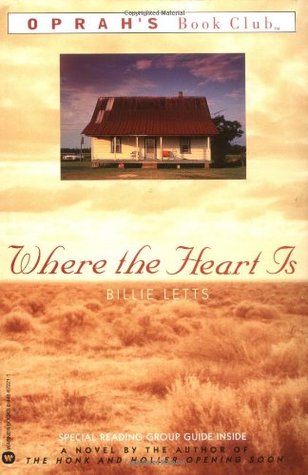
Tracy Letts has a small role in The Big Short. It makes sense. He’s a theatre kid, writing plays and acting in movies. Also, his mother was the writer Billie Letts, who wrote Where the Heart Is. It was turned into a movie starring Natalie Portman and Ashley Judd. (I saw it in the movie theater with my friend Jamie in 2000.) Judd, who was in Bug, has thus appeared in films by two different Lettses.
![]() |
| I didn't read this. |
But I digress. In trying to find out a little more about Letts’ acting career, I found upon a photo of Letts with Rebecca Hall and Michael C. Hall (no relation to one another). The Halls and Letts are involved in a film called Christine, scheduled to be released in October (next month).
I recently saw Michael C. Hall in Kill Your Darlings, the drama in which Daniel Radcliffe played Allen Ginsberg. I loved that movie. David Cross was adorable as Ginsberg’s poet father, Dane DeHaan* is dreamy even though Lucien Carr was a shit boyfriend to Allen (repressed much?), and Radcliffe is now my second-favorite movie Ginsberg after James Franco. I’ll always have a special place in my heart for the Norman Reedus/Keifer Sutherland/Courtney Love film Beat, with my sweet sweet baby Kyle Secor as David Kammerer, Carr’s creepy stalker. The Kammerer character in KYD is much better written and sympathetic, and Hall does an excellent job playing him.
Rebecca Hall, of course, played the long-suffering wife of Alfred Borden (Christian Bale) in The Prestige. It’s one of my favorite movies, and I’m not the only fan. The Simpsons had its season premiere this past weekend. Mr. Burns re-instated a vaudeville-like stage show like he remembered from his childhood, including a magic act performed by twins Sherri and Terri that referenced The Prestige.
![]() |
| I DID read Christopher Priest's novel - after I saw the movie |
I’ve also been watching Rebecca Hall as Edwardian narcissist Sylvia Tietjens, opposite Benedict Cumberbatch, in Parade’s End. She will play the title character in Christine.
Christine is Christine Chubbuck, a real person whom I read about in He Who Shall Remain Shameless.
Sylvia Tietjens isn’t a very sympathetic character. One tends to feel more sympathy for husband Christopher, who is desperately in love with spunky suffragist Ms. Valentine Wannop (Adelaide Clemens, a young Australian who played Myrtle Wilson’s sister in The Great Gatsby), but too old-fashioned to divorce Sylvia. I'm on episode 2 of the 4-part miniseries, and so far the most scandalous thing Christopher and Valentine have done is get lost in the fog and stay out together all night…sitting next to each other. Just sitting, physical contact at an absolute minimum. It’s like the opposite of Jane Eyre. Where Edward Fairfax Rochester was not concerned enough about pursuing the woman he loved while in a bad marriage, Christopher Tietjens was probably too concerned. Lots of unresolved longing and surreptitious eye contact ensue.
Christine Chubbuck, conversely, is a very sympathetic character. Life dealt her a hand so much worse than she deserved. Her severe depression cost her her life. Live on television. We can't see the actual footage, thank Something, but we will see a dramatized version.
*I saw him in the trailer for Tulip Fever while waiting for Love and Friendship (a Jane Austen adaptation) to start in the movie theater. I want to see that. Christine might be too sad, even though I'm sure Rebecca Hall's acting will be great. Let's see Tulip Fever instead. As of this writing, its release is planned for February 2017.
![]() |
| No, I did not read this book. |
Monday, September 12, 2016
'The Lunatic, The Lover, and The Poet' by Myrlin A. Hermes
Let’s talk about The Lunatic, The
Lover, and The Poet by Myrlin A. Hermes, because this book blew my
mind. Be warned there may be SPOILERS in this post.
I learned about it from this post.
I couldn’t get it out of my head.
Books that have well-rounded bisexual characters are few and far
between anyway, and this novel’s locating its 2011 Lambda Literary
Award-winning bisexual character within an exceedingly thorough
re-imagining of William Shakespeare’s Hamlet made this a must-have
inside my greedy little brain.
Hermes gives us a love triangle between
Hamlet, Horatio, and her original character Adriane, Baroness of
Maricourt. It’s not a love vee, in which Hamlet and Horatio are
each separately in love with Adriane. Horatio is in love with Hamlet,
Hamlet is in love with Horatio, Horatio is also in love with Adriane,
and Adriane is using them both in an intricate chess game for her own
literary and personal ends.
Adriane. Oh, Adriane. She’s a
difficult woman, and she tries extremely hard to turn Hamlet and
Horatio against each other (at the same time she’s trying to make
their love immortal in poetry), but you can’t end up hating her.
Like Lady Macbeth before her, she has to do what a woman has to do
for her ambition’s sake. Unlike Lady Macbeth, she won’t have to
live to regret it, and she won’t be punished by the author for it.
Recognizable lines from Macbeth are
woven into the dialogue and narration of this novel, as are lines
from a number of Shakespeare’s most famous sonnets and other plays.
Sometimes they’re consciously created by the characters as they’re
creating art within the context of the novel, and sometimes they come
up in more organic ways from the plot. Sometimes Shakespeare feeds
Myrlin A. Hermes a straight line and she turns it into a dirty joke,
in the same way that Shakespeare plays with his characters.
That’s some of the beauty and
brilliance of Hermes’ writing. Although it’s written in prose,
the whole thing feels like poetry in blank verse. This is astounding
work.
Ophelia still gets the short end of the
stick, alas.* She doesn’t drown, and she does live long enough to
marry Hamlet and become Denmark’s queen. She even produces an heir,
although the little boy dies from an accidental wound. It’s implied
he may have hemophilia, which of course is something that
historically affected the real royal houses of Europe, after too many
centuries of intermarriage between cousins.
Incest is a creeping theme throughout
the novel. Hamlet is rumored to have an incestuous relationship with
his own mother, although Hermes never gives the reader any reason to
believe this is true. Gertrude is certainly unsure which brother is
Hamlet’s biological father – Hamlet the Elder or Claudius –
although this doesn’t make any genetic difference, since they’re
identical twins. The cheeky undertaker at the end of the novel tells
Horatio, in unnecessarily vague terms, that the king is marrying his
sister – what he means is that King Claudius is marrying his
sister-in-law.
Yet it may actually be the case when
Hamlet marries Ophelia that he is marrying his own half-sister. A
small portion of this novel is told by Polonius talking to Laertes.
Polonius – whose name literally means that he is a Polish guy –
tells his son that he, Polonius, was a minor prince in his native
land, although he was the youngest son who was never going to inherit
any kind of throne. When Hamlet the Elder conquered Poland, not only
did his men kill all of Polonius’s older brothers on the
battlefield, but Hamlet the Elder also took Polonius’s wife,
Aphelia. Polonius and Aphelia were married but, because she was still
a young teenager, their marriage wasn’t consummated. Aphelia became
Hamlet’s concubine, and it’s possible Laertes and his sister
Ophelia are both Hamlet the Elder’s biological children.
Hamlet the Younger marrying his bio
sister? Sounds like an acting job for Benedict Cumberbatch, who has
both played Hamlet on stage and, as a character in the film version
of August: Osage County, has unknowingly had a sexual affair with
probable his half sister. (And not even in a bad way. Ivy and Little
Charles and two of the only humane characters in that grim Tracy
Letts play. ‘Tis pity they are whores*.)
Someday I’ll discover why Letts keeps
setting his plays in the Plains States, which he is from and seems to
hate.
Hamlet isn’t my favorite of
Shakespeare’s tragedies – I understand and enjoy Macbeth better.
(I recently saw the 2015 film adaptation with Michael Fassbender and
Marion Cotillard. I thought she was gorgeous and brilliant as Lady
Macbeth, but I didn’t want Duncan to die, not only because he
doesn’t deserve it but also because he was David Thewlis, the actor
who played Remus Lupin in the Harry Potter movies. I still have
issues with Remus and Tonks’ sad deaths.) That said, I found myself
heavily invested in the romantic relationship between Hamlet and
Horatio. I’m glad they got to be together long after Ophelia’s
unprocessed grief over her child’s death sent her to a nunnery for
long-term mental health care.
![]() |
| http://thatwritererinoriordan.tumblr.com/post/128423110740/brain-drops-soul-winks-promotional-posters-for#notes |
At first Horatio is conflicted about
his own bisexuality. He’s wildly attracted to Hamlet when Hamlet
dresses as a female character in the play Horatio has written, but
rejects Hamlet’s amorous advances out of deference to his
upbringing in the church, even though Horatio is not a religious man.
Later, when he believes Hamlet has drugged them both with belladonna
and intends to kill them both, sex becomes a lifeline for them.
Horatio eventually has to admit he loves Adriane physically, but the
lifelong commitment of his heart he reserves exclusively for the
Danish prince. Lady Adriane is Horatio’s first love, but Hamlet is
his true love. Hamlet, surprisingly (for he is infamously fickle with
Ophelia, including in this version), reciprocates the depth of
Horatio’s feeling.
Get that: They are two bisexual men who
commit themselves to each other, and neither one of them has to be
killed off violently and tragically. See, TV? Writers can do that.
It’s possible to let same-sex lovers grow old together and die of
natural causes.
This is a beautiful, poetic, and sexy
book, with complicated characters we think we know exposed from
entirely new angles.
The titular allusion, by the way, is to a line spoken by Theseus in A Midsummer Night's Dream.
*That’s supposed to be remedied in a film starring the English actress Daisy Ridley, who stars in the most
recently released Star Wars film.
*I'm not really judging them. That’s me showing off that I know
the plot of the 17th-century John Ford play ‘Tis Pity
She’s a Whore includes a brother-sister pair who commit intentional
incest. In August: Osage County, only Ivy knows her cousin is
probably also her brother.
John Ford is probably not related to
Ford Madox Ford, the English poet, novelist, and critic who wrote Parade’s
End, a novel series turned into a Downton Abbey-esque drama for
British television. The protagonist, Christopher (“Chrissie”)
Tietjans, marries a monumentally inconsiderate woman who is pregnant
with a child that may or may not be his, then falls in love with a
saucy Women’s Suffragist. It’s an Edwardian disaster and possibly semi-autobiographical. I’ve been watching it in
small doses.
![]() |
| http://thatwritererinoriordan.tumblr.com/post/150032747400/somanyperioddramas-parades-end-tv-series |
Because Benedict Cumberbatch.
Subscribe to:
Posts (Atom)