Pages

Showing posts sorted by relevance for query Harry Potter. Sort by date Show all posts

Monday, October 9, 2017

What Would These Harry Potter Characters Do in Real Life?

What might our favorite Harry Potter characters do for a living if they lived in the Muggle world? Based on their magical careers and personalities, these occupations might suit these Harry Potter main characters in the real world.

Please note that some of the character information used in this post is derived from Harry Potter and the Cursed Child. If you haven’t read that book or seen the play yet, be aware that you may be reading spoilers.

Harry Potter


We know that in the magical world, Harry James Potter became an Auror, a magical law enforcement officer. He rose through the ranks and by the time he was forty he became head of the Department of Magical Law Enforcement.

In real life, Harry would be a police officer or a detective. He would most likely be a detective, responsible for gathering evidence and assembling the facts of criminal cases in preparation to go to trial with them.

Harry might be a criminal investigator for a territorial police force, or he might work for one of the United Kingdom’s national investigation agencies such as the National Crime Agency, the Ministry of Defence Police, the National Counter Terrorism Security Office, or the National Fraud Intelligence Bureau. His experience with Voldemort’s terrorism would make him a good candidate for the National Counter Terrorism Security Office.

Author: Bagui

Ron Weasley


Ronald Bilius Weasley worked with Harry as an auror for a time, but his law enforcement career didn’t last long. He left the Ministry of Magic to work with his older brother George at George’s retail store, Weasley’s Wizard Wheezes, the joke shop located at Number 93 Diagon Alley.

As the manager of a store selling props for magic tricks, novelties, candy, and fireworks, Ron would be classified in the real world as a "first-line supervisor of retail sales workers" (in the language of the U.S. Bureau of Labor Statistics). If he lived in the U.S., he might run a seasonal pop-up store that sold Halloween costumes and decorations. Given his wife’s more high-paying career, it’s also likely Ron would take some time off from retail sales to be a stay-at-home dad to his daughter Rose and son Hugo.

Hermione Granger

Hermione Jean Granger, despite being the daughter of two dentists, grew up to work her way through the Ministry of Magic and rise to the rank of Minister for Magic.

In the real world, Hermione Granger would work her way up from local politics to be elected to the House of Commons. After years of dedicated service to the people, her party, and the Crown, Hermione would be appointed Prime Minister. We’d refer to her as The Right Honourable Hermione Granger (or, internationally, Her Excellency).

Ginny Weasley


Ginevra Molly “Ginny” Weasley is a former professional athlete, sports reporter, and sports editor for the wizarding newspaper The Daily Prophet. Her sport is Quidditch; she played chaser for the Holyhead Harpies.

In the real world, Ginny’s sport might be football (soccer to U.S. sports fans). While real Quidditch teams do exist (minus the magic, of course), women in England have been playing football for over 100 years.

Ginny would likely be a midfielder in the Football Association Women’s Premier League. With her football experience and, perhaps, a degree in communications, her career path of player to reporter to editor makes as much sense in the real world as it does in the magical one.

Neville Longbottom


Neville Longbottom, like Harry and Ron, started out as an Auror. Then he switched career paths and went on to teach Herbology at Hogwarts.

Since Herbology is not a subject taught at postsecondary institutions in the U.K., real-world Neville might be a professor of biology specializing in plant science. His students might be working toward degrees such as Plant and Soil Science or Molecular Biology (or Cellular Biology) with a concentration in Plant Science.

Luna Lovegood


Notoriously eccentric, Luna Lovegood became a magizoologist, specializing in the study and care of magical creatures. This career choice was, no doubt, influenced by her marriage to Rolf Scamander, the grandson of Newton “Newt” Scamander, the author of Fantastic Beasts and Where to Find Them.

In the real world, Luna Lovegood might be an eccentric blogger, perhaps specializing in the field of cryptozoology. As a Ravenclaw, she would naturally be drawn to seek out knowledge and the field of writing. Writing about cryptids such as the Loch Ness Monster would allow her to express her creativity and exercise her curiosity. Her careful attention to SEO (seach engine optimization) would help her find a wider audience and display her Ravenclaw erudition.

Since Neville would work in a hard science field related to biology, he and Luna would have a lot of interesting discussions. He would probably try to explain to her why cryptozoology is classified as a pseudoscience. She would probably remind him of the Dingiso and other cryptids that turned out to be real and encourage him to keep an open mind.

Thursday, November 28, 2013

The Hanukkah Hotness, Night 2: Daniel Radcliffe

Happy second night of Hanukkah!

For a long time, I didn't realize Daniel Radcliffe was Jewish. When I found out, I was really excited. Not that there's anything wrong with being non-Middle Eastern. It's just nice to belong to the same tribe as the cool kids.


From Sorceror's Stone and Chamber of Secrets, Daniel Radcliffe was just "that kid who plays Harry Potter." In Prisoner of Azkaban, Daniel Radcliffe became "that cute kid who plays Harry Potter." Then, right around the time of Harry Potter and the Order of the Phoenix - right about the time he starred in Equus on London's West End - it became, "Wow, Dan Radcliffe is an actual hot guy."


As I wrote here, I do not mind his vertically-challenged status. Height is not required for hotness.

Grace Norwich published Daniel Radcliffe: No Ordinary Wizard in 2005, when Radcliffe was 15-ish and still in the "cute; I'd be into him if I was in high school" phase. I bought it (at a card shop that also sold books, now out of business) because I was as Potter-obsessed then as I am today, and I read it, too, although the writing is clearly intended for a teen/tween audience.

For your edification, I'll quote a few passages.

"...Dan shares a lot of similarities with the fictional character that has made him a household name. First off, they are both British, and very cute!...'We have curiosity [and] loyalty,' Dan told People magazine...Another similarity that Dan and the fictional wizard seem to share is a level of wisdom and maturity that is beyond their years, which is probably due to the fact that they both had to handle a great deal of responsibility at such a young age."


"Daniel Jacob Radcliffe was born on July 23, 1989, in London, England, to Alan Radcliffe and Marcia Gresham. He grew up in the well-to-do neighborhood of Fulham, in the southwest part of the city. Daniel attended Sussex House, an exclusive all-boys private school in Chelsea, where his favorite classes were gym and science."


On how Dan came to audition for the role of Harry Potter: "One summer Dan went to the theater with his parents to see Stones in His Pockets, a comedy about two extras on a big American movie shooting in Ireland. In the row directly in front of the Radcliffe family were two men who knew his father. And they were behaving oddly. Instead of concentrating on the play in front of them, the men kept turning around to stare at Dan....The two men turned out to be none other than David Heyman and the screenwriter, Steve Kloves."


"More than ten thousand fans gathered to scream and swoon when Dan arrived at the world premiere of Harry Potter in London. At the momentous event, Dan watched the film for the third time. Although he loved the final product, he hated seeing himself on the screen, especially that evening."


"There were a lot of people who would weigh in on this film, but perhaps there was no one more important than J.K. Rowling. She made her firm pronouncement after seeing the film. 'I think Dan nailed it,' she said in a written statement later published by the Toronto Star..."


"Not surprising are Dan's sophisticated tastes. He likes music from bands that broke up way before he was even born. But Dan has been hanging around adults on film sets for a long time now, and has picked up a thing or two. He also is the only child of two very sophisticated parents, who took him to the theater regularly and exposed him to a lot. Dan wasn't going to settle for any Britney Spears or the latest boy band. Instead Dan is into edgier stuff. In fact, with his main musical passion, punk, he doesn't even like the current bands."


"He has a ton of crushes on the leading ladies of rock. He admitted to Radio 1 that he is a sucker for Brody Dalle, the lead singer of the punk band the Distillers, who sports enormous tattoos and thick black eyeliner. 'I'm madly in love with her!' Dan said. He also professed love to Marcie Bolen, the adorable red-head guitarist for another punk band, the Von Bondies."


"When the inevitable time arrives for Dan and Harry to go their separate ways, Dan's future will be wide open and anything is possible. Who knows what he will try next?"


We do! We've already seen him in The Woman in Black. Next up, we'll see him in the adaptation of Joe Hill's horror novel Horns and as Allen Ginsberg (squee! He's my dead gay Jewish boyfriend) in Kill Your Darlings.


Follow on Bloglovin

Sunday, August 7, 2016

#CursedChild No-Spoiler Mini Review

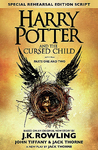
Harry Potter and the Cursed Child - Parts One and Two (Harry Potter, #8)Harry Potter and the Cursed Child - Parts One and Two by J.K. Rowling

My rating: 4 of 5 stars

So it's not exactly an 8th Harry Potter book - but so what? We still get a deep dive into Harry and Ginny's married life and the next generation, focusing on the middle Weasley-Potter child, Scorpius Malfoy (son of Draco and his wife Astoria Greengrass), and, to a lesser extent, Rose Granger-Weasley.

Remember when J.K. Rowling said she wished she hadn't paired Ron and Hermione? Well, she seems to have jettisoned that thought, because clearly, Romione is meant to be in every alternative universe.

And maybe Rainbow Rowell ruined me on this, but I can't help but think Scorpius's crush on Rose is only temporary, and that eventually, Scorpius and Albus end up together. I kept waiting for them to kiss. But hey, I won't rush them. Let them figure it out in their own time.

Major Voldemort bombshell? Oh, yes! Major, major, major. I won't spoil it.

This play gave me a lot of good feelings, and some bad ones. (There's mention of Molly Weasley, but not Arthur. Jo, did you kill Arthur?) It's well worth the read, since we can't all get to London's West End. Just read it.

Look, there it is on my night stand. Photo by me.
I pre-ordered this book from Amazon.com. I purchased it with my own funds and was not obligated in any way to review it.

Wednesday, October 14, 2015

'Carry On' by Rainbow Rowell

This book discussion is not spoiler-free. If you haven’t read Fangirl and Carry On yet, I strongly recommend you read no further.


I bought my copy of Carry On by Rainbow Rowell on the day it was released: Tues. October 6th. I couldn’t wait to dig in and start reading the boy-boy love story. (I say “boy,” but understand I’m talking about 18-year-old adults.) I finished it a week later, on Monday the 12th. In a way, I still can’t believe I’ve finished it. Reading Carry On was an incredibly enjoyable experience. I’m not sure I can entirely explain why, but I’ll try.

Part of it was the extent to which I enjoyed Rowell’s 2013 book, Fangirl. Recall that I didn’t just LIKE Cath Avery, but also felt like I WAS Cath Avery. Because Cath loved Simon Snow and his vampire classmate Baz, I loved Simon Snow and his beloved/enemy Baz.

Another part of the puzzle is that Simon and Baz are based, in part, on Harry Potter and Draco Malfoy.  I’ve never personally been a Drarry shipper – I’m satisfied with J.K. Rowling’s choice of Ginny Weasley as Harry Potter’s lifemate. Even if Rowling herself sometimes wishes she’d made Harry and Hermione more than friends. Let’s face it: I’m a grown adult who wears Harry Potter socks and a golden snitch necklace and whenever I hear plumbing make a funny noise my first thought is still “Chamber of Secrets!” I consider myself a member of the Harry Potter fandom. I understand the fandom impulse.

And yes, it is exciting to read a mainstream novel in which the featured romantic subplot involves a same-sex couple. It IS important to me as an out bisexual woman to have non-heterosexual (I’d say queer, but I don’t want to use that word if it will offend some readers. I personally do not have a problem with “queer”), positive representation in the media. Especially in the traditional media.

Can you imagine if J.K. Rowling went back and wrote a book about Albus Dumbledore’s unrequited love for Gellert Grindelwald? It would be heartbreaking and poignant and I would love that so much, even while it was torturing my poor little heart.

But until we get Carry On, Albus, we have to settle for SnowBaz.

In my review of Fangirl, I wrote, “Let's talk about Simon Snow. I honestly would love it if someone wrote Carry On, Simon as Cath, because the little bits of fan fiction that we get in the novel are tasty. Cath left her magnum opus unfinished (and, may I just say, I think the ending of this novel is perfection and I wouldn't want it any other way), but I still want to know if she decided to kill Baz or to let Simon and Baz live happily ever after. We're somewhat left hanging in a Hazel Grace Lancaster-type fashion. This book is meta to begin with - fiction about a fiction writer writing fan fiction about fiction - would it just be too incredibly meta for someone to write Carry On, Simon?”

Rowell hasn’t written Carry On, Simon, but she’s written something even better. Carry On isn’t written as Cath Avery writing Simon Snow fan fiction, nor is it written as if it were the original novel Cath based her fan fiction on (written by the fictional Gemma T. Leslie). Instead it’s a Simon Snow novel written in Rowell’s own authorial voice. But I no longer feel disappointed or Peter Van Houtened by Fangirl. I’ve gotten my SnowBaz story – and (spoiler alert!) Baz doesn’t even die.

Of course, I would not be sad if Rowell somehow extended this to a 7- or 8-book series…I’m just sayin’.

Ultimately, Simon Snow owes his existence to J.K. Rowling and Harry Potter. Because Rowling’s world-building is so thorough, and we’re already assumed to be familiar with it, Simon Snow’s Watford School already seems like familiar territory – yet it is its own unique world. Further, Rowling and Rowell are brilliant writers, each in unique ways. As I’ve discussed in my reviews of the Robert Galbraith novels, Rowling is intimately familiar with all 400+ years of English-language literature, plus the Latin language, plus Classical mythology and a veritable buffet of multicultural world mythologies.  She’s wonderfully erudite and such a natural storyteller, she can write a children’s book filled with scholarly Classical references without either boring the reader or showing off.


I’m not implying that Rowell isn’t as brilliant or as educated as Rowling, but Rowell’s storytelling style is more inwardly oriented, more personal and intimate and less world-traveling. She writes with her tongue in her cheek, tossing in pop cultural references that might be not-so-subtly winking puns, meaningful allusions, or a combination of the two. In an early chapter, for example, Simon is nearly taken out by a taxi driver who turns out to be a goblin. In the mirror’s reflection he appears to have green skin and blood-red lips, but otherwise he’s “handsome as a pop star.” Any goblin who manages to kill Simon will become the goblin king. Wait a minute: goblin king, handsome as a pop star? Is she talking about David Bowie in the film Labyrinth, in which the pop star plays the Goblin King?

I have no doubt Rowell is making references to a wide variety of fantasy novels, films, and tropes throughout her novel. I half-suspect the surname Snow is a reference to Game of Thrones – Simon, like Jon Snow, was abandoned by his parents. Of course, it’s revealed in Carry On that Snow is his middle name. Maybe Simon officially has his mother Lucy’s last name. It’s unclear whether Davy (the Mage) and Lucy ever married – not that that would necessarily require her to change her name. I don’t recall the Mage’s last name ever being given.

Baz – short for Tyrannus Basilton – has his mother’s last name. His mother, Natasha Pitch-Grimm, was headmistress of Watford before The Mage. Baz’s father isn’t a bully like Lucius Malfoy; he’s more of a neglectful parent than an abusive one. He’s not happy that Baz is gay. Baz doesn’t identify much with his father, so he doesn’t use the Grimm last name. He’s chummy with his Grimm cousins, though.

Naming traditions are more conventional in the household of Simon’s best friend, Penelope Bunce. Penelope is a British girl with a British-ethnicity dad and an Indian-ethnicity mom. She has some of the traits of Ron Weasley (including ginger hair, in their first year at Watford) and some of the traits of Hermione Granger, yet she managers to be her own unique character. Her siblings, including brother Premal and sister Priya, have Indian personal names, but they all have the Bunce family name. Penelope is technically a name from Greek mythology, but it’s not that uncommon in the English-speaking world.

Rowell, of course, is from the United States. She’s writing English characters who speak U.K. English, and occasionally (to my North American ears) this rings a little false. For example, I’ve never heard a person from the U.K. or Ireland refer to a “bag of crisps.”* The familiar expression is “a packet of crisps” where we Americans would say “a bag of chips.” But U.K. readers will have to weigh in on that matter.

(I can say that E.L. James, writing in the voices of U.S. characters, uses an occasional phrase that rings very British. It works both ways – as if we can understand, but not quite reproduce, one another’s dialects.)

The witches and wizards of Simon’s world are a bit more modern than those in Harry’s, who seem a bit stuck in the 19th century in some of their customs. Simon doesn’t speak Latin. Heck, he barely speaks English. (His dad really did a number on him when he dumped Simon in that orphanage.) Rowell’s witches cast spells in English, using concentration and intent to turn common phrases into spells. Any phrase can become a spell, theoretically, but some have caught on and are common. Song titles and lyrics often work well, and nursery rhymes are said to be the most powerful spells of all.

Baz’s family – the Pitch side – is unusually gifted with fire magic. This is a shame, since Baz (made a vampire, not born a vampire) is more flammable than the average human, something his dad and aunt (a somewhat Bellatrix LeStrange-like character, but not quite as evil) consistently remind him of. Baz is aristocratic, worldly, handsome, charming, and completely in love with Simon since their fifth year of school.

Yet it’s Simon who initiates their first kiss, in a moment of despair when Baz seems on the verge of suicide by self-immolation. Simon hasn’t quite worked out his sexuality yet. He knows he’s attracted to Baz – Baz’s huge vampire fangs impress him. It’s unclear whether he’s sexually attracted to Agatha Wellbelove or simply socially attracted to her. It’s a question the author chose to leave open. It’s entirely possible Simon is bisexual or pansexual, though.

The first kiss is magickal. Please don’t judge me, but I may have done a slight dance shortly after reading it. I really do love SnowBaz as a couple.

Of course, the dramatic climax is a traumatic climax. Not Allegiant traumatic, but still…Simon loses a person and a thing, both very dear to him. The person, Ebb the goatherd, is sort of a combination of Rubeus Hagrid and Sybil Trelawney, in a very wonderful way. Her nickname is short for Ebeneza. She’s a very powerful magician but must sacrifice herself (which she does willingly) to save Agatha.

Agatha Wellbelove doesn’t closely resemble any of the characters in the Harry Potter series. Her family name is vaguely reminiscent of Luna Lovegood’s, but she’s not quirky like Luna. In fact, she’s quite the opposite: she’d rather be with her Normal friends (the equivalent of Muggles – apparently, magicians can hear the difference between Normal and normal) than at a magickal school. She has a slight crush on Baz – one that’s destined to be unrequited, obviously. But it is not a typical young adult novel love triangle, not at all. In fact, Agatha breaks off her relationship with Simon because she realizes they’re both only going through the motions.

Penelope – Penny – has an American boyfriend named Micah. I have a deep desire to watch a sitcom starring Mindy Kaling as an older Penny living in the U.S.A. with Micah and their kids. Seems unlikely to happen, though.

Penny’s roommate, Trixie the pixie (the ridiculous name is lampshaded by the characters), is also LGBTQ+. Her girlfriend is another female Watford student, and the fact that dorm rules do nothing to keep them from snogging and flinging pixie dust 24/7 annoys Penny to no end. Technically she isn’t allowed in Baz and Simon’s shared suite, but through some unknown method she circumvents this policy – a feat never attempted by policy-respecting Hermione Granger.

SnowBaz ends more happily-for-now than happily-ever-after. They both have such grave insecurities. But I’ll take it. It’s better than being stuck, not knowing whether Baz even survives the end of Cath’s fan fiction rendition of Gemma T. Leslie’s world. (It’s not even entirely clear that Baz CAN be killed.) I like knowing Rainbow Rowell’s take.

I purchased Carry On with my own funds and was obligated to review it in any way. But I really, really, really liked it.

See what I did there?
*Retracted. J.K. Rowling uses "bag of crisps" in one of the Cormoran Strike/Robin Ellacot novels.

Friday, July 15, 2011

Is it St. Swithen's Day already? Pagan roots of a distinctly English holiday


The day is here at last: the release of the final Harry Potter movie, Harry Potter and the Deathly Hallows Part Two. J.K. Rowling has moved on; she is said to be hard at work on a new book, something completely different from Harry's world. It's the end of a great decade in children's literature, one that has amused me to no end. (I'm still not happy about Tonks and Lupin, btw.)

In honor of Harry Potter's ultimate film adaptation, I'd like to present a post that's as distinctively English as that fistfight between Hugh Grant and Colin Firth in Bridget Jones' Diary*. At its phoenix feather core, this post is also about a magic so strange and ancient it would make the late Albus Dumbledore proud.

July 15 is known in some parts of the U.K. as St. Swithen’s Day. The saint’s name is also spelled Swithin or Swithun. In the U.S., if the name sounds vaguely familiar, you’re probably a Simpsons fan. In the episode “Bart of Darkness,” a broken leg keeps Bart from playing in the Simpsons’ pool all summer, and he stays indoors writing a (strangely British) play:

[Cockney] "`Kippers for breakfast, Aunt Helga? Is it St.
Swithin's Day already?'
'Tis,' replied Aunt Helga…"

Kippers may or may not be eaten for breakfast on July 15, but the main food associated with St. Swithen is the apple. Apple farmers pray for rain on St. Swithen's Day, hoping for a good crop of apples in the fall, when they are harvested.

Apples were sacred to both the Celtic peoples of the British Isles and their Anglo-Saxon invaders. To the Celts, the gods lived in Avalon (Apple-Land), a magical place of immortality. Morgan, the death-goddess, could choose to bring living human beings to Avalon, as she did for King Arthur.

To the Norse cultures, the apple-land of immortality was tended by the goddess Hel in the far west. She had the power of reincarnation. The custom of roasting a pig with an apple in its mouth comes from their belief that food-animals could be reincarnated to return and be eaten again.

In accordance with the hope for future apples, July 15th is used for weather forecasting, like Groundhog Day (Imbolc). If it’s raining on St. Swithen’s Day, according to folklore, we’re in for forty more days of wet weather. If it’s sunny, the weather will be nice for forty days. (This phenomenon has actually been studied over more than 50 years, and it isn’t even remotely true.)

Swithen himself lived in England in the 9th century. He’s remembered as the founder of several churches. Sir Walter Scott mentions “St. Swithin’s Chair” in his 1814 novel Waverly. Scott locates the “chair,” actually the peak of a rocky crag, near a body of water called Loch Veolan in Scotland. Scott recounts a legend that if someone sits in St.Swithin’s Chair on Halloween, the “night-hag” (probably an owl; cailleach oidhche, “night hag,” is a Scottish expression for the bird) will have to answer three questions asked by the sitter.

“Night hag” is also an expression for a witch in bird form. Many goddesses are associated with the owl, including Greece’s Athena and Wales’ Blodeuwedd. If Scottish villagers associated St. Swithen’s Chair with asking questions of a witch or goddess-figure, the custom may be older than St. Swithen’s 9th century date of birth. Swithen may be a stand-in for a Pagan figure, or Christians who sought Pagan wisdom may have used his name to cover up activities that church officials would otherwise have frowned upon.


No one seems to know how the Christian saint whose feast day is in July became associated with the “chair," though it does seem connected with Halloween. October is the time of year when the apples ripen. Apples are still part of the symbolism of Halloween, as are owls. Some of us still bob for apples on Halloween, a custom that originated with the Celts, who may have associated the mock-drowning game with death. Agatha Christie certainly made the association when she wrote Hallowe'en Party.

The Celts did not fear death as our culture does, but considered it a return to the Goddess’ cauldron and a chance for rebirth. To be noticed by the Goddess in case they were killed, Celtic warriors painted themselves blue for battle. Blue represents ichor, the legendary “blue blood” divine beings possess.

*The Bridget Jones/Harry Potter connection: Shirley Henderson played Bridget's pal Jude and Hogwarts' resident ghost Moaning Myrtle. Authors J.K. Rowling and Helen Fielding have both been animated on The Simpsons.

Wednesday, September 4, 2013

Oh How Pinteresting: Just Harry Potter Bling


L'shanah tovah to all my friends who are celebrating Rosh Hoshanah tonight!

I have done many an Oh How Pinteresting! Pinterest post now, and it's recently come to my attention I've never done a post entirely dedicated to Harry Potter. Here, I remedy that situation. I have more than 300 pins on my Harry Potter Love, Expecto Patronum and Nerdy Girls Need Love Too boards, so to narrow it down somewhat, I'll stick to Harry Potter jewelry pins. 

I think I'm probably a Ravenclaw, but I still think the Slytherin house ring is the prettiest. 


The house necklaces are very pretty, too.


Owls, the Deathly Hallows, and the Golden Snitch - this bracelet set has it all!


No post on Sundays? No problem!


Who wouldn't want a charm necklace with all seven horcruxes on it?


Or a horcrux bracelet?


What happens if you wear this in the bathtub?


Actually, this works for an engaged couple as well. 


Quidditch was never my favorite part of the books, but I'd still wear this necklace.


My favorite non-human creature of the HP books: Fawkes.


Saturday, December 3, 2016

Fantastic Beasts and How I Found Them


My hardcover copy of Fantastic Beasts and Where to Find Them: The Original Screenplay by J.K. Rowling arrived on Friday, November 18th. I didn't start reading it right away, because I wanted to see the film in the theater first. (Beware of spoilers if you keep reading below.) 


It has been many years since I last read J.K. Rowling's 2001 book titled Fantastic Beasts and Where to Find Them, one of the two volumes she wrote for a charity project as Harry Potter's schoolbooks. I really had very little idea of what to expect when I saw the movie on Thanksgiving, other than a prequel to the Harry Potter series set in the 1920s.

The FBAWTFT film is set in 1926, to be exact.

We knew the main character was going to be Newt Scamander. When Harry Potter read Fantastic Beasts at Hogwarts, he knew Newt Scamander as the author of his textbook. We, the readers, had very little information about Newt - other than that he would be played by Eddie Redmayne. I remember Redmayne best as Marius Pontmercy in Les Miserables.  


He is absolutely adorable as Newt Scamander. 

Newt is a wizard visiting New York in the '20s. He has a suitcase with a virtual zoo inside, full of magical creatures. He's on his way to Arizona on a creature-related errand when he's distracted by an escapee: a niffler, a sort of platypus-mole that can't stop itself from hoarding shiny objects. 

The real trouble begins when Newt crosses paths with a Muggle - or, as they're known to American wizards - a No-Maj. He's Jacob Kowalski, a WWI vet who works in a canning factory but aspires to opening his own bakery with his grandmother's recipes. Jacob is played by Dan Fogler. I wasn't familiar with him before this film, but he's adorable too.

Jacob's briefcase of sample pastries gets mixed up with Newt's case of beasts, causing the intervention of an American auror (magical law enforcement officer), Tina Goldstein (Katherine Waterston). When Jacob is bitten by a murtlap and takes ill, Tina decides to take him and Newt home for the night. She shares a room with her sister, Queenie (Alison Sudol). 

Here, I swoon. American witches! JEWISH American witches! 

American witches and wizards have, rather than a Ministry of Magic, the MACUSA (Magical Congress of the United States of America). MACUSA doesn't allow witches and wizards to marry No-Majs, ostensibly so the witches' code of secrecy isn't broken, so they can't be persecuted. But Queenie and Jacob start flirting almost immediately. 

Newt and Tina have even more of a slow build. Newt is more socially awkward than Jacob. He does, however, keep a picture of Leta Lestrange in his creature case. We don't know how Leta is related to Bellatrix Lestrange - but presumably, she is. The actress portraying Leta in Newt's photo is Zoë Kravitz.

This will probably be explored further in the four sequels planned for this film. They're said to be taking us from 1926 all the way up to the end of World War II. Interestingly, Albus Dumbledore defeated Gellert Grindelwald in 1945, according to his chocolate frog card. Young!Albus doesn't appear in the FBAWTFT movie, but he is mentioned. He was Newt's teacher at Hogwarts and single-handedly kept Newt from being expelled over an undisclosed magical creature incident. 

Will Young!Albus appear in the prequel sequels? Fingers crossed for yes.

All of this, plus the amazing creatures, are very good. But wait, there's more! 

No-Majs aren't supposed to know that witches and wizards exist, but some of them suspect. The rough equivalent of Harry Potter's Aunt Petunia is Mary Lou Barebone (Samantha Morton). She heads the New Salemers, a religious group seeking to root out witchcraft in the U.S.A. 

Mary Lou has two adopted daughters (one a child, one an adult) and an adopted son, Credence (an adult). Credence is played by Ezra Miller, whom I may remember from such series as Californication. [SPOILERS] Credence's biological mother was a witch, and Credence is both desperately trying to hide his natural magic from Mary Lou, who violently abuses him, and desperate to join the magical world. This is a recipe for disaster. 


Credence serves as an informant for Percival Graves (Colin Farrell), a high-ranking auror and Tina's boss. Graves is looking for a magical child with legendary powers. Only the "child" isn't a child, but turns out to be Credence himself!

(We can suppose that Credence is in his early 20s. Ezra Miller is 24.) 

And...MAJOR SPOILER HERE...Graves isn't actually Graves, but Grindelwald in disguise.

But oh! The interactions between Credence and Graves are so flirty. It seems Credence is repressing his sexuality as well as his magic. (Not such a stretch for Ezra Miller, who is pansexual.) And, I think, Grindelwald is using Credence's attraction to Graves for Grindelwald's own evil purposes. 

But can I help it if real!Graves and Credence would make an incredibly sexy couple? I mean...

Not my fan art. http://thatwritererinoriordan.tumblr.com/post/153820648360/para-dlse-i-want-to-eat-you
I can't get "Gradence" out of my brain. They have pushed my Sherlock obsession almost completely out of my head. 

And that was already starting to replace Destiel. By the way, as of today I can no longer say I've never watched a single episode of Supernatural. While babysitting my twin nephews this morning, I watched a 3-episode DVD with my 12-year-old niece. I learned God (a.k.a. Chuck) has a sister named Amara, a.k.a. The Darkness. Basically, the Supernatural universe is a duality, as in Zoroastrianism. Dean offered to sacrifice himself so God and the universe wouldn't die, and Castiel offered to go with him. That angel really does love that human. (Maybe in a platonic way. But maybe not.) 

I digress. Still, the movie will not leave my brain alone. I was glad to have the screenplay at home waiting for me. It helped me catch some of the bits I missed in the theater. Especially that part where I had to take my niece to use the restroom. The screenplay was beautifully written, and it made me appreciate how well-acted the movie was. 

And now I have read all of J.K. Rowling's books, except Very Good Lives. 

Thursday, October 16, 2014

The Feast Day of St. Hedwig

October 16 is the feast day of St. Hedwig of Silesia. If you're a Potterhead/Harry Potter fan, you probably know J.K. Rowling named Harry's snow-white owl companion after Hedwig, the patron saint of orphans. According to David Colbert in his book The Magical Worlds of Harry Potter, Rowling found the name in a book of saints.

Snowy owl. Creative Commons image by Matt MacGillivray
Now, there are two women referred to in English as St. Hedwig. One is Hedwig, or Jadwiga, of Poland, who lived in the 14th century and was canonized by Pope John Paul II. Jadwiga of Poland is a fascinating historical figure because her official title made her king, rather than queen, of her country. However, Jadwiga of Poland is not the patron saint of orphans.

Hedwig, Queen of Poland. Public domain image
That honorary title goes to ÅšwiÄ™ta Jadwiga ÅšlÄ…ska, also known as Saint Hedwig of Andechs or of Silesia. Andechs is a family name, referring to a series of Bavarian kings. Our Hedwig was born in Andechs castle in Bavaria circa 1174. Silesia is a place; it was a medieval (1138-1335) province of Poland, ruled over by a duke. Its neighboring provinces were Bohemia and Moravia. 

Hedwig married Henry I, nicknamed Henry I the Bearded. Henry I is remembered for bringing the German language and culture to Silesia. 

Henry I became Duke of Silesia in 1232, a position he held until his death in 1238. Their son Henry II the Pious became Duke of Silesia upon his father's death, and Hedwig spent the remainder of her life in a monastery (which she'd encouraged her husband to establish) as a lay sister. She did not become a nun. When Henry II died, Hedwig and Henry II's widow Anna of Bohemia (sometimes called Anne of Bohemia) established a Benedictine abbey together.

Besides founding several religious institutions with her husband and daughter-in-law, Hedwig of Silesia is known for her charity and humility. She refused to wear shoes, even in winter. She ministered to women afflicted with Hansen's disease. In folklore, she is also credited with stopping in Austria on a pilgrimage to Rome; where she visited Austria, a stream with healing properties sprung up from the earth. 


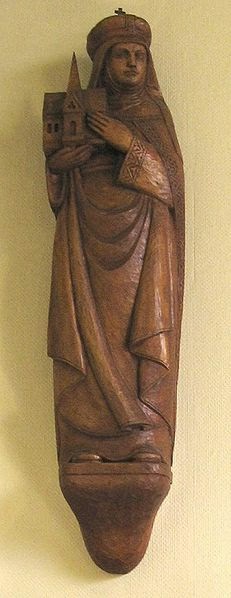
St. Hedwig of Silesia, public domain image by Matthias Feige
Although Hedwig was canonized by Pope Clement IV in 1267, her association with orphans didn't begin until 1848. In that year, Robert Spiske founded a religious women's association that eventually developed into the congregation of the Sisters of St. Hedwig. The nuns' principal mission is the education of orphaned/abandoned children, chiefly in Germany, Austria, and Denmark. 

Robert Spiske is not himself considered a saint, but the Catholic church considers him "venerable." He was a Polish priest born in 1821, known for his preaching, pastoral work with young people, and outreach to people who felt alienated from the church. 

According to TheHogsHead.org, a Harry Potter fan website, Hedwig of Silesia was the mother of seven children, like Molly Weasley. Her husband's name, Henry, is another form of the name Harry. The Hog's Head also reminds us that in the books, Harry chooses Hedwig's name after seeing it in A History of Magic by Bathilda Bagshot. We don't know what the fictional Bathilda Bagshot wrote in her fictional magical textbook, but it may have had something to do with those magical healing waters. 

You can read more about St. Hedwig on Wikipedia and the Catholic Encyclopedia. The Catholic Encyclopedia lists her feast day as October 17. She is thought to have died on October 15, 1243. 

Other saints' day posts you might enjoy:

St. Swithen's Day
St. Lucia's Day

Follow on Bloglovin

Social Media, Writing, and Editing Services I Offer - Erin O'Riordan

Friday, August 22, 2014

#FridayReads: Books I'm Currently Reading Aug. 22, 2014

I'm having one of those "read 1,000 things at the same time" moments again, but what's new? I love books. I'm kind of obsessed with them, really.


My main book is Four: A Divergent Short Story Collection, which I picked up at the public library a few days ago. I loved the Divergent trilogy. Even though I already bought and read one of the e-book versions of "The Transfer," the first story in the collection, I haven't read all four stories yet.


I had intended to take a short hiatus from reading young adult books, but the opportunity to get this from the library weakened my resolve.

By the way, I said in my Divergent review that Tris and Caleb Prior are fraternal twins. Four makes it clear they're "Irish twins." In other words, they were born ten or eleven months apart. I missed that upon first reading.

I had been reading the final book in the All Souls Trilogy series, The Book of Life by Deborah Harkness. Unfortunately, I didn't have time to finish more than a third of it before it had to go back to the library.


It's too wonderful. I don't want to gulp it down. I need to savor. I think I'll have to buy the e-book and read it in my Nook.

The book I'm currently reading in my Nook is Fated (Vampire Destiny #1) by Alexandra Anthony. It's a paranormal romance, and a pretty quick, easy read.


The vampire, Stefan Lifsten, is tall, blond, and Nordic, heavily reminiscent of Eric Northman in Charlaine Harris's Southern Vampire Mysteries series. The heroine, Josephine, is a telepath who reads people's minds. She's very much like Harris's Sookie Stackhouse. It almost reads like True Blood fan fiction - and I'm not complaining. I'm liking it.

The last episode of True Blood is coming up this Sunday. I'm looking forward to it, and I'm dreading it at the same time.

The book I'm reading in my kitchen as I wait for coffee to brew and water to boil is Vampyres of Hollywood by Adrienne Barbeau and Michael Scott.


It's a paranormal murder mystery. Half the chapters are written from the point of view of a vampire/horror film actress who's sort of the sheriff of Hollywood the same way Eric is the sheriff of the Shreveport region. All of the victims (at least the first three) were her vampiric creations, her "children." The other half of the chapters are written from the POV of the mortal human detective who's investigating the crime. He doesn't know that vampires really exist.

I haven't read any of Michael Scott's other books, but he wrote the YA fantasy Secrets of the Immortal Nicholas Flamel series. And of course we all remember who Nicholas Flamel is...he created the Philosopher's Stone, the very thing that gave young Harry Potter so much trouble. Well, that's the folklore. He was an actual historical person, too.

Barbeau in a Creative Commons image by Leslie Gottlieb. 
Adrienne Barbeau, of course, is an actress as well as an author. Very beautiful lady.

The book I keep in my husband's van in case of reading time is HellFire by Kate Douglas. This is part of my PNR rotation. It's the second book in the DemonSlayers series. It's a silly-but-fun paranormal romance series with a hero from the lost continent of Lemuria. (That's an interesting subject we'll save for when I finish the book. I have a thing for discarded scientific theories.)


Okay, the cover model with the long blond hair looks exactly like Jason Isaacs as Lucius Malfoy in the Harry Potter movies. As I'm reading the book, though, I'm imagining the tall, white-blond hero as Lee Pace in the Hobbit movies. I'm imagining Rutina Wesley - True Blood's Tara Thornton - in the role of the heroine, Ginny. (That's Ginny as in Virginia, not like Harry Potter's Ginny. Mrs. Potter's nickname comes from Ginevra, the Italian equivalent of Jennifer or Guinevere.)

I love me some Kate Douglas. She had me hooked from the first time I picked up Wolf Tales.

Now, the serious book I'm reading is my latest Amazon Vine pick. It's called Religio Duplex: How the Enlightenment Reinvented Egyptian Religion by Jan Assmann, translated from German by Robert Savage. (I don't know what Assmann means in the German language, but it's unfortunately giggle-worthy in English. I can't help but think of the Seinfeld episode in which Kramer mistakenly receives the "ASS MAN" vanity license plates.) This scholarly work describes the history of a thought, from a Greek interpretation of the Egyptian religion during antiquity to the re-emergence of this interpretation during the European Enlightenment era of the 1600s and 1700s. Assmann is an Egyptologist, and he's also a scholar of European history, so this is right up his alley. I'll write a detailed review as soon as I finish this dense academic work. I'm about halfway through.

What are you reading?

Thursday, March 22, 2018

'Quidditch Through the Ages' Audiobook Read by Andrew Lincoln

Slight spoilers below if you haven't already listened to this audiobook. Nothing major - no Cursed Child-type surprises. 

When I first read Quidditch Through the Ages by "Kennilworthy Whisp," one of the schoolbooks Harry Potter and his cohort are said to have read and studied at Hogwarts, I wasn't too impressed. Quidditch was never one of my favorite aspects of the Harry Potter books, although I do have quite the fondness for some of the lady quidditch players, especially Ginny Weasley and Angelina Johnson. But the history of the sport didn't interest me, so I only gave it three stars on Goodreads.

Still, it sounded like fun to listen to the new audiobook version read by Andrew Lincoln, available through Pottermore. It has sound effects and bonus material, namely new writing by J.K. Rowling. It consists of 21 tracks, of which the first 12 are the actual text of the book.

Andrew Lincoln has a lovely reading voice. I can imagine it's the voice Edgar Linton used to read bedtime stories to baby Judith Cathy Linton before he remarried Michonne and lived happily ever after sadly passed away. Somehow his natural English accent sounds nothing at all like Rick Grime's Georgia accent. Actors are amazing.

The audiobook's bonus tracks also feature the voice of Imogen Church as Ginny Weasley-Potter (reading bulletins she wrote for the Daily Prophet as a Quidditch World Cup correspondent) and Annette Badland as Rita Skeeter (gossiping at the World Cup finals).

https://whompingwillowy.tumblr.com/post/170186950554/i-woke-up-to-such-news-my-fandoms-collide

A portion of the proceeds from sales of this audiobook go to charity, so I didn't feel bad at all about paying the $16 to Pottermore. One charity is the Lumos Foundation, which helps support families who might otherwise give their children up for adoption, since it's normally in a child's best interest to stay with their birth family whenever possible. Its goal is to reduce the number of children who live in the world's orphanages. The other charity is Comic Relief UK, which supports poverty alleviation projects.

Introduction

The first track of this book is an introduction by Albus Dumbledore. Dumbledore describes the process of borrowing the Hogwarts library's copy of Quidditch Through the Ages from librarian Madame Pince, who was not keen on letting the book be released into the muggle world. Lincoln reads this chapter in the voice of elderly Dumbledore. It's amusing, but I'm glad he doesn't have to use this voice for the entire book.

Chapter Three

This chapter relays the recollections of early quidditch play recorded by Gertie Kettle at Queerditch Marsh. Andrew Lincoln's Gertie Kettle voice is one of the funniest parts of this book.


Chapter Ten

Lincoln pronounces "patent" with a long A. It's the most British thing I've ever heard, aside from perhaps Benedict Cumberbatch's guest appearance on The Simpsons.


...which is, of course, a parody of Love Actually, in which Andrew Lincoln plays would-be wife-stealer Mark.

Afterward 

In the 12th track, Lincoln reads the biography of Kennilworthy Whisp and the book's "reviews" from in-world celebrities such as Rita Skeeter. The best of these reviews, in Lincoln's reading, is from Gilderoy Lockhart. He might have been brilliant at playing Lockhart, had he been given the chance. (No offence to Sir Kenneth Branagh.)

History of the Quidditch World Cup

In this bonus material, track 13, Lincoln does Viktor Krum's Bulgarian accent, and this is very cute. You'll be happy to know that Viktor is still playing competitive quidditch at the age of 38.

Quidditch World Cup 2014 - First Round Matches (Track 15)

The match between Chad and Lichtenstein seems like it will never even, and Imogen Church's Ginny sounds sufficiently exasperated at the seemingly-endless play. Church's real accomplishment, though, is pronouncing the many multi-ethnic names required of her here. In this bonus chapter we learn that Viktor Krum has come out of retirement to play again at the age of 38 and that he's the oldest player in the tournament.

Quidditch World Cup 2014 - Rita Skeeter's Gossip Column (Track 18)

Skeeter is a notoriously unreliable narrator, and she's clearly jealous of Ginny. Should we believe her when she reports that Harry, age 34, has some streaks of gray in his black hair?

Rita Skeeter is certainly a character one loves to hate; I'd have some words for her over her snark about Hermione's hair or her speculation about why Charlie Weasley is still unmarried. (He's probably just asexual.)

I hope she's correct in her assessment that Bill and Fleur's daughter Victoire and Harry's godson Teddy Lupin are taking every available opportunity to sneak off to a dark corner and snog.

Quidditch World Cup Final 2014 - Live Match Commentary (Track 20)

Rita Skeeter and Ginny Potter perform the live match commentary together (with a brief introduction narrated by Andrew Lincoln). It's the most highly-enhanced track as far as sound effects. Harry, James Sirius, and Lily Luna are rooting for Viktor's Bulgarian team in the finals, but Albus Severus is rooting for Brazil. They're sitting with Neville Longbottom.

Skeeter also gives us a vivid description of Luna Lovegood's wedding dress when she married Rolf Scamander (grandson of Newt Scamander and Tina Goldstein): "Rainbows, spangles, and a tiara of silver unicorn horns." It sounds awesome.

Will Viktor Krum finally walk away with a Quidditch World Cup trophy on his third attempt? If he does, will Ron still be jealous of Hermione's teenage crush on Viktor? Will Ginny jinx Rita to get her to shut up? You'll have to listen to find out.

And the 21st and Final Track...

...is only the credits and a little spiel about Pottermore, read by Andrew Lincoln.

Summary

If you're not the biggest fan of sports/quidditch, you won't find this the most interesting of J.K. Rowling's books. It certainly relies much less on traditional mythologies than, say, Fantastic Beasts and Where to Find Them. The voice actors' performances are enjoyable, but not so amazing that they can hold your attention if you're simply not interested in the material. But if you're like me and you feel compelled to read all of J.K. Rowling's books, you're going to listen to this anyway. And you should, because the proceeds are going to a really good cause.

Thursday, August 25, 2011

Holy Cow, It’s Almost September! or Five Books to Get You in the Mood for School

Guest Post By Jill-Elizabeth

I don’t know about you, but I can’t even believe it is almost September…where did the summer go? It seems like it was just Memorial Day, like summer was just beginning, like the weather was just starting to warm up to the perfect sit-in-a-hammock temperature. And yet here we are, the end of August, the night coming on earlier every day, the weather cooling down at night to actually require – gasp, shudder – long sleeves!


It’s been a little while since I’ve been in school myself, but I’ve never entirely lost that whole ugh-it’s-September feeling – and not just because I’ve spent the last few years helping get small people ready for their own back-to-school days. I love Fall, don’t get me wrong – leaves changing colors, cooler weather, crisp air that smells like apples. But there’s still something sad about the days getting shorter and the calendar getting busier. I may not miss the heat or the bugs or the chaos of summer, but I definitely do miss the laziness of the days.

But as with everything, there’s always some silver lining. Fall brings school, sure, but it also brings a whole slew of new back-to-school reading. So in honor of that, I bring you a few back to school books for your consideration – and by “school books” I mean quite literally books about schools. Cool schools. The kind that I rather would have liked to attend. At least one will be obvious; the others may surprise you (and tell you more than you’d like to know about the contents of my head). But they’re all great and worth a look!

The Harry Potter series by J.K. Rowling: By now, Hogwarts must be the most famous school in the world, right? I will admit, it made me rather sorry I never got to enjoy the miracle of British boarding school – at least, the miracle of non-Muggle British boarding school. There’s not a lot to say that hasn’t already been said – and if there is someone out there reading this who is not already familiar with Harry and his world, well, I’m not sure where exactly I’d begin anyway. I understand Harry has made a lot of educators talk – some in his favor (“kids actually read these books”), some against (“these books are the tool of the devil”). Personally, I tend to fall wholeheartedly on the former end of the spectrum. And if you know a child in need of reading encouragement, you can do a lot worse than Harry and friends…

The Mysterious Benedict Society by Trenton Lee Stewart: Take four special kids (and by “special” of course I mean utterly fantastically unique), add in a “school” program tailored to maximize those utterly fantastically unique abilities and a narcoleptic leader and what do you have? Stewart’s own take on the good-kids-must-defeat-evil-adults genre, of course. The series opens strongly; I was particularly fond of the initial “entrance”-testing, which I’m sad to report I would likely not have passed. Then again, given the troubles the kids find themselves in throughout the course of the book, maybe that is an entirely good thing. I will admit that I found the second and third books a little derivative, but there is still good stuff going on throughout to warrant a read.

The Fiction Class by Susan Breen: It’s not exactly your typical “school” book, but it is a great story for adults looking to get back into the swing of education by taking a class. A fiction class. The Fiction Class tells the tale of Arabella Hicks (poor dear – blame her mother for her name; she does), a frustrated writer who has been struggling with her novel – and her mother – forever, and who teaches a weekly fiction writing class for prospective authors. The book is organized along with the class syllabus; the story shifts between chapters devoted to Arabella’s class and her personal life. Eventually, of course, the two overlap. Much hilarity ensues – along with much frustration, poignancy, and a painful-but-crucial realization or two. It’s proof positive that learning can be fun – and funny.

Midnight for Charlie Bone (The Charlie Bone Books) by Jennie Nimmo: Charlie Bone is like Harry Potter, only not as famous (and not an orphan). But his adventures are equally as enjoyable. Bloor’s Academy is full of creepy management and horrid students, but I still think it’d be rather cool to be a descendant of the Red King and to spend your days trying to figure out exactly what your legacy – and those weird noises and locked doors signified. Charlie and his fellow students find themselves embroiled in the classic war of good-vs.-evil – albeit with some new and intriguing twists. And they still have to do homework. Hardly seems fair, does it?

The Charm School by Nelson DeMille: Okay, this one probably doesn’t belong here because it’s really a cold-war spy thriller from one of the masters of the genre. But still, it IS about a school – the eponymous “charm school” is a training ground for Soviet agents who will be sent to infiltrate the United States. I know it’s not exactly the traditional kind of “school” most people who enjoy attending, but I find the idea of a total-immersion social experience training camp to be rather fascinating. And this one is all wrapped up in a fantastically entertaining (and sometimes more than a little terrifying) package. Who wouldn’t love that? J

A former corporate attorney and government relations/health policy executive, Jill-Elizabeth walked away from that world (well, skipped actually) and toward a more literary life (equally challenging, but infinitely more enjoyable). If you enjoyed this review, please visit her at Jill-Elizabeth.com, the official home of All Things Jill-Elizabeth – that is, all of the teehees, musings, rants, book reviews, writing exercises, and witticisms of her burgeoning writing career.

Autumn leaves and Hogwarts images - Creative Commons license

Sunday, May 5, 2024

Opinions on Fictional Men

 On Thursday, May 2nd, this came up in my Facebook memories:


"111 Male Characters Of British Literature, In Order Of Bangability"

by Carrie Frye, April 29, 2011


It's been 13 years, but I have thoughts. I'll skip the characters I don't know from books I haven't read.


111. Frankenstein’s Monster (Frankenstein, or The Modern Prometheus). Fair, judging solely by the book. But in Maggie Gyllenhaal's forthcoming The Bride of Frankenstein retelling The Bride (2025), the Monster will be played by Christian Bale. Which bumps him up to #1. I apologize in advance for the feelings I will feel about that movie.


110. Uriah Heep (David Copperfield)


109. Casaubon (Middlemarch). If I remember Middlemarch, the main character's elderly husband looked like the philosopher John Locke, but I pictured him as Lost!John Locke. Not unhot.


108. Bradley Headstone (Our Mutual Friend)

107. Samuel Pickwick (Pickwick Papers)

106. Gussie Fink-Nottle (Right Ho, Jeeves)

105. Keith Talent (London Fields)


104. Jerry Cruncher (Tale of Two Cities). Domestic violence perpetrator; deserves to be at the bottom.


103. Hercule Poirot (The Mysterious Affair at Styles). What's wrong with Poirot? He's smart, he's Belgian, he keeps his moustache neat. In the movies he's Kenneth Branagh. What have we got against Poirot?


102. Ham Peggotty (David Copperfield)


101. Thorin Oakenshield (The Hobbit). This is just anti-dwarfish. In the movies he's Richard Armitage. That gay Brit is pretty hot. Adaptational attractiveness? Sure, but still, I think a lot of Tolkien men are ranked too low on this list.


100. Tracy Tupman (Pickwick Papers)

99. Julian Malory (Excellent Women)


98. C.J. Stryver (A Tale of Two Cities). This one is correct. Sydney Carton is the hot one at this law firm.


97. Charles Arrowby (The Sea, the Sea)


96. Dr. Watson (“A Study In Scarlet”). Wrong. Watson is a catch. He's a Victorian 10.


95. Willy Wonka (Charlie and the Chocolate Factory). Ma'am, he has unlimited access to chocolate. That should bump him into the Top 50, at least.


94. Jim Dixon (Lucky Jim)


93. Edward Ferrars (Sense and Sensibility). I'm sorry, but in what universe is Edward Ferrars less bangable than George Wickham? Carrie Frye, did you read these books all the way through to the end?


92. Colonel Brandon (Sense and Sensibility). EXCUSE ME?!?


91. Percy Mannering (Memento Mori)

90. Edmund Bertram (Mansfield Park)

89. Augustus Snodgrass (Pickwick Papers)

88. Mr. Micawber (David Copperfield)

87. Bertram Wooster (“Extricating Young Gussie”)

86. Everard Bone (Excellent Women)

85. Peregrin Took (The Lord of the Rings)


84. Will Ladislaw (Middlemarch). EXCUSE THE FUCK OUTTA ME?! Will Ladislaw INVENTED fanservice.


83. Flashman (Flashman)

82. J.P. Worthing (The Importance of Being Earnest)

81. Holly Martins (The Third Man)


80. Charles Bingley (Pride and Prejudice). Fair. Bingley is about as attractive as a golden retriever.


79. Alec Warner (Memento Mori)

78. Leopold Bloom (Ulysses)

77. Timothy Cavendish (Cloud Atlas)

76. Kubla Khan (“Kubla Khan”)

75. Aylwin Forbes (No Fond Return of Love)

74. Falstaff (Henry IV, Part I)

73. Sir Wilfred of Ivanhoe (Ivanhoe)

72. Stephen Colley (I Capture The Castle)

71. George Smiley (Call for the Dead)

70. Charles Ryder (Brideshead Revisited)

69. Simon Cotton (I Capture The Castle)


68. Peter Pan (Peter Pan; or, the Boy Who Wouldn’t Grow Up). MA'AM HE IS A LITERAL CHILD. HE SHOULD NOT BE ON THIS LIST.


67. Long John Silver (Treasure Island)

66. King Lear (King Lear)

65. Reginald Jeeves (“Extricating Young Gussie”)

64. Henry Pulling (Travels with My Aunt)


63. Romeo (Romeo and Juliet). Another literal child from the reader's pov, but pretty bangable to his age-appropriate partner, I guess?


62. Tristram Shandy (The Life and Opinions of Tristram Shandy, Gentleman)

61. Winston Smith (Nineteen Eighty-Four)

60. Roland Michell (Possession)

59. Crow (Crow)

58. Brigadier Etienne Gerard (The Exploits of Brigadier Gerard)


57. Tertius Lydgate (Middlemarch). I don't remember who this is.


56. Lord Sebastian Flyte (Brideshead Revisited)

55. Henry Crawford (Mansfield Park)

54. Frederick Wentworth (Persuasion)

53. Edward Murdstone (David Copperfield)

52. Desmond Ragwort (Thus Was Adonis Murdered)


51. Captain Hook (Peter Pan; or, the Boy Who Wouldn’t Grow Up). I feel like he should be closer to 111. Unless we're talking about that one adaptation with Jason Isaacs. I like Jason Isaacs.


50. Charles Darnay (A Tale of Two Cities). That's pretty fair. Sure, he looks exactly, weirdly like Sydney Carton, but Charles Darnay has another golden retriever personality. Pleasant, I suppose, but not sexy. Plus he's probably sad about his dead son.


49. Dorian Gray (The Picture of Dorian Gray). He could have been much higher if not for the murder.


48. King Arthur (The Once and Future King)

47. Mortimer Lightwood (Our Mutual Friend)

46. M. Héger (Villette)


45. Legolas (The Lord of the Rings). Tolkien elves are hot.


44. Robin Hood (Piers Plowman)

43. Inspector Alan Grant (The Man in the Queue)

42. George Emerson (A Room with a View)

41. Alan Breck Stewart (Kidnapped)

40. Rockingham Napier (Excellent Women)

39. Mr. Neville (Hotel du Lac)


38. St. John Rivers (Jane Eyre). Colonialist. Not sexy.


37. Remus Lupin (Harry Potter and the Prisoner of Azkaban)

36. Lancelot (The Once and Future King)


35. Othello (Othello, The Moor of Venice). He definitely killed his wife. We saw him do it. Therefore, unbangable.


34. Tarzan/Lord Greystoke (Tarzan of the Apes). I know he was on my Disney "would" list, but let's be honest: The real sexiness is Tony Goldwyn's.


33. Severus Snape (Harry Potter and the Philospher’s Stone)


32. Aslan (The Lion, The Witch and the Wardrobe). Ma'am, he is a literal lion. He shouldn't be on this list. I'm pretty sure he's an asexual untame talking lion.


31. Sydney Carton (A Tale of Two Cities). Should be closer to #1 OBVIOUSLY.


30. John Willoughby (Sense and Sensibility). This much higher than Edward Ferrars? Really?


29. Thomas Cromwell (Wolf Hall)


28. Maxim de Winter (Rebecca). Um, didn't he kill his wife?


27. Simon Bakerloo (The Wolves of Willoughby Chase)


26. Sirius Black (Harry Potter and the Prisoner of Azkaban). Yeah. Or maybe a little higher, even. This is not an endorsement of J.K. Rowling, whose attempt to gaslight the Internet into ignoring Nazi anti-lgbtq+ violence makes me ill. If I were a billionaire writer with a huge platform, I simply would not use my huge platform to target a vulnerable minority.


25. Brian de Bois-Guilbert (Ivanhoe)

24. Adam Dalgliesh (Cover Her Face)


23. James Bond (Casino Royale). James Bond's behavior and personality are offputting. The only thing that ever makes James Bond sexy is when he's played by Daniel Craig.


22. James Steerforth (David Copperfield)


21. Tom Bombadil (The Lord of the Rings). Accurate. Tom Bombadil might not be a permanent keeper, but he does sound fun.


20. Edward Driffield (Cakes And Ale)


19. Sherlock Holmes (“A Study In Scarlet”). I never get very strong sexy vibes from book!Sherlock. Watson does more for me. But the sound of Benedict Cumberbatch's voice is an entirely different story. (Hours spent reading Johnlock fanfic? Who, me?)


18. Justin Alastair, Duke of Avon (These Old Shades)


17. Robert Frobisher (Cloud Atlas). That's about right. Sexy, but sad. Depraved bisexual trope, but sexy.


16. Eomer (The Lord of the Rings). Yes.


15. Michael Cantrip (Thus Was Adonis Murdered)

14. Algernon Moncrieff (The Importance of Being Earnest)

13. Randolph Henry Ash (Possession)


12. Heathcliff (Wuthering Heights). I have normal, proportional feelings about Heathcliff and about Ralph Fiennes playing him. I'm normal about Byronic antiheroes.


11. Maurice Bendrix (The End of the Affair)

10. Beorn (The Hobbit)


9. Orlando (Orlando: A Biography). Strongly agree. Ms. Carrie Frye and I are on the same page here.


8. Oliver Mellors (Lady Chatterley’s Lover). I get it.


7. Lord Peter Wimsey (Strong Poison)

6. Don Juan (Don Juan)

5. The Beast (“The Tiger’s Bride”)

4. Eugene Wrayburn (Our Mutual Friend)


The top three are fine. I feel like there should me more Shakespeare in here somewhere, though. I feel like the unsexy Shakespeare characters are covered better than the actually hot ones. Benedick, anyone? Dom Demetrius, afraid of yet intrigued by Helena's sub tendencies?


3. Mr. Darcy (Pride and Prejudice)

2. Strider/ Aragorn (The Lord of the Rings)

1. Mr. Rochester (Jane Eyre)