Erin O'Riordan writes smart, whimsical erotica. Her erotic romance novel trilogy, Pagan Spirits, is now available. With her husband, she also writes crime novels. Visit her home page at ko-fi.com.
May 25, 1812: An explosion at Felling Colliery in England kills 92 men and boys.
May 25, 1895: Oscar Wilde is convicted of "committing acts of gross indecency with other male persons" and taken to Newgate Prison for processing. He is later transferred to Pentonville Prison, where he is sentenced to hard labor, is malnourished, and is only allowed to read either the Bible or The Pilgrim’s Progress.
May 25, 1979: American Airlines Flight 191, bound from Chicago to Los Angeles, loses an engine shortly after takeoff due to improper maintenance. It crashes less than a mile from the end of the runway. All 271 people on board are killed, as are two people on the ground.
My mother’s first cousin, James Zielinski, was one of the passengers killed in this accident.
May 25, 1985: Tropical Storm One, formed over the Bay of Bengal on May 22nd, reaches Bangladesh. The storm surge, torrential rains, and floods kill more than 11,000 people.
February 21, 1868: Italian painter Giuseppe Abbati dies of rabies after being bitten by his rabid pet dog.
February 21, 1965: Malcolm X is assassinated by a member of the Nation of Islam, an organization he had left.
February 21, 1974: Ontarian hockey legend Tim Horton, intoxicated, loses control of his De Tomaso Pantera near St. Catharines, Ontario. The sports car crosses the highway median and flips several times, throwing Horton from the vehicle. He is pronounced dead at the hospital in St. Catharines. Horton is not wearing a seatbelt and a half-empty vodka bottle is found in the wreckage.
February 21, 2022: The 28-year-old father-to-be and his 27-year-old brother are killed by an improvised exploding device they’re attempting to build as part of the planning of an unborn baby’s gender reveal party in Liberty, New York State.
October 1, 1941: 52-year-old Aline Murray Kilmer, herself a poet and also the widow of Joyce Kilmer, a poet killed in World War One, dies following three years of an unknown, but excruciatingly painful, illness.
October 1, 1951: Journalist Pauline Pfeiffer dies at age 56 of acute shock. She had a rare pheochromocytoma tumor on one of her adrenal glands. It appears that when Pauline’s transgender daughter Gloria was arrested for using a women’s bathroom and Gloria’s father Ernest Hemingway called his ex-wife Pauline to tell her, the news of Gloria’s arrest caused Pauline’s adrenal tumor to produce the hormones that caused the fatal state of physical shock.
October 2, 2018: Saudi Arabian journalist Jamal Ahmad Khashoggi, who resides in the U.S., is murdered at the Saudi consulate in Istanbul, Turkey. Khashoggi’s writings were critical of the Saudi government, and Saudi Arabia’s Crown Prince Mohammed bin Salman is suspected of being involved in the assassination.
October 2, 2019: Guitarist Kim Shattuck, who played for groups including Pixies, the Muffs, and the Pandoras, dies of amyotrophic lateral sclerosis at the age of 56.
October 3, 1849: On this election day, Edgar Allan Poe is given alcohol and marched from polling place to polling place in an illegal voting scam that was popular at the time. It may have contributed to his death four days later.
October 4, 1951: Henrietta Lacks passes away from complications of cervical cancer. She had been treated with radiation therapy at Johns Hopkins Hospital in Baltimore. As a result of her cancer and/or the radiation, her organs failed. After her death and without her knowledge or consent, Lacks’ cancerous cells will be collected and used to start an “immortal” cell line that will be used in most of the major medical research of the 20th century.
October 4, 1970: Her road manager finds 27-year-old singer Janis Joplin dead on the floor of her motel room in Los Angeles. She has apparently died of a heroin overdose.
October 4, 1974: Poet Anne Sexton dies by suicide in her car, locked inside her garage, by carbon monoxide poisoning. She is 45 years old.
October 5, 1995: 50-year-old voice actor Linda Gary, who provided an impressive number of cartoon characters with their voices in American animation of the ‘70s and ‘80s, dies of brain cancer.
October 5, 2001: Robert Stevens, a photographer for the tabloid newspaper Sun in Boca Raton, Florida, dies of pulmonary anthrax. His death is the first in a series of anthrax terror attacks that killed Stevens and four other people and sickened 17 others.
Microbiologist Bruce Ivins is the lead suspect in the FBI investigation into the anthrax attacks. He dies by suicide before he can be arrested and charged.
October 7, 1849: In Baltimore, Edgar Allan Poe dies.
October 7, 1992: The last fluent speaker of the Ubykh language, Tevfik Esenç, dies at the age of 88. The Ubykh people are a subset of the Circassian people, who were the victims of ethnic cleansing by the Russians in the 18th and 19th centuries.
October 10, 1901: 23-year-old David Park Barnit, a poet of the Decadent school of poetry, dies suddenly of what newspapers describe as “an enlarged heart.” Some suspect this may be a cover story and that the young poet may have taken his own life.
October 10, 1963: 47-year-old French cabaret singer Édith Piaf dies of liver failure from liver cancer and cirrhosis after years of alcohol and drug addiction.
October 10, 1984: One employee and three customers are killed when a fire breaks out at Ole's Home Center in South Pasadena, California. The youngest victim is two years old. The fire is determined to be arson by investigators who include John Leonard Orr. In 1992, Orr will be convicted of this and several other arson fires in the Los Angeles area.
October 12, 1943: Poet Robert Traill Spence Lowell IV, best known as Robert Lowell or Robert Lowell, Jr., is sentenced to a year in prison for draft evasion for being a conscientious objector to service in World War II.
October 19, 1950: Poet Edna St. Vincent Millay, age 58, dies after apparently suffering a heart attack and falling down the stairs of her home.
October 19, 1977: A small fire breaks out aboard the charter plane used by members of the band Lynyrd Skynyrd. No one is hurt, but the fire makes Cassie Gaines hesitant to board the plane the next day.
October 20, 1728: The Copenhagen Fire of 1728 begins and burns through October 23rd. It destroys nearly a third of the city’s buildings, leaving approximately 20% of Copenhagen’s population homeless. The University of Copenhagen library loses approximately 35,000 texts.
October 20, 1977: Cassie Gaines, her brother Steve Gaines, Ronnie Van Zant, road manager Dean Kilpatrick, and pilots William Gray and Walter McCreary die when Lynyrd Skynyrd’s chartered plane runs out of fuel and crashes in the woods outside Gillsburg, Mississippi. Drummer Artimus Pyle, guitarist Gary Rossington, and keyboardist Billy Powell all survive with serious injuries.
October 20, 1990: Stunt performer Brian Jewell, portraying a hanged man at a New Jersey “haunted hayride” attraction, accidentally hangs himself in earnest.
October 21, 1966: “[On this date] a massive coal-tip slid down a mountainside and engulfed the Welsh mining village of Aberfan, killing 144 persons, mostly school children. In response to an appeal the following week in a national newspaper, an English psychiatrist, J. Barker, obtained a large number of reports from respondents who felt they may have received paranormal information concerning this tragedy. After all claims were carefully checked out, thirty-five cases remained which Dr. Barker considered worthy of confidence. In twenty-four cases, the respondents had related the information to someone else before the landslide occurred. Dreams figures in twenty-five of these accounts. In one, the dreamer saw, spelled out in large, brilliant letters, the word ABERFAN, In another, a telephone operator from Brighton talked helplessly to a child, who walked toward her, followed by a billowing cloud of black dust or smoke.” - Our Dreaming Mind by Robert L. Van de Castle
October 22, 2009: The county government of Zhenyuan, Gansu province, China, announces on social media that it has burned 65 “illegal publications” outside of a local library. It describes the books as either “religious” or displaying “leanings,” presumably leanings that tend to disagree with the Chinese government.
On the same day, in the United States, novelist/blogger Mac Tonnies dies at age 34 of a cardiac arrhythmia.
October 23, 1731: Fire breaks out at Ashburnham House in Westminster, England. The house holds the Cotton Library, a collection of books and historical documents gifted to the British Crown by Sir Robert Bruce Cotton, a Member of Parliament who died in 1631. The fire destroys 13 manuscripts and damages 200 others. The Nowell Codex, the single manuscript on which the Epic of Beowulfis recorded, is among those damaged.
October 24, 2010: Pan Jin-yu dies at the age of 96 in Taiwan. She was the last fluent native speaker of the Pazeh language.
October 26, 1952: Hattie McDaniel, the first African-American to sing on the radio in the U.S. and the first African-American to win an Academy Award for acting, dies of breast cancer in Los Angeles. She’s 59 years old.
October 26, 1990: 15-year-old William Anthony Odom, setting up a gallows scene for a Halloween tableau in North Carolina, accidentally hangs himself when the rope he’s using tightens on him.
October 26, 2018: A bomb addressed to then-Senator Kamala Harris is intercepted by authorities in Sacramento, California. Cesar Altieri Sayoc, Jr. is later convicted of the terroristic threat.
October 26, 2022: Food writer Julie Powell dies of cardiac arrest at age 49 after battling a COVID-19 infection.
October 28, 1991: The commercial fishing boat Andrea Gail is lost amid the so-called Perfect Storm weather event that began with Hurricane Grace, formed on October 26th. The boat sinks with six crew members aboard near Sable Island, Canada. Their bodies are never recovered. In all, the Perfect Storm claims 13 lives.
October 31, 1871: Emily and Mary Wilde, the older half-sisters of Oscar Wilde, attend a Halloween party at Drumacon House near Ulster, Ireland. During the last dance of the evening, Mary gets too close to a candlestick and catches her dress on fire. Emily, too, catches her dress on fire as she rushes to help her sister. Party host Andrew Reid leads the women outside in the hope that the snow would help them extinguish the flames, but both sisters die of their injuries, Mary (age 22) on November 9th and Emily (age 24) on November 21st.
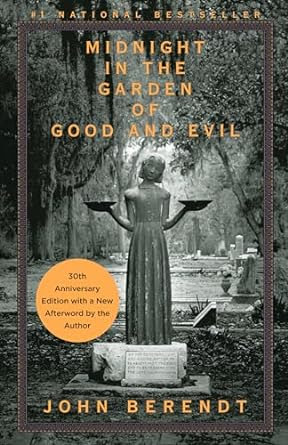
May 2, 1981: Antiques dealer Jim Williams shoots 21-year-old Danny Hansford at Williams’s historical home, Mercer House (formerly owned by composer Johnny Mercer), in Savannah, Georgia. The lovers had been in an argument; Williams argued the killing was self-defense. After four trials, Williams was acquitted. The homicide is the basis of John Berendt’s book Midnight in the Garden of Good and Evil.
May 4, 1897: On the second day of a charity bazaar set up by Catholic charitable organizations in Paris, aristocratic women shop in a wooden warehouse set up to look like a Medieval market. Decorations of cardboard, cloth, papier-mache, and wood help achieve this effect. As an extra attraction, an early movie projector called a cinematograph is set up with ether lamps as a light source.
The projection equipment catches fire. With flammable materials all around and little to no signage marking the exits, the largely female crowd is trapped inside. 126 people die; 200 more are injured. Many of the dead were so badly burned that they could only be identified by their clothing, jewelry, or expensive dental work.
May 5, 1994: American Michael Fay, age 18, receives four lashes with a bamboo cane after being convicted of vandalism in Singapore. Fay attended the Singapore American School and lived with his American mother and Singaporean stepfather. This is believed to be the first time an American was sentenced to corporal punishment in another country.
May 7, 1896: Serial killer H.H. Holmes (real name: Herman Webster Mudgett) is executed by hanging at Moyamensing Prison in Philadelphia after his conviction for 27 murders and attempted murder of six other people. His neck does not break when his body is dropped, and it takes over 15 minutes for Holmes to strangle to death.
May 8, 2012: Children’s book illustrator and author Maurice Sendak dies in the hospital of complications from a stroke.
May 9, 1914: Cereal manufacturer Charles William (C.W.) Post, recovering from emergency surgery for what was believed to be appendicitis, dies by self-inflicted gunshot wound when he can longer stand his severe abdominal pain.
His death leaves the Post cereal fortune to his only child, Marjorie Merriweather Post, who uses some of it to build her mansion, Mar-a-Lago, in Palm Beach, Florida.
May 9, 1977: American novelist James Jones dies at age 55 from congestive heart failure.
May 10, 1933: Led by Joseph Goebbels, a crowd of 40,000 Germans gathers at the State Opera building in Berlin to watch the German Student Union burn approximately 25,000 books that they’ve decided are “un-German.”
May 10, 1943: Fire destroys the grounds of the National Library of Peru in Lima, taking it with numerous irreplaceable historical artifacts.
May 12, 2010: Afriqiyah Airways Flight 771 leaves Johannesburg, South Africa, bound for Libya. A series of errors by the flight crew causes the aircraft to crash into low terrain, killing 103 of the aircraft’s 104 occupants. Among the dead is novelist Bree O’Mara, an Irish and South African dual citizen.
The sole survivor is a 9-year-old boy from the Netherlands. Both of his legs are broken, but he sustains no life-threatening injuries. His parents were killed in the crash, so he is adopted by his aunt and uncle.
May 13, 1988: American jazz musician Chet Baker dies of an apparently accidental fall from a window in Amsterdam, Netherlands. If you're like me, you recently heard this story on the "Sunflowers" episode of Ted Lasso.
May 14, 1998: Frank Sinatra dies of a heart attack. He's 82 years old.
May 15, 1886: Poet Emily Dickinson dies of kidney disease at her home in Amherst, Massachusetts. She’s 55 years old. Dickinson has not left the home since 1865.
May 15, 1953: Chester “Chet” Miller dies in a car crash during practice for the 1953 Indianapolis 500. He is 50 years old.
May 16, 1940: During World War II, the library of the Catholic University of Leuven, Belgium, rebuilt after German troops burned it down in the First World War, is shelled by the Nazis. The rebuilt library catches fire again, and approximately one million books and other materials are lost.
May 16, 1955: Writer/activist James Agee has a heart attack and dies in the back of a taxi cab in New York City. He’s 45 years old.
May 17, 2012: Singer Donna Summer dies of lung cancer. She's 63 years old.
May 19, 1935: Thomas Edward Lawrence, a.k.a. “Lawrence of Arabia,” dies of his wounds six days after a motorcycle crash. He is 46 years old.
May 21, 1703: Under the reign of Queen Anne, novelist and political pamphleteer Daniel Defoe is sent to prison for seditious libel on the basis of his satirical writings. He’ll spend six months in prison before the Earl of Oxford helps get him released in exchange for Defoe supplying the Earl with intelligence about his political rivals.
May 21, 1956: Léo Valentin attempts a dive using a wing suit at an air show in Liverpool. Among the 100,000-person crowd that day are George Harrison, Paul McCartney, and 3-year-old Clive Barker. Valentin’s wing suit malfunctions after it makes contact with the plane as he jumps. He attempts to land using a backup parachute, but it fails, and he falls to the ground to his death.
May 25, 1895: Oscar Wilde is convicted of "committing acts of gross indecency with other male persons" and taken to Newgate Prison for processing. He is later transferred to Pentonville Prison, where he is sentenced to hard labor, is malnourished, and is only allowed to read either the Bible or The Pilgrim’s Progress.
May 25, 1979: American Airlines Flight 19, bound from Chicago to Los Angeles, loses an engine shortly after takeoff due to improper maintenance. It crashes less than a mile from the end of the runway. All 271 people on board are killed, as are two people on the ground.
Author’s note: My mother’s first cousin, James Zielinski, was one of the passengers killed in this incident.
May 26, 1991: Lauda Air Flight 004, flying from Bangkok to Vienna, breaks apart mid-flight and crashes into a national park in Thailand. All 223 people on board are killed. The bodies of victims who could be recovered were taken to a hospital in Bangkok, where they were stored without refrigeration; as a result of decomposition, 27 victims were never able to be identified.
Lauda Air belonged to Austrian Formula One driver Andreas “Niki” Lauda, who himself had suffered severe burn injuries and almost died in a racing accident on August 1, 1976, at the German Grand Prix.
May 29, 1997: 30-year-old musician Jeff Buckley drowns in the Wolf River in Tennessee.
May 30, 1955: William John Vukovich Sr., who won the 1953 and 1954 Indianapolis 500s, dies in a car crash during the 1955 Indy 500. Vukovich’s car went over a wall, sailed through the air, flipped several times, and struck a low bridge. Vukovich is partially decapitated and dies instantly when his car struck the bridge. His grandson, William Vukovich III, will die during racing practice in 1990. Metal roll bars installed in vehicles and safety-certified driver helmets were mandated starting with the 1956 Indy 500.
May 30, 1958: Pat O’Connor is killed during the last lap of the Indy 500 amidst a 15-car pile-up. O’Connor’s car strikes Jimmy Reece’s car, sails through the air, lands upside-down, and catches fire. His death is due to head trauma from the car’s upside-down landing.
November 2, 2004: Vincent Van Gogh’s 47-year-old great-grand-nephew Theo Van Gogh, a filmmaker, is shot and then has his throat slit while riding his bicycle on the east side of Amsterdam. His killer is a 26-year-old man, Mohammed Bouyeri, who has ties to Egyptian terrorist group Jama'at al-Muslimin, a radical Islamist offshoot of the Muslim Brotherhood. Van Gogh was a vocal critic of some Islamic practices, especially those associated with fundamentalist Islam.
November 3, 1793: Playwright and early feminist Olympe de Gouges is executed by guillotine by the French Revolution’s Revolutionary Tribunal. Although convicted of “seditious behavior” and attempting to reinstate the monarchy, of which de Gouges is not guilty, her real “crime” is criticizing the Revolution and wondering in writing if it had gone too far.
November 4, 1918: One week before the Armistice that will end the war, the poet Wilfred Owens is killed in the First World War.
November 4, 1982: The family of Dominique Dunne takes 22-year-old Dominique off life support after medical tests reveal that she has no brain activity. The young actress has been in this state since she was attacked and strangled by her estranged boyfriend on October 30th. Her killer was convicted of manslaughter rather than murder and sentenced to only six years in prison. Dunne’s parents, Dominick and Lenny Dunne, became advocates for crime victims after the outrage of their daughter’s killer’s light sentence.
November 7, 1837: Anti-slavery newspaper editor Elijah Parish Lovejoy is shot to death by a pro-slavery mob in Alton, Illinois, which is near Illinois’ border with “slave state” Missouri.
November 8, 1965: 52-year-old journalist Dorothy Kilgallen dies at home of an apparently accidental overdose of alcohol and barbiturates.
November 12, 1981: Popular 1950s actor William Holden dies after slipping on a rug in his bedroom, striking his forehead on the bedside table, and bleeding to death while apparently too intoxicated to help himself in Santa Monica, California.
Suzanne Vega reads the account of Holden’s death in the newspaper while sitting in a diner and memorializes this diner trip in her song “Tom’s Diner.” She was a frequent patron at Tom’s Restaurant, on the corner of Broadway and 112th St. in New York, while she attended Barnard College.
Vega performs the song “Tom’s Diner” a capella on her 1987 album Solitude Standing. In 1990, English music producers Nick Batt and Neal Slateford, working under the artist name DNA, add an instrumental background to Vega’s track. The collaborative version was certified gold in the U.S. and was a #1 hit in four European countries.
The lyrics include:
“I open
Up the paper
There's a story
Of an actor
Who had died
While he was drinking
It was no one
I had heard of
And I'm turning
To the horoscope
And looking
For the funnies”
The day Vega describes must have been Nov. 18, 1981, when the New York Post carried the story about the discovery of Holden’s body. We know Vega read the story in the Post because it was the only one of New York’s then-daily newspapers that had “funnies,” or comic strips.
November 13, 1974: 23-year-old Ronald DeFeo Jr. shoots to death the other members of his Amityville, Long Island family: his father Ronald DeFeo Sr., mother Louise, sisters Dawn and Allison, and brothers Marc and John. John, the youngest, was nine years old. The house in which the familicide occurs will later become infamous as the focus of the Amityville Horror book and films.
November 14, 1916: Masterful British short story writer H.H. Munro, who published under the pen name Saki, is killed by a German sniper while serving in the First World War. His last words are reportedly, “Put that bloody cigarette out!”
November 15, 1959: Herb and Bonnie Clutter and two of their four children, Nancy and Kenyon, are murdered by Dick Hickock and Perry Smith in Holcomb, Kansas. The murders form the basis of Truman Capote’s “nonfiction novel” In Cold Blood. All four were shot, and Herb is also stabbed.
November 20, 1934: Poet, printmaker, and adventurer Everett Ruess is seen for the last time when he sets out to explore the Escalante River Basin in the Utah desert. Ruess’s two donkeys are discovered in February or early March 1935 in a corral he’s made for them. No other sign of Ruess is ever found.
November 22, 1963: C.S. Lewis dies in Oxford of kidney failure. Approximately seven hours later, Aldous Huxley dies of laryngeal cancer in Los Angeles. This news is overshadowed by the assassination of U.S. President John F. Kennedy on the same day.
November 28, 1694: Matsuo Bashō dies. A wandering poet and teacher who owned almost no worldly possessions, Bashō is considered Japan’s greatest writer of haiku.
November 30, 1900: 46-year-old Irish writer Oscar Wilde dies of meningitis. His health has been in decline since he was imprisoned and sentenced to hard labor after being convicted of “gross indecency.” His crime was being in a relationship with Lord Alfred Douglas, whose father did not like Wilde.
October 1, 1941: 52-year-old Aline Murray Kilmer, herself a poet and also the widow of Joyce Kilmer, a poet killed in World War One, dies following three years of an unknown, but excruciatingly painful, illness.
October 1, 1951: Journalist Pauline Pfeiffer dies at age 56 of acute shock. She had a rare pheochromocytoma tumor on one of her adrenal glands. It appears that when Pauline’s transgender daughter Gloria was arrested for using a women’s bathroom and Gloria’s father Ernest Hemingway called his ex-wife Pauline to tell her, the news of Gloria’s arrest caused Pauline’s adrenal tumor to produce the hormones that caused the fatal state of physical shock.
October 2, 2018: Saudi Arabian journalist Jamal Ahmad Khashoggi, who resides in the U.S., is murdered at the Saudi consulate in Istanbul, Turkey. Khashoggi’s writings were critical of the Saudi government, and Saudi Arabia’s Crown Prince Mohammed bin Salman is suspected of being involved in the assassination.
October 3, 1849: On this election day, Edgar Allan Poe is given alcohol and marched from polling place to polling place in an illegal voting scam that was popular at the time. It may have contributed to his death four days later.
October 4, 1951: Henrietta Lacks passes away from complications of cervical cancer. She had been treated with radiation therapy at Johns Hopkins Hospital in Baltimore. As a result of her cancer and/or the radiation, her organs failed. After her death and without her knowledge or consent, Lacks’ cancerous cells will be collected and used to start an “immortal” cell line that will be used in most of the major medical research of the 20th century.
October 4, 1974: Poet Anne Sexton dies by suicide in her car, locked inside her garage, by carbon monoxide poisoning. She is 45 years old.
October 5, 1995: 50-year-old voice actor Linda Gary, who provided an impressive number of cartoon characters with their voices in American animation of the ‘70s and ‘80s, dies of brain cancer.
October 7, 1849: In Baltimore, Edgar Allan Poe dies.
October 7, 1992: The last fluent speaker of the Ubykh language, Tevfik Esenç, dies at the age of 88. The Ubykh people are a subset of the Circassian people, who were the victims of ethnic cleansing by the Russians in the 18th and 19th centuries.
October 10, 1901: 23-year-old David Park Barnit, a poet of the Decadent school of poetry, dies suddenly of what newspapers describe as “an enlarged heart.” Some suspect this may be a cover story and that the young poet may have taken his own life.
October 12, 1943: Poet Robert Traill Spence Lowell IV, best known as Robert Lowell or Robert Lowell, Jr., is sentenced to a year in prison for draft evasion for being a conscientious objector to service in World War II.
October 19, 1950: Poet Edna St. Vincent Millay, age 58, dies after apparently suffering a heart attack and falling down the stairs of her home.
October 20, 1728: The Copenhagen Fire of 1728 begins and burns through October 23rd. It destroys nearly a third of the city’s buildings, leaving approximately 20% of Copenhagen’s population homeless. The University of Copenhagen library loses approximately 35,000 texts.
October 21, 1969: Jack Kerouac dies of internal abdominal hemorrhage caused by his heavy alcohol use. He is 47 years old.
October 22, 2009: The county government of Zhenyuan, Gansu province, China, announces on social media that it has burned 65 “illegal publications” outside of a local library. It describes the books as either “religious” or displaying “leanings,” presumably leanings that tend to disagree with the Chinese government.
On the same day, in the United States, novelist/blogger Mac Tonnies dies at age 34 of a cardiac arrhythmia.
October 23, 1731: Fire breaks out at Ashburnham House in Westminster, England. The house holds the Cotton Library, a collection of books and historical documents gifted to the British Crown by Sir Robert Bruce Cotton, a Member of Parliament who died in 1631. The fire destroys 13 manuscripts and damages 200 others. The Nowell Codex, the single manuscript on which the Epic of Beowulfis recorded, is among those damaged.
October 24, 2010: Pan Jin-yu dies at the age of 96 in Taiwan. She was the last fluent native speaker of the Pazeh language.
October 28, 1991: The commercial fishing boat Andrea Gail is lost amid the so-called Perfect Storm weather event that began with Hurricane Grace, formed on October 26th. The boat sinks with six crew members aboard near Sable Island, Canada. Their bodies are never recovered. In all, the Perfect Storm claims 13 lives.
October 31, 1871: Emily and Mary Wilde, the older half-sisters of Oscar Wilde, attend a Halloween party at Drumacon House near Ulster, Ireland. During the last dance of the evening, Mary gets too close to a candlestick and catches her dress on fire. Emily, too, catches her dress on fire as she rushes to help her sister. Party host Andrew Reid leads the women outside in the hope that the snow would help them extinguish the flames, but both sisters die of their injuries, Mary (age 22) on November 9th and Emily (age 24) on November 21st.
Here in Indianapolis, we have a saying: This is May. By this we mean, it's May, so it's time to obsess over the Indianapolis 500-Mile Race, held every Memorial Day weekend. So I'm going to include some info about the Indy 500. It's not literary. I'm simply an author who lives in Indianapolis.
Trigger warnings: Death, cancer, murder, car accidents, plane crashes, corporal punishment, body horror, mention of Nazi Germany.
ICYMI, this post is the latest in a series highlighting one of my two current books in process, The Almanac of Bad Days (tentative title). Past installments:
May 2, 1981: Antiques dealer Jim Williams shoots 21-year-old Danny Hansford at Williams’s historical home, Mercer House (formerly owned by composer Johnny Mercer), in Savannah, Georgia. The lovers had been in an argument; Williams argued the killing was self-defense. After four trials, Williams was acquitted. The homicide is the basis of John Berendt’s book Midnight in the Garden of Good and Evil.
May 5, 1994: American Michael Fay, age 18, receives four lashes with a bamboo cane after being convicted of vandalism in Singapore. Fay attended the Singapore American School and lived with his American mother and Singaporean stepfather. This is believed to be the first time an American was sentenced to corporal punishment in another country.
May 7, 1896: Serial killer H.H. Holmes (real name: Herman Webster Mudgett) is executed by hanging at Moyamensing Prison in Philadelphia after his conviction for 27 murders and attempted murder of six other people. His neck does not break when his body is dropped, and it takes over 15 minutes for Holmes to strangle to death.
Erik Larson wrote the nonfiction book Devil in the White City about Holmes. A fictionalized version of Holmes was played by Evan Peters on American Horror Story: Hotel.
May 8, 2012: Children’s book illustrator and author Maurice Sendak dies in the hospital of complications from a stroke.
May 9, 1977: American novelist James Jones dies at age 55 from congestive heart failure.
May 10, 1933: Led by Joseph Goebbels, a crowd of 40,000 Germans gathers at the State Opera building in Berlin to watch the German Student Union burn approximately 25,000 books that they’ve decided are “un-German.”
May 10, 1943: Fire destroys the grounds of the National Library of Peru in Lima, taking it with numerous irreplaceable historical artifacts.
May 12, 2010: Afriqiyah Airways Flight 771 leaves Johannesburg, South Africa, bound for Libya. A series of errors by the flight crew causes the aircraft to crash into low terrain, killing 103 of the aircraft’s 104 occupants. Among the dead is novelist Bree O’Mara, an Irish and South African dual citizen.
The sole survivor is a 9-year-old boy from the Netherlands. Both of his legs are broken, but he sustains no life-threatening injuries. His parents were killed in the crash, so he is adopted by his aunt and uncle.
May 13, 1988: American jazz musician Chet Baker dies of an apparently accidental fall from a window in Amsterdam, Netherlands. If you're like me, you recently heard this story on the "Sunflowers" episode of Ted Lasso.
May 14, 1998: Frank Sinatra dies of a heart attack. He's 82 years old.
May 15, 1886: Poet Emily Dickinson dies of kidney disease at her home in Amherst, Massachusetts. She’s 55 years old. Dickinson has not left the home since 1865.
May 15, 1953: Chester “Chet” Miller dies in a car crash during practice for the 1953 Indianapolis 500. He is 50 years old.
May 16, 1940: During World War II, the library of the Catholic University of Leuven, Belgium, rebuilt after German troops burned it down in the First World War, is shelled by the Nazis. The rebuilt library catches fire again, and approximately one million books and other materials are lost.
May 17, 2012: Singer Donna Summer dies of lung cancer. She's 63 years old.
President (1981-1989 : Reagan). White House Photographic Office. 1981-1989 (Most Recent), Public domain, via Wikimedia Commons
May 19, 1935: Thomas Edward Lawrence, a.k.a. “Lawrence of Arabia,” dies of his wounds six days after a motorcycle crash. He is 46 years old.
May 21, 1703: Under the reign of Queen Anne, novelist and political pamphleteer Daniel Defoe is sent to prison for seditious libel on the basis of his satirical writings. He’ll spend six months in prison before the Earl of Oxford helps get him released in exchange for Defoe supplying the Earl with intelligence about his political rivals.
May 21, 1956: Léo Valentin attempts a dive using a wing suit at an air show in Liverpool. Among the 100,000-person crowd that day are George Harrison, Paul McCartney, and 3-year-old Clive Barker. Valentin’s wing suit malfunctions after it makes contact with the plane as he jumps. He attempts to land using a backup parachute, but it fails, and he falls to the ground to his death.
May 25, 1895: Oscar Wilde is convicted of "committing acts of gross indecency with other male persons" and taken to Newgate Prison for processing. He is later transferred to Pentonville Prison, where he is sentenced to hard labor, is malnourished, and is only allowed to read either the Bible or The Pilgrim’s Progress.
May 25, 1979: American Airlines Flight 19, bound from Chicago to Los Angeles, loses an engine shortly after takeoff due to improper maintenance. It crashes less than a mile from the end of the runway. All 271 people on board are killed, as are two people on the ground.
Author’s note: My mother’s first cousin, James Zielinski, was one of the passengers killed in this incident.
May 26, 1991: Lauda Air Flight 004, flying from Bangkok to Vienna, breaks apart mid-flight and crashes into a national park in Thailand. All 223 people on board are killed. The bodies of victims who could be recovered were taken to a hospital in Bangkok, where they were stored without refrigeration; as a result of decomposition, 27 victims were never able to be identified.
Lauda Air belonged to Austrian Formula One driver Andreas “Niki” Lauda, who himself had suffered severe burn injuries and almost died in a racing accident on August 1, 1976, at the German Grand Prix.
May 30, 1955: William John Vukovich Sr., who won the 1953 and 1954 Indianapolis 500s, dies in a car crash during the 1955 Indy 500. Vukovich’s car went over a wall, sailed through the air, flipped several times, and struck a low bridge. Vukovich is partially decapitated and dies instantly when his car struck the bridge. His grandson, William Vukovich III, will die during racing practice in 1990. Metal roll bars installed in vehicles and safety-certified driver helmets were mandated starting with the 1956 Indy 500.
May 30, 1958: Pat O’Connor is killed during the last lap of the Indy 500 amidst a 15-car pile-up. O’Connor’s car strikes Jimmy Reece’s car, sails through the air, lands upside-down, and catches fire. His death is due to head trauma from the car’s upside-down landing.
I celebrated Adrienne Rich's Day by eating breakfast at my local poet house. A poet house, you’ll find, is like a pancake house, but with better coffee.
Adrienne Rich's Day (May 16) is a made-up holiday. It doesn’t exist, although Rich was born on the 16th of May. But that doesn’t stop me from celebrating Adrienne Rich's Day to the fullest. I’d already written out my Poets’ Day cards, trimmed the Poets’ Day tree and opened each one of my Poets’ Day gifts. All that was left to do was brunch at the Poet House.
There I heard Lewis Carroll as he ordered the seafood omelet with extra oysters.
"We cannot do with more than four," his server responded. "To give a hand to each."
Carroll frowned, and when his omelet came, he complained that the lobster was baked too brown. "I must sugar my hair," he said in frustration. He had the server take away the omelet and bring the soup of the evening, beautiful soup, instead.
George Gordon, Lord Byron said that he wasn’t hungry, but I caught him staring at Emily Dickinson’s waffles. Dickinson led the poets in saying grace in the name of the butterfly, and of the birds, and of the breeze, amen. She washed down her waffles with the sherry which the guest leaves.
Allen Ginsberg let me have a bite of his kosher Zen New Jersey nowhere, howling as he sipped his hot matzo ball soup. Meanwhile, Lawrence Ferlinghetti ate a good deal of spaghetti.
Along came Adrienne Rich, who ordered strong black coffee. It came nestled sensuously between the waitress’s breasts.
Langston Hughes had the raisin toast in the sun, but said that it was dried up. Edgar Allan Poe had the toast as well. His came with cognac and three red roses. When asked if he wanted a side of bacon with that, Poe said, "Nevermore." When the check came, Poe was nowhere to be found.
Oscar Wilde went wild when served his Oscar Meyer wiener. Robert Frost stopped by to watch the powdered sugar fall on my french toast, but he couldn’t stay. "I have promises to keep," he said. "And miles to go before I sleep."
William Shakespeare ordered the turkey dinner, and made much ado about stuffing. But all was as he liked it in the end. He washed down his meal with a winter’s ale.
It was impossible to tell what Robert Pinsky wanted for an entree, so we put him in charge of ordering dessert. He chose Basho, banana pudding. It was the perfect ending to the perfect Adrienne Rich's Day celebration.
***Author's Note: An earlier version of this poetic fantasy appeared in Wild Violet literary magazine. ***
[Guest Post] It is not uncommon for some phrase to be memorized out of the whole book of our favorites. It was so catchy, so memorable or simply was in the fullness of time. Users of a popular social network gathered together just some out of those, which are the most popular ones. Here are the eight quotes on the top of the list:
“That's the wonderful thing about man; he never gets so discouraged or disgusted that he gives up doing it all over again, because he knows very well it is important and WORTH the doing.”
― Ray Bradbury, Fahrenheit 451
“No”, he said quickly. “Never. Stay friends? Try to grow a small rose garden on the ashes of broken feelings? No, this will never work for you and me. It happens only after small affairs and it looks fake. Love should not be spoiled by friendship. The end is the end.”
― Erich Maria Remarque, Arch of Triumph
“I don`t care what you think about me. I don`t think about you at all.”
― Henri Gidel, Coco Chanel
“I suppose it comes from the fact that none of us can stand other people having the same faults as ourselves...”
― Oscar Wilde, Picture of Dorian Grey
“I won`t think of it now. I will think of it tomorrow.”
― Margaret Mitchell, Gone With the Wind
“What really knocks me out is a book that, when you're all done reading it, you wish the author that wrote it was a terrific friend of yours and you could call him up on the phone whenever you felt like it. That doesn't happen much, though.”
― J.D. Salinger, The Catcher in the Rye
“I don`t ask you to love me always like this, but I ask you to remember.”
― F. Scott Fitzgerald, Tender In The Night
“That is the most difficult thing of all. It is far more difficult to judge oneself than to judge others. If you succeed in judging yourself correctly, then you are truly a man of wisdom.”
― Antoine de Saint-Exupéry, The Little Prince
About the Author: Melisa Marzett is a young lady who nevertheless has gone through many books, met lots of people, and can come up with an opinion on anything, really. Working for bigpaperwriter.com at this time, she is eager to write more and more. She has passion for writing and it would be delightful to her to get to know more. She is never tired of what she does and will gladly accept a challenge to write a guest post whatever the topic would be.