Pages

Showing posts with label The Count of Monte Cristo. Show all posts

Friday, July 24, 2026

Almanac for July 24th

Erin O'Riordan's Almanac for July 24th: https://ko-fi.com/post/July-24-Dawn-L4L71HQFRA

Artist Birthday: Alexandre Dumas, pere


It's also the birthday of Jennifer Lopez.


Bummer July 24th

July 24, 1913: Donald A. Kenny and Christopher Gustin die during a hazing ritual performed by the Loyal Order of Moose in Birmingham, Alabama. Told they’re going to be branded, the men are touched with a rubber brand attached to an electrical current. Apparently the current is much stronger than intended, and the two men die of electrocution.

July 24, 1915: The Western Electric Company charters four ships to sail passengers consisting of its employees and their families to Michigan City, Indiana, for a company picnic holiday. One of the ships, the SS Eastland, is loaded with passengers and crew members when it suddenly rolls onto its side, trapping many of those onboard underwater. An unfortunate 844 people die.

Sunday, January 3, 2016

'The Lullaby of Polish Girls' by Dagmara Domińczyk #ReadWomen #BookReview

The Lullaby of Polish GirlsThe Lullaby of Polish Girls by Dagmara Domińczyk

My rating: 5 of 5 stars

Maybe I'm biased in favor of this book because I'm a Polish-American, with nearly every ancestor on my mother's side of the family emigrating from Warsaw in the early 1900s. It might help that I know simply phrases like "Dzien dobry" without having to look them up. Maybe I'm biased in favor of this book because I love The Count of Monte Cristo and the movie version in which the author starred as Mercedes. Either way, I felt attached to the characters from the very first page.

The writing flowed smoothly, never distracting me from the absorbing tale of three very different women who became friends as children. Their paths diverged, then all came back together. I thought it was a well-crafted novel as well as a well-written one.

 I chose to read it in December 2015 as part of the #ReadWomen initiative, but I'd recommend it at any time, to anyone who loves a good story.

Tuesday, December 15, 2015

Erin's Dream Diary #10

I haven't done a Dream Diary since January, so let's do a quick one now.

I dreamed I was a young, lithe Hunger Games tribute. I went in search of Santa Claus. By an astonishing coincidence, he lived in the house directly across the back fence from my parents' house, where the parents of my childhood best friend Amy used to live. I wanted to tell him my Christmas wish, which was to rid myself of the residual trauma of the arena. 

My particular trauma took on a psychotic-break-with-reality quality. I believed I was being haunted by an evil spirit named Henry. Henry was my tormentor and my lover. I wasn't bothered by the sexual part of our relationship.

Santa's house, it turned out, was filled with runaway tributes. We even had a leader - Max from Divergent. I guess I got my YA trilogies mixed up. 

And the Christmas wish part was probably due to reading The Lullaby of Polish Girls by Dagmara Dominiczyk. It has several Christmas scenes. You may remember the author as the actress who played Mercedes opposite Jim Caviezel's Edmond Dantes in The Count of Monte Cristo.

Listening to on my hour-long commute: Grey by E.L. James. I'm on disc 6 of 16.
Reading on my lunch hours: Jane and the Damned by Janet Mullany

Jane Austen, vampire

Previous Dream Diary Installments:


https://amzn.to/42GybAg - this is an affiliate link

Saturday, November 28, 2015

'A Little in Love' by Susan Fletcher #Review

A Little in LoveA Little in Love by Susan Fletcher

My rating: 5 of 5 stars

Ok, I admit it - I didn't read Les Misérables. My French is lousy, and - well, I haven't even attempted to read it in English. That book is like a brick, and I already have a beloved brick-like classic translated from the French (The Count of Monte Cristo). I saw the Hugh Jackman movie, though. I may not have caught all the finer plot points, but I think I got the gist. Overall I enjoyed the opera more than I thought I would.

I knew nothing about the background of Eponine. I knew she was a tragic heroine whose love for our hero, Marius, was destined to go unrequited. I felt bad for Eponine.

So, when the opportunity to read an adaptation that starred the unfortunate teenager as the heroine of her own story, I took that opportunity. I really enjoyed this book, even with my sketchy knowledge of Victor Hugo's original.

Susan Fletcher has done a really nice job of imagining Eponine's world. Through Eponine's voice, she gives us a lot of sensory details about what it must have been like to be a poor woman in 1830s France.

Eponine clearly knows the difference between right and wrong, and most often she chooses to do what is right. Sometimes, though, she goes along with her family's unfortunate habits of lying, cheating, and stealing. She treats her would-be friend, Cosette, quite horribly when they are small children. When they are teens on the verge of adulthood, Eponine is indirectly responsible for Cosette's beloved foster father, Jean Valjean, being gravely wounded.

Determined to reclaim her own soul, Eponine uses her intelligence and kindness to protect Cosette. This is especially painful since Cosette and Eponine are both in love with the same man. But in order for Cosette and Marius to get their happy ending - frankly, one of the only redeeming plotlines in this tale of misery and woe - Eponine has to make a sad, sad sacrifice. This isn't really a spoiler, since we know from the first page of the novel that Eponine is dying because she saved Marius's life.

The ending isn't as sad as it could have been, though. As far as Eponine knows, her little brother Gavroche is still alive. In the opera, Gavroche dies too.

Eponine in this novel is a fully developed, well-rounded character who isn't entirely good and isn't entirely bad. She's a person, with a past and interesting point of view. She's definitely well worth reading about, and Fletcher has written a narrative that flows smoothly and seems authentic. I read this in four short sittings. It's quite fast-paced.

FYI, there are some non-explicit threats of sexual assault in this novel. Readers who are sensitive to this type of content should be aware before reading it.

I received this book for free in exchange for a fair and honest review through the Amazon Vine program.

Thursday, January 1, 2015

I Read 'Last Sacrifice" and Finished the Vampire Academy Series

Last Sacrifice (Vampire Academy, #6)Last Sacrifice by Richelle Mead

The Vampire Academy Series so far:


My Last Sacrifice rating: 4 of 5 stars

SPOILER ALERT! If you don't want to know how the series ends, EARMUFFS now. 

As the last book of the Vampire Academy series begins, Rose Hathaway is sitting in prison, waiting to be executed for the murder of her queen. Rose is innocent, but who is the murderer? Will Rose be able to find and reveal the true killer before her own doom?

Of course she will, but first she'll undergo a series of trials. These include a daring prison break engineered by Rose's closest friends and her dad Abe. (Abe subtly clued Rose in to his plans by bringing her a copy of one of my favorite books ever, The Count of Monte Cristo.)


Another trial she'll endure is being torn between her budding relationship with Adrian Ivashkov - the adorable Moroi who fights the ravages of being a Spirit user with alcoholic beverages and clove cigarettes - and the man who first stole her heart, Dimitri Belikov. While Dimitri had previously protested that his love for Rose had faded, this volume reveals that he LIED. Dimitri never stopped loving Rose, and let's be honest: she never stopped loving him either. I felt awful for Adrian as the story unfolded, but I'm happy that RoMitri got their happily ever after.

I was sad to find out who the real murderer turned out to be. That character was a character I liked for the sake of their very likable family member.

The only thing I wanted from this book that I didn't get was a Christian Ozera-Lissa Dragomir wedding. I thought they'd at least get engaged. Although she does discover her long-lost half sibling (and it's someone we know!) in this book and is no longer thought of as the last of her line, I still hoped Christian and Lissa would at least get engaged. I wanted the security of knowing they were on their way to making little Dragomir-Ozeras. I want that for them.


By the way, it doesn't disappoint me at all that Rose and Dimitri will never have kids. They'll still be perfectly happy. They're soulmates.

Because these characters may make occasional appearances in the Bloodlines series, I don't really feel like this is the final, FINAL Vampire Academy novel. I don't know if I'll read Bloodlines, so for now I'm pretty satisfied with this as an ending for Rose and Lissa.

I purchased this book from BarnesAndNoble.com with my own funds and was not obligated in any way to review it.

Wednesday, October 22, 2014

Wuthering Heights (Stage Production) Review


I watched the performance of Wuthering Heights by the Aquila Theatre on October 13, 2014. This adaptation of Emily Bronte’s novel was written by Desiree Sanchez, who also directed the production. This was a touring cast, which I caught at my alma mater of St. Mary’s College of Notre Dame, Indiana. The Aquila Theatre’s permanent home is at New York University.

Film and video recording were prohibited at the performance, so these photos are borrowed from Aquila Theatre’s website, for informational purposes.

The cast consisted of six actors. There are more than six characters in the adaptation, so this required some of the actors to play multiple characters. I’d recently watched a performance of William Shakespeare’s Much Ado About Nothing by the Actors From the London Stage at the University of Notre Dame in which all the roles were played by five actors. I was familiar with this type of production, but I can’t say it’s one of my favorites.

Nor did I understand the framework of the adaptation. As the play opened, all six actors were on stage, and they appeared to be in some sort of industrial setting, working in a mill. I say a mill because the program, under the cast list, says “Edgar Linton/Mill Foreman,” “Heathcliff/Mill Worker #5,” etc. I don’t understand what the mill is supposed to represent. The novel doesn’t even take place in an urban setting. Perhaps if I’d gotten to my seat a little sooner, I would have heard a preface of some sort, but it had been a long day at work and I barely had time for theater-going.


Still, it’s tough for me to resist an adaptation of a Bronte sisters novel. I love Wuthering Heights and Jane Eyre to bits.

The lighting designer was Peter Meineck. With the minimalist set (another theater convention of which I’m not overly fond – I prefer the elaborate production), the lighting was one of the most pleasing things about this production. I especially liked the way that the actor’s shadows projected on the right and left walls of the auditorium on both sides of the stage. It was lovely to turn my head and observe how much the shadows told the stories of the characters merely through their body language.

Here I’ve sorted my thoughts about the performances by character. I barely need to mention James Lavender, the actor playing Old Earnshaw, Joseph (the fire-and-brimstone-preaching servant), and the doctor, as well as a mill worker. I’m sure he’s a fine actor, but those are the least important roles in this adaptation.

Nelly:  By far the most sympathetic character in the adaptation, and a narrator just as she is in the book (of the story within the story, that is), Nelly Dean was played by Lizzy Dive. Ms. Dive is a lovely full-figured woman with a rich voice meant just for storytelling. She was by turns maternal, particularly with Heathcliff and then Hareton, and exasperated with Catherine. To use a netspeak turn of phrase, Nelly is SO DONE with Catherine.

The role requires an incredible amount of REACTING on Nelly’s part, and Dive had mastered the art. This was especially evident in the scene in which Nelly is physically menaced by the drunken, degenerated Hindley.

Dive also took a brief turn as Frances, the wife of Hindley and mother of Hareton. I know it’s impractical to keep another actress on the road tour just to play the small role of Frances. However, it stretches credulity to imagine the hale, hearty Nelly embodied in the same way as fragile Frances.

Catherine: Kali Hughes played Cathy. According to her biography, her acting credits include The Count of Monte Cristo; I wonder if she played Mercedes. Also, there’s a stage version of The Count of Monte Cristo?! We needs it, precious.

But back to the play at hand. Ms. Hughes as Cathy delivered an impeccably harrowing, suitably wild-hearted performance. When Cathy, as her final illness was coming on, didn’t recognize her own face in the mirror, Hughes gave a truly blood-curdling scream. Her mannerisms and body language managed to perfectly convey the depths of her feelings for Heathcliff, the instability of her wild character, her insouciance, the shallowness of her feelings for Edgar, her madness, and even her pregnancy. It was subtle performance.

I thought maybe at the end they’d lift her into the air like they did to Marge Simpson as Blanche Dubois in the Springfield production of Streetcar, but mercifully they didn’t.


Heathcliff:  The equally complex and challenging role of Heathcliff was taken on with aplomb by Dale Mathurin. Let me tell you a thing about Dale Mathurin: he’s stop-your-breath gorgeous. Now let me tell you a thing about why he’s so perfect for the role of Heathcliff: In addition to the fact that he’s been acting since he was seven years old, he’s a Briton of African descent. I know what you’re thinking: white British, black British, Pakistani British, Indian British, Chinese British, Polish British – they’re all just British. They’ll all pop ‘round to the pub with their mates, have a pint, grab a takeaway curry on their way back to their flats, and put on the kettle for a cuppa.

But the brilliance of casting a person of color in the role of Heathcliff is that Emily Bronte repeatedly describes him as “black” and “a Gypsy” in the novel. As much as I love Ralph Fiennes as Heathcliff, there’s nothing about Fiennes’ lovely pale complexion that suggests the Roma people. The Roma are what my Jewish ancestors are: an Asian ethnicity that immigrated to Europe, except the Roma’s homeland is India. Heathcliff may be of Indian descent, or he may be of Afro-Caribbean descent; we can’t count on the rural English people of the novel to know or care about the difference. Either way, he is almost certainly a person of color.

When I first read that Andrea Arnold was filming an adaptation with Heathcliff as a black man, I was super excited to see her movie. I didn’t end up liking it, but not because of Solomon Glave as young Heathcliff or James Howson as adult Heathcliff. I just thought the sets were too dark for the action to be seen, the film was too silent, and half the time I couldn’t quite make out what was going on.

The stage production wasn’t plagued with those problems. Dale Mathurin will rank up there among my favorite Heathcliffs. He’s a damn sight better at it than Tom Hardy, at any rate.*

Edgar: The Masterpiece Classic movie version ruined for me any Edgar Linton who isn’t Andrew Lincoln. Stupid Englishman-turned-zombie-killing-American; why do you have to be so damn handsome? To be honest, though, casting Lincoln to play Edgar Linton is an example of what TV Tropes would call AdaptationalAttractiveness. Bronte herself named Linton in a Dickensian way; he was probably about as attractive as his name suggests. Calder Shilling did a fine job of playing him.

Isabella: One of the things that disappointed me most about this performance was that Isabella, a rather important character to this adaptation, was played by Michael Ring, the actor playing Hindley. Yes, Isabella is young, naïve, and silly, and she’s as frail as her brother, and to some extent Bronte makes her an object of mocking. Still, I’d like to see her humanized a little more by having her played by a woman, since having her played by a male actor makes her look that much more ridiculous. In theory I have nothing against gender-blind casting, but in the case of Isabella Linton it did somewhat rub me the wrong way.


In the end, what disappointed me about this play the most was what disappoints me the most about almost all the adaptations of WH: they leave off the ending. For me, if we don’t get to the part where Heathcliff finally joins Cathy in death, their spirits are said to haunt to moors, and Cathy the younger finally gets to be free with Hareton, then the story is seriously lacking in any sort of resolution. This one cut off just after Catherine the elder’s death, with barely a mention of Cathy the younger’s existence. After Heathcliff’s impassioned speech begging Cathy to haunt him, Nelly gave a brief wrap-up, they all returned to their odd mill worker poses, and curtain.

*At intermission, I heard some men two rows back from me talking about a recent film adaptation starring Christian Bale as Heathcliff. I wish! But they were simply mistaking one actor from The Dark Knight Rises for another. Also, they couldn’t remember what happened to Isabella in the novel, whether she died in childbirth or lived. They didn’t remember the latter chapters of the book very well at all. I thought that was a little sad, since the novel is best grasped as a whole, its plot being somewhat circular.


Here’s a quick rundown on them: Isabella escapes her wretched, abusive marriage to Heathcliff, fleeing to London with their young son, who is named, simply, Linton. However, Isabella eventually dies, and the fragile Linton is forced to move back to Wuthering Heights with his father. When Linton and Catherine the younger are teens, Heathcliff uses them as pawns in his revenge game, forcing them into a marriage. Then Linton dies, and Heathcliff treats his nominal daughter-in-law as if she were a household servant. Thus Catherine the younger meets the love of her life: Hareton. After Heathcliff’s death, Catherine and Hareton are free to pursue their romance – the redemptive ending to this whole sad drama. 

Wednesday, July 23, 2014

I Finally Finished Reading 'Middlemarch'

Middlemarch
Middlemarch by George Eliot

My rating: 4 of 5 stars

I have ridden the mighty moon worm!*

Well, no, but I did finally finish Middlemarch. I've been reading this book since January. I thought I would breeze right through it, but it turned out to be 800 dense pages of characterization of virtually every person in the fictional Midlands English town of Middlemarch. It centers mainly on two marriages: the marriage of young, idealistic Dorothea Brooke to the older, bachelor scholar Edward Casaubon, and the marriage of spoiled "princess" Rosamond Vincy to a newcomer to Middlemarch, the physician-scientist Tertius Lydgate. Rosamond's brother, Fred Vincy, wants to marry the sweet-natured Mary Garth, but encounters many obstacles in the course of that courtship.

Edward Casaubon is described as looking like the philosopher John Locke.

Public domain image

However, when I started reading this, I did not know what the philosopher John Locke looked like, so I imagined Edward as looking like the character John Locke on Lost, as portrayed by actor Terry O'Quinn. Edward's life work is a lengthy philosophical and theological work that compares several ancient mythologies. Part of the reason Dorothea married him is that she wants to be a part of something important, and she thinks helping Edward with his scholarship will help her achieve this goal.

Creative Commons image

While the Casaubons are on their honeymoon in Italy, they run into Will Ladislaw, a young cousin of Edward's. Will is considered somewhat disreputable in Middlemarch because his mother ran off and married a man "below her station," a Polish musician. He has no inheritance, no living, and is out in the world on his own. Dorothy feels an immediate sympathy with him. Edward feels jealousy over his wife's interest in Will, and changes his will to say that Dorothy will not inherit any money if she remarries Will.

I can't exactly say why, but I keep picturing Will Ladislaw as Ben Whishaw.

Creative Commons image by KikeValencia

Will and Dorothea are attracted to one another, but they are proper Victorians and wouldn't dare do anything about it. They can't even admit their attraction to themselves. Rosamond, on the other hand, is an improper Victorian. Because she's such an attractive young lady, she's used to flirting with men and having them give her anything she wants. In her head, she imagines Will is in love with her. She has no intention of acting on her attraction to Will, but she has a romantic fantasy built up in her silly little head. Rosamond's ignorance of practical matters causes her husband great, great distress.


This isn't an exciting classic, like The Count of Monte Cristo or Gone With the Wind, but it is an interesting book. I read it because my copy of Jane Eyre said that if I liked that book I might also like this one. I LOVED Jane Eyre. I must point out, though, that there aren't a lot of obvious similarities. Both deal with class differences and the shifting position of women in society, though.

Middlemarch isn't nearly as romantic as Jane Eyre, nor is it as witty as anything Jane Austen ever wrote. I said before (in this post) that I thought George Eliot was a contemporary of Austen and the Bronte sisters, but this wasn't accurate. George Eliot was born (as Mary Anne Evans) in 1819, and Middlemarch was published in installments between 1871 and 1872. Jane Austen died in 1817, two years before Evans was born. Emily Bronte's short life spanned 1818-1848, and her sister Charlotte lived 1816-1855. Jane Eyre was published in 1847. Charlotte Bronte came the closest to being Evans' contemporary, but she died relatively young and published her most famous work long before Middlemarch debuted.


George Eliot is more cerebral and philosophical than her Regency-era predecessor Jane Austen, and the pleasure of reading her is a more subtle one than the emotional Romantic-era drama of the Brontes. However, I was not unsatisfied with the ending, and I'm glad I had the patience to finish all 800+ pages.

View all my reviews on Goodreads

I bought this paperback at Barnes and Noble and was not obligated to review it in any way.

*Nerdy-ass Futurama reference. Sorry.

Thursday, February 20, 2014

Book Review: 'The Anonymous Girl' by Holy Ghost Writer


The Anonymous Girl by Holy Ghost Writer (HGW) is the sequel to That Girl Started Her Own Country (review here). The first novel in this series is The Sultan of Monte Cristo, a contemporary follow-up to Alexandre Dumas' 19th-century masterpiece. Sultan followed the further adventures of Edmond Dantes, Mercedes, and Haydee; That Girl switched the scenery to the 21st century, following the adventures of a descendant of Dantes and his mistress Raymee.

At least one other volume of the series - The Sovereign of Monte Cristo, which I have read - takes place in the 19th century on an American plantation. Quite frankly, I'm not entirely sure what order the entire series is meant to be read in, but Sultan definitely comes first.

The protagonist of The Anonymous Girl is Zaydee, and she's still in the process of starting her own country. She doesn't know she's a descendant of Edmond Dantes and Raymee, but she seems to be edging closer to the truth about her heritage. She's also connected somehow to a secret society called the Sovereign Order of Monte Cristo. Like the previous book, this one hints at conspiracy theories, but very little is revealed. I keep hoping the next installation will tie things together in a neat package.

Within this fictional world, Zaydee may be the true identity of the fictional character Lisbeth Salander. Steig Larsson, in this fictional world, is a pen name of U.S. journalist named Steve Larson, and Steve is a former lover of Zaydee's. This volume introduces a new wrinkle to the story, though: Zaydee has an identical twin sister named Liz. Steve didn't realize they were two different people even though he had relationships with both of them - so, chances are, Lisbeth Salander is based on some characteristics of both sisters.


This time around, Liz is extremely concerned for Steve's safety, but Zaydee seems convinced he's safe but has been taken into some kind of custody for his own protection. This is the first time the sisters have spoken in several years.

Speaking of custody, Zaydee is still residing in a federal prison in Florida. She's getting increasingly fed up with the criminal justice system, and she uses her superior hacking skills to get some sweet revenge on a couple of FBI bozos. These scenes are typical of the wicked humor throughout these stories, some of what makes them so fun and enjoyable.

Zaydee has really grown on me as a character, partly because she's so smart and competent, and partly because in some ways she resembles her famous ancestor The Count. She plays fast and loose with the American legal system, but you can't help but root for her dream of starting her own micro-nation with mostly women in all the important positions of state.

A new character in this volume is Remey, the heir of a biotech company whose father is working on a transhumanist project involving manipulating the human genetic code and furthering evolution at a greatly sped-up rate. Zaydee throws a spanner in the company's works, much to the chagrin of Remey's father. Remey takes Zaydee's side, turning his back on his family and his connections to a second secret society, Skull and Bones. Remey's character is well-written because when he comes into Zaydee's life on one of her excursions outside prison walls, it's unclear whether he's going to be an asset or a liability to her. By the end of the novel he seems to be trustworthy, but there's a bit of mystery to his character.

This fast-paced series continues to draw me in, and I look forward to reaching the end and having some answers to the questions raised by the secret societies and the exact nature of the link between the present day and the Count of Monte Cristo's time. I tended to take the series a little too seriously at first. You have to have fun with it. It's like a fun, breezy Dan Brown thriller.

"Holy Ghost Writer" is the pen name of an undisclosed author. The person who discovers his or her true identity has the opportunity to win a $1,000 prize. To enter, one has to e-mail a guess to prize AT sultanofmontecristo DOT com.

I purchased this book with my own funds from Barnes and Noble.

This is an affiliate link:

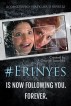
Erinyes by George Saoulidis. $4.99 from Smashwords.com
When a sheltered teenager starts noticing a hazy face following her in her photographs, she begins to investigate an urban legend. But will she uncover the truth when she gets in trouble with a technology corporation, when an enigmatic hacker starts telling her conspiracy theories and when the hazy face becomes all too real and starts chasing her non-stop?

Tuesday, September 24, 2013

For 'Person of Interest' Season 3 Premiere Day: the John Reese Family Tree

Tuesday, September 24, 2013: the season premiere of Person of Interest, going into its third season.

When we left off at the end of season 2, The Machine had been set free, Root was recovering from a gunshot wound in what appeared to be a mental health hospital, Sam Shaw appeared to have joined Finch and Reese, and Carter had, for some reason, saved the life of Carl Elias. Kara Stanton's virus has wreaked its havoc, and it's unclear at this point how Finch and Reese will continue to save lives.

This family tree isn't originally my idea. Like so many great things in life, it started with Tumblr. Specifically, with this post posted by the blogger whose blog is Obsesiones Mias. (I feel like I should know her name, but I don't.) The contention of this post is that John Reese seems like he's a little superhuman because, perhaps, his distant ancestor was Kainan - a character in the film Outlander*, also played by Jim Caviezel. The character is an extraterrestrial. Kainan crash-landed on Earth in an Iron Age Viking settlement and, after defeating the space dragon he'd brought with him, he became king of the Viking clan.

At a later time, the Obsesiones Mias blogger said something about adding to the Reese family tree, which got me thinking, until at last I came up with:


It was surprisingly hard to find a way to make fictional family trees online. I gave up the search and instead used a scrapbooking website, CropMom. It's not the most elegant scrapbook page ever - I made it in a bit of a rush.

Let me break down the line of descent:

We can begin the John Reese family tree with Mary.


Her son, Jesus...


...married Mary Magdalene (well, that's one possible scenario, isn't it?)...


...who was pregnant at the time of Jesus' death. Different versions of folklore disagree as to whether the couple had a daughter or a son, but let's say, hypothetically, they had a daughter. This is actually an image said to represent Mary Magdalene, but it could be how the daughter of Jesus and Mary looked. (Some people say her name was Sara. I can't remember if her name is mentioned in The Da Vinci Code or not.)


Now let's say that Sara has many generations of descendants - hundreds of years go by. Some say that the Merovingian kings of France were her descendants. Imagining that she was the ancestress of a royal line, let us speculate that some of her royal descendants migrated northward, to the Viking regions. Let's say that one of her descendants was the warrior-king Hrothgar.


Hrothgar is on the viewer's left, portrayed by John Hurt. You may remember John Hurt best as Mr. Ollivander from the Harry Potter movies; I do too, but I also like to think of him as Winston Smith in Nineteen Eighty-Four. You may also remember that Hrothgar is the name of the king whose realm is under attack from Grendel in Beowulf, but I don't think the Outlander movie is meant to imply that this is the same Hrothgar.

Hrothgar's daughter, Freya - a warrior princess - marries Kainan, the outlander.


Presumably, they have children who have both royal DNA and Kainan's extraterrestrial DNA. We'll just assume Kainan's DNA is close enough to that of Homo sapiens that he and Freya can interbreed without difficulty. Their princes and princesses have descendants, some of whom may end up in France (or back in France, if that's where we imagine Mary Magdalene and her offspring ended up).

Hundreds of years later, one of their descendants may have been Edmond Dantes.


Dantes, after many long years of suffering, married Mercedes.


I imagine they had several children together (at the end of the movie, Mercedes rests her hand on her belly, which I always think means she's already pregnant again), but their oldest was Albert. If Albert resembles Superman, it's probably because of the Kainan DNA. Superman is an alien, too.


Albert Dantes, born in the early 1800s, had descendants who, several generations later, included John Reese.


Maybe Reese is the last of this bloodline. But maybe there's a baby Carter-Reese in his future.


*Not to be confused with the 2014 movie based on Diana Gabaldon's time-travel romance novel also called Outlander.

If you need me, I'll be counting down the hours until 10 p.m. Eastern.


Follow on Bloglovin

Tuesday, August 13, 2013

A-Z Book Survey (Nicked From Somewhere Between the Pages)

I found this fun book survey at Somewhere Between the Pages, and it was created by The Perpetual Page-Turner.

Author you've read the most books from: Charlaine Harris, probably, since I read the entire Sookie Stackhouse series

Best sequel ever: Shadow of Night by Deborah Harkness

Currently reading: Insurgent by Veronica Roth


Drink of choice while reading: at home, coffee; at a Starbuck's, tropical green tea

E-reader or physical book? Both

Fictional character you probably would have actually dated in high school: Augustus Waters

Glad you gave this book a chance: The Hunger Games

Hidden gem book: Master by Colette Gale

Important moment in your reading life: Finishing the first draft of The Smell of Gas, because once I knew I could finish writing a book, I knew I could write whatever I wanted to read that wasn't written yet

Just finished: Hotter Than Hell by Jackie Kessler

Kind of books you won't read: I generally don't read hard science fiction or high fantasy, and I'm not much of a mystery reader either - but I'll give any genre a chance if there's a particularly well-written example

Longest book you've read: probably From Here to Eternity. It's 860 pages (and worth every second of the time it takes to read)

Major book hangover because of: The Count of Monte Cristo


 Number of bookcases you own: One free-standing, two built-in

One book you have read multiple times: Wuthering Heights

Preferred place to read: Comfy spot on the couch

Quote that inspires you/gives you all the feels from a book you've read: "Tell all the Truth, but tell it Slant/Success in circuit lies..." ~ Emily Dickinson

Reading regret: I waited too long between each of the His Dark Materials books. If I'd known how great The Amber Spyglass is, I'd have read them one right after another

Series you started and need to finish (all books are out in series): the original Vampire Diaries series, the ones actually written by L.J. Smith. I have one more to go.

Three of your all-time favorite books: Alice's Adventures in Wonderland/Through the Looking Glass, Little Women, Slaughterhouse-Five

Unapologetic fangirl for: Harry Potter

Very excited for this release more than all the others: Deborah Harkness's third All Souls Trilogy book

Worst bookish habit: reading in the bathroom

X marks the spot (the 27th book from the top left of your shelf): The Simpsons: An Uncensored, Unauthorized History by John Ortved


Your latest book purchase: Hm, my last few acquisitions were freebies, so I think my last actual purchase was of three Nalini Singhs at the discount book store

ZZZ-snatcher (the last book that kept you up way late): Lover at Last by J.R. Ward

Follow on Bloglovin


Monday, August 5, 2013

'That Girl Started Her Own Country' by Holy Ghost Writer

In January, when I read The Sultan of Monte Cristo by Holy Ghost Writer*, I didn't quite know what to make of the modern sequel to Alexandre Dumas' classic The Count of Monte Cristo (which I also read in January of this year). Recently, when the author approached me on Goodreads about reading the sequel, That Girl Started Her Own Country, I didn't know what to expect.


I was pleasantly surprised by That Girl Started Her Own Country; I really enjoyed it. It appears to be only loosely linked to Sultan - the main character, Zaydee, is the great-granddaughter of Raymee, an original Holy Ghost Writer (HGW) character introduced in Sultan. Early in That Girl, Zaydee is arrested and taken in federal custody in the United States. She won't reveal her real name, and lets the authorities believe she's royalty from another country (a very Count of Monte Cristo thing to do). She intends to become just that - the sovereign of her own micronation, which will be largely a gynecocracy.

It's strongly suggested that Zaydee is the real-life inspiration for Lisbeth Salander in Stieg Larsson's Millennium trilogy that starts with The Girl With the Dragon Tattoo. HGW makes mention of time Zaydee has spent in psychiatric institutions; since this is the reader's first introduction to Zaydee, it appears that HGW assumes the reader is familiar with Lisbeth's story (which includes psychiatric hospitalization) and can make the connection. Zaydee also uses the nickname "Pippi Longstocking," which is likely another reference to Lisbeth, who is sometimes thought to be an adult version of the beloved children's book character. I am a bit of a disadvantage here as a reader, since I haven't read any of Larsson's novels. (I did read the summary of The Girl With the Dragon Tattoo on Wikipedia, though.)

Larsson himself becomes a character in the novel; he's Zaydee's former boyfriend, a journalist who wrote the Millennium books under a Swedish pseudonym, but who is actually an American named Steve Larson. In this novel, he's investigating the Bilderberg Group (a favorite topic of conspiracy theorists, or individuals we might categorize by the less-pejorative term "proponents of non-mainstream theories"), and Zaydee is giving him false leads so that his real investigation does not endanger his life and his work.

Granted, this novella suffers from some of the same faults as its predecessor: HGW gives us tantalizing bits of information, but those hints don't necessarily get fully explained by the end of the novel. The narrative doesn't always flow very smoothly, jumping from place to place and introducing new characters without much transition. That said, all of the various theories and characters who pop up in these books may very well be explained and unified by the time this series is concluded. I'm more confident in the author's ability to pull off an overarching storyline than I was when I'd only read Sultan.

I also happen to know from conversing with the author and glimpsing a later volume that the Sultan (the former Edmond Dantes), Haydee and Raymee make an appearance in a later volume.


The next book in the series is The Boy Who Played With Dark Matter.

Disclosure: The author provided a paperback copy of this book to me at no cost. The opinions presented here are entirely my own. I am an Amazon.com affiliate; if you make a purchase from Amazon after clicking through a link on my site, I'll earn a commission of a few cents.

*HGW sponsors an ongoing contest; whoever can guess his true identity wins $1,000!

This is an affiliate link:

Erinyes by George Saoulidis. $4.99 from Smashwords.com
When a sheltered teenager starts noticing a hazy face following her in her photographs, she begins to investigate an urban legend. But will she uncover the truth when she gets in trouble with a technology corporation, when an enigmatic hacker starts telling her conspiracy theories and when the hazy face becomes all too real and starts chasing her non-stop?

Monday, May 27, 2013

#BookReview 'Master: An Erotic Novel of the Count of Monte Cristo' by Colette Gale

Nobody stands in between me and my dead French man, 'cause it's me and Mr. Alexandre Dumas pere. If I may briefly recap my history with Dumas' classic The Count of Monte Cristo:

1) I saw the Jim Caviezel movie, loved it, read a summary of the book on Wikipedia and decided I would not like to read it.

2) I got The Black Count: Glory, Revolution, Betrayal and the Real Count of Monte Cristo by Tom Reiss from Amazon Vine. I read it, loved it, and decided I would read the Dumas novel.

3) I read The Count of Monte Cristo (an abridged version, unfortunately) in January 2013 and thought it was awesome. Afterward, I had withdrawals.

4) In the midst of my withdrawals, I read The Sultan of Monte Cristo, which I found quite disappointing.

5) I found out about Colette Gale's Master: An Erotic Novel of the Count of Monte Cristo.


Readers, I'm happy to announce that Master met all of my expectations. I was extremely pleased with this retelling of the the Dumas novel, largely from the point of view of Mercedes. This novel does some things that I really appreciate, including:

1) It gives Haydee, a character I like, a happy ending with someone other than the Count. In Gale's telling, Haydee is in the love with Ali, the Nubian man whose life the Count saved, and who therefore put himself in servitude to the Count for ten years to repay the debt. I should have seen it before - Haydee and Ali are a perfect couple! She's a Greek princess of the Ottoman Empire, and he's a Nubian prince. She's also a virgin, and Ali is too honorable to take her virginity. She engages in a relentless seduction campaign.


Near the beginning, Haydee does attempt to seduce The Count, but he clearly has very little interest in her. He's too rattled by all his feelings when he sees Mercedes again.

2) It gives us some moments of stolen passion between Max and Valentine. There are a couple of nice scenes in which they meet, can only speak and touch through the small holes in her father's garden wall, and have to conduct their secret romance through the iron fence Pyramus and Thisby-style.

3) Like the movie, it allows Mercedes and the Count/Edmond the possibility of living together happily ever after. Assuredly, there are many angsty moments along the way. By the final chapter, however, they've come to forgive each other for everything that's happened since Edmond's unjust imprisonment. The implication is that they'll be permanently reunited in Marseilles, in the little cottage Mercedes inherited from her father.

The best erotic scenes in this book are the ones in which the reader can feel the love. One of the least sexy erotic scenes is the sort of threesome involving the Count, Mercedes and Fernand. Nobody loves Fernand, not even when he is portrayed by the lovely Guy Pearce, because he's a slimy, evil bastard. In this retelling, Gale follows a traditional romance novel convention you can read about in Beyond Heaving Bosoms: that gay male character = evil character. Fernard, although wanting Mercedes is part of his motivation for betraying Edmond Dantes, prefers men.


We do not love this convention, obvs. But in Gale's defense, Fernand Mondego Comte de Morcerf is evil gay, straight or bi.

It also feeds into another convention: that if your heroine is married to someone other than your hero, you must go out of your way to assure the reader that the marriage is loveless and, for the most part, sexless. You want all the true love and mind-blowing sex to be between your hero and heroine. (Just because we know these are the conventions, this doesn't mean we don't enjoy the romantic ones.)


Just ignore the small mistake in this video I made, in which I refer to Colette Gale as "Colleen."

When I first heard of the name "Colette Gale," I assumed it was a pseudonym, an homage to the French writer Colette and to beloved fictional character Dorothy Gale. I was at least partially right. Colette Gale, I learned from someone on Goodreads, is a pen name for NYT bestselling author Colleen Gleason, who also writes under the pen name Joss Ware.

Disclosure: I purchased this book with my own money from Better World Books. My review is completely voluntary, not influenced by any person or organization, and represents my own opinion.

Sunday, April 14, 2013

I Need Another Book Like I Need A Hole in the Head, But...

I wasn't going to buy any more books for a while. In May, the Amazon Vine program is changing; currently, you have to write reviews of 80% of the items you've ordered to get another two items, but in May it'll be 100%. That means by the third Thursday in May, I'll have to have read three books:

Hemingway's Girl by Erika Robuck - I'm currently on page 25, and I've got to say the heroine, Mariella, is pretty hard not to love.


The Difference a Day Makes (Perfect, Indiana: Book Two) by Barbara Longley, the sequel to Far From Perfect

The Watcher in the Shadows by Chris Moriarty, the sequel to The Inquisitor's Apprentice

...so I'll be busy reading these, and also Covet by J.R. Ward. This is the second time I've tried to read her non-Black Dagger Brotherhood series, and I just couldn't get into it. It's actually pretty good - the main character, Jim Heron, seems to be a building contractor but actually has secret assassin skills gained from covert military ops. He's like Mr. Reese on Person of Interest, but instead of a reclusive billionaire boss he's now working for mysterious supernatural beings. His first "number" is Vin diPietro, a real estate mogul who, against his wishes, is also a medium who gets flashes of when people are going to die. In seven books, Jim will battle the seven deadly sins, starting with attempting to save Vin from greed.

Covet will also hold me over until I get my hands on the book I really want, Ward's Lover at Last. I'm gonna need Qhuinn and Blaylock to get their HEA - finally. (Sidenote: Thanks to this vampire/goddess article on SecretSun.blogspot.com, I remembered that the bisexual vampire played by Catherine Deneuve in The Hunger was named Miriam Blaylock. Did J.R. Ward name her gay vampire character after Miriam?)

So my reading dance card was quite booked already when I read "The Smuttiest Fanfiction Stories Starring Highbrow Literary Characters" by Emily Temple. #8 on the list is Mitzi Szereto's Pride and Prejudice: Hidden Lusts. #6 was the one that really got my attention, though:


"An Erotic Novel of the Count of Monte Cristo." Apparently it takes place after the end of the Dumas novel, and is about the Count and Mercedes - not the Count and Haydee. What happens to Haydee? I hope she doesn't make good on her statement that she'll die if the Count leaves her. I don't think it would be possible to exaggerate how badly I need to know what happens in this book - so I ordered it from Better World Books.

I read The Count of Monte Cristo in January. I desperately wanted the book to be longer. I read an abridged version, but even so, the ending left too many questions unanswered. Burning with questions, I read the modern sequel The Sultan of Monte Cristo by "Holy Ghost Writer." It was poorly written and unsatisfying for a huge number of reasons.

So please, Colette Gale, do not disappoint me.

Colette Gale sounds like a false name to me. Not just because Colette is a beautiful pen name in reference to the wonderful hell-raising 20th century French writer Sidonie-Gabrielle Colette who was known professionally only by her last name. (I learned the cooking term aspic from one of her short stories - but I digress.) Also because "Henry Gale" is the false name that Ben Linus initially gives the survivors on Lost - the name of Dorothy Gale's Kansas-bound uncle to go along with his Ozian tale of arriving on the island via hot air balloon. If the name "Colette Gale" is in tribute to both a beloved, prolific French author and the beloved, prolific U.S. author L. Frank Baum, then I expect a high quality of very imaginative and sensual work.

Oh, and as a nod to the title of this post, I now present for your amusement (I hope) "Call Me a Hole," a musical mash-up of the vocals from Nine Inch Nails' "Head Like a Hole" and the melody of Carly Rae Jepsen's "Call Me Maybe."

Friday, March 22, 2013

Book Haul! Austen, Dumas, Meyer and more

Yesterday was my library's once-monthly used media sale, which I attend a few times a year (at one time, with my grandma, although she's stopped reading due to health problems - that is, until she indulges herself in an e-reader. I hope she'll do so for her birthday, coming up this weekend. 

But I digress. 


My Haul:


The Books:


1.The Host by Stephenie Meyer. I haven't read it yet. It's the only novel by Stephenie Meyer that I haven't read. Perhaps I'll get to it by the time the movie comes out on DVD and I rent it on Netflix. I understand it's something about aliens. 


2. The unauthorized Twilight companion by Lois H. Gresh, who also wrote The Truth Behind 'A Series of Unfortunate Events'. I wasn't terribly impressed with her SOUE book, but I was willing to give the Twilight one a chance for 25 cents. 


3. An unabridged The Count of Monte Cristo. It's a little rumpled, but at least this time I won't miss out on the lesbian elopement. (I promise I'll never read an abridged classic again. I didn't even do it on purpose this time.) 


4. Darkest Highlander by Donna Grant. Granted, it's the 6th book in the series, I only own 1-3 and I've only read 1 (Dangerous Highlander; review here), but I'll still have a head start when I someday eventually finish the Dark Sword series.  


5. Jane Austen's Northanger Abbey. I've never read it before. I do think that when I took the "Which Jane Austen Character Are You?" quiz, I got Catherine Morland. I did suggest the other day that Joseph Gordon-Levitt should star in a period-piece adaptation by a beloved female author - as Christian Bale did in Little Women and Tom Hardy did in Wuthering Heights - and could play Henry Tilney. 


(That Tom Hardy is an unlikely choice for Heathcliff will be a rant for another day.) 


The Movies: 


1. The Hunger Games. I saw it twice, but I didn't own it until now. 


2. Becoming Jane. I haven't seen it, but Anne Hathaway as a young Jane Austen - how bad could that be? It also has James MacAvoy (Mr. Tumnus the faun), Julie Walters (Molly Weasley) and Maggie Smith (Minerva McGonagal). 


3. The Orlando Bloom Three Musketeers. I haven't seen this one either. To be honest, I don't have very high hopes for it - the previews looked like more special effects than story - but it's a Dumas adaptation and it's been ages since we had a big Hollywood Musketeers movie. (Coincidentally enough, the last one was in 1993, the year I wrote about in yesterday's music post. If we count The Man in the Iron Mask, which came out in 1998, it's still been 15 years.) 


4. Best of all, A Midsummer Night's Dream (1999), with Christian Bale, Stanley Tucci, Rupert Everett and Michelle Pfeiffer, among many other stars. I've seen this one literally dozens of times, starting when it came out in theaters. It's hard to believe I didn't own it, but I didn't until now. 


Mmm, Demetrius No-Pants. http://pinterest.com/pin/46936021088470209/