Erin O'Riordan writes smart, whimsical erotica. Her erotic romance novel trilogy, Pagan Spirits, is now available. With her husband, she also writes crime novels. Visit her home page at ko-fi.com.
"Sexy Tales of Strong Women." What's not to love about that subtitle? Editors M. Christian and Sage Vivant chose well, because this is not only good erotic writing but good writing, period. Not all of it is explicitly erotic, by the way. Some of it is gently suggestive. For added fun, each tale begins with a quote from an extraordinary real-life woman, from Bette Davis to Pamela Anderson to Barbra Streisand.
My favorite stories in this anthology were:
"Bullbitch 8.0" by C.B. Potts. Cowgirls are all Amazons anyway, right? But Lynette is a special -breed of cowgirl - she's a rodeo bull rider.
"The Spear of Janice Kienan" by Chris Bridges. It shows just how deeply the modern woman can get in touch with her inner Amazon.
If only it were possible to combine Chris Bridges the erotica writer with Chris "Ludacris" Bridges the rapper/actor, because that combined guy would be a hell of an erotic songwriter.
"Amazon" by M. Christian. A sexy tale of Sapphic love among burlesque dancers, one of whom has dwarfism, and the twist of the story is that the shortest woman is the most Amazonian of all.
"Punk Syster Morris" by Bryn Colvin. This was my second-favorite story of the book, about an unsuspecting man who thinks he's only going to a rock show with his buddy and ends up finding so much more.
"The Hands of a Princess" by Catherine Lundoff*. Viking warrior Commander Agnes "The Bloody" Helensdottir will go to any length to serve her king, even it means pleasing his like-minded daughter.
"Sex With Ducks" by Hannah Strom-Martin. Worry not: Ducks is a man's name. He's a quirky writer, but our narrator learns how to exploit his hidden desires. Best phrase:
"When dealing with writers it breaks down like this: a regular writer is your average everyday megalomaniac. Like every artist, there's a part of them that believes--nay, knows--the world turns for them. Most are harmless. Some are obnoxious. Some are Bret Easton Ellis."
Technically, my editor-inner-ear tells me, it should say, "A part of them believes--nay, knows--the world turns for them, as does a part of every artist."However, that does not flow as smoothly.
"The Girl From Pellucidar" by Jason Rubis. Purporting to be about a woman who attempts to make peace with her ex-boyfriend's unpredictable new girlfriend, the story then takes an outrageous turn and ends up much, much better than I could have predicted.
"Thalea of the Mountain" by Kristina Wright. This has the mythic, timeless quality of a really good fairy tale, one that could have come from anywhere in the world. It's beautiful written, but then again, I'd expect nothing different from Wright.
"The Bearded Lady" by Madeline de Chambrey. My favorite of the anthology, and it's one of the merely suggestive rather than explicitly erotic ones. It's about the deep connection between a man who's in love with a woman who barely acknowledges him, as he nurses her through breast cancer. She survives, the ending is triumphant, and I think I actually pumped my fist as I read the last page. Also, a woman with a beard may not be considered traditionally beautiful by Western societies, but de Chambrey manages to convey precisely how this "unfeminine" feature is part of our heroine's allure.
"Blue Girl" by Kathleen Bradean**. Dystopian erotica in a Puritanical society, but one that's completely imaginable. Damn fine writing in this one.
"Sixteen Hands" by Paula L. Fleming. The heroine of this tale is a jockey, and she's an Amazon when she's on her horse. Her unexpected lover fits the more traditional Amazonian profile. This tale is full of passion and tenderness that really resonated with me.
"Legend" by Sage Vivant. This one explores the gap between reality and perception, and it's funny.
I bought this book with my own funds and was not obligated to review it in any way.
"An artistic collection of more than 50 drawings featuring unique, funny, and poignant foreign words that have no direct translation into English.
"Did you know that the Japanese language has a word to express the way sunlight filters through the leaves of trees? Or that there’s a Finnish word for the distance a reindeer can travel before needing to rest?
"Lost in Translation brings to life more than fifty words that don’t have direct English translations with charming illustrations of their tender, poignant, and humorous definitions. Often these words provide insight into the cultures they come from, such as the Brazilian Portuguese word for running your fingers through a lover’s hair, the Italian word for being moved to tears by a story, or the Swedish word for a third cup of coffee.
"In this clever and beautifully rendered exploration of the subtleties of communication, you’ll find new ways to express yourself while getting lost in the artistry of imperfect translation."
The Random House author bio:
"ELLA FRANCES SANDERS is a twenty-something writer and illustrator who intentionally lives all over the place, most recently Morocco, the United Kingdom, and Switzerland. She likes to create books with real pages while drawing freelance things for charming people, and she is not afraid of questions or bears. You can find her at ellafrancessanders.com."
My review:
This is the kind of book you'll read in an hour or less - perhaps much less. Yet you'll want to keep coming back to it again and again, especially if you're a person such as myself who's obsessed with words. In fact, it would make an excellent gift for any "words person." The design of this book is very lovely. and Sanders' illustrations are gorgeous, making this little volume a joy to flip through.
The words themselves, which come from a wide variety of cultures as diverse as the indigenous people of Tierra del Fuego and the Malay peninsula, are fascinating. A lot of them deal with emotions, and although the words may be unique to their cultures, the feelings are universal. I think I have felt all of them at some point.
Two of them deal with kinds of nostalgia for a place or a past to which one can never return, each with a slightly different connotation.
If you'd like a window into how people around the world think and communicate their thoughts, this is the book for you.
I received this book from Blogging for Books for this review. It represents my own honest opinion.
Content Warning (CW) for discussion of child abuse. The Bourne Identity
YouTube recommended this video to me the other day.
This video is a bit silly. Mario is essentially just reading an article he found on the (unaffiliated with him) website The Vigilant Citizen. The article is from June 2012, and it includes photos of Twilight stars Robert Pattinson and Kristen Stewart - separately - in photo shoots from glossy fashion magazines. The article makes reference to MK Ultra, a favorite among conspiracy theorists a.k.a. alternative media sources. (No judgment - remember, I like to examine so-called conspiracy theories through the lens of modern folklore and urban legends.)
Here's how the theory basically goes, according to my understanding:
- During/after the Korean War, the U.S. government saw the American prisoners of war were being manipulated by their North Korean captors to say anti-American things. (This part seems to be factual.)
- As a defense strategy, the U.S. began researching ways in which the human mind can be controlled. The "MK" part stands for "Mind Kontrol." Part of the U.S. government experiments under this program involved giving doses of hallucinogenic drugs, including LSD, to people without their knowledge or consent. (This part is factual and documented.)
- Although the program was alleged to have ended in the 1970s, it continues today. Actors, musicians, and other popular culture figures undergo mind control experimentation that makes them into Jason Bourne-type "puppets" who can be triggered by their handlers into performing whichever action their handlers want them to take. The process involves taking these people into a secret place where they are abused and tortured until their minds split like people with dissociative disorder. They come out with alternate personalities that don't know what the other personalities are doing. Common triggers include Disney movies, Alice in Wonderland symbolism, and Wizard of Ozsymbolism (This part is speculative.)
Mario is an interesting vlogger. I don't see eye to eye with him on many, many issues. He's anti-feminist, for example, and he doesn't believe in the theory of evolution. I'll never quite understand why a certain segment of the Christian population has to reject the scientific method, but hey, that's just me (and people who believe in a rational universe). But I think he's basically coming from a well-intentioned place, even if his "facts" are intellectually questionable. I say this so you know my intention is not to mock or disrespect him. On a person-to-person level, I kinda like the guy. Like me, he was raised as a Roman Catholic. He's a French Canadian who learned English as a second language.
Ellie Goulding's "Lights"
At this point, I have been exposed to enough YouTube and blog material by The Vigilant Citizen, Mario the Vigilant Christian, and others to be able to "talk the talk" of MK Ultra, as you'll see below. If I were going to pick out a song to use as an example of mind control talk in popular media, that song would be "Lights" by Ellie Goulding.
I know you can interpret the lyrics of just about any song to mean whatever you want them to mean. In college I once wrote a paper about how the lyrics of Hole's song "Violet" could be interpreted as a warning about the dangers of alcohol abuse and another paper on how the Beatles song "I Am the Walrus" was John Lennon's plea for American authors, but especially Edgar Allan Poe, to be taken as seriously by the literary world as classical British authors. I knew those things weren't intended by the songwriters, but at the time I thought it was humorous to tortuously over-interpret things for allegedly comical effect.
So, please take this with a large grain of salt and, perhaps, a rocks margarita.
I hear "Lights" quite often on the station Tit Elingtin and I listen to on our day job as remodeling contractors. We listen to an "easy listening" station, while essentially means Top 40 radio without the rap songs. I liked the way the song sounded before I even listened to all the lyrics. I started to like Ellie Goulding even more when I heard her song "High For This (The Weekend Cover)." Then, of course, she contributed the song "Beating Heart" to the Divergentfilm soundtrack. It was one of my favorite songs for a while.
BUT I can't stand her song "Burn." I just find the very high-pitched section of this song incredibly annoying. Sorry. Even the best musical artists have an occasional fail. Now back to "Lights."
According to SongMeanings.com, which lets anyone add their comments on what they think the song means, the simplest explanation of this song is that it's about Goulding's childhood fear of the dark. She was afraid of the dark, so she had to sleep with a light on in order to feel safe.
Other theories think the song refers to:
- A battle with depression or another mental illness, such as schizophrenia
- Childhood sexual abuse
- An encounter with an extraterrestrial spacecraft and/or Goulding herself being from another planet.
Lyrics
Let's look at the lyrics of "Lights."
I had a way then losing it all on my own I had a heart then but the queen has been overthrown And I'm not sleeping now, the dark is too hard to beat And I'm not keeping now the strength I need to push me You show the lights that stop me turn to stone You shine it when I'm alone And so I tell myself that I'll be strong And dreaming when they're gone 'Cause they're calling, calling, calling me home Calling, calling, calling home You show the lights that stop me turn to stone You shine it when I'm alone home Voices I play within my head Touch my own skin and hope that I'm still breathing. And I think back to when my brother of my sister slept In an unknown place the only time I feel safe You show the lights that stop me turn to stone You shine it when I'm alone And so I tell myself that I'll be strong And dreaming when they're gone 'Cause they're calling, calling, calling me home Calling, calling, calling home You show the lights that stop me turn to stone You shine it when I'm alone home Light, lights, lights, lights Light, lights, lights, lights (Home, home) Light, lights, lights, lights Light, lights You show the lights that stop me turn to stone You shine it when I'm alone And so I tell myself that I'll be strong And dreaming when they're gone 'Cause they're calling, calling, calling me home Calling, calling, calling home You show the lights that stop me turn to stone You shine it when I'm alone home Home, home Light, lights, lights, lights Light, lights, lights, lights... Writers: Ash Frances Howes, Lorin Ashton, Ellie Goulding, Richard StannardCopyright: Sony/ATV Music Publishing (Uk) Limited, Major 3rd Music Limited, Amorphous Music, Global Talent Publishing Interpretation The first line could refer to a childhood fear of the dark: "I had a way then (when I was a child) of losing it (losing my fear of the dark) all on my own (I simply turned on my night light)."
Creative Commons image by Marple Bridge Photography
The second line, though, seems a little strange in that context. The queen has been overthrown? That fits more with the mental illness theory - the "queen," or rational part of her mind, has been "overthrown" or overwhelmed by the illness. It also makes sense according to the childhood sexual abuse theory: she had a heart then (as a child, before she was abused) but then she learned to shut off her feelings after "the queen was overthrown," which could refer to an adult authority figure, such as her mother, being unable to keep her safe from the abuse. Of course, both mental illness and sexual abuse could be considered part of MK Ultra-type conditioning - a child who is being groomed to be a pop star is abused until her mind splits, and that way she'll be easily controllable.
The chorus starts off with, "You show the lights that stop me turn to stone/You shine it when I'm alone/And so I tell myself that I'll be strong/And dreaming when they're gone." Now this seems to be saying the opposite of what we might expect. The lights were supposed to protect her from fear of the dark, right? So why is saying that the lights "stop me?" This speaks to the alien theory, I suppose: the lights that stop her are the sudden lights from a spacecraft that appear. She is either stopped simply by curiosity, or paralyzed with fear of them, or the extraterrestrial beings have stopped her somehow.
Some theorists, depending on their point of view, would go so far as to claim that aliens are synonymous with demons. They say that when people think they are abducted by aliens, they are really being tormented by fallen angels. If we are going with the MK Ultra theory, then we'd probably say that the handlers who perform the abusive experiments disguise themselves as aliens--or that they're somehow in league with actual aliens, who may or may not be fallen angels.
Creative Commons image by Mingle Media TV
The "I tell myself that I'll be strong" could refer to being strong in the dark when there are no lights - a simple enough explanation, although it doesn't seem to match up with "lights that stop me, turn to stone" line. What does turning to stone mean, anyway? Shutting off one's emotions so that one is as imperturbable as stone, perhaps, which fits with the abuse theory.
"Dreaming when they're gone" seems to fit this theory as well; the child cannot sleep until her abusers are gone. What would "they're" refer to in the context of fear of the dark? Nightmares, perhaps. Maybe she simply means that sleeping in the dark makes her prone to nightmares.
The "calling me home" of the chorus is why some people interpret this song to mean that Goulding herself has come from the star people. The lights call her home? Why, that's her fellow extraterrestrials coming back to claim her. Alternatively, we might say that the lights calling her home are some kind of signal or trigger that her handlers use when it's time for her to "come home" to be reprogrammed. The "reprogramming" process is painful and frightening, and that's why the singer seems to be so scared and depressed.
In the second verse, "Touch my own skin and hope that I'm still breathing" sounds a bit ominous, but fear - including simple childhood fear of the dark - could do that to a person. But then she sings something rather strange: "And I think back to when my brother of my sister slept/In an unknown place(,) the only time I feel safe." The only time she feels safe is when her brother and sister slept in an unknown place - now that seems odd. If a child were simply scared of the dark, wouldn't we expect her to say that she only felt safe when her brother and sister slept in her room with her, or when they were in the house with her - sort of a "safety in numbers" feeling? What is the "unknown place?" Is she saying that she wants her brother and sister to sleep away from where she is, because wherever she is is unsafe, and she wants to keep them safe? That line really makes it seem as if something other than mere darkness frightened her when she was a child.
In short, although this song is supposed to be about using light to ward off fear of the dark, the lyrics actually seem to be suggesting exactly the opposite - that the lights are failing to ward off the fearful thing that the dark brings, whatever that thing may be. But only the songwriters know for sure what they were thinking.
Emily arrives at Westbury Hall with a job to do. She’s to clean and conserve all of the books in their impressive library, preserving them for future generations. Not long into her stay at the house, she bumps into the night guard, George. She’d expected an old, balding guy with a comb over, so the hunky chap she actually meets is a very pleasant surprise. The introductions complete, George leaves Emily in peace to get on with her job. But when a falling photograph sets off a chain reaction of ghostly events, Emily and George are thrown together in order to find out who—or what—is causing them. Their investigation uncovers a tragic past, a lost love, and a stunning secret.
PLEASE NOTE: This is a revised and extended of a previously published title, Love Through Time.
Emily received some strange looks and frowns from the people she passed as she walked across the graveled drive towards the front entrance of Westbury Hall. She could appreciate their confusion. It was closing time for the stately home and the last of the visitors were being politely ushered out of the building, yet she was heading inside. What’s more, she’d been invited. She had a job to do.
An elderly lady stood in the porch smiling and nodding as she held the door open for those departing the property. Most of them seemed in no hurry to leave, stopping to make comments to the woman, thanking her for a lovely visit and so on. Emily waited patiently, allowing the patrons to leave before attempting to get in. When the staff member—most likely a volunteer, Emily thought—caught sight of her, she gave her a polite nod of acknowledgment.
Finally, the last of Westbury Hall’s visitors moved out, leaving Emily free to enter. Climbing the single stone step to the threshold of the front porch, she took the hand that had already been offered to her.
Shaking Emily’s hand with a surprising firmness, the woman said, “You must be Miss Stone.” Her smart appearance and the intelligence in her eyes indicated that despite her advancing age, she was far from past it, “I’m Mrs. Thompson, house supervisor.”
“I am,” replied Emily, dropping her hand back to her side, “but please, call me Emily. It’s lovely to meet you. So, house supervisor? Do you live on site?” Not a volunteer, then, but a paid member of staff.
Indicating Emily should step inside the entrance hall, Mrs. Thompson proceeded to close and lock the porch and front doors of the house, securing them in.
“I do,” the older woman said, turning back to face Emily, “I have rooms in a separate building just off the back of this one. So you needn’t worry about me disturbing you.”
“Oh no,” said Emily, worried she’d inadvertently rubbed Mrs. Thompson up the wrong way, “I didn’t mean that. I was just curious, that’s all. You’re more than welcome to see me at work, Mrs. Thompson, although I’m afraid you won’t see anything terribly exciting.”
Mrs. Thompson smiled now, the warmth reaching her eyes. Emily almost sagged with relief. She’d yet to see the extent of the work she had to do, but she’d been told it was no easy task, so she could be here for some time. The last thing she needed was to upset any of the staff.
“Oh, you’d be surprised, my dear. This is a fascinating old place. Of course, all these old houses have history, but Westbury Hall’s is particularly rich.”
Emily smiled. The woman’s enthusiasm was infectious. “Well then,” she replied, “I can’t wait to learn more about it. I hope you’ll feed me some historical tidbits throughout the time I’m here?”
Mrs. Thompson gave an enigmatic smile. Then, startling Emily somewhat, she turned smartly on her heel and walked deeper into the house. “Come, my dear, I won’t hold you up any longer. I’ll show you to the library, where you’ll soon start uncovering Westbury’s illustrious history for yourself.”
*****
Author Bio:
Lucy Felthouse is a very busy woman! She writes erotica and erotic romance in a variety of subgenres and pairings, and has over 100 publications to her name, with many more in the pipeline. These include several editions of Best Bondage Erotica, Best Women's Erotica 2013 and Best Erotic Romance 2014. Another string to her bow is editing, and she has edited and co-edited a number of anthologies, and also edits for a small publishing house. She owns Erotica ForAll, is book editor for Cliterati, and is one eighth of The Brit Babes. Find out more at http://www.lucyfelthouse.co.uk. Join her on Facebook and Twitter, and subscribe to her newsletter at: http://eepurl.com/gMQb9
Author Bio: REBECCA MEAD is a staff writer for The New Yorker and the author of One Perfect Day: The Selling of the American Wedding. She lives in Brooklyn.
Random House's Book Blurb: A New Yorker writer revisits the seminal book of her youth--Middlemarch--and fashions a singular, involving story of how a passionate attachment to a great work of literature can shape our lives and help us to read our own histories.
Rebecca Mead was a young woman in an English coastal town when she first read George Eliot's Middlemarch, regarded by many as the greatest English novel. After gaining admission to Oxford, and moving to the United States to become a journalist, through several love affairs, then marriage and family, Mead read and reread Middlemarch. The novel, which Virginia Woolf famously described as "one of the few English novels written for grown-up people," offered Mead something that modern life and literature did not.
In this wise and revealing work of biography, reporting, and memoir, Rebecca Mead leads us into the life that the book made for her, as well as the many lives the novel has led since it was written. Employing a structure that deftly mirrors that of the novel, My Life in Middlemarch takes the themes of Eliot's masterpiece--the complexity of love, the meaning of marriage, the foundations of morality, and the drama of aspiration and failure--and brings them into our world. Offering both a fascinating reading of Eliot's biography and an exploration of the way aspects of Mead's life uncannily echo that of Eliot herself, My Life in Middlemarch is for every ardent lover of literature who cares about why we read books, and how they read us.
Mead has skillfully combined a memoir of her own life experience through the lens of George Eliot's novel, instructive incidents in Eliot's life as they relate to the novel, and opinions from the leading scholars of Eliot's work. It doesn't hurt that Mead is herself a talented writer. Taken together, these various elements add an extra dimension to my recent reading of the classic, increasing my appreciation for the lengthy work of fiction.
Here are some quotes from this book that I found particularly interesting and insightful:
“Reading is sometimes thought of as a form of escapism, and it’s a common turn of phrase to speak of getting lost in a book. But a book can also be where one finds oneself; and when a reader is grasped and held by a book, reading does not feel like an escape from life so much as it feels like an urgent, crucial dimension of life itself.”
“What's your favorite book?' is a question that is usually only asked by children and banking identity-verification services--and favorite isn't, anyway, the right word to describe the relationship a reader has with a particularly cherished book. Most serious readers can point to one book that has a place in their life like the one that Middlemarch has in mine.”
“Some very eminent critics writing in the decades immediately after the novel's publication felt that Eliot failed to maintain sufficient critical distance in her depiction of Ladislaw--that she fell in love with her own creation in a way that shows a lack of artistic control and is even unseemly, like a hoary movie director whose lens lingers too long on the young flesh of a favored actress. Lord David Cecil calls Ladislaw 'a schoolgirl's dream, and a vulgar one at that,' while Leslie Stephen complained 'Ladislaw is almost obtrusively a favorite with his creator,' and depreciated him as 'an amiable Bohemian.”
“Eliot was scornful of idle women readers who imagined themselves the heroines of French novels, and of self-regarding folk who saw themselves in the most admirable character in a novel, and she hoped for more nuanced engagement from her own readers. Even so, all readers make books over in their own image, and according to their own experience.”
“In the Life of George Eliot, John Walter Cross gave an intriguing account of Eliot's creative method. 'She told me that, in all her best writing, there was a "not herself" which took possession of her, and that she felt her own personality to be merely the instrument through which this spirit, as it were, was acting,' Cross wrote.”
I think some time I would like to read George Eliot's novel Daniel Deronda. It sounds good.
FTC Disclosure: I received this book from Blogging for Books for this review.
This is an affiliate link:
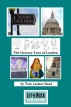
The Literary Tour of London by Tom Laimer-Read. $1.99 from Smashwords.com
Ladies and gentlemen, roll up one and all for the strolling tour of a lifetime! Follow in the footsteps of some of Great Britain's greatest writers! London is a city of literature and lust, poverty and riches, woe and wonder. Come experience the places that inspired and were influenced by some of the greatest writers of all time, and find out more about their fascinating lives.
Although I've never worked in a library, I find them to be fascinating and wonderful places. One of the most wonderful things about the library is that it makes so many resources available to a wide cross-section of the community...almost anyone, in fact. The public library is very democratic. The rich variety among library patrons gives rise to this book, which started as a Tumblr blog, of strange, unusual, humorous, and amusing incidents in the life of public library assistants and librarians.
This book is laugh-out-loud funny, but it also gives the reader a new appreciation for all the things librarians and their assistants actually do.
My favorite is the incident relayed on pages 145-146. A man who did not speak English as a primary language needed help accessing a website, fearing he might lose his job if he couldn't complete some online paperwork, but the website was malfunctioning. The library assistant TRACKED DOWN THE PHONE NUMBER OF THE WEB MASTER AND GOT HIM TO REWRITE THE CODE OF THE WEBSITE TO MAKE IT WORK PROPERLY. Wow - that's dedication. The man did not lose his job, and he showed up at the library WITH HIS ENTIRE FAMILY to thank her.
Cheers, workers of the public libraries of the world. You put information in the hands of the people who can be cranky, belligerent, drunk, users of unknown substances, distracted, or simply ignorant of a particular facet of life. You endure much with stoic poker faces and gentle good humor.
Appropriately enough, I checked out this book at a public library. I was under no obligation to write a review. This review represents my own honest opinion.


.jpg)


 The Literary Tour of London