Pages

Showing posts with label Norse myth. Show all posts

Monday, May 18, 2015

'Loving Loki' by Cheryl Pillsbury


I have much to say about this little book - some of it good, some of it not so good - but first, full disclosure: Cheryl Pillsbury is or was the publisher at AG Press, a small press for which I once did some editing. I edited poetry, fiction, and nonfiction for several authors, including Cheryl, only some of which I was paid for.

I don't think she ever had any bad intentions, but I do think she wasn't quite financially or organizationally prepared to deal with the publishing business. I didn't make money on the experience, but I did learn to be more skeptical of small press publishers I met online. It was a good learning experience overall.

As an editor of Cheryl's books, I noticed some consistent writing errors and overall poor sentence structure. To be perfectly fair, Cheryl is, for a large part, a fan fiction author writing for her own pleasure. She has written works using characters from several franchises, some of which have run her into occasional trouble with the copyright holders. This book can be thought of as a work of fan fiction, not of a copyrighted franchise but of Norse mythology.

I don't think it's completely forthcoming when the introduction states that the Marvel Comic Universe film franchise was not an influencing factor, though. For example, reference is made to Jane Foster, who is clearly a Marvel Comics character and not a person from Norse mythology. But that's okay. Authors are allowed to be inspired, although not allowed to infringe. They are two different things. Even bestselling author Linda Lael Miller admits she finds inspiration in TV, movies, and country music. The trick is to make the characters original enough that they are clearly your own creations.

Cheryl is a practicing Neopagan, and she claims in her introduction to the book that her work of fiction is based on the deities whom she worships. I don't have a problem with that. I wrote Shiva into Midsummer Night in a scene that is both reverential and erotic; I don't belong to any one religion, but I do love Hinduism's Shiva and Kali. They are some of my deities.

And Cheryl and I are certainly not the only ones who incorporate erotic writing into a form of religious worship or ceremony. See, for example, this piece of Easter meditation by Joan Borysenko. That said, you would not be completely out of your mind if you were to envision Tom Hiddleston in his role as Loki Laufeyson as the Norse deity described in the text.

The Brass Tacks:

Why Should I Read This Book?

Read this book is you've longed for erotic fan fiction featuring the Norse trickster god Loki in a relationship with an original character (OC).

Purchase link: http://www.lulu.com/shop/cheryl-t-pillsbury/loving-loki/paperback/product-22021581.html

Note that I am not an affiliate of Lulu.com and you going to the above URL will not benefit me in any way. I purchased a copy of this book with my own funds and was not compensated in any way for reviewing it.

Add It On Goodreads: https://www.goodreads.com/book/show/25473887-loving-loki

Why Shouldn't I Read This Book?

You shouldn't read this book if you'll be bothered by unpolished writing that needs an editor. You can offer to edit for Cheryl if you're a kind-hearted and very patient beta reader who does it for love of the genre without any expectation of financial reward - if, for example, you're a high school student who just wants to get some editing experience under his or her belt before majoring in English in college.

Are There Any Thorki Moments in This Book?

Only one comes to mind: a scene of Thor and Loki sleeping side-by-side. For the most part, it's a love story between Loki and the OC, a Midgardian woman named Sira. There's even a Neopagan-style handfasting ceremony between them.

For some people, the gift of being able to turn out polished, professional writing comes easily. Others need a second set of eyes to help them reach the polished stage. There's nothing wrong with being a diamond-in-the-rough fanfic writer. Many of us will read these unpolished gems if the story is good and the characters are strongly written. If you hope to advance as a professional writer, though, you absolutely need a polisher.

This is an affiliate link:

The Wheel of The Year. . by Maureen Murrish. $5.99 from Smashwords.com
The Wheel of the Year is a beginner's guide to celebrating the eight traditional pagan festivals of the the year.

Wednesday, September 3, 2014

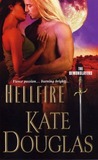
'Hellfire' (The Demonslayers Book 2) #PNR by Kate Douglas

HellFire (DemonSlayers #2)HellFire by Kate Douglas

My rating: 4 of 5 stars

You can read my review of the first book in the series, DemonFire, here.

Kate Douglas had me hooked the first time I read Wolf Tales, to be honest, and I rarely dislike any of her work. We're friends on Facebook. She seems to be a genuinely nice person who adores her grandkids.

I liked this novel especially because it has a realistically strong heroine who happens to be a gorgeous women of color, specifically an African-American heroine. I love that Douglas, who is a Caucasian U.S. author, doesn't feel the need to restrict her heroes and heroines to one skin color.

These novels in the DemonSlayers series have a lot of fun paranormal elements and a fast pace that makes them exciting, but the main event is still the love story. Ginny and Alton make a great couple. They're both stubborn, he's a little arrogant, and they aggravate each other just enough to build the sexual tension.

If this were a movie, I would cast Lee Pace to play him - we know he looks great as a stately blond because we've seen him in The Hobbit - and True Blood's Rutina Wesley to play Ginny.


I purchased this book with my own funds solely for my enjoyment and was not obligated in any way to review it. I bought my copy from Better World Books. The used paperback appears to have begun its life as a library book, judging by the Winnipeg Public Library sticker on the front. Due to an unfortunate incident involving a cup of coffee, mine copy is, sadly, bound for the recycling bin.

Lost Lemuria

But since we've mentioned the paranormal elements, let's talk about the lost continent of Lemuria. Douglas writes in her prologue:

"Thousands of years ago, the continent of Lemuria disappeared beneath the sea, much in the same manner of the continent of Atlantis. However, unlike the Atlanteans, Lemurians are not considered lost--legend says they relocated their entire society to a sanctuary deep within the dormant volcano known as Mount Shasta in the rugged mountains of North California.

"Much has been written about these tall and graceful beings of their great intelligence and beauty, their advanced technology and supernatural abilities, but no actual proof of their existence has ever been discovered."

Douglas is writing fiction, of course, but she isn't entirely making up the story of the Lemurians. She's incorporating some folklore, as skillful fantasy writers will often do. But Lemuria is also interesting for another reason, because it started out as a scientific theory.

If we look at Wikipedia, it says:

"Lemuria is the name of a hypothetical 'lost land' variously located in the Indian and Pacific Oceans. The concept's 19th-century origins lie in attempts to account for discontinuities in biogeography; however, the concept of Lemuria has been rendered obsolete by modern theories of plate tectonics. Although sunken continents do exist – like Zealandia in the Pacific as well as Mauritia and the Kerguelen Plateau in the Indian Ocean – there is no known geological formation under the Indian or Pacific Oceans that corresponds to the hypothetical Lemuria.

"Though Lemuria is no longer considered a valid scientific hypothesis, it has been adopted by writers involved in the occult, as well as some Tamil writers of India. Accounts of Lemuria differ, but all share a common belief that a continent existed in ancient times and sank beneath the ocean as a result of a geological, often cataclysmic, change, such as pole shift."

Lemurs. Public domain image by Adrian Pingstone
The name "Lemuria" came from an 1864 paper by English zoologist Philip Lutley Sclater. In attempting to explain why fossils from lemurs and related primate species are found in Madagascar and India but not in Africa or the Middle East, Sclater proposed a lost continent under the sea. He named it Lemuria after the lemur fossils. Sunken continents and lost "land bridges" were often theorized to explain the distribution of land animals separated by bodies of water before the theory of continental drift became widely accepted.

So that's the science part. Then, Wikipedia tells us, the legend of Lemuria fell into the hands of Helena Petrovna Blavatsky. The first time I ever remember reading her name was in The Magical Worlds of Harry Potter by David Colbert. In the chapter called "Who Really Wrote the Book on Divination?" It reminds us that one of Harry's textbooks at Hogwarts is Unfogging the Future by Cassandra Vablatsky. The Cassandra part, Colbert informs readers, comes from Greek myth. He then writes, "Cassandra Vablatsky's last name is no doubt taken from Helena Petrovna Blavatsky (1831-1891), a founder of the Theosophical Society, whose aims include 'investigating unexplained laws of nature and the powers latent in humanity' - in other words, magic."

Blavatsky, born in Russia, traveled widely as a young woman, including visits to Tibet and India, where she learned about Buddhism. She founded the Theosophical Society with two others in 1875, and from 1879 to 1888 she was the editor of a magazine called The Theosophist. She also wrote several popular books, including Isis Unveiled, The Secret Doctrine, The Key to Philosophy, and The Voice of the Silence.

Helena Blavatsky is variously credited and blamed for being one of the forerunners of the New Age movement, and her theories about the "seven root races" are blamed for influencing the so-called Aryan racism that in turn influenced Adolph Hitler/Nazism. She's been accused of being a devil worshiper or, at the very least, a modern Gnostic, because she wrote in The Secret Doctrine that the "serpent of Genesis" or Lucifer was not the representative of evil, but rather of enlightenment. She has also been accused of being a fraudulent medium who deceived people. So, although Colbert's mention of her is neutral, she's rather detested in some schools of thought.

Helena Blavatsky
It's the "seven root races" theory that includes the ancient Lemurians. Wikipedia tells us, "Within Blavatsky's complex cosmology, which includes seven 'Root Races,' the 'Third Root Race' occupied Lemuria. She describes them as about 7 feet (2.1 m) tall, sexually hermaphroditic, egg-laying, mentally undeveloped and spiritually more pure than the following 'Root Races.' Before the coming of the Lemurians, the second 'Root Race' is said to have dwelled in Hyperborea. After the subsequent creation of mammals, Mme Blavatsky revealed to her readers, some Lemurians turned to bestiality. The gods, aghast at the behavior of these 'mindless' men, sank Lemuria into the ocean and created a 'Fourth Root Race' – endowed with intellect – on Atlantis."

Wikipedia also has an entry on Lemuria in popular culture. From it, we learn that the hypothetical continent appears in, among other places:

- H.P. Lovecraft's short story "The Haunter of the Dark"
- Thomas Pynchon's 2009 novel Inherent Vice
- In Marvel Comics, Lemuria is home to Prince Namor's nemesis, Princess Llyra
- Captain America: The Winter Soldier (which features a ship called the Lemurian Star)
- Dark Horse Comics' Hellboy series

So there you go: from serious scientific theory (subsequently discarded) to the philosophy of Helena Blavatsky and then into popular culture. Frederick Spencer Oliver's 1894 book (alleged to be a true story dictated to Oliver through channeling) A Dweller on Two Planets introduced the idea that white-robed Lemurians dwell in Mount Shasta.

Nine Hells

In HellFire, Alton's favorite curse is "nine hells." Does the Abyss from which Dax originally came have nine different layers? If so, it recalls the nine circles of Hell in Dante's Inferno: Limbo (the virtuous Pagans who lived without knowledge of Jesus Christ), Lust (where the lustful and adulterous are blown around by severe winds), Gluttony (where the gluttonous are forced to lie down in freezing-cold slush), Greed (where the greedy spend their time jousting with enormous weights), Anger (where your punishment might be either constant fighting or endless drowning in the River Styx, depending on whether you were wrathful or sullen), Heresy (where the heretics lie in flaming graves), Violence (where the violent are boiled in a river of blood, torn apart by dogs, picked at by harpies, or wandering in a desert where fire rains from the sky, depending on their crimes), Fraud (where the fraudulent are sunk into stone ditches - that one actually doesn't sound all that bad), and Treachery (where the treacherous are frozen in a lake of ice).

Creative Commons image
Nine is also a favorite number in Norse mythology, which imagines there are nine home-worlds through which the World Tree Yggrasil grows. Sources disagree on the identities of the nine worlds, but they are often said to include Midgard (the world of human beings), Asgard (the world of the As, one class of Norse gods), Vanaheim (the world of the Vanir, another class of Norse gods), Jotunheim or Utgard (the frost giant home world), Alfheim (the elf world), and Hel (the underworld, where the dead go). But that's only six.

Separate from Alfheim is the home of the Dvergar, dwarves or "black elves." (This becomes an important plot point in the second Thor movie, subtitled The Dark World.) Their home-world is sometimes called Svartalfheim. That makes seven home-worlds for seven kinds of beings.

The other worlds are sometimes listed as Niflheimr (primordial ice that existed before creation) and Muspellheimr (primordial fire that existed before creation). In some literary works, however, Niflheim and Hel are used interchangeably. Some separate the land of the dwarves, called Nidavellir, from the land of the dark elves, although "dwarves" and "dark elves" seem to be used interchangeably. See, for example, Encyclopedia Mythica.

But Kate Douglas may not have been thinking of Norse myth, or even Dante, at all. Maybe she just thought "nine hells" sounded like an impressive number of hells.

View all my reviews on Goodreads

What I'm Reading Next


Judging by the cover, Nalini Singh's third book in the Psy-Changeling series of paranormal romances takes place in Jotunheim. 

Sunday, August 3, 2014

Who Is Lugh, and What's Logi Got to Do With It?

I created a slight neoPagan controversy when I posted a link to "The Loki in Lughnasa," a post I wrote in 2012, on Tumblr. That post relied heavily on Barbara J. Walker's The Woman's Encyclopedia of Myths and Secrets, a source I have learned is highly questionable. Since August 1st, I learned that:

- The Celtic god Lugh (sometimes spelled without the "h") is not a fire god.

- The association between the Norse god Loki and the Norse fire giant Logi is an error.

- No solid evidence links Loki in Norse mythology to Lugh in Celtic mythology.

So, who is Lugh? What is he the Celtic god of? Who is Logi? And who confused Logi with Loki? We'll look at each of these questions in turn.

Lugh

In my very first Lughnasadh post, written in 2010 when I was still fairly new to blogging, I wrote:

"The Irish consider it the feast of the god Lugh, who consecrated it in honor of his foster-mother's death. Lugh's foster-mother Tailtiu, "The Great One of the Earth," represents the land of Ireland itself. Thus, her death is symbolic of the harvest: the crops sacrifice themselves so human beings and animals can live. Tailtiu's death was celebrated with feasting, Olympic-style games, bonfires and handfasting ceremonies. Where corn is harvested, the goddess is often visually represented by making corn dolls."

Contemporary corn doll depicting Lugh. Creative Commons image by MountainAsh333
Unfortunately, I didn't happen to note the source of that information. I did better in 2013's Mabon post, when I referred to Lugh's article at Encyclopedia Mythica. It says:

"Lugh is the Celtic lord of every skill. He was patron of Lugodunum (Lyons) in Gaul. He and his nature goddess consort (Rosmerta) were worshipped during the 30 day Lugnasad midsummer feast in Ireland. Fertility magic during this festival ensured ripening of the crops and good harvest. He was called Lamfhada or 'of the long arm' in Gaelic because of his great spear and sling. His animal attributes were the raven and the lynx. Lugh mirrors Hindu Karttikeya, the spiritual warrior, and Roman Mercury, the swift messenger. His exploits are recounted in the Tain Bo Cuailnge, the Cattle-raid of Cooley." - Dave Buchert

So Lugh is a skilled warrior, a swift messenger, and a fertility god. Well, that's minimally informative. Wikipedia is user-generated, and therefore not the most reliable source, but it tells us that:

- Lugh's Welsh counterpart is Lleu Llaw Gyffes. As you may recall from this post, Lleu Llaw Gyffes was the son of the goddess Arianrhod. She cursed him never to marry an earthly woman, so instead he married the unearthly Bloddeuwedd, made from nine different flowers.

- His father, Cian, is of the Tuatha Dé Danann, or "tribe of the goddess Danu." His mother, Ethniu, belongs to the Fomorians, the mythical people who were said to have inhabited Ireland before the Celtic people got there.

- Lugh was given to a foster mother, Queen Tailtiu, to raise, possibly because of a prophecy that his maternal grandfather would be killed by his grandson. Lugh's grandfather Balor was said to have a poisonous eye that killed everyone he looked on it with.

Cú Chulainn by J.C. Leyendecker. Public domain. 
- The king of the Tuatha Dé Danann appointed Lugh to his court because he had so many different skills. The Tuatha Dé Danann are being oppressed by the Fomorians, and Lugh agrees to help the Tuatha Dé Danann regain their freedom.

- In a battle against the Fomorians, Lugh uses a slingshot to shoot out his grandfather Balor's evil eye, causing the Fomorians to lose the battle.

- During the battle, Lugh spares the life of Bres, a former king who agrees to teach the Tuatha Dé Danann the secrets of agriculture. However, Lugh ultimately killed Bres by causing him to drink the poisonous "milk" of 300 wooden cows Lugh had made.

- Later in his life, Lugh instituted the Olympic-style games in memory of his foster mother. August 1 was the conclusion of the games.

- Lugh had several wives, including the daughter of a British king. One of his wives had an affair with Cermait, son of the Irish father-god The Dagda. Lugh killed Cermait, but then Cermait's three sons killed Lugh.

- In some versions, Lugh is the father of the Irish hero Cú Chulainn. When Cú Chulainn is severely wounded in battle, Lugh arrives and heals his wounds.

Mythography says the confusion of Lugh with a deity of the sun may have to do with his nickname, "Shining One." However, the nickname was probably in reference to all his various skills. It also says Lugh ascended to become the leader of Tuatha Dé Danann when the god Nuada was killed in battle.

So that's Lugh - a mythological figure who may have been based on a historical king, but was said to have belonged to the divine tribe of the goddess Danu.

Public domain image by John McColgan.
Logi

Wikipedia says that Logi means "fire" in Old Norse and that the mythological Logi was a fire giant. It says the Prose Edda by Snorri Sturlson describes the eating contest between Logi and Loki. They competed to see who could most quickly eat meat from the bones, and Logi won by consuming meat, bones, and trencher all alike. Not only was Logi a fire giant, he was also the personification of fire itself.

Logi has two brothers, one who rules over the winds and another who rules over the sea. In astronomy, Loge (an alternate spelling) is one of the moons of Saturn.

NorthernPaganism.org adds that Logi was called High-Logi because he was so tall. His wife was named Glow, and they had two daughters named Ashes and Embers. After the death of his wife and daughters, Logi lived alone in a black-rock cave in Muspellheim (the land of fire).

So it seems unlikely Logi has anything at all to do with Lugh. Lugh has an association with blacksmiths, who do use fire, but that has more to do with Lugh's many skills than it does to any elemental connection Lugh might have.

Loki and Sigyn in a painting by Mårten Eskil Winge. Public domain.
The Confusion of Logi With Loki

According to NorseMyth.org,Wagner named a character in the Ring opera cycle Loge and gave him the characteristics of the mythological Loki. Wagner's Loge is a fire sprite.

Wikipedia's Loki article says Jacob Grimm referred to Loki as a "fire god" in 1835. It also says:

"Famously, Loki appears in Richard Wagner's opera cycle Ring of the Nibelung as Loge (a play on Old Norse loge, 'fire'). He is depicted as an ally of the gods (specifically Wotan's assistant rather than Donner's), although he generally dislikes them and thinks of them as greedy, as they refuse to return the Rhine Gold to its rightful owners. In the conclusion of the first opera Das Rheingold he reveals his hope to turn into fire and destroy Valhalla, and in the final opera Götterdämmerung, Valhalla is set alight, destroying the Gods."

Wagner completed Das Rheingold in 1856, post-Grimm. Collin Cleary's essay "Wagner's Place in the Germanic Tradition" clearly points the finger at Grimm as the source of the confusion between Logi and Loki:

"The Grimms often made imaginative links between names and other elements in the sources they utilized, and this seems to have emboldened Wagner to do the same – achieving a kind of fusion of German and Scandinavian elements. Indeed, some of the inferences or connections Wagner has been criticized for actually have their origin with the Grimms. For example, Wagner also includes a character named 'Loge,' who is the equivalent of the Scandinavian Loki. In fact, there is scant evidence that there was a Loki figure in the German mythological world. However, Jacob Grimm postulated 'Locho' or 'Loho' as possible German equivalents. Wagner didn’t particularly like either, and settled on 'Loge.'

"Purists have long railed against Wagner, however, for making his Loge/Loki a god of fire. Again, however, this has its origin in Grimm. In Scandinavian myth there was a fire giant named Logi, and Grimm thought that there might be a connection to Loki. (More recent scholarship doesn’t support this.) We find the origin of Wagner’s Loge in these words of Jacob Grimm: 'Now a striking narrative . . . places Logi by the side of Loki: a being from the giant province beside a kinsman and companion of the gods. This is no mere play upon words, the two really signify the same thing from different points of view, Logi the natural force of fire, and Loki with a shifting of the sound, a shifting of the sense: of the burly giant has been made a sly, seducing villain.'"

The Brother Grimm. Public domain. 
There we have it: Lugh is not Logi, Logi is not Loki, and Loki is definitely not Lugh.

This is an affiliate link:

The Wheel of The Year. . by Maureen Murrish. $5.99 from Smashwords.com
The Wheel of the Year is a beginner's guide to celebrating the eight traditional pagan festivals of the the year.

Saturday, August 2, 2014

A Lughnasadh Lesson Learned

Yesterday was August 1. Here in the Northern Hemisphere, the neoPagan community celebrated the cross-quarter holiday of Lughnasadh. The halfway point between Summer Solstice and the Autumnal Equinox is named for an ancient Celtic celebration of the god Lugh. The Christianized name for this holiday is Lammas, a contraction of "loaf mass," because this grain harvest festival retains the tradition of celebrating with breads and other baked goodies.

At Lughnasadh 2012, I wrote a blog post called "The Loki in Lughnasadh." Yesterday I shared the link on Tumblr, thinking a few neoPagans and Wiccans might be interested. I don't know if you're aware of this, but Loki is pretty popular on Tumblr, as are all things related to The Avengers, the movie.

The little blurb I added to my Tumblr link said:

"Barbara G. Walker notes that Loki was sometimes identified as “Logi,” or “flame.” She associates Loki-as-Logi with Lug (or Lugh), the Celtic god of fire, who was celebrated at Lughnasa/Lughnasadh (Lug’s games) on August 1st."

The response I got was enlightening. Tumblr user Answers From Vanaheim commented:

"Oh no, nonononono Barbara Walker is a terrible source for anything that isn’t about knitting.

"Loki and Logi are separate entities. Loki even competes against Logi in an eating contest (and loses because Logi, being a fire giant, eats his plate as well as the food). Someone (I believe it was Wagner) confused the two, and the association of Loki with fire persists."

Now, I am a humble witch/neoPagan/writer/person and I know I can always learn more from people wiser than myself. I take these comments with my listening ears on, because here I've encountered a new bit of knowledge: that Barbara G. Walker, who's been my go-to reference for years, might be a questionable authority.

I first encountered Walker when, as a student at St. Mary's College of Notre Dame, Indiana, I stumbled upon her Feminist Fairy Tales. I don't remember how I first found The Women's Encyclopedia of Myths and Secrets, but by the time I did, I already had it in my mind that Walker was a feminist scholar. The Encyclopedia is heavily footnoted, but because it was originally written in the early 1980s (when I was a small child), I didn't have access to many of the sources Walker cites in her footnotes.

Goodreads
Let's look at some of the other notes I got from Tumblr users yesterday. Tylluan Faolchú-Gealach, building on what Answers From Vanaheim wrote, said:

"Not to mention that Lugh isn’t a fire god - also a very persistent misconception. When I read that first bit I got mad, Lugh is very dear to me, and no disrespect to Loki intended; but they are two worlds apart. You cannot just toss them on the same pile."

Elder Scrolls Witch says simply, "This causes me physical pain." Well, I do apologize for that, sir. I never meant for my ignorance to cause physical pain.

Gaelic Heathenry writes, "Good heavens! Did she really just equate Loki and Lugh? What?" with the following notes:  #This is painful #Holy different pantheons Batman! #They're not even vaguely similar

#Sorry #I was wrong #My source is controversial #I'm learning

Korrigan adds, "That might be the highest sentence-length-to-false-information ratio I’ve ever seen someone stab my eyes out with the gae assail."

Hyperbole is as common on Tumblr as that photo of Jensen Ackles in gym shorts. The Gáe Assail is Lugh's lightning spear, by the way.

Wikimedia Commons 
About the above image, Wikimedia Commons says, "Illustration of Lugh's magic spear by H.R.Millar, published in Celtic Myth and Legend by Charles Squire (1905), and scanned and made available online at sacred-texts.com, according to whom it is in the public domain in the United States."

The Women's Encyclopedia has 88 reviews on Amazon U.S., with 45 5-star reviews and 19 1-star reviews, with an average rating of 3.6 stars. An anonymous Amazon customer wrote in 2002:

"I picked up this book in 1987, and was quite excited at first. My own research, however, quickly proved The Encyclopedia to be highly unreliable as a jumping-off point of feminist/pagan scholarship. A small amount of digging into B. Walker's sources will immediately prove how little research actually went into this work. The actual sources cited in Walker's footnotes frequently don't support her suppositions, and her etymology is just plain fanciful. She seems to feel that, if one word sounds like another word, they must necessarily be related. Ouch!

"Check this out for yourself. Pick a few entries, then look up all of the footnotes in your local university library. How many of Walker's sources have ANYTHING to do with the subject in question, let alone support her theories? It's a disappointing, but necessary, exercise for anyone determined to see The Encyclopedia honestly.

"Enjoy this book for its empowering (and fun) ideas, but don't place any weight on its 'scholarship.' It's a house of cards."

That's a clear enough message to inform me that Walker's writings are to be taken with a grain of salt, just like using a Wikipedia article as a reference - a fine start, but in need of more reliable back-up.

On Goodreads, the Encyclopedia has 826 ratings and 53 reviews. With an average of 4.27 stars, it has 266 5-star reviews and 12 1-star reviews. The 1-star review that pops up first, written by Colleen the Contrarian, reads:

"Barbara Walker has an obvious bias against all things male and/or Christian. She rewrites myth and history to make everything female-supreme, Goddess centric, anti-male, and full of sexual womyn power. Now, before someone dismisses me as 'obviously anti-female and deluded by patriarchy' or some such, I should state that I am a female neo-pagan with no love for the Church and/or the views it supports towards women. That said - I don't like made up or revisionist history, even if it does stroke the ego a bit. She bases everything on the supposed Pre-historical Matriarchy - which has little to no archeological evidence to truly support in the grand scale she portrays it.


"But besides that, her Encyclopedia and Dictionary are a mish-mash of cultural hodge-podge! She acts as if gods and goddesses from varying cultures are generally interchangeable, offering nothing for the cultural differences which give birth to their own representations of deity. She has butchered myths, made up 'alternate versions' which have no founding anywhere except her own imagination, ignored important details of myths which don't mesh with her agenda, and basically perverted the symbols she pretends to represent.

"Bad scholarship is bad enough... but her fabrications and invented history and myths are just a disgrace to the pagan community, and, in my opinion, an insult to women and to the goddess and gods which exist without the clap-trap found in this book. It does not present women as strong and/or empowered to rely on revisionist pseudo-history, no matter how good it may sound.

"There are many strong female figures out there...many strong goddesses of all ilks. This book does not do them justice."

I never knew! But now I do. See, this is why witches need communities, even if they are virtual ones. We can learn so much from each other, and it's a lifelong process.

Tomorrow: Disambiguation. Who is Logi, who is Lugh, and how did Loki get mixed up in all of this?

This is an affiliate link:

Witchcraft Second Degree. Wiccan Themed. by Black Witch S. $29.97 from Smashwords.com
Witchcraft - A 2nd Year in the Craft. This course will introduce you to the basics of Witchcraft with a Wiccan fusion. Step-by-step beginner exercises are included to help you start your journey safely and to show you exactly what to do in order to achieve your full magical potential. Plus, you can apply for a Certification of Completion for 2nd Degree Witchcraft.

Sunday, June 15, 2014

I Took My Nieces to See 'Maleficent' (Spoilers)

If you're any kind of a Disney fan, I highly recommend you go see Maleficent, starring Elle Fanning and Angelina Jolie. I took my 8- and 10-year-old nieces on Wednesday, and they loved it.

Disney's Sleeping Beauty Castle, Anaheim, CA. Public domain image
I loved it, too. Although Maleficent is the villainous fairy who tries to kill the princess with a spell in the Disney cartoon Sleeping Beauty, she's the heroine of this live-action version (also from Disney). Sleeping Beauty/Aurora herself is...also a heroine! This movie doesn't pit them against each other, it makes them friends.

The villain is Aurora's awful father Stephon. Human Stephon and fairy Maleficent met as children. He showed goodwill at their first meeting when he threw away his iron ring - fairies can't bear the touch of iron. As they grew into teens, they fell in love, but Stephon didn't have an honest or loyal bone in his entire body. Maleficent grew nicely into her role as protector of the moors, while Stephon went off to court and secretly aspired to be king. She was innocent, open, and honest, while he was worldly, greedy, and duplicitous.

The presiding king tried to conquer the moors; Maleficent and her fairies repelled them. The king was wounded and promised that whoever killed Maleficent would be his successor. Slimy Stephon paid his "true love" a visit on the pretense of warning her, but instead drugged her and brutally cut off her wings. He brought the wings to the king as "proof" she was dead.

Stephon, subsequently made king, married and had a daughter, but slowly descended into madness. Maleficent got her bit of revenge by cursing the newborn Aurora to fall into a deep sleep on her 16th birthday when she touched a spinning wheel. (We know this part from the cartoon.) We can't really blame Maleficent for this, because STEPHON CUT OFF HER MAGNIFICENT FRICKING WINGS.

"Sleeping Beauty" by Louis Sussman. Public domain photo by Mutter Erde
Stephon sent baby Aurora off to a cottage in the woods to be raised by three fairies (one of them was played by Imelda Staunton, best known to U.S. audiences as Dolores Umbridge in the Harry Potter movies). These fairies are well-meaning but rather dim-witted. Maleficent looks out for Aurora, and gradually the two women become friends. Inevitably, Aurora finds out about the curse and forsakes the moors for her father's castle. Of course, the curse comes true, although Maleficent regrets it and tried unsuccessfully to lift it. Aurora falls into her enchanted sleep.

Maleficent comes to the rescue, though. Aurora's prince friend is ineffective at lifting the curse, but because Maleficent friendship-love for Aurora is true, Maleficent kisses her friend and breaks the spell.

Then the really happy ending: fairy and wings are reunited, Stephon gets his comeuppance, and the violent old patriarchy is replaced with a peaceful matriarchy under Queen Aurora.

This movie is visually beautiful and well-written. Angelina Jolie's acting in the title role is perfection.

According to Wikipedia, the earliest published account of Sleeping Beauty is Charles Perrault's 1697 version. That article (linked above) doesn't say much about the European folklore that may have inspired it, except that the sleeping princess motif may have been inspired by "tribulations of saintly female martyrs in early Christian hagiography conventions" and the Germanic folk tale of Brynhild. Also called Brunnehilde, Brynhild was placed by Odin in a magical circle of fire, where she slept. The hero Siegfried rescued her and awakened her by removing her Valkyrie armor.

"Hagiography" is simply a fancy Greek loan word that means "holy writing." For an example of a female martyr story, see this post on the feast day of St. Lucia.

"Wotan's Farewell to Brunhilde" by Emilie Kip Baker. Public domain within the U.S. 
So, why a spindle or spinning wheel, of all things, as the center of the curse? If we read SparkNotes' Themes, Motifs, and Symbols page for Sleeping Beauty (the Disney film), we see that the spinning wheel might represent "the unstoppable revolutions of the years," signifying how time inevitably changes things. Clearly one of things time is changing is Aurora - on her 16th birthday, she's transforming from a girl into a woman. This is certainly another example of the Dangerous 16th Birthday trope.

I've read elsewhere - and unfortunately I can't remember where - that the spindle on which Aurora pricks her finger may be a stand-in for another type of "prick." In other words, the thing the king and queen wish to keep her away from is her own awakening sexuality.

If you'll recall from the Mother Night post, the Germanic mother-goddess known variously as Frigga, Frigg, and Freya has a spinning wheel, which was known as the Wheel of Fate. Fate or Fortune seems to be an underlying theme of the Sleeping Beauty legend. Wikipedia will tell you that in some versions, the princess doesn't fall under a curse at all, but falls into an enchanted sleep simply because it's her fate to do so. The three fairies who raise her represent the Fates, who in Germanic mythology are called the Norns.

Public domain image of the three Norns. 1895
The Norns are also collectively called the Weird Sisters (cf. Macbeth, and also Harry Potter and the Goblet of Fire), the Women Who Write (because they wrote the Book of Destiny), and the Three Mysterious Beings. Their names were Fate, Being, and Necessity; or Become, Becoming, and Shall-Be; or Urth (Mother Earth), Verthandi, and Skuld. Skuld lends her name to "skullduggery," the doings of witches. As depicted above, they lived in a cave containing the root of the world-tree Yggdrasil and the source of the Fountain of Life. (If you're a fan of Marvel movies, you'll be somewhat familiar with Yggdrasil. The image of the tree first shows up in Captain America, I believe.)

It's probably not a coincidence that when a bitter, vengeful Maleficent decides to make herself queen of the moors, her throne is located in a grotto with a waterfall, and a tree grows out of it.

The Fates are also the Triple Goddess: maiden, mother, and crone. This is clearly depicted in Maleficent. The eldest of the three, played by Staunton, wears pink and represents the crone. (Imelda Staunton isn't actually very grandmotherly, in my opinion. She's younger than 60 and rather young-looking for a Caucasian woman of her age. She has good skin.) The fairy in blue who wishes happiness on Aurora is the mother figure, and the green nature-fairy with wild blonde hair is the childlike maiden.

The ancient Greeks pictured the fates as weavers, weaving the thread of life and cutting it at the time of death. What do you make with a spinning wheel? Thread. You spin thread from flax. The Greeks also envisioned the Fates as standing over the cradle of newborns, determining the child's destiny, according to Barbara G. Walker's The Woman's Encyclopedia of Myths and Secrets.

Clearly, the fairy tale of Sleeping Beauty has some roots in very old Indo-European mythology, some of which was common to the ancient Greeks and the Vikings. How cool that we're still adapting and telling this ancient bit of goddess-mythology. How cool that Angelina Jolie makes such a cool goddess figure.

This is an affiliate link:

Hollywood Classics Title Index to All Movies Reviewed in Books 1 - 24 by John Howard Reid. $0.99 from Smashwords.com
Another essential book for a film buff's library, this one is packed with information and reviews. Some of the entries are quite extensive. JHR provides all the information you need, including complete cast and production staff. I find JHR's information invaluable. I like to read not only who acted in a movie, but who made it, both top-billed and lesser mortals. -- Ross Adams in DRESS CIRCLE mag.

Monday, October 21, 2013

#YA #BookReview The Lost Sun by Tessa Gratton #NorseMyth

The ending is sad (but since this is only the first book in the series, I'm not TOO worried about that), but otherwise, this book is kind of perfect. By that I mean Tessa Gratton - a scholar of Old English who previously translated 'Beowulf' - does a really wonderful job of weaving Norse mythology and Anglo-Saxon saga tradition into a young adult novel set in the contemporary world, tweaked with Germanic folkways. And - oh, yeah - the Norse gods are real.


The plot draws heavily on the Norse myth of the death of Baldur, traditionally the most beloved son of Odin. Yet Baldur is a secondary character to Soren Bearskin (that's Bears' Kin rather than Bear Skin), the mortal son of Berserker who went TOO berserk, filled with his own dawning battle-rage and destined to be like his father, yet not like him.

Soren is just beginning to realize how deeply he loves his friend Astrid, the daughter of a famous fortune-teller and a fortune-teller herself, when Baldur fails to make his annual return from the land of death. Baldur, who represents the sun, is sort of like a phoenix, who dies and then rises from his own ashes - at least, he has until now. Soren and Astrid set off on an adventure, guided by fate and joined by a new friend, the strange Loki's Kin girl named Vider. There are trolls, but just little ones. Their goal is to find the apple orchard of Idun, the keeper of youth and immortality, and when they get there, nothing is as it seems.


One of the really brilliant things about this book is the nature of reality in it: the gods are real and interact with mortals (Vider, it turns out, knows Loki personally, and Soren meets Loki's daughter Fenris Wolf), but are also spoken of in myths, and there are different versions. The gods could tell mortals their own true histories, but they choose to let the mortals create their own versions, because even the gods have agendas, and it wouldn't suit their ends to have their full stories known. The gods are mysterious, and even Astrid's foresight can't reveal everything about the journey she and Soren will make...

Resulting in a sad ending. I hope the next book in the series makes right what was "wrong" with the ending. I also hope Loki gets to play a bigger role in the next book. When he appears, it's as a sullen teenage boy. The myths about him make him the mother of Fenris (he became a female wolf and lived among a pack of wild wolves; all were slaughtered except Loki, and he then discovered his belly swollen with Fenris), but she calls him "Father." I would like Tessa Gratton to tell me more about Loki.

Gratton's conception of Freya is very interesting as well. Most of what I've read associated the queen of the Valkyries with the All-Mother Frigg. I've never read anything else that associated Freya with Hel, the queen of the world of the dead. Hel is usually called Loki's daughter, along with Fenris and the Midgard Serpent (Loki's three children with his frost giant mistress). I like this twist, making the goddess of love and war Freya one with the death-goddess.


The Goddess who embraces the souls of warriors at death should be the one who watches over their shades - which is part of the traditional mythology, that dead warriors feast with Freya and become her lovers. Hel is usually thought of more of ruling over the souls of dead mortals, I think, but I think this is a really interesting twist. Maybe Freya, Frigg, and Hel are the trinity or triple goddess in Norse mythology, equivalent to Persephone-Demeter-Hecate in Greek mythology and the triple goddess The Morrigan in Irish mythology?

If I lived in this universe, which god would I choose to follow? I'd probably belong to Freya, like Astrid does. Either Freya or Frigg, although the temptation to belong to Loki would be there as well.

It's really different from any other YA novel I've read before. It's fascinating. So other than wanting more, I thoroughly enjoyed this book. I look forward to the next one, The Strange Maid. It won't be out until June 10, 2014, but you can preorder it now.

I got this book free in exchange for a review through Amazon Vine. I was not otherwise compensated for this review, which represents my own honest opinion.

                                                 Amazon Music: Six Months of Disney+
                                                           This is an affiliate link.

Friday, October 11, 2013

#FridaysReads 'Fangirl' and 'The Lost Sun'


I'm currently reading Rainbow Rowell's Fangirl and loving it! The synopsis from Goodreads:

"From the author of the New York Times bestseller Eleanor and Park.

"A coming-of-age tale of fan fiction, family and first love. 

"Cath is a Simon Snow fan.

"Okay, the whole world is a Simon Snow fan . . .

"But for Cath, being a fan is her life — and she’s really good at it. She and her twin sister, Wren, ensconced themselves in the Simon Snow series when they were just kids; it’s what got them through their mother leaving.

"Reading. Rereading. Hanging out in Simon Snow forums, writing Simon Snow fan fiction, dressing up like the characters for every movie premiere.

"Cath’s sister has mostly grown away from fandom, but Cath can’t let go. She doesn’t want to.

"Now that they’re going to college, Wren has told Cath she doesn’t want to be roommates. Cath is on her own, completely outside of her comfort zone. She’s got a surly roommate with a charming, always-around boyfriend, a fiction-writing professor who thinks fan fiction is the end of the civilized world, a handsome classmate who only wants to talk about words . . . And she can’t stop worrying about her dad, who’s loving and fragile and has never really been alone.

"For Cath, the question is: Can she do this?

"Can she make it without Wren holding her hand? Is she ready to start living her own life? Writing her own stories?

"And does she even want to move on if it means leaving Simon Snow behind?"


Simon Snow, for those who don't know, is a fictionalized version of Harry Potter. (A fictionalized version of a fictional character? It's kind of meta, but that's what it is.) Cath and Wren are well-know in the Simon Snow fandom as the co-writers of an ongoing romance series between Simon and his roommate Baz. Baz is, essentially, Draco Malfoy. Essentially, Cath ships Drarry - really, really hard. If you've ever been in a fandom and you're familiar with fanfics and shipping, you'll probably find this book highly amusing. 

If you find it highly amusing that there are people who get into fandoms and know terms like fanfics and shipping, you'll probably find this book highly amusing. 


Cath and Wren are from Omaha, Nebraska


I'm also about 100 pages into The Lost Sun by Tessa Gratton. Its Goodreads synopsis:

"Fans of Neil Gaiman's American Gods and Holly Black's The Curse Workers will embrace this richly drawn, Norse-mythology-infused alternate world: the United States of Asgard. Seventeen-year-old Soren Bearskin is trying to escape the past. His father, a famed warrior, lost himself to the battle-frenzy and killed thirteen innocent people. Soren cannot deny that berserking is in his blood--the fevers, insomnia, and occasional feelings of uncontrollable rage haunt him. So he tries to remain calm and detached from everyone at Sanctus Sigurd's Academy. But that's hard to do when a popular, beautiful girl like Astrid Glyn tells Soren she dreams of him. That's not all Astrid dreams of--the daughter of a renowned prophetess, Astrid is coming into her own inherited abilities. 

"When Baldur, son of Odin and one of the most popular gods in the country, goes missing, Astrid sees where he is and convinces Soren to join her on a road trip that will take them to find not only a lost god, but also who they are beyond the legacy of their parents and everything they've been told they have to be."

Gratton has written this book in a fairly brilliant way. It's set in a contemporary, familiar world (the 21st century U.S.A.), using familiar modern language, yet there's just enough Norse mythology and Germanic folkways to make it resonate with the time-honored sagas of the English language and its cultural ancestors (think Beowulf). Gratton is a scholar of Old English, but this novel is in the voice of a modern teenager. 

I don't think I'm explaining it well, but it's really well done. 


Heather at Blonde, Undercover Blonde had a good idea today: to link to all the reviews she's done so far in 2013. I don't want to link to every single one, but here's one for every month:

January - The Count of Monte Cristo
February - Cora: The Unwilling Queen
March - The Art of Disappearing
April - Hemingway's Girl
May - Lover At Last
June - In the Body of the World
July - Divergent
August - Insurgent
September - Finding Esta
October - Princesses Behaving Badly

Thursday, October 3, 2013

Handmade Mini Comic: Jesus and Ganesha Go To Valhalla by MJ Alexander

A nice surprise came in the mail yesterday. It's the mini comic booklet Jesus and Ganesha Go to Valhalla, written by MJ Alexander and Adam Kuphos and illustrated by MJ Alexander.


It's gorgeous work. The plot revolves around a young girl and boy having a toy boat race. She's sailing her boat for Ganesha, and he's sailing his boat for Jesus. The race will determine who is the true lord - but Odin has a different idea.

It's only an 8-page mini-comic, but I only paid $3.50 for it, including shipping from MJ's Canadian home to me in the U.S.


She even wrote me a thank-you and included a sticker. Canadian politeness - not just a legend.

Here is a review by Carrie Q. at Peaches and Zines.

So, if you want to support a very young, very indie illustrator, I highly recommend you visit MJ's Etsy shop. I have absolutely no affiliation with MJ's Etsy shop whatsoever - I'm just a fan of her work. I can't resist a handmade book, especially with a title like Jesus and Ganesha Go to Valhalla.

MJ's Etsy shop: http://www.etsy.com/ca/shop/Snartha?ref=l2-shopheader-name

                                                 Amazon Music: Six Months of Disney+
                                                           This is an affiliate link.

Monday, September 23, 2013

Mabon Greetings, Day 2: Let's Talk About Sif

Yesterday we talked about Mabon; today I'll focus on a Northern European goddess strongly associated with the grain harvest, an ideal archetypal figure for a fall holiday of thanksgiving. We can learn a little about this Norse goddess, often simply referred to as "the wife of Thor" (typical patriarchy! to honor a goddess only as far as her relationship to a male divinity), from a beautiful old book I rescued from a library book sale.

My cover looks different. This image is from Amazon.co.uk, and is by this person*
This book, first published in 1957, is called The Lost Gods of England by Brian Branston (not to be confused with Breaking Bad actor Bryan Cranston!). It's all about the religious-mythological system of the British Isles during the Anglo-Saxon period, which it appears was something of a mash-up between traditional Norse mythology and Celtic mythology. The two cultures had some similarities anyway, because all Indo-European pantheons can be traced back to the very ancient religion of the Indian subcontinent.

I just made a really cool thing sound incredibly boring. Norse myth is cool, really. Otherwise, Marvel wouldn't have co-opted it for comic books, and an increasingly successful movie franchise. More on the comic book Sif later.

Sif's brief article at Encyclopedia Mythica will tell you the story of how Loki sneaked into Sif's bedroom and cut off all her golden hair. The crime was investigated by Veronica Mars - no, I'm just kidding. Thor threatened to pull an Incredible Hulk on Loki unless Loki found a way to replace the hair. The ever-resourceful trickster god went to some dwarves, who spun gold into replacement locks, which Loki then magically attached to Sif.

Lost Gods is slightly more instructive. Slightly. Sif comes up four times. The first time is on page 117 of my edition, which teaches us that the Anglo-Saxon counterpart of Thor, called Thunor, is associated with agriculture, which "make[s] for a fertility element to his cult...He is married to the golden-haired goddess Sif, the northern Ceres, another manifestation of Mother Earth." Ceres, of course, is the Roman equivalent of the Greek grain-goddess Demeter, the mother of Persephone.

She comes up again on page 123, in the myth of how Thor once fought a stone giant named Hrungnir and ended up with a piece of stone embedded in his skull. The original source for this tale is the famous Icelandic poet and politician Snorri Sturluson, who lived in the 12th and 13th centuries. Christianity came to Iceland around the year 1000, and by Snorri's time, the Norse religion was no longer the dominant one. But I digress - this myth says only that Hrungnir threatened to abduct both Sif and Freya.

As seen in this Creative Commons image, another famous Icelandic person is Bjork
The third reference, on page 128, is similarly brief; Branston merely asserts that Freya and Sif are the same goddess, and so is Frig.

The final reference, on page 145, takes the tale of how Sif lost her hair as a metaphor - our old favorite, the agricultural metaphor of the Annually Dying and Returning God and his mother/lover who is Mother Earth. The loss of hair is the loss of the lover ("death" of the harvested crops), and its return is the lover's return (springtime growth of new crops from seeds planted in autumn). Branston cites another version of this myth from the Norse canon. In it, Loki steals the Brisingamen (a really fancy piece of jewelry) from Freya.

Heimdall, the guardian of the godly realm of Asgard who controls the rainbow bridge, Bifrost, transforms himself into a seal selkie-style and swims out to the rock on which Loki has stashed it, and after a battle with Loki, retrieves it for the beautiful goddess of sex and death.


If you read Eternally Bad: Goddesses With Attitude by Trina Robbins, as I did many years ago, you'll read a slightly different twist on the story of Freya and the Brisingamen. In it, Freya offers her sexual services to the dwarves, whose craftsmanship produced the shining jewel (a necklace, in Robbins' telling). From this bawdy Norse myth descends the Western European folk tale of Snow White. Oddly enough, by the 20th century this was regarded as such an innocent children's tale, Walt Disney turned it into the first full-length animated Disney movie.

Public domain image, a screen capture from the trailer for the 1937 Disney film, from Wikimedia Commons
Did you wonder why the seven dwarves worked in a diamond mine?

Trina Robbins also wrote The Great Women Superheroes, which my brother bought me one Winter Holidays. It doesn't mention the Marvel Comics version of Sif. (It does, however, mention The Valkyrie, briefly a member of the Marvel "superteam" The Defenders in the 1970s.) But if you saw the 2011 movie Thor, you may remember that Sif was a character - played by a distinctly brunette actress (Jaimie Alexander). If you were a fan of that movie, you've probably already seen this.

Thor: The Dark World is scheduled for a November 2013 release. The Marvel comic book character Sif, according to the Marvel Universe wiki, first appeared in 1964. In this version of the loss of Sif's golden hair, Loki was overeager to get the replacement hair to the goddess, and over time it darkened from shining gold to jet black. The first Thor film ends with the god's mortal beloved, scientist Jane Foster (played by Natalie Portman), waiting on earth for Thor while he remained in Asgard. In the comics, Thor and Jane have a fairly brief relationship, Odin has long approved of Sif as a mate for Thor, and Thor and Sif get engaged (although they've never been married in the Marvel Universe}. Jane and Sif never come up in the next Marvel film to feature Thor and Loki, The Avengers (2012), but it's possible there may be a bit of a love triangle in The Dark World. Loki has a wife, Sigyn, both in Norse mythology and in Marvel Comics, but she isn't in the film franchise. That's because the filmmakers want Loki to be a single guy, because they know he is attractive to women. Like me. I love Tom Hiddleston as Loki, and I think Idris Elba is absolutely gorgeous with the golden eyes he has when playing Heimdall. Of course, Idris Elba is absolutely gorgeous reading the phone book, or sitting in traffic, or naked on the roof of the Empire State Building eating an Eskimo Pie. (Yeah, I reached way back into the '90s for that reference.) Did I have a point here? Ah, yes - Mabon. The mythological Sif is a great goddess to celebrate at the harvest time because she's a fertility goddess whose golden hair represents the golden sheaves of wheat, or corn, or whatever grain you have that's ripened to a golden brown in the autumn. The sexual pairing of Sif and Thor assures the fertility of the crops. We can also think of Thor and Loki - the fair-haired brother and the dark-haired brother - as archetypes of the Oak King (Thor) and the Holly King (Loki). At Mabon, Loki's powers are starting to decline. At the Winter Solstice - Yule - Loki has his final fling as Lord of Misrule and then becomes the yearly sacrifice of a warrior that Hel (underworld goddess - Loki's daughter, incidentally) demands. Thor will rule until the Summer Solstice, when they'll once again switch places. Eternally. Or at least until Ragnarok, when Loki's monstrous child the Midgard Serpent and Thor kill one another.
I made this myself at QuickMeme.
*This person is Mr. Ian Johnston of Bon Bon Books, Cottenham, Cambridgeshire, U.K. Bon Bon is one of the two bookshop dogs, both Cairn terriers. The other is named Robbie. I only mention it because it makes a charming footnote. Compare Selected Works and its bookshop cat. This is an affiliate link: League of Super Heroes: Rise of the Villain (#1) (Party Game Society Hit Party Game) by Celeste Ayers. $2.99 from Smashwords.com The League of Super Heroes HQ is under attack! A Super Hero went missing last night. Looks like someone is out for blood… someone is killing heroes… but who? Who amongst you has turned from Super Hero to Super Villain? It’s time to suit up and take control of this evil once and for all. The fate of the world is at stake. Will the good guys be victorious in sniffing out the tyrants?