Pages

Friday, August 21, 2015

Discovering 'The Wind in the Willows' as an Adult

The Wind In The Willows (Treasury of Illustrated Classics)The Wind In The Willows by Kenneth Grahame, adapted by Nicole Vittiglio

My rating: 4 of 5 stars

The Wind in the Willows by Kenneth Grahame was my dad's favorite book when he was a kid in the 1950s. I didn't read it until I was an adult, and it was a bit hard for me to place it in its proper context without looking up a little background on it. It was originally published in 1908, and I suppose the anthropomorphized animal tale can be thought of as a descendant of Alice's Adventures in Wonderland (first published 1865) and an ancestor of Winnie-the-Pooh (1926). In fact, Winnie-the-Pooh author A.A. Milne adapted parts of The Wind in the Willows into a stage play called Toad of Toad Hall in 1929.


Willows is really a set of two interconnected stories. One is a set of vignettes about the friendship between Mole and Rat. Wikipedia says Rat is actually a water vole, which I suppose is a European animal somewhat similar to an animal I see outside my house all the time, the muskrat. The setting of 'Willows' is the area surrounding the Thames River in England.

Kenneth Grahame was a banker by trade, and he worked for the Bank of England for most of his career. He had a secondary career as a writer, though, and he wrote these stories particularly for the amusement of his own son Alistair - similar to the way Peter S. Beagle wrote The Last Unicorn.

The other vein of stories running through 'Willows' is about Toad, an impulsive and vainglorious animal with a habit of taking up hobbies and then abandoning them. He does have an ongoing obsession with motorcars, though, which gets him into trouble with the law. (Keep in mind that in 1908, motorcars were very new and still had to share the roads with horses and carriages.) He ends up imprisoned, but escapes with the help of the jailer's daughter. He spends much of the book disguised as, and mistaken for, a human washerwoman. He considers this a great insult to his pride.


The age and setting of the story make it a bit exotic to me. Grahame contributes to this impression by creating an idealized, pastoral setting, a version of Merry England. You can read more about Merry England or Merrie Olde England in the "pseudohistory" category on Wikipedia. The writer(s) define it as "an English autostereotype, a utopian conception of English society and culture based on an idyllic pastoral way of life that was allegedly prevalent at some time between the Middle Ages and the onset of the Industrial Revolution. More broadly, it connotes a putative essential Englishness with nostalgic overtones, incorporating such cultural symbols as the thatched cottage, the country inn, the cup of tea and the Sunday roast. Children's storybooks and fairy tales written in the Victorian period often used this as a setting as it is seen as a mythical utopia. They often contain nature-loving mythological creatures such as elves and fairies, as well as Robin Hood. It may be treated both as a product of the sentimental nostalgic imagination and as an ideological or political construct, often underwriting various sorts of conservative world-views."


I don't think Willows is political, but it is nostalgic and idealized. Although Grahame was born in Edinburgh, Scotland, his father moved him and his three siblings to the Oxford area (Berkshire, which is just south of Oxforshire) when Grahame was five years old. He grew up boating on the Thames with his uncle in settings that inspired Willows (and probably would have seemed familiar to Lyra Belacqua in The Golden Compass).

While fairies and elves fail to show up in the Willows stories, the god Pan makes an appearance, although he is described rather than specifically named. When Otter's little son Portly goes missing, Rat and Mole find him sleeping peacefully between the cloven hooves of Pan, who is playing the pan-flute. After Mole and Rat depart with Portly, Pan wipes the memories of the animals clean of every having met him, presumably because the old gods are somewhat terrifying to mortals.


There are just a few fantasy elements in the story; they pop up and then they quickly dissipate, as when the Wayfarer - a wandering sea rat - seems to put some kind of spell over Rat that makes him want to leave home and take to the sea. He shakes off the spell with the help of Mole.

It took me a little while to get into this book, because at first it seems to be a collection of loosely-related talking animal stories with very little plot. Once the Toad stories take prominence, there's a bit more of a plot, and it does have a recognizable climax and denouement, even if the ending does seem a bit rushed. I wouldn't go so far as to say it's become a new favorite of mine, but I do appreciate some of its charms. I think Rat was my favorite character. Who wouldn't want to do little else in life besides hanging out with friends and messing about in boats?

The Disney film The Adventures of Ichabod and Mr. Toad dates from 1949. As best as I can remember, I have only watched the Ichabod part of the cartoon, which is the animation of Washington Irving's 1820 longish short story "The Legend of Sleepy Hollow." 88 years older and American, the story of the Headless Horseman is an odd juxtaposition with a thoroughly English, early 20th century book. I'm not sure what Walt Disney was thinking with that one. You can still ride Mr. Toad's Wild Ride at Disneyland in California, but its equivalent at the Magic Kingdom in Florida closed in 1998.


Grahame also wrote a short story called "The Reluctant Dragon," which was also made into a Disney cartoon.


I purchased this book with my own funds (at Goodwill, and then donated it to a local tutoring program after I read it). I was not obligated to review it in any way.

If your local (U.S.) library subscribes to Hoopla, you can read the e-book free there.

Friday, August 14, 2015

Thoughts on 'Go Set a Watchman'

On Thursday, August 13th, Mr. Elingtin and I visited the Kurt Vonnegut Memorial Library at 340 N. Senate Avenue, in the heart of downtown Indianapolis, Indiana. The book I took with me to read in the car was Go Set a Watchman by Harper Lee. It is the second novel she published, although she wrote it before her iconic To Kill a Mockingbird.


The docent at the Kurt Vonnegut Memorial Library told me he was still deciding whether or not to read this book. I understand this impulse. From the moment those of us of a literary bent read the first chapter as published in the Wall Street Journal, it was apparent our long-serving image of Atticus Finch as a force for colorblind morality would be altered by his character development in this book.

I read To Kill a Mockingbird once, either in the sixth or seventh grade, as assigned to me in junior high. I liked the book then and it's stayed with me ever since.  I think many people who didn’t conform to strict gender stereotypes have identified with the tomboyish Jean Louise “Scout” Finch over the years. I’m among them. (I’m not the most “girlish” of girls, although I do love glitter and pink things.)

I decided before GSAW came out that I would have to have it immediately. To that end, during my lunch hour on Tuesday, July 14, I went to Forever Books and paid full retail price for a brand-new hardcover copy. I had, after all, waited more than 20 years for a second Harper Lee novel. (It wasn't the longest possible wait, since the novel was originally published in 1960, the year my parents each turned 8.) As soon as I finished Paper Towns, I started GSAW.

Titular Allusion: The Jewish Bible, Isaiah 21:6. In the King James version, “For thus hath the Lord said unto me, Go, set a watchman, let him declare what he seeth.” In the novel, the watchman is literally a “citizens’ council” of highly dubious intent and, figuratively, Scout’s conscience.


The bit of character development that Scout Finch – aged 26 – undergoes in the novel is discovering that the father she idolizes has feet of clay. He belongs to the citizens’ council whose purpose is to counter the actions of the NAACP, and he sits by, tacitly affirming its virulently racist rhetoric.

Scout’s reaction to learning about her father’s hidden racism is to become violently physically ill, take to bed for 12 straight hours, then to lash out at the members of her family who approve of what she considers morally abhorrent behavior. Scout’s natural instinct, nurtured in her by Atticus during the first 25 years of her life, is to judge people by the content of their character and not by the color of their skin.

While many will be disappointed with Atticus in his old age, one could make the case that Scout remains essentially the same person she was at age 10 (her age in TKAM, set in the mid-1930s). She’s still stubborn, independent, not overly burdened by societal views of traditional femininity, brilliant, creative, and empathetic. Atticus has changed, but Jean Louise is still the Scout we know and love.

Another of the pleasures of this novel is in its several flashbacks to the 1930s, when Scout was still a girl and her older brother Jem was still alive. (We learn he’s died suddenly from the same heart defect that killed the Finch children’s mother.) These are highly amusing, including an incident in which Scout fundamentally misunderstands where babies come from and plans to kill herself, under the mistaken impression that she’s pregnant.

In another great scene, Scout, Jem, and their summer neighbor Dill (whom Lee based on Truman Capote – another author of American classics, although sadly he is no longer with us, unlike Ms. Lee) play a game of pretend. They pretend to have a religious revival, much to the dismay of Dill’s aunt/temporary guardian. She catches Dill dressed as the Holy Ghost (wearing a bed sheet with eye holes cut out) and attempting to baptize the Finch children in a goldfish pond. Atticus, as it happens, had the pastor over to dinner that night, but rather than being dismayed by his children’s antics, Atticus merely conceals himself on the back porch to laugh out of the pastor’s earshot.

So, although it has us rethinking everything we thought we knew about the moral character of Atticus Finch, I say go ahead and read Go Set a Watchman. It’s still a pleasure to spend further time with Scout Finch. Some will also be able to make the case that Calpurnia’s character is developed in further depth than the way we saw her in To Kill a Mockingbird.

Sidebar: Truman Capote died in 1984 (I was 7) in the midst of a battle with liver cancer, compounded by years of alcohol and drug abuse. I remember reading “A Christmas Memory” in elementary school and being disappointed to learn that Capote was no longer living. Visiting my classroom during this discussion the school principal, Mr. John Farthing, told us (non-judgmentally) that Capote was gay. He recounted to us a bit about the famous Black and White Ball and Capote’s flamboyant personality. I read Breakfast at Tiffany’s shortly after that. I still have my first copy.

By the way, one may also visit the preserved mid-Victorian home of the poet James Whitcomb Riley while visiting Indianapolis. I haven’t, and I fear it would bore Mr. Elingtin to death if I did.

We did, however, go to the Indiana State Fair. Neither of us had ever been to it before. It had everything you’d expect an agricultural fair to have, including an enormous number of booths serving foods of questionable nutritional value. Okay, I admit it: I had a sandwich made with a pressed pork patty, dill pickles, and barbeque sauce. (It wasn’t great. I’d have been better off with a nice Greek salad or even some fried okra from the Jamaican food booth. I’d also considered some French-style beignets and/or a peach cider slush.)

The Kurt Vonnegut Memorial Library is small, but worth visiting. I got to type on Vonnegut’s personal typewriter, as visitors are encouraged to do. The current exhibit focuses on the Mother Night film, and a typewriter belonging to Nick Nolte is on loan, but visitors are not allowed to type on it.

For further reading:

http://www.nytimes.com/2015/06/29/books/bookstores-plan-rollout-for-next-harper-lee-novel.html

http://www.nytimes.com/2015/07/13/books/the-invisible-hand-behind-harper-lees-to-kill-a-mockingbird.html

http://www.stltoday.com/entertainment/books-and-literature/book-blog/article_a0f1ec1b-ae96-5fd5-9069-ca252937a2d5.html

http://www.publishersweekly.com/pw/by-topic/industry-news/publisher-news/article/67442-first-chapter-of-harper-lee-s-go-set-a-watchman-published.html

http://www.publishersweekly.com/pw/by-topic/industry-news/publisher-news/article/67482-early-reviews-hype-watchman-interest.html

http://www.publishersweekly.com/pw/by-topic/industry-news/publisher-news/article/67484-authors-reflect-on-to-kill-a-mockingbird.html

http://www.publishersweekly.com/pw/by-topic/industry-news/bookselling/article/67508-historic-day-one-sales-for-watchman.html

http://www.publishersweekly.com/pw/by-topic/columns-and-blogs/soapbox/article/67521-rethinking-to-kill-a-mockingbird.html

http://www.publishersweekly.com/pw/by-topic/industry-news/publisher-news/article/67578-watchman-cements-1-spot.html

http://www.publishersweekly.com/pw/by-topic/industry-news/publisher-news/article/67645-watchman-sells-220k-in-week-two-stays-put-at-1.html

http://www.publishersweekly.com/pw/by-topic/industry-news/bookselling/article/67620-watchman-print-king-of-the-digital-era.html

http://www.nytimes.com/roomfordebate/2015/07/15/how-should-schools-deal-with-the-new-atticus-finch

http://www.theguardian.com/books/2015/jul/13/harper-lee-third-novel-lawyer-tonja-carter

Monday, August 10, 2015

'Paper Towns,' the Novel, Reviewed

Paper TownsPaper Towns by John Green

My rating: 4 of 5 stars

The second line of the prologue contains a throwaway cancer joke that momentarily stopped my breath, but Quentin "Q" Jacobsen is no Augustus Waters, and Margo Roth Spiegelman is no Hazel Grace Lancaster. (Same number of syllables in her case, but there the similarity ends.) I mean that in a good way! The actor who plays Q in the movie version, Nat Wolff, is the same actor who played Isaac in The Fault in Our Stars. But never mind that - aside from their author, the two books have little in common.

While TFIOS is decidedly a love story, PT deals with the issue of how we represent other people in our minds. We all see other people through the lens of our personal experience with them. Q learns that each of Margo's friends has his or her own version of Margo and that there were many sides to her he hasn't considered.

The tool that allows Q to discover these facets of Margo is Walt Whitman's Leaves of Grass. I love the idea that this novel may get younger readers excited about Walt Whitman's poetry. Some of it is quite remarkable. I've always admired Whitman's ability to make the reader feel connected to him as a human being, despite the fact that he died in 1892.


Also there is something about Moby Dick. Like Q, I did not read Herman Melville's dense symbolist tome. I understand Green is referencing Captain Ahab's white whale when Q's life is nearly ended by a pure-white cow, but I lack the ability to compare all the moments in this novel that may resonate with Melville's masterpiece. Once again, I'd like to express my gratitude to my 11th grade American Lit teacher, the late Mr. Tom Gerencher, for having us read ONLY Billy Budd and not Melville's longer, more famous work.

Classic American literature fuels this literary journey, with references to Emily Dickinson, Henry David Thoreau, Sylvia Plath, and Kurt Vonnegut (Green's fellow Hoosier, and mine) sprinkled in. As an American Lit nerd, I enjoy this very much. The greatest thing is that Green's American Lit references seem organic, not forced and/or pedantic. Q is a bit of a lit nerd, too. In that way, he does share similarity to the well-read Augustus. Possibly a bit of the creator sneaks into the creations.

I should really watch a few more Vlog Brothers videos. I really don't know that much about John Green as a person. I've only picked up a few of his thoughts and mannerisms from bits on Tumblr and Pinterest.


(Okay, that's John Green's younger brother Hank, but to be fair Hank IS the other Vlog Brother.)

Note, too, that Margo's last names each reference notable American authors - Philip Roth and Art Spiegelman. Both are noted for chronicling the lives of American Jews. Both Q and Margo are Jewish characters, but their ethnicity and/or religion (it's not clear that either the Roth Spiegelmans or the Jacobsens practice religious Judaism) don't make up a very important part of the novel. Therefore, I don't read too much into the characters being Israeli-Americans.

I really liked this book. Not quite 5 stars for me, but a solid 4.5. It didn't make me cry, unlike a certain other book I could name that made me cry, then drop it on the floor, then call it a stupid book for making me cry and drop it. An excerpt from that certain book appears in the end of my paperback. I reread the excerpt. Then I got emotional about Augustus Waters' fictional existence. John Green, quit playing games with my heart.

I purchased Paper Towns with my own funds from Forever Books in St. Joseph, Michigan. I was not obligated in any way to review it. This review represents my own honest opinion.

Thursday, August 6, 2015

'Like a Mask Removed,' Now in Paperback - Win It on #Goodreads!


Goodreads Synopsis: You don't have to be an evil genius to figure that superheroes are hot, and not just because of the perfect bodies clad in spandex (or leather, or stylized body armor). Film adaptations of favorite superheroes continue to rise in popularity and comic book conventions are among the best-attended gatherings in the world. But as comic book creators and artists have been trumpeting for decades, comic books are not for kids. Although the battles of good versus evil and of archetypal iconic figures in struggle tug at our primal, childhood selves, these same primal urges lead us to exploring the erotic side of heroes--and villains. How could the stylized physiques and skin-tight costumes (think of the bodacious bosom of Wonder Woman or the Batman's codpiece) common in the milieu not lead to erotic thoughts and explorations? This Like A Mask Removed Omnibus contains both volumes of the ebook series (Volume One: Superheroes, Volume Two: Supervillains) in one sex-charged package!

Be sure to read "Invisible Touch" by yours truly, Erin O'Riordan. It appears in the Supervillains half.

Giveaway ends August 31, 2015. Open to U.S. and Canada residents. Click here to enter. Don't forget to add it to your to-read list!

Monday, July 20, 2015

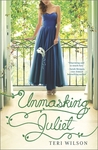
Review: 'Unmasking Juliet' by Teri Wilson

Unmasking JulietUnmasking Juliet by Teri Wilson

My rating: 4 of 5 stars

Two households, both alike in dignity/In fair Napa, where we lay our scene. In this delightful modern twist on a beloved Shakespearean classic, author Teri Wilson turns a bloody tragedy into a chocolate-drenched romance in which the worse thing that happens is a non-fatal, accidental dog poisoning. (Animal lovers, fear not.) Wilson tells us in her introduction, "I really wanted a chance to give these star-crossed lovers the happy ending they deserve." This is a romance novel, after all.

No Tybalts were slain in the making of this novel.


Personally, my first exposure to Romeo and Juliet was in the 7th grade. My English teacher, Mrs. O'Brian, went on maternity leave midway through the play, and the class finished it out with Mr. Bowerman. He was the greatest substitute teacher of my life. I'll never forget that when it came time for him to read the line, "How now, Balthazar?" he said, "How now, Brown Cow?" The class laughed for a solid 10 minutes, and it still makes me chuckle to this day. I re-read the play with my 9th grade class, and it hadn't lost any of its charm or magic.

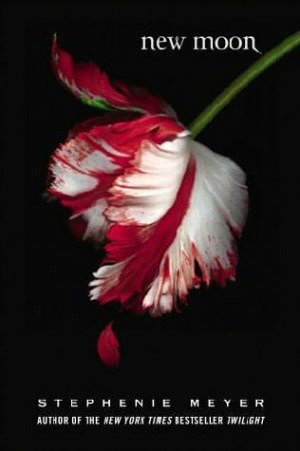
For me, some of the fun of this novel is the way Wilson incorporates familiar lines from Shakespeare's play. Unmasking Juliet seems to be set in a slightly alternate universe in which no one has heard of the fictitious Romeo and Juliet. The characters aren't referencing the play within the world of the novel the way Bella and Edward consciously do in New Moon. They're simply living a (happier) version of it.


The female protagonist of Wilson's version is third-generation chocolatier Juliet Arabella. The male protagonist is Leo Mezzanotte. (Leo - as in DiCaprio - as in the Romeo of the Baz Luhrmann film adaptation. I see what you did there, Ms. Wilson.) He's the grandson of Juliet's grandmother's original business partner in the chocolate business. The Arabellas and Mezzanottes are now rivals as bitter as unsweetened baker's chocolate.


Of course, Leo's only love springs from his only hate. From the moment the two meet - identities concealed in Italian carnival masks - there's a magnetic attraction. They can't get each other out of their minds. I think we all know where this is going, but the fun is in getting there.

By coincidence, the names Arabella and Mezzanotte can combine to make Bellanotte - Italian for "beautiful night."

For never was a story of more "Whoa!"/Than this of Juliet and her Leo.

I received a copy of this book through the Amazon Vine program in exchange for this review, which represents my own honest opinion.

Sunday, July 5, 2015

'The Loss,' A Book Based on a Series Based on a Series Based on a Book

The Originals: The Loss by Julie Plec

My rating: 4 of 5 stars

The Loss is an appropriate title for this book, which centers on Klaus Mikaelson's oh-so-very ill-fated marriage.

I didn't read the first book in this trilogy, so I don't know if Vivianne Lescheres was an important character in that book. If she was, I'm guessing the plot of that one centered on the 1722 battle between the Mikaelsons (the Original vampires) and the witches over who would rule New Orleans. We learn from The Loss that the battle culminated in witch-induced hurricane and an explosion, and that Vivianne died.


Now it's 1766. The Mikaelsons rule New Orleans with a firm hand, keeping the witch clans at bay in the surrounding swamplands. The werewolves, too, have fled the city for fear of Klaus. And Klaus still mourns Vivianne. She's the great love of his long, long, unnatural life.

...Which leads to a terrible decision. Pining for his lost love, Klaus goes to the leader of the witches, Lily Leroux, with an opal pendant from his witch mother. The pendant has magical properties, and Lily uses it to bring Vivianne back from the land of the dead.

This is a lesson literature has tried to teach us before. Bringing someone back from the dead worked out very poorly in Stephen King's Pet Sematary, in Douglas Clegg's Isis, and in J.K. Rowling's "Tale of the Three Brothers" in The Tales of Beedle the Bard. Klaus is many centuries old by the 18th century and should have known better.

The side effect of the spell creates an evil not yet seen in the Vampire Diaries world: zombies. In fact, Vivianne herself is slowing becoming more and more like the walking undead, who have a penchant for eating the hearts out of living things. Their first victim is Elijah's lover, Ava.

Don't worry about Elijah, though - he's learned not to get too attached to other vamps who aren't his siblings. By the end of the book, he's moved on to the lovely gray-eyed vamp Lisette.

Is Lisette a character on the show? I haven't watched very much of The Originals, although I'm familiar with Elijah, Rebekah, and Klaus from the TV version of The Vampire Diaries.

Some of the most delicious bits of this book are Klaus's love scene with Vivianne and Elijah's love scene with Lisette. Rebekah doesn't get a love scene in this one, unfortunately. The great love of her life, Eric Moquet, lost his life in the hurricane.

Klaus is a difficult character to love because of his destructive tendencies, but I find Rebekah quite sympathetic. She causes her fair share of destruction as well, but she's also been epicly mistreated by her older half-brother.

"By" Julie Plec is a bit of a misnomer; this was ghostwritten, with Plec credited as creatrix of the Vampire Diaries spin-off. She gets a lot of fandom hate, but I like her a whole lot more now that I know her horror film credits include Cursed, the stupidest werewolf movie I ever loved.

I received this book through the Amazon Vine program in exchange for an honest review.


This is an affiliate link:

The First Bite Is the Deepest by Elisa Catrina. $2.99 from Smashwords.com
“Funny and clever and emotionally hard-hitting” "A perfectly creepy read." Elisa Catrina's debut novel begins as a quirky send-up of vampire romance, but quickly turns sinister. High schooler Stella Ortiz starts dating the mysterious new guy, but her friends are convinced he's bad news: Sebastian misses tons of school, he day-drinks something that smells like pennies, and oh yeah, he's a vampire.